Find the Best Land Clearing Contractors for Your Business
No obligation • Fast responses • Nationwide coverage

Why you can trust Landscape Atlas
Landscape Atlas is a leading United States resource for evaluating landscaping, lawn care, and outdoor service providers. Our team researches each category in depth, focusing on service quality, safety, and customer experience. Listings and rankings are based on independent criteria and user feedback, and companies cannot pay to influence our assessments or recommendations.
Search providers near you
Best Land Clearing Contractors in Colorado Ranked
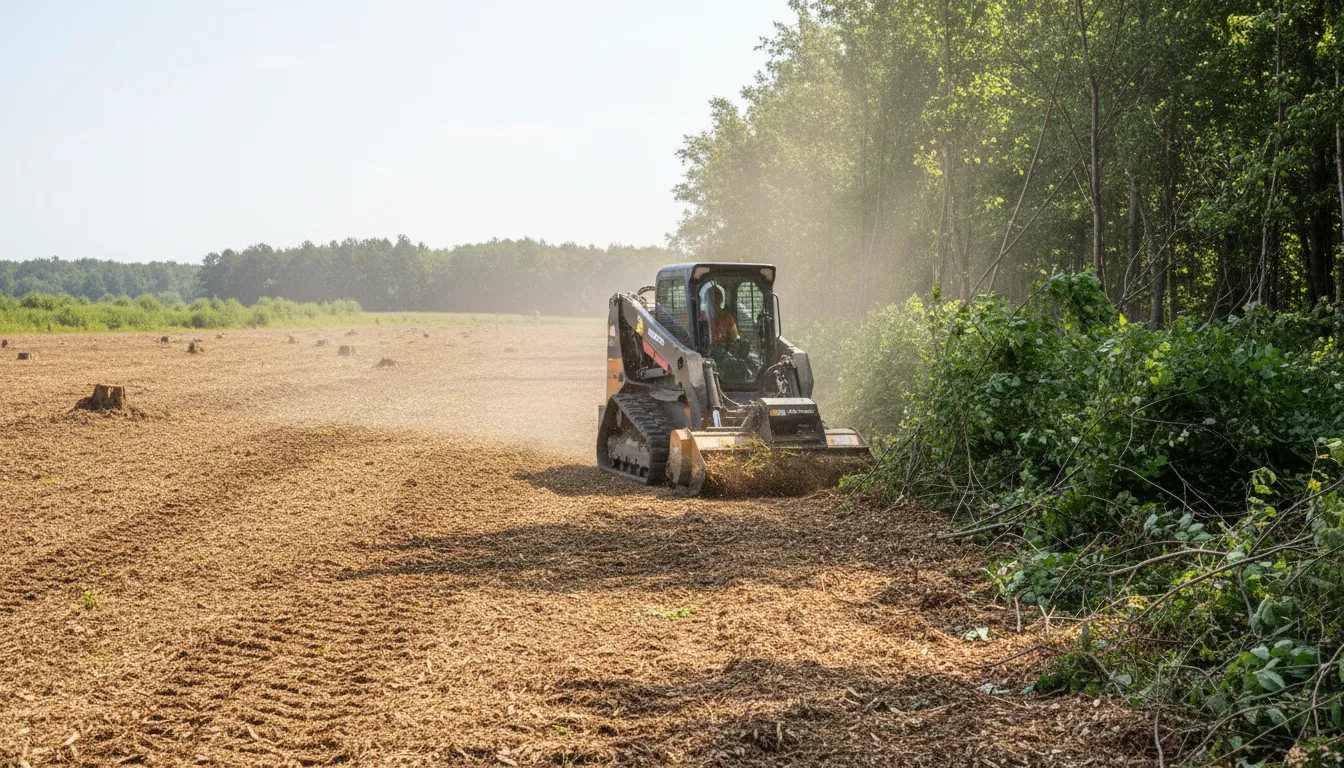
Land clearing is the process of removing trees, brush, stumps, and other obstacles from a piece of land to prepare it for construction, agriculture, or landscaping. In Colorado, this work is more than just heavy machinery; it's a careful balance between achieving your property goals and protecting the state's sensitive ecosystems, water resources, and scenic beauty. Understanding local regulations, environmental best practices, and cost factors is essential for a successful project. This guide provides practical information to help you plan your land clearing work and connect with experienced local professionals who understand Colorado's unique requirements.
Complete Tree Service
Colorado Springs, CO
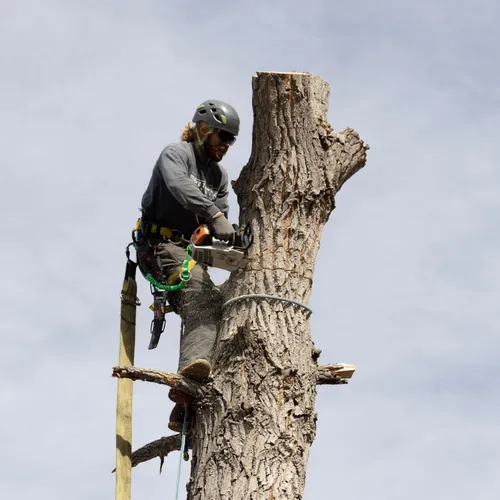
Complete Tree Service is a licensed and insured full-service tree company based in Colorado Springs, CO. They provide tree maintenance, tree removal, stump grinding, shrub trimming, fire mitigation, storm damage cleanup, and emergency tree removal services. Serving both residential and commercial customers in Colorado Springs and nearby areas such as Monument, Woodmoor, and Black Forest, they focus on careful removal and cleanup to protect surrounding structures and landscaping. The company is family owned and emphasizes professional standards and customer satisfaction.
Pikes Peak Tree Care
Colorado Springs, CO
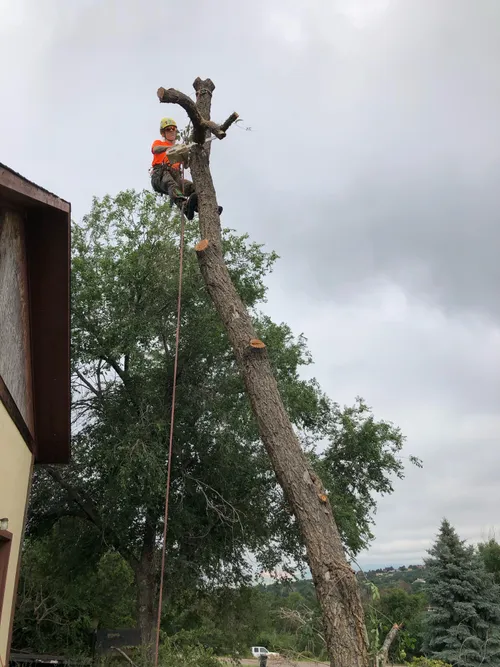
Pikes Peak Tree Care provides tree services including tree removal, stump grinding, land clearing, and brush removal in Colorado Springs, CO. The company is experienced in managing tree health and landscape protection, with a focus on careful and efficient removal of large trees and clearing projects. Customers have noted their skill in handling complex tree removals near structures without damage. The business emphasizes knowledgeable service and thorough cleanup after jobs.
Tree Service Denver LLC
Denver, CO
Tree Service Denver LLC is an ISA-certified arborist company based in Denver, CO, offering a wide range of tree care services including tree removal, stump grinding, tree trimming, and land clearing. They specialize in safe removal of hazardous and storm-damaged trees, precision pruning to promote tree health, and emergency response services available 24/7. The company uses advanced equipment such as cranes and bucket trucks to handle complex urban tree removals while ensuring zero damage to property. Serving Denver families since 2011, they provide expert assessments, disease treatments, and sustainable solutions like tree planting and cabling to maintain healthy landscapes.
Wytcherley Tree Service
Colorado Springs, CO
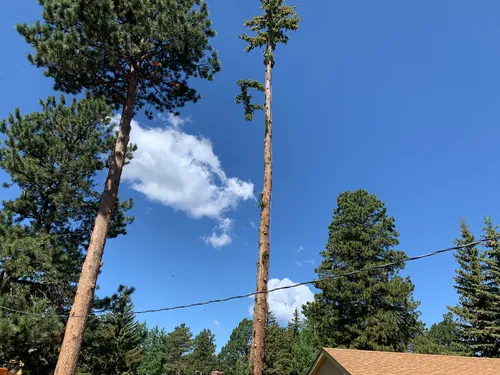
Wytcherley Tree Service is a locally owned company based in Colorado Springs, CO, offering tree removal, stump grinding, land clearing, and fire mitigation services. With over five years of experience, their licensed and insured arborists provide safe and efficient solutions tailored to each property. They focus on precision and safety, using state-of-the-art equipment for tree removal and comprehensive site evaluations. Their fire mitigation work includes vegetation assessments and creating defensible spaces to reduce wildfire risks. Additional services include tree pruning, storm cleanup, and brush removal to maintain landscape health and safety.
Clear Creek Fire Mitigation
3719 Evergreen Pkwy, Evergreen, CO 80439
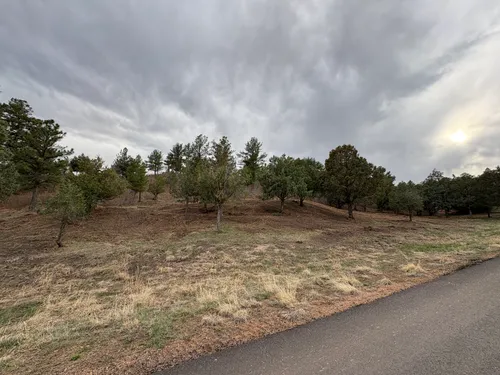
Clear Creek Fire Mitigation is based in Denver, CO, and specializes in fire mitigation, tree removal, stump grinding, and land clearing services. They serve landowners, homeowners, and business owners in Jefferson, Clear Creek, Park, Boulder, and Gilpin counties, focusing on properties larger than one acre. Their services include reducing wildfire risks through hazardous vegetation removal, thinning dense tree stands, and creating defensible spaces using specialized forestry equipment. They also provide forestry mulching to clear and grind trees, brush, and stumps into mulch, promoting soil health and reducing erosion.
Understanding Colorado's Regulatory Landscape
Unlike many states with uniform rules, land clearing in Colorado is primarily governed by local county and municipal codes. This means the requirements in Winter Park, Gunnison County, or Douglas County can differ significantly. Before any work begins, your first step must be to check with your local planning or building department. They will outline specific permits, buffer zones, and erosion control plans you need to follow.
For projects on federal public lands managed by the U.S. Forest Service (USFS) or Bureau of Land Management (BLM), a separate Special Use Permit is mandatory. You must contact the local district office for the land you intend to clear to initiate this process. Proceeding without proper authorization on public land can result in significant fines and restoration requirements.
Key Environmental Protections and Best Management Practices (BMPs)
Colorado regulations emphasize protecting its natural resources. Professional land clearing services will integrate these protections into their project plan from the start.
- Water Body Buffers: A common rule across many jurisdictions is maintaining a 30-foot vegetative buffer from the banks of streams, lakes, wetlands, and other waterways. This buffer helps filter runoff, stabilize banks, and protect aquatic habitats. In-stream work is heavily restricted and often requires additional permits.
- Endangered Species Considerations: Your project area may be habitat for state or federally protected plants and animals. Planning should include a consideration of potential impacts on sensitive species, which may influence the timing or methods of clearing.
- Erosion and Sediment Control: This is arguably the most critical aspect of land clearing in Colorado, especially on sloped terrain. State and local codes require the use of Best Management Practices (BMPs) to prevent soil loss and polluted runoff. Common BMPs include:
- Mulching: Applying a layer of wood chips or straw to achieve 80-90% ground cover immediately after disturbance1.
- Erosion Control Blankets or Mats: Biodegradable mats that hold soil in place until new vegetation establishes.
- Hydroseeding: Spraying a slurry of seed, mulch, and tackifiers to quickly revegetate exposed soil.
- Temporary Sediment Barriers: Silt fences or wattles placed downhill of work areas to trap sediment.
- Stabilization Timelines: Some counties, like Gunnison, require that all exposed soil on steep slopes or within buffer zones be stabilized within 14 days of disturbance.
- Minimizing Disturbance: The best practice is to design the clearing project to preserve natural vegetation and soil cover wherever possible, clearing only what is necessary for the intended use.
Cost Factors for Land Clearing in Colorado
The cost to clear land in Colorado varies dramatically based on the size, terrain, vegetation density, and accessibility of your property. There is no flat fee per acre.
- Small Residential Lots (e.g., ¼ acre): For basic brush clearing and small tree removal to prepare a building site, homeowners might expect costs ranging from $200 to $1,500.
- Per-Acre Costs for Larger Properties: For tracts of multiple acres, costs are typically quoted per acre and can range from $1,000 to over $90,000 per acre2 3. The low end might apply to flat, lightly wooded grassland. The extreme high end reflects extremely rocky, boulder-filled, or densely forested mountain terrain with poor access.
- Primary Cost Drivers:
- Terrain and Slope: Steep slopes (often defined as greater than a 3:1 ratio) require more specialized, slower equipment and intricate erosion planning, increasing costs4.
- Density and Type of Vegetation: Thick brush, large trees, and root systems take more time and powerful equipment to remove.
- Rock and Boulder Content: Colorado's rocky soil is a major factor. Removing or breaking up large bedrock and boulders requires heavy machinery like excavators with hydraulic hammers, significantly raising the price.
- Accessibility: If large equipment cannot easily reach the site, costs will increase.
- Disposal/Processing: Hauling away debris, chipping it on-site, or burning it (where permitted) all carry different costs.
- Equipment and Methods: The tools used directly impact price.
- Hand Tools: For very small, selective clearing.
- Skid-Steers and Compact Tractors: For medium-sized jobs on accessible land. Rental can cost $300-$500 per day.
- Excavators: For precision work, stump removal, and rock handling. Rental: $600-$1,000 per day.
- Bulldozers: For large-scale clearing and grading. Rental: $800-$1,200 per day.
- Mulchers (Forestry Mowers): Attached to heavy equipment, these machines grind vegetation into mulch in one pass, ideal for large, brushy areas. Rental: $1,000-$1,800 per day5.
Find the perfect land clearing contractors for your needs
Get personalized recommendations and expert advice
Planning and Executing Your Project: A Step-by-Step Guide
- Define Your Goals: Clearly outline what you want the land for (home site, pasture, wildfire mitigation). This determines the scope and finish level of the clearing.
- Research Local Regulations: Contact your county planning department to understand specific permit requirements, buffer zones, and required erosion control plans.
- Consult with Federal Agencies (if applicable): If your project involves USFS or BLM land, contact the local district office immediately to discuss the Special Use Permit process6 7.
- Develop a Site Plan: A professional can help design the clearing to minimize disturbance, preserve natural drainage patterns, and protect sensitive areas8.
- Obtain Multiple Quotes: Due to the wide cost range, get detailed bids from several experienced Colorado land clearing contractors. Ensure quotes include site prep, clearing, erosion control implementation, and cleanup.
- Verify Credentials: Ensure the contractor is licensed, insured, and has experience with Colorado's environmental regulations. Ask for references from similar projects.
- Plan for Revegetation: Factor in the cost and timing for reseeding or replanting disturbed areas to prevent long-term erosion and meet county stabilization requirements9.
Special Considerations for Colorado Landowners
- Wildfire Mitigation: In the Wildland-Urban Interface (WUI), clearing brush and creating defensible space is often encouraged. Some counties may have specific guidelines for this type of vegetation management.
- Agricultural Clearing: Converting land for pasture or crops has its own set of considerations, often related to soil conservation district rules.
- Timing: Scheduling work during periods of low rainfall and snowmelt (typically late summer/early fall) can reduce erosion risks and make sites more accessible for equipment.
Frequently asked questions
Sources
Footnotes
-
Protecting Soils with Mulch and Erosion Control Materials - https://eec.ky.gov/Environmental-Protection/Water/Protection/DocsEPSC/EPSC-ProtectSoilsWithMulch.pdf ↩
-
How Much Does it Cost to Clear Land in 2026? - Lawn Love - https://lawnlove.com/blog/land-clearing-cost/ ↩
-
Excavation Cost in Colorado - Iron Summit Excavating - https://ironsummitexcavating.com/excavation-cost-in-colorado/ ↩
-
Code of Colorado Regulations - https://www.sos.state.co.us/CCR/GenerateRulePdf.do?ruleVersionId=1619 ↩
-
How Can I Clear My Land Fast? A Landowner's Guide to Lot Clearing - https://daylogging.com/2023/06/08/how-can-i-clear-my-land-fast-a-landowners-guide-to-lot-clearing/ ↩
-
Title 7 - Unified Development Code - enCodePlus - https://online.encodeplus.com/regs/winterpark-co/doc-viewer.aspx?secid=89 ↩
-
Landowning Colorado Style - https://csfs.colostate.edu/wp-content/uploads/2015/03/landowning_guide.pdf ↩
-
Conservation Practice Standard Land Clearing (Code 460) - https://www.nrcs.usda.gov/sites/default/files/2022-09/Land_Clearing_460_CPS_9_2020.pdf ↩
-
GRADING AND EROSION CONTROL - Gunnison County - https://www.gunnisoncounty.org/DocumentCenter/View/2087/Grading--Erosion-Control-Requirements?bidId= ↩