Find the Best Land Clearing Contractors for Your Business
No obligation • Fast responses • Nationwide coverage

Why you can trust Landscape Atlas
Landscape Atlas is a leading United States resource for evaluating landscaping, lawn care, and outdoor service providers. Our team researches each category in depth, focusing on service quality, safety, and customer experience. Listings and rankings are based on independent criteria and user feedback, and companies cannot pay to influence our assessments or recommendations.
Search providers near you
Top Land Clearing Contractors in Alpharetta, Georgia Ranked
Preparing a piece of land for a new home, garden, or commercial project often starts with a clean slate. Land clearing is the essential first step in transforming overgrown or wooded property into usable space. In Alpharetta, this process involves careful planning, specialized equipment, and adherence to local regulations to ensure safety and environmental responsibility. This guide will help you understand the methods, costs, and key considerations for site preparation in your area, connecting you with the expertise needed for a successful project.
Weston Tree Service
60 Whitlock Pl SW suite e, Marietta, GA 30064
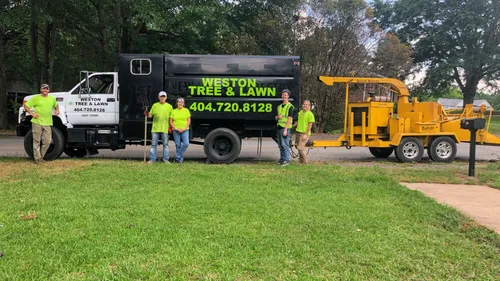
Weston Tree Service is a tree care company based in Atlanta, GA, specializing in tree removal, stump grinding, land clearing, and brush removal. They serve Marietta and the North Metro Atlanta area, offering services such as tree trimming, pruning, emergency response, and lot clearing for residential and commercial properties. The company emphasizes property stewardship, arbor expertise, and clear communication to ensure safe and precise tree work. Weston Tree Service also assists with insurance claims following storm damage. Owner Josh Weston brings a personal passion for tree care, fostering long-term relationships with clients and prioritizing safety and property care.
Joshua Tree Service
89 Atlanta St SE, Marietta, GA 30060
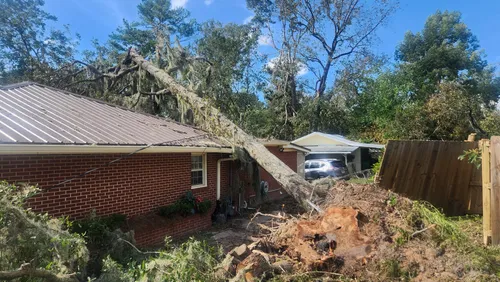
Joshua Tree Service is a family-owned tree care company based in Atlanta, GA, serving Marietta and surrounding areas. With over 25 years of experience, they provide a range of services including tree removal, stump grinding, land clearing, brush removal, and emergency tree services. Their ISA-certified arborists offer expert pruning and tree health assessments to maintain the safety and beauty of local landscapes. The company is fully licensed and insured, with a 24/7 emergency crew available to respond to storm damage and urgent tree care needs.
Northside Tree Professionals
3116 Chestnut Dr #102, Atlanta, GA 30340
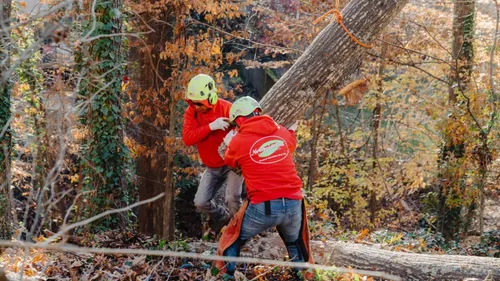
Northside Tree Professionals provides tree removal, stump grinding, land clearing, and brush removal services in Atlanta, GA. They handle complex tree removal projects with care to avoid damage to surrounding property and ensure clean work areas. Their team is skilled in safely guiding large limbs and trees in tight spaces. The company is known for thorough property assessments and efficient project scheduling.

Outside Designs
Atlanta, GA
Outside Designs is a landscape design and hardscaping company based in Atlanta, GA, serving Cobb County, Roswell, Sandy Springs, Buckhead, and surrounding communities. With over 15 years of experience, they offer a range of services including landscape design, installation of softscapes like plants and flower beds, hardscape construction such as patios, pergolas, fire pits, retaining walls, and outdoor kitchens, as well as low voltage landscape lighting. Their capabilities include yard grading and drainage improvements to enhance outdoor spaces for both residential and commercial properties.
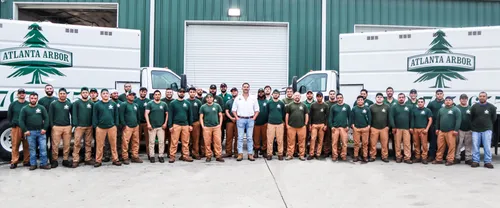
Atlanta Arbor Marietta Tree Service
301 Old Clay St SE, Marietta, GA 30060
Atlanta Arbor Marietta Tree Service is a certified tree care provider based in Atlanta, GA, offering a wide range of services including tree removal, trimming, pruning, stump grinding, and land clearing. They serve both residential and commercial clients, with expertise in emergency storm damage removal and plant healthcare. Their team includes certified arborists who provide consultations and use environmentally responsible practices. Established in 2014, the company combines over 30 years of combined experience and offers 24/7 emergency tree removal services for urgent situations.
What is Land Clearing and Site Preparation?
Land clearing, also known as site clearing or brush clearing, is the process of removing trees, stumps, brush, rocks, and other obstacles from a parcel of land. The goal is to create a safe, stable, and buildable surface for construction, agriculture, or landscaping. In Alpharetta, this isn't just about demolition; it's a systematic operation that includes assessment, permitting, vegetation removal, debris management, and final grading. Proper site preparation is crucial for foundation integrity, drainage planning, and maximizing the utility and value of your property.
The Land Clearing Process: A Step-by-Step Guide
A successful lot clearing project follows a logical sequence to ensure efficiency, safety, and compliance.
1. Initial Site Assessment and Planning
Every project begins with a thorough evaluation. A professional will visit your property to identify boundaries, assess the density and type of vegetation, note slopes and accessibility issues, and locate any protected areas or wetlands. A critical first step is calling GA 811 to have underground utility lines marked, which is required by law and prevents dangerous accidents. This assessment forms the basis for the work plan and permit applications.
2. Securing Necessary Permits
In Alpharetta and Fulton County, land disturbance activities typically require permits. Regulations are in place to control erosion, protect waterways, and manage tree removal, especially for larger parcels. Your contractor should handle this process, which may involve submitting a site plan and an Erosion and Sedimentation Control Plan. Starting without proper permits can lead to significant fines and project delays.
3. Vegetation Removal Techniques
The method chosen depends on the land's condition and your future plans for the site.
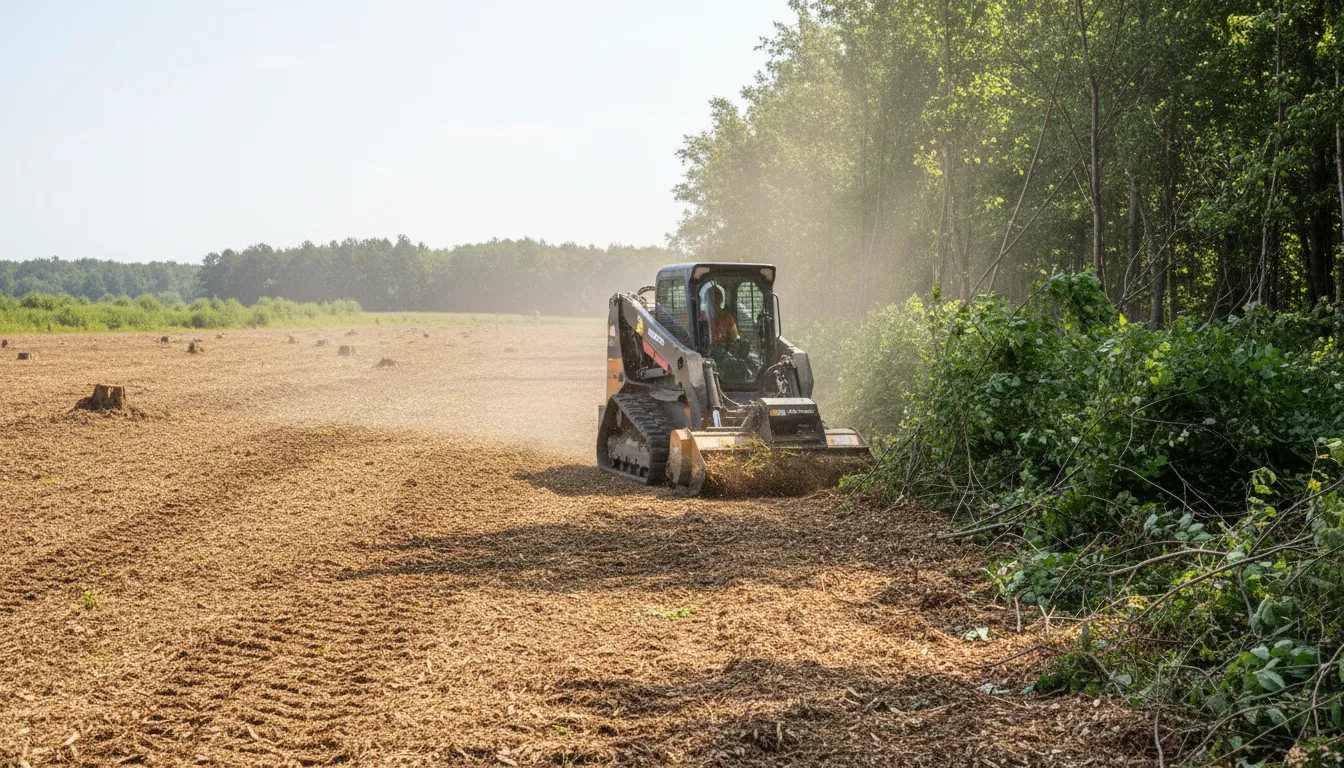
- Forestry Mulching: This is often the preferred method for its eco-friendly benefits. A specialized machine with a rotating mulching head grinds trees, brush, and stumps into a fine woodchip mulch, which is left on-site. This process enriches the soil, prevents erosion, and avoids the need for hauling away bulky debris.
- Mechanical Clearing: For heavily wooded areas or large-scale projects, bulldozers, excavators, and skid-steers are used to push over and pile trees and brush. This is faster for dense forest but requires subsequent steps for stump and debris removal.
- Manual Clearing: Chainsaws and hand tools are used for sensitive areas, near structures, or for selective clearing where specific trees are to be preserved.
4. Stump and Root Removal
After trees are felled, stumps remain. They can be removed via:
- Stump Grinding: A grinder chews the stump and surface roots into small wood chips. This is efficient and leaves a hole that can be filled with soil.
- Stump Grubbing/Uprooting: An excavator is used to dig out the entire stump and root ball. This is more thorough but disturbs a larger area of soil.
5. Debris Management and Hauling
What happens to all the removed material? You have several options:
- On-site Chipping/Mulching: As with forestry mulching, debris is processed into mulch and spread back on the property. This is cost-effective and beneficial for soil health.
- Hauling Off-site: Logs, brush piles, and stumps are loaded onto trucks and transported to a licensed recycling center or landfill. This provides a completely clean site but adds to the project cost.
- Controlled Burning: In some rural parts of Georgia, burning is allowed with a permit. It has a low cost but is highly regulated, weather-dependent, and not always suitable for suburban areas like Alpharetta 1.
6. Final Grading and Stabilization
The final step is to grade the land to the desired contour for proper drainage and a level building pad. This may involve spreading topsoil and installing temporary erosion control measures like silt fencing or straw wattles to prevent runoff until permanent landscaping is established.
Find the perfect land clearing contractors for your needs
Get personalized recommendations and expert advice
Understanding Land Clearing Costs in Alpharetta
Pricing for lot clearing in Alpharetta is rarely a flat fee; it's influenced by multiple project-specific factors. Here's a breakdown of what to expect.
Primary Cost Factors
- Density and Type of Vegetation: A lightly brushed acre costs far less than an acre of dense, mature hardwood forest. The size and number of trees are the biggest drivers.
- Accessibility: Steep slopes, wet ground, or limited entry points for large machinery can increase the time and complexity, raising the price.
- Clearing Method: Forestry mulching may have different hourly or per-acre rates compared to traditional mechanical clearing and hauling.
- Debris Disposal: Choosing to haul debris away is a significant added cost versus leaving mulch on-site.
- Permits and Regulations: The time and fees associated with securing necessary permits are part of the overall project cost 2 3.
Estimated Price Ranges
Based on local provider data, here are general cost estimates for land clearing in the Alpharetta area:
- Light Clearing (shrubs, small trees): $1,200 - $3,000 per acre.
- Moderate Clearing (medium trees, dense brush): $2,500 - $5,000 per acre.
- Heavy Clearing (large, dense forest): $4,000 - $7,000+ per acre 4.
- Forestry Mulching: $150 - $300+ per hour, or approximately $500-$3,000 per acre depending on conditions 5.
- Stump Grinding: $100 - $400 per stump, based on size 6 7.
- Debris Hauling: $300 - $600+ per truckload or as a line-item cost for the entire job 8 9.
Important Note: These are estimates. Always get detailed, written quotes from local professionals who have assessed your specific property.
Choosing the Right Land Clearing Service
Selecting a qualified contractor is vital for a project that is on time, on budget, and compliant.
- Verify Licensing and Insurance: Ensure the company is licensed to work in Georgia and carries comprehensive liability and workers' compensation insurance.
- Check Local Experience: A company familiar with Alpharetta and Fulton County will understand local permit requirements, soil conditions, and common vegetation types.
- Review Their Equipment: Modern, well-maintained equipment (like dedicated forestry mulchers or tracked excavators) is a sign of a professional operation and can mean a faster, cleaner job.
- Ask for References and Portfolios: Look at photos of past projects similar to yours and speak to previous clients about their experience.
- Get a Detailed Contract: The quote should be in writing and specify the scope of work, methods to be used, cleanup standards, timeline, payment schedule, and who is responsible for obtaining permits.
Environmental Considerations and Best Practices
Responsible land clearing balances progress with preservation.
- Erosion Control: A proper plan is legally required and ecologically necessary to prevent soil loss and protect nearby streams from sediment pollution 10 11.
- Tree Preservation: If possible, mark desirable, healthy trees to be saved. Selective clearing can maintain privacy, shade, and property value.
- Soil Health: Leaving mulch on-site, as with forestry mulching, returns nutrients to the soil, improves moisture retention, and suppresses future weed growth.
- Wildlife: Conducting work outside of key nesting or breeding seasons when possible is a considerate practice.
Frequently asked questions
Sources
Footnotes
-
Land Clearing Services in Alpharetta GA | Fast & Reliable - https://georgialandclearing.com/alpharetta-georgia-land-clearing/ ↩
-
How to Clear Land in Atlanta A Practical Guide - https://richmondtree.com/how-to-clear-land/ ↩
-
Pricing Guide: How Much Does It Cost to Clear Land in 2026? - LawnStarter - https://www.lawnstarter.com/blog/cost/clear-land-price/ ↩
-
Land Clearing Costs Georgia | Cost To Clear Land | Call Us - https://rapillardlandworks.com/land-clearing-costs-in-georgia/ ↩
-
30 Smart Ways to Save Money on Land Clearing in Georgia (2025 ... - https://www.bucktowngradingandconstruction.com/30-smart-ways-to-save-money-on-land-clearing-in-georgia-2025-guide/ ↩
-
2024 How Much Does It Cost To Clear Land In Georgia? | TBX Landworks - https://tbxlandworks.com/how-much-does-it-cost-to-clear-land-in-georgia/ ↩
-
Understanding Tree Removal Costs in Atlanta - https://avalontrees.com/understanding-tree-removal-costs-in-atlanta/ ↩
-
Atlanta Brush Removal Cost Explained - Richmond Tree Experts - https://richmondtree.com/brush-removal-cost/ ↩
-
Cost To Clear Acre Of Land In Georgia - Free Estimates - https://rapillardlandworks.com/cost-to-clear-an-acre-of-land-in-georgia/ ↩
-
The Ultimate Guide to Land Clearing | DC Hauling Makes It Easy - https://www.dcmakesiteasy.com/the-ultimate-guide-to-land-clearing/ ↩
-
A Step-by-Step Approach to Commercial Land Clearing in Georgia - https://peachstatelandclearing.com/a-step-by-step-approach-to-commercial-land-clearing-in-georgia/ ↩