Find the Best Land Clearing Contractors for Your Business
No obligation • Fast responses • Nationwide coverage

Why you can trust Landscape Atlas
Landscape Atlas is a leading United States resource for evaluating landscaping, lawn care, and outdoor service providers. Our team researches each category in depth, focusing on service quality, safety, and customer experience. Listings and rankings are based on independent criteria and user feedback, and companies cannot pay to influence our assessments or recommendations.
Search providers near you
Top Land Clearing Contractors in Shakopee, Minnesota Ranked
Land clearing is the essential first step in transforming a wooded or overgrown property into a usable space for building, farming, or landscaping. This process involves the systematic removal of trees, brush, stumps, and debris to prepare a site for its next purpose. For Shakopee homeowners and developers, understanding the local methods, regulations, and costs is key to a successful project. This guide will help you navigate the process and connect with qualified professionals in the Shakopee area who can assess your specific needs.

Scott Lorenz Tree Service
4741 Gettysburg Ave N, Minneapolis, MN 55428
Scott Lorenz Tree Service is a family-owned business based in Minneapolis, MN, offering tree trimming, removal, stump grinding, and land clearing services. With over 35 years of experience, they serve Central Minnesota and the Twin Cities area, focusing on careful property protection and thorough cleanup. Their team uses proven techniques to ensure safety and efficiency while treating each project with respect and precision.
Twisted Limb Tree Works LLC
Minneapolis, MN
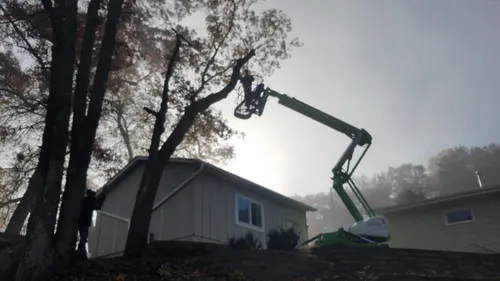
Twisted Limb Tree Works LLC is a tree service company based in Minneapolis, MN, specializing in tree removal, trimming, stump grinding, and land clearing. They serve several nearby communities including Maplewood, Oakdale, White Bear Lake, Roseville, North St. Paul, and Woodbury. With over 20 years of experience in the tree care industry, the company focuses on quality workmanship and customer satisfaction. Their services include technical tree removals and lot clearing, with an emphasis on careful site cleanup after each job.
Mancini Tree Service
St Paul, MN
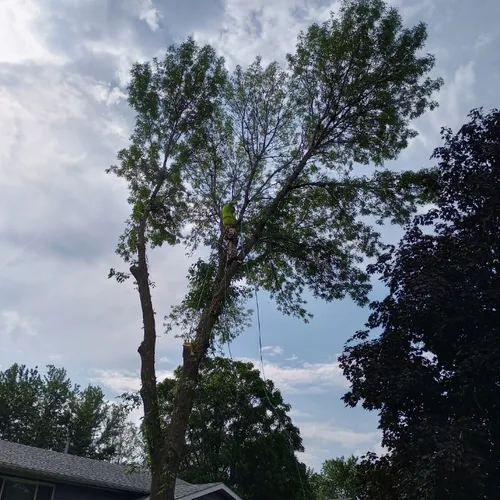
Mancini Tree Service provides professional tree care and land clearing services in St Paul, MN. Their skilled arborists offer tree trimming, removal, stump grinding, brush removal, and specialized ash tree removal to maintain the health and safety of landscapes. They also handle land clearing for construction or agricultural projects and offer rapid storm damage removal to restore properties efficiently. With years of experience, Mancini Tree Service focuses on delivering quality solutions tailored to each client's needs.
Minnehaha Falls Landscaping
4549 41st Ave S, Minneapolis, MN 55406
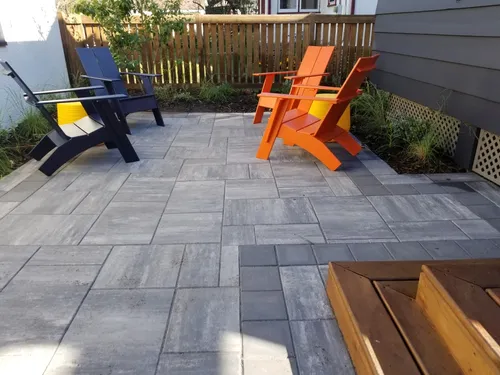
Minnehaha Falls Landscaping is a landscaping company based in Minneapolis, MN, offering a wide range of services including lawn fertilization, weed control, landscape design, yard drainage, land clearing, and hardscaping. They focus on creating sustainable, eco-friendly landscapes that support local ecosystems, using organic and chemical-free methods. With over 60 years of experience, they provide personalized landscaping plans that incorporate native plants, soil health, and water conservation. Their capabilities include designing and building patios, retaining walls, and other hardscaping features that enhance outdoor living spaces while promoting biodiversity.
Schroeder Outdoor Services
5346 Lakeside Ave N, Crystal, MN 55429
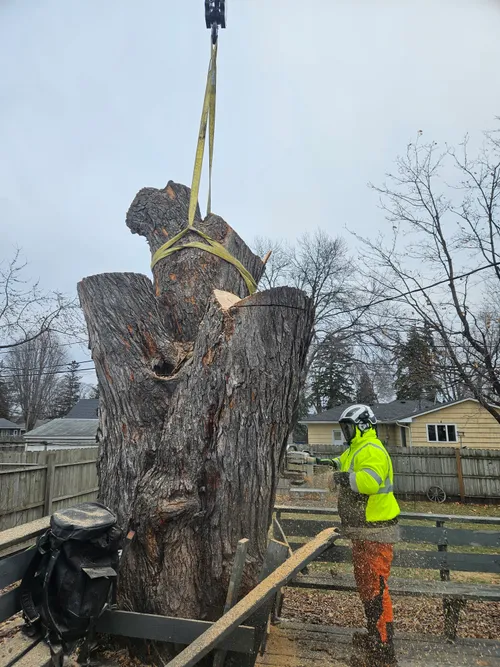
Schroeder Outdoor Services is a landscaping and tree service company based in Minneapolis, MN. They offer a range of services including tree removal, stump grinding, land clearing, brush removal, and landscape design. The company specializes in removing dead, dying, and hazardous trees, with a focus on combating invasive species such as buckthorn and emerald ash borer. Schroeder Outdoor Services works on sensitive ecosystems in the Midwest and partners with environmental initiatives to plant new trees for every tree removed. They begin each landscaping project with a detailed consultation to align with client goals and preferences.
Understanding the Land Clearing Process in Shakopee
A professional site clearing project in Shakopee is more than just removing trees; it's a multi-stage operation that ensures safety, compliance, and proper site preparation. The typical workflow begins long before any equipment arrives on your property.
Initial Assessment and Permits
The first step any reputable contractor will take is a thorough site assessment. They evaluate the density of vegetation, tree sizes, terrain, soil conditions, and the presence of any wetlands or protected areas. Crucially, they will also check local Shakopee and Scott County ordinances to determine if permits are required for the scope of work planned. Significant clearing, especially near waterways or for new construction, often needs official approval. A professional will handle this permitting process, saving you time and potential legal headaches.
Vegetation and Brush Removal
Once plans are set, the actual brush clearing and tree removal begins. The method depends on the site's characteristics:
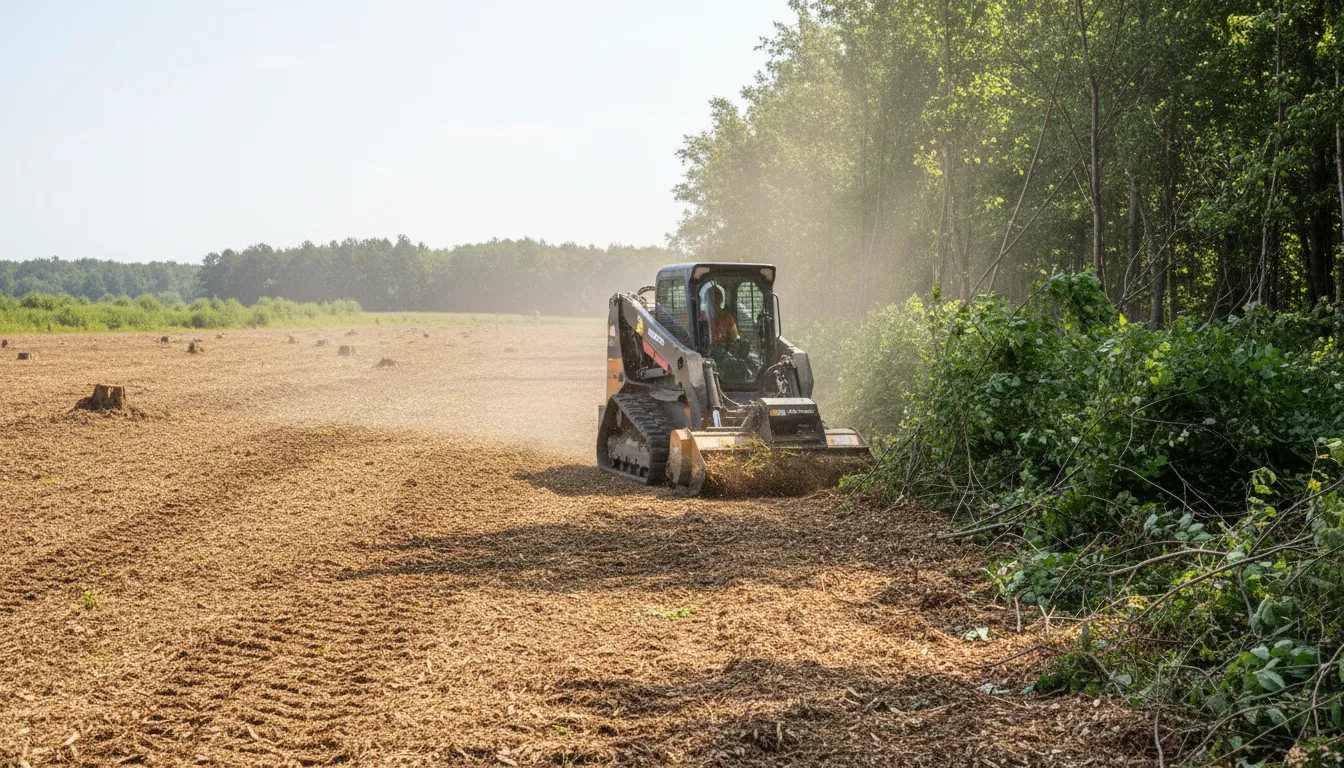
- Mechanical Clearing: For larger tracts of land with heavy brush and smaller trees, contractors use heavy equipment like bulldozers, skid steers with mulching heads, or specialized brush cutters. This is the fastest method for clearing large areas.
- Manual Clearing: For smaller lots, areas near structures, or sites requiring more precision, crews may use chainsaws and hand tools. This allows for selective tree removal and careful work around sensitive areas.
Stump Removal and Grubbing
After trees are felled, stumps and root systems remain. Proper lot clearing requires addressing these to prevent future issues with grading or construction. Stump grinders are used to chip stumps down below ground level. For complete removal, a process called "grubbing" uses excavators or root rakes to pull out the entire stump and root ball, ensuring the land is truly clear for grading.
Debris Management and Disposal
What happens to all the removed material is a major factor in the project's cost and environmental impact. Shakopee contractors typically offer several options:
- On-Site Mulching: Using a forestry mulcher, vegetation is turned into wood chips that can be spread over the site for erosion control or later landscaping use. This eliminates hauling costs 1.
- Chipping and Hauling: Brush and trees are fed through a chipper, reducing their volume, and then the chips are hauled away to a biomass facility or landfill.
- Off-Site Hauling: Larger logs and debris are loaded onto trucks and transported to disposal sites. The choice between mulching and hauling significantly affects the final price.
Final Grading and Site Preparation
The final stage of the land clearing service is grading. Using bulldozers or graders, the contractor levels the soil, creates proper drainage slopes, and prepares a stable base for whatever comes next-whether it's laying a foundation for a home, seeding for a lawn, or preparing for agricultural use.
Key Methods and Equipment for Shakopee Properties
The right technique depends on your land's condition and your end goal. Here are the most common approaches used by Shakopee area contractors:
1. Mulching (Forestry Mowing): This is an efficient, single-step method where a heavy-duty mulching head mounted on a skid steer or excavator grinds trees, brush, and stumps into small wood chips. It's excellent for clearing underbrush, invasive species, and small to medium trees while leaving a layer of nutrient-rich mulch on the ground. It's often the preferred method for ecological management and firebreak creation.
2. Cut and Grind: This traditional two-step process involves felling trees with chainsaws or shears, then processing the debris. Stumps are ground separately. It allows for more control over which trees are removed and is ideal for selective clearing or residential lots where larger timber may be salvaged for lumber 2.
3. Pushover (Clearing with Heavy Equipment): For large-scale development projects on several acres, bulldozers with rakes or shears are used to push over trees and pile debris. This is the fastest method for clearing dense forest but requires significant space for equipment operation and subsequent debris burning or hauling 3.
Find the perfect land clearing contractors for your needs
Get personalized recommendations and expert advice
Cost Factors for Land Clearing in Shakopee
The cost to clear land in Shakopee is highly variable and is rarely a simple flat fee. Professional estimates are based on a detailed evaluation of your specific site. Understanding these factors will help you interpret quotes accurately.
Primary Cost Drivers:
- Vegetation Density and Type: A lightly brushed acre costs far less than an acre of dense, mature forest with large hardwood trees. The mix of small brush, medium trees, and large trees directly impacts time and equipment needs.
- Terrain and Accessibility: Steep slopes, rocky ground, or wet, soft soil can slow down equipment and require specialized machinery, increasing costs. Easy access for large trucks and equipment helps keep prices lower.
- Debris Disposal Method: Choosing on-site mulching is typically more cost-effective than paying for hauling fees, landfill tipping fees, and transportation 4 5.
- Project Size: While per-acre costs often decrease with larger projects due to economies of scale, even a small, densely wooded residential lot can be expensive due to the need for precision work.
Estimated Pricing Structures
While every project is unique, local providers often price work in the following ways:
- Hourly Rates: For certain equipment-intensive tasks. Grading work might range from $125 to $250 per hour, while tree and brush removal with heavy mulching equipment can run $300 to over $500 per hour, depending on the machine size.
- Per Acre Estimates: Provides a broader picture for planning. These are general ranges and can vary significantly.
Always get multiple detailed, written estimates that break down costs for each phase (clearing, stump removal, debris disposal, grading) to ensure you are comparing equivalent services.
Local Considerations for Shakopee Homeowners
Tree Laws and Neighbor Relations: Minnesota law, including in Shakopee, generally allows you to trim branches or roots that cross onto your property from a neighbor's tree, but you may be liable for damage if the trimming kills the tree 8. For trees directly on the property line, ownership may be shared. Clear communication with neighbors before starting a lot clearing project near boundaries is essential to maintain good relations and avoid disputes.
Erosion Control and Soil Health: After clearing, exposed soil is vulnerable to erosion, especially with Shakopee's seasonal rains. Reputable contractors will discuss erosion control measures, such as seeding straw mulch or using silt fencing. The mulch left from on-site mulching can greatly aid in protecting the topsoil.
Future Use Planning: Clearly communicate your long-term plans for the land to your contractor. Preparation for a building site requires more precise grading and compaction than clearing for a pasture or wildflower meadow. This foresight ensures the clearing work aligns perfectly with your next steps.
Finding the Right Professional Service
When searching for land clearing services in Shakopee, look for providers with:
- Local Experience: Knowledge of Scott County permit requirements and soil conditions.
- Proper Insurance: Comprehensive liability and workers' compensation insurance.
- Equipment Fleet: A range of equipment suitable for different job sizes and terrains.
- Clear Communication: Willingness to provide a detailed, written estimate and explain each step of the process.
- Environmental Stewardship: Options for sustainable debris management like recycling wood or on-site mulching.
Investing in thorough, professional site preparation sets a solid foundation for any property development project, ensuring safety, compliance, and a successful outcome for your Shakopee land.
Frequently asked questions
Sources
Footnotes
-
Top 5 Methods of Land Clearing | Which Is Right for You? - Valor - https://www.valorenv.com/top-5-methods-of-land-clearing-which-is-right-for-you/ ↩
-
Lot Clearing Minneapolis & St. Paul - Oak and Iron Tree Experts - https://ironandoakmn.com/tree-services/lot-clearing/ ↩
-
Best Equipment for Efficient Land and Brush Clearing - DOZR - https://dozr.com/blog/best-equipment-for-efficient-land-and-brush-clearing ↩
-
Complete Guide to Land Clearing Pricing and Project Planning - https://www.skidsteers.com/blog/brush-clearing-cost/ ↩
-
How Much Does It Cost to Clear Land? - https://www.bobvila.com/articles/cost-to-clear-land/ ↩
-
How Much Does It Cost to Clear Land in 2025? - Daniel Dean - https://www.danieldean.com/how-much-does-it-cost-to-clear-land/ ↩
-
MN Land Clearing - https://mnlandclearing.com/minnesota-land-clearing-services/ ↩
-
Trees - Neighbor Law - Library Research Guides at Minnesota ... - https://mncourts.libguides.com/neighbors-trees ↩