Find the Best Land Clearing Contractors for Your Business
No obligation • Fast responses • Nationwide coverage

Why you can trust Landscape Atlas
Landscape Atlas is a leading United States resource for evaluating landscaping, lawn care, and outdoor service providers. Our team researches each category in depth, focusing on service quality, safety, and customer experience. Listings and rankings are based on independent criteria and user feedback, and companies cannot pay to influence our assessments or recommendations.
Search providers near you
Top Land Clearing Contractors in Cincinnati, Ohio Ranked
Whether you're preparing a residential lot for a new home, reclaiming an overgrown field for agricultural use, or getting a commercial site ready for development, professional land clearing is the essential first step. This process involves the systematic removal of trees, brush, stumps, and other obstacles to create a clean, usable parcel of land. In the Cincinnati area, with its varied terrain and mix of wooded and overgrown properties, understanding your options for site clearing and vegetation removal is key to a successful project. This guide will help you navigate the methods, costs, and considerations for land clearing services in the region.
Clark Tree Service
Cincinnati, OH
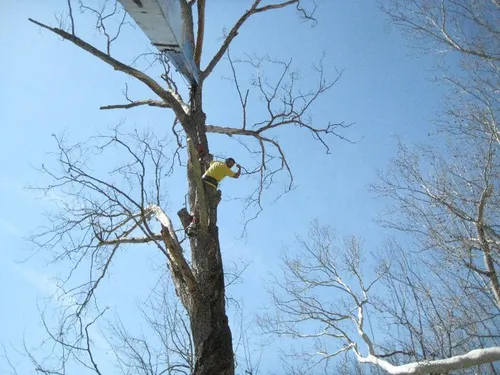
Clark Tree Service is a locally owned company serving Cincinnati, OH, and nearby Kenton and Boone counties. They provide a range of tree services including tree removal, trimming, stump grinding, land clearing, and commercial tree care. The company is equipped to handle emergency tree removal 24/7, responding quickly to storm damage and hazardous tree situations. Founded in 2008, Clark Tree Service brings over a decade of experience to its community-focused work.
Jacob's Tree Experts LLC
Cincinnati, OH
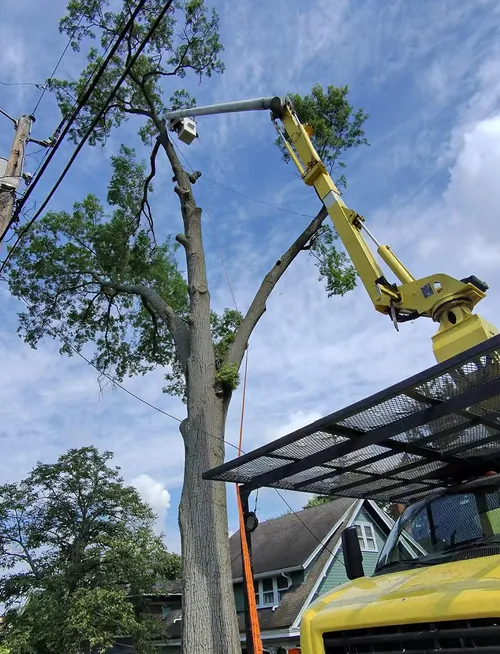
Jacob's Tree Experts LLC is a licensed tree service company based in Cincinnati, OH. They provide a range of services including tree removal, stump grinding, tree trimming, lot clearing, and emergency tree removal. The company uses modern equipment and offers 24/7 emergency services to address hazardous tree situations promptly. As a family-owned business, they emphasize clear communication and personalized service, with a bilingual team fluent in English and Spanish.
Must Lawn & Landscape LLC
5055 Eagles View, Cincinnati, OH 45244
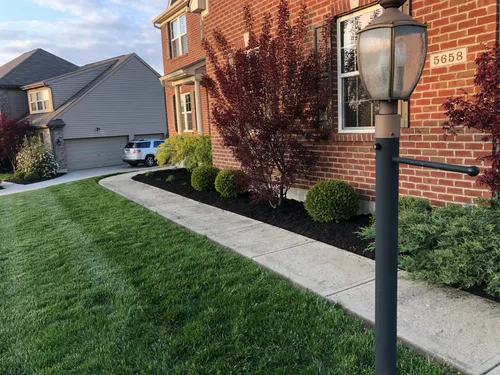
Must Lawn & Landscape LLC is a Cincinnati, OH-based company offering a wide range of lawn care and landscaping services for residential and commercial properties. Their services include lawn mowing, fertilization, weed control, sod installation, landscape design, lighting installation, tree removal, stump grinding, and land clearing. They focus on customized landscape design and maintenance to keep properties looking their best throughout the year. The company serves various neighborhoods in the Cincinnati metro area, including Indian Hill, Anderson Township, Milford, Hyde Park, and Oakley. Must Lawn & Landscape LLC is known for its detailed approach to lawn and landscape care, including seasonal cleanups and ongoing maintenance tailored to client needs.
Paul's Tree Removal, LLC
Cincinnati, OH
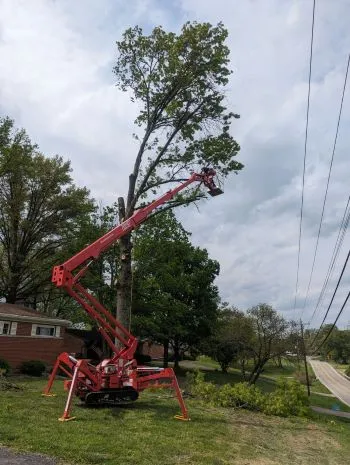
Paul's Tree Removal, LLC is a locally owned tree service company based in Cincinnati, OH. They provide a range of services including tree removal, stump grinding, tree trimming, yard cleanup, and brush chipping. Serving Hamilton County and surrounding areas, the company handles projects both large and small with attention to safety and efficiency. Their certified team focuses on completing jobs on time and within the quoted price, ensuring no hidden fees or surprises.
WAI Lawn and Landscape
Cincinnati, OH
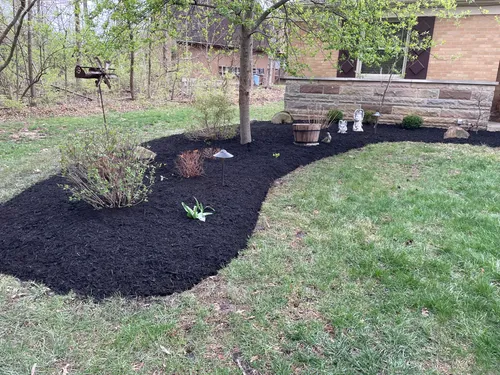
WAI Lawn and Landscape provides a wide range of lawn care and landscaping services in Cincinnati, OH, including lawn mowing, fertilization, weed control, tree trimming, stump grinding, and hardscaping such as paver patios and retaining walls. They serve residential and commercial clients throughout Cincinnati and nearby areas like West Chester, Mason, and Liberty Township. The company offers seasonal services such as spring cleanup, storm debris removal, aeration and seeding, leaf cleanup, snow removal, and holiday lighting installation. WAI Lawn and Landscape is known for its detailed landscaping work and maintenance, including garden planting and landscape lighting installation.
What is Land Clearing?
Land clearing, often referred to as site clearing or brush clearing, is more than just cutting down trees. It's a comprehensive process to remove all vegetation, debris, and sometimes structures from a piece of land. The goal is to transform an undeveloped or overgrown area into a blank slate suitable for construction, farming, landscaping, or other uses. In Greater Cincinnati, this work is crucial due to the prevalence of wooded hillsides, dense underbrush, and properties with legacy vegetation that can hinder progress and pose safety risks.
The process typically follows a logical sequence: starting with an assessment, moving to vegetation and obstacle removal, managing the resulting debris, and finishing with site preparation like grading. Each step requires specific expertise and equipment to be done efficiently and safely.
The Land Clearing Process: A Step-by-Step Breakdown
A professional land clearing project in Cincinnati follows a structured approach to ensure thoroughness and safety.
1. Initial Assessment and Planning
Before any machinery arrives, a reputable contractor will conduct a detailed site evaluation. They identify the types and density of vegetation, note any large trees or stumps, assess the slope and soil conditions, and look for obstacles like rocks, old foundations, or utilities. This planning phase determines the best clearing methods, necessary equipment, and an accurate timeline and estimate.
2. Vegetation Removal
This is the primary phase of clearing. For light brush and small saplings, equipment like brush hogs or forestry mowers may be used. For larger trees and dense forest, chainsaws are employed for felling, often followed by heavy machinery. In many Cincinnati projects, excavators or bulldozers with specialized shears or grapples are used to selectively remove trees and push over brush, maximizing efficiency 1.
3. Stump and Root Removal (Grubbing)
After trees are felled, stumps and root systems remain. These are addressed through a process called grubbing. Stump grinding chips the visible stump into wood chips, leaving the roots to decay underground. For complete removal, especially when new construction or grading is planned, stumps are dug out entirely using excavators with thumb attachments or bulldozers with root rakes, ensuring no organic material is left to settle later 2.
4. Debris Management and Disposal
What happens to all the felled trees, brush, and stumps? This is a major component of the project cost and environmental impact. There are two primary approaches:
- Haul Away: Debris is loaded onto trucks and transported off-site to landfills, recycling centers, or biomass facilities. This method is clean and complete but adds significant transportation and tipping fee costs.
- On-Site Processing: Increasingly popular for its eco-friendly benefits, this involves chipping or forestry mulching the vegetation. The resulting mulch is either spread back over the site to suppress weeds, enrich the soil, and prevent erosion, or it can be removed. This drastically reduces haul-away costs and disposal fees 3 4.
5. Final Site Preparation
Once cleared and grubbed, the site may require final grading to achieve the desired slope and drainage. Soil stabilization measures, like seeding or laying erosion control blankets, might be applied. This stage ensures the land is truly "construction-ready" or prepared for its next intended use 5.
Find the perfect land clearing contractors for your needs
Get personalized recommendations and expert advice
Common Land Clearing Methods Used in Cincinnati
The right technique depends on your land's characteristics and your end goal. Local contractors typically offer several key methods.
Forestry Mulching
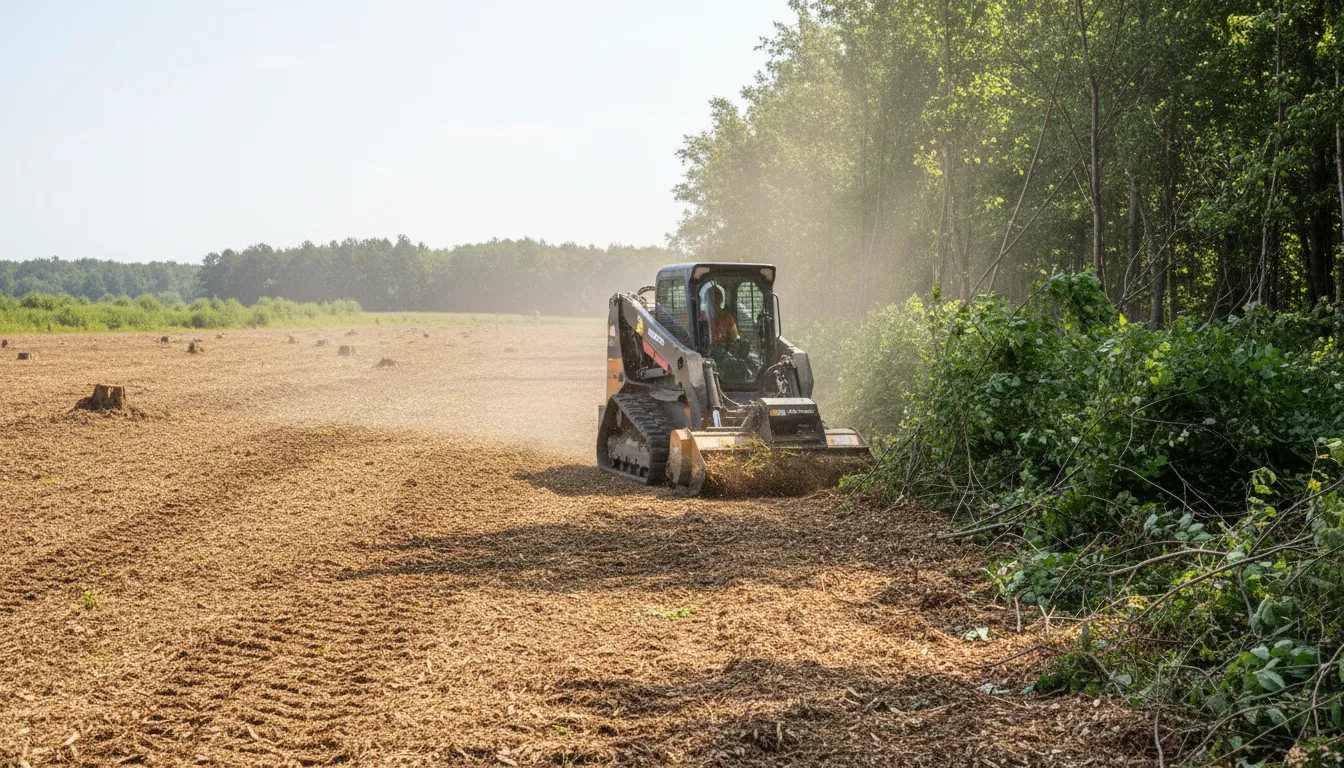
This is a versatile, single-step method where a machine with a rotating mulching head grinds trees, brush, and stumps into small, nutrient-rich wood chips. The mulch is immediately deposited on the ground. Forestry mulching is ideal for eco-conscious projects, land reclamation, creating trails, or clearing underbrush while improving soil health and preventing erosion. It's highly efficient for medium-density vegetation common in many parts of Ohio 6.
Traditional Grubbing and Dozing
For denser forest or when complete removal of all organic material is required (such as for building foundations), traditional methods with bulldozers and excavators are used. Bulldozers with root rakes can push over trees and rip out stumps and roots. Excavators can be more selective, carefully digging out specific stumps and piles of rock. This method is very effective for large-scale clearing and development sites.
Selective Clearing and Bush Hogging
Not every project requires total deforestation. Selective clearing involves removing specific trees or undesirable brush while preserving mature, healthy trees. Bush hogging uses a heavy-duty rotary cutter (a "bush hog") attached to a tractor to mow down thick undergrowth, briars, and small saplings. This is perfect for maintaining fields, clearing fence lines, or improving the aesthetics and accessibility of a wooded lot without removing the tree canopy 7.
Demolition and Total Clean-Up
Some properties require more than just natural vegetation removal. This comprehensive service includes tearing down old sheds, barns, or dilapidated structures, removing concrete slabs, and hauling away years of accumulated junk and debris. It's a full reset for neglected properties.
Understanding Land Clearing Costs in Cincinnati
Costs for lot clearing in Cincinnati vary widely based on the acreage, vegetation density, site accessibility, and chosen disposal method. Prices are typically quoted per acre or as a project-based estimate.
- Medium Brush & Small Trees: Clearing land with light to medium brush, weeds, and small trees (under 6" diameter) generally ranges from $2,500 to $4,000 per acre.
- Heavy Brush & Mixed Forest: For land with dense thickets, heavy brush, and a mix of medium-sized trees, expect costs between $4,000 and $6,000 per acre.
- Dense Forest with Large Trees: Clearing heavily wooded land with large, mature trees is the most expensive, often ranging from $6,000 to $12,000 or more per acre. The cost increases with the size and number of trees, as felling, processing, and stump removal become more labor and equipment-intensive 8.
- Brush Pile Removal: If you already have piled brush from previous work, removal costs about $800 to $3,000 per acre, with many contractors charging a minimum trip fee of $250 to $600 9.
Important Factors Affecting Price:
- Site Access: Easy access for large equipment keeps costs down. Difficult, steep, or restricted access can significantly increase the price.
- Disposal Method: On-site mulching is often more cost-effective than hauling debris to a distant landfill, which incurs trucking and tipping fees.
- Stump Removal: Grinding stumps is less expensive than full grubbing (digging them out). The number and size of stumps directly impact the quote.
- Grading & Final Prep: Basic clearing quotes may not include final grading and soil stabilization, which are additional services.
For the most accurate estimate, it's recommended to get quotes from several local Cincinnati-area land clearing contractors who can assess your specific property 10.
Frequently asked questions
Sources
Footnotes
-
Equipment Needed for Land Clearing | The Cat Rental Store - https://www.catrentalstore.com/en_US/blog/equipment-land-clearing.html ↩
-
In-Depth Look at Land Clearing Services in Cincinnati ... - https://www.elitecsohio.com/post/comprehensive-land-clearing-services-in-cincinnati-ohio ↩
-
Cincinnati Land Clearing Solutions: Everything You Need to ... - https://www.nickellconstructionsolutions.com/post/cincinnati-land-clearing-solutions-everything-you-need-to-know-before-your-next-project ↩
-
Land Clearing and Excavation: The Best Guide From Sapphire Construction - https://sapphireconstructionservice.com/land-clearing-and-excavation/ ↩
-
Earthwork: Understanding the Process, Types, and Tools for Excavation - https://sspaving.com/blog/earthwork-understanding-the-process-types-and-tools-for-excavation/ ↩
-
Land Clearing | Tremson Landclearing Corp - https://www.tremson.com/landclearing ↩
-
Top 5 Methods of Land Clearing | Which Is Right for You? - Valor - https://www.valorenv.com/top-5-methods-of-land-clearing-which-is-right-for-you/ ↩
-
How Much Does It Cost to Clear Land in 2025? - Daniel Dean - https://www.danieldean.com/how-much-does-it-cost-to-clear-land/ ↩
-
How Much Does It Cost to Remove a Brush Pile? (2026) - HomeGuide - https://homeguide.com/costs/brush-pile-removal-cost ↩
-
How Much Does It Cost to Clear Land? [2026 Data] | Angi - https://www.angi.com/articles/how-much-does-it-cost-clear-land.htm ↩