Find the Best Land Clearing Contractors for Your Business
No obligation • Fast responses • Nationwide coverage

Why you can trust Landscape Atlas
Landscape Atlas is a leading United States resource for evaluating landscaping, lawn care, and outdoor service providers. Our team researches each category in depth, focusing on service quality, safety, and customer experience. Listings and rankings are based on independent criteria and user feedback, and companies cannot pay to influence our assessments or recommendations.
Search providers near you
Top Land Clearing Contractors in Tulsa, Oklahoma Ranked
Preparing a piece of land for a new purpose is a significant undertaking. Land clearing, the process of removing trees, brush, stumps, and other obstacles from a property, is often the essential first step for construction, farming, or major landscaping projects in Tulsa. This service transforms overgrown or unusable land into a clean, level, and stable site ready for your vision. For property owners, understanding the local process, methods, and costs is key to planning a successful project. This guide will help you navigate the specifics of site preparation in Tulsa, from initial assessment to final cleanup.
Edgington Construction
10211 E 46th Pl, Tulsa, OK 74146
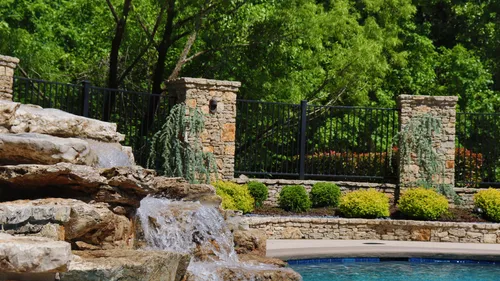
Edgington Construction is a landscaping and hardscaping contractor based in Tulsa, OK. They provide services including yard drainage, grading, land clearing, brush removal, landscaping, and the construction of patios, pavers, and retaining walls. The company is known for its expertise in building retaining walls and drainage systems, handling complex projects with creative solutions and quality materials. With over a decade of experience in luxury home building and landscaping, Edgington Construction has established a reputation for dependable project execution and attention to detail.
Arbor Masters
1901 W Iola St, Broken Arrow, OK 74012
Arbor Masters is a tree care company serving Tulsa, OK, with over 60 years of experience. Their services include tree removal, pruning, stump grinding, land clearing, insect and disease control, and emergency tree removal available 24/7. The team includes ISA Certified Arborists who follow industry best practices to ensure proper tree care and safety. They also offer specialized capabilities such as structural support systems and tree preservation techniques to maintain tree health and stability. Arbor Masters serves Tulsa and nearby communities including Claremore, Muskogee, Sand Springs, Sperry, and Valley Park.
Brush Busters Land Clearing
Tulsa, OK
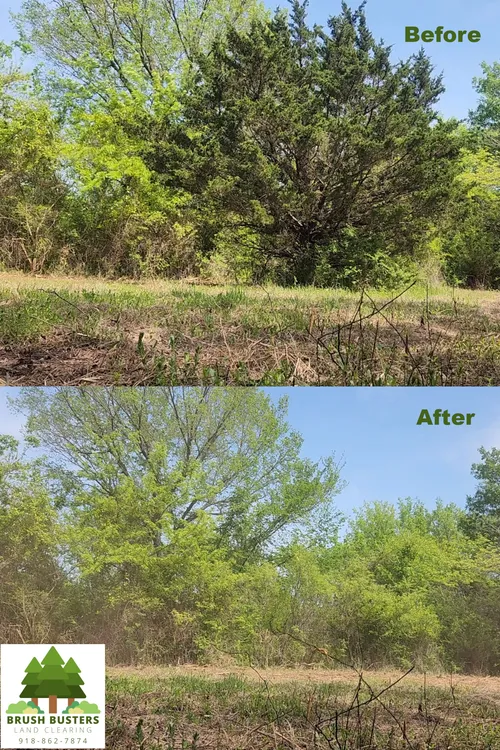
Brush Busters Land Clearing is a tree service and land clearing contractor based in Tulsa, OK. They specialize in forestry mulching, tree removal, stump grinding, and brush removal. Their services are used for a variety of projects including clearing wooded areas for better views, maintaining driveways in wooded properties, and preparing land for recreational activities like hunting. The company works closely with clients to ensure land is cleared according to their specific needs, such as creating shooting lanes or open spaces while preserving desired areas.

T & M Tree Service
Tulsa, OK
T & M Tree Service is a family owned and operated business serving Tulsa, OK, and surrounding areas. With over 30 years of experience, they provide a range of tree services including tree removal, trimming, thinning, shaping, stump grinding, land clearing, and brush removal for both residential and commercial clients. The company is insured and bonded, equipped to handle emergency situations with 24/7 availability. Their expertise includes land clearing and brush hogging, supporting various types of properties such as private homes, schools, gated communities, and golf courses.

Redbud Pro Services
20059 S 4080 Rd, Claremore, OK 74019
Redbud Pro Services is a Tulsa, OK-based company specializing in land clearing, landscaping, and hardscaping services. They provide custom construction projects including shops, pole barns, storage facilities, residential houses, and commercial buildings. With over a decade of experience in property maintenance, Redbud Pro Services offers a range of services such as landscaping, driveway and parking lot concrete or asphalt repair, pesticide applications, and land clearing. They also handle renovations like bathroom upgrades and retaining wall replacements, serving the Tulsa Metro area with a focus on quality and timely project completion.
What Does Land Clearing Involve in Tulsa?
Land clearing is more than just cutting down trees. It's a systematic process that turns a raw piece of property into a usable blank canvas. For Tulsa-area projects, whether you're building a home, expanding a business, or creating pasture, the work typically follows a structured sequence to ensure safety, efficiency, and compliance with local guidelines.
Initial Site Assessment and Planning
Every successful land clearing project begins with a thorough evaluation. A professional will visit your property to identify potential hazards, assess the density and type of vegetation, determine the best equipment access points, and evaluate the terrain. This planning stage is crucial for developing a strategy that addresses tree and brush removal, stump management, grading needs, and debris disposal. It's also the time to check for any necessary permits from the City of Tulsa.
Vegetation and Brush Removal
The core of the clearing process is the removal of unwanted plants. This can range from dense underbrush to large trees. The methods used depend on the project's goals and the vegetation present. For lighter work, crews may use chainsaws and chippers. For larger-scale clearing, heavy machinery like bulldozers, excavators, or specialized forestry mulchers are employed to efficiently clear the land.
Stump Grinding and Removal
After trees are felled, the stumps remain. Simply cutting a tree flush with the ground isn't enough for most development purposes, as stumps can regrow, interfere with grading, and rot over time. Stump grinding is the most common solution, using a machine to chew the stump and its major roots into wood chips. For some projects, full stump extraction may be necessary. This step is vital for creating a truly level and stable site 1.
Land Grading and Leveling
Once vegetation and stumps are cleared, the next phase is shaping the land itself. Grading involves moving soil to create a level surface or to establish specific slopes for proper drainage. Proper grading prevents future water pooling, erosion, and foundation issues for any structures built on the site. This step ensures the land is not just clear, but also functionally prepared for its next use.
Final Cleanup and Debris Management
The job isn't complete until the site is clean. This phase involves managing all the leftover organic material. Options include hauling the debris away to a designated disposal site or processing it on-site through methods like forestry mulching. The chosen cleanup method significantly impacts the project's overall cost and timeline.
Common Land Clearing Methods Used in Tulsa
The technique used for your site preparation depends on your end goal, budget, and environmental considerations. Tulsa contractors typically offer several standard approaches.
Traditional Clearing and Haul-Off: This is a comprehensive method where all vegetation is cut, piled, and then transported off the property to a landfill or recycling center. It leaves a very clean site but can be more expensive due to hauling and disposal fees.
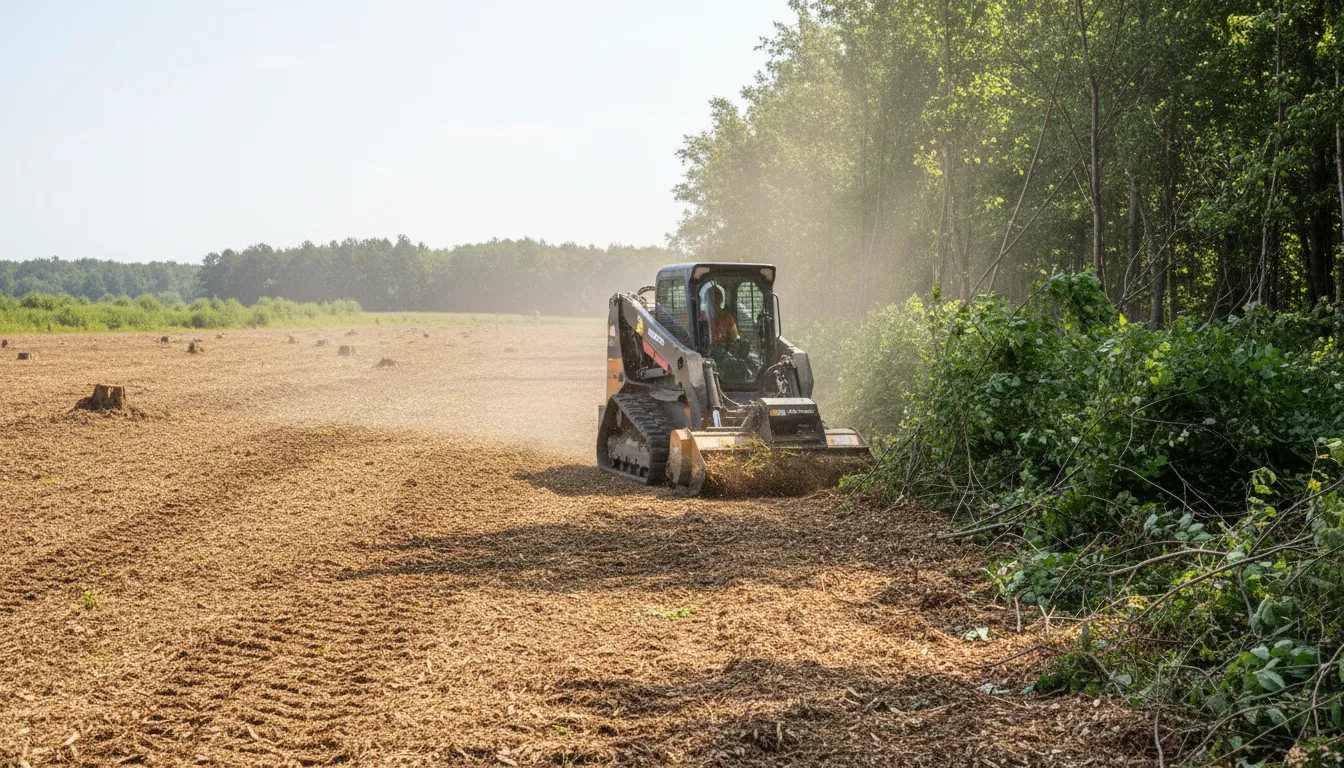
Forestry Mulching: An increasingly popular and efficient method, forestry mulching uses a single machine to cut, grind, and shred vegetation into small wood chips, which are then spread evenly over the cleared area. This acts as a natural ground cover that suppresses weed growth, enriches the soil as it decomposes, and prevents erosion. It eliminates the need for hauling debris off-site 2.
Controlled Burning: In some rural areas of Rogers County surrounding Tulsa, controlled burning may be an option for disposing of brush piles. This method is highly regulated. It requires checking specific local ordinances, obtaining permits, ensuring safe weather conditions, and having fire control measures in place. It is not typically suitable for residential or densely populated areas.
Find the perfect land clearing contractors for your needs
Get personalized recommendations and expert advice
Understanding Land Clearing Costs in Tulsa
The cost for lot clearing in Tulsa can vary widely, as it is highly customized to each property's specific conditions. There is no one-size-fits-all price, but understanding the primary cost drivers can help you budget effectively.
Primary Cost Factors:
- Vegetation Density and Type: A lightly wooded lot with small trees and brush will cost far less to clear than a densely forested acre with large, mature trees.
- Terrain and Accessibility: Steep slopes, rocky ground, or poor access for heavy equipment will increase labor time and complexity, raising the cost.
- Debris Disposal Method: Hauling debris off-site incurs transportation and dump fees. Forestry mulching, while having a machine cost, often avoids these disposal expenses.
- Scope of Work: Are you only removing vegetation, or does the project also include full stump removal, grading, and rock removal? More services mean a higher total cost.
General Price Ranges: While every quote is unique, you can expect general pricing frameworks in the Tulsa area. For light clearing or forestry mulching work, costs may start in the range of $100 to $200 per hour or per acre3. For a full, heavy clearing project that includes large tree and stump removal, prices often range from $1,500 to $5,000 or more per acre3. As a point of reference, the average cost for professional tree removal in Tulsa-a key component of many clearing jobs-is estimated between $540 and $630 per tree, though this varies dramatically with size and difficulty4.
Key Considerations Before You Begin
Permits and Regulations: Before any machinery arrives, it's your responsibility to check local requirements. The City of Tulsa may require permits for land clearing, especially if it is related to new construction or involves significant tree removal. Always verify rules with the city's Development Services department to avoid fines or project delays.
Getting Detailed Quotes: When contacting local site preparation services, ensure you get a detailed, written estimate. A clear quote should specify exactly what is included: the acreage to be cleared, the removal method (mulching vs. haul-off), whether stumps are included, if grading is part of the price, and how cleanup will be handled. This clarity prevents unexpected costs later 5.
Choosing the Right Service Provider: Look for experienced, insured, and licensed contractors who specialize in land clearing. Ask for local references and examples of past projects similar to yours. A reputable company will insist on a site visit before providing a firm quote and will clearly explain their process and timeline.
Frequently asked questions
Sources
Footnotes
-
How to Clear Land for Farming! | 48-Year Veteran Explains - https://www.victoriafarmeq.com/blog/how-to-clear-land-for-farming ↩
-
Forestry Mulching - D & M Tree Service - https://dmtreeservice.com/services/forestry/ ↩
-
Understanding the Costs: - https://buffalolandserv.com/f/understanding-the-costs ↩ ↩2
-
Tree Removal in Tulsa, OK - Costs 12 / 2025 - Homeyou - https://www.homeyou.com/ok/tree-removal-tulsa-costs ↩
-
Land Clearing for Construction: What You Need to Know - https://www.hickmantrees.com/post/land-clearing-for-construction-what-you-need-to-know ↩