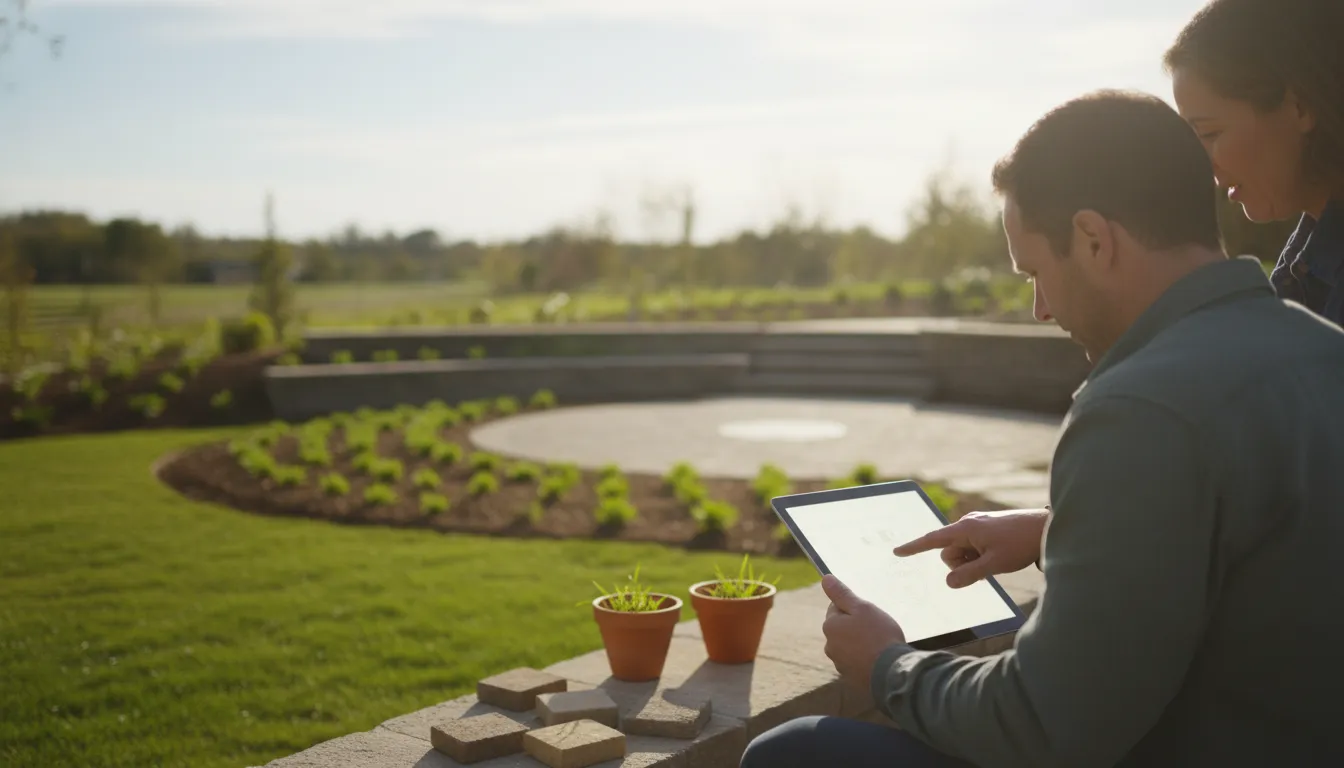
Find the Best Landscape Design Companies for Your Business
No obligation • Fast responses • Nationwide coverage

Why you can trust Landscape Atlas
Landscape Atlas is a leading United States resource for evaluating landscaping, lawn care, and outdoor service providers. Our team researches each category in depth, focusing on service quality, safety, and customer experience. Listings and rankings are based on independent criteria and user feedback, and companies cannot pay to influence our assessments or recommendations.
Search providers near you
Top Landscape Design Companies in Florissant, Missouri Ranked
Creating a beautiful and functional outdoor space in Florissant is about more than just planting a few flowers. It's the art and science of arranging living plants, structures, and open spaces to enhance your property's beauty, utility, and value. Given our humid continental climate with hot summers and cold winters (Zone 6) and prevalent clay or loam soils, a successful garden plan requires thoughtful consideration of local conditions. This guide will help you understand the key components of residential landscaping, from foundational principles to popular features, so you can make informed decisions about transforming your yard.
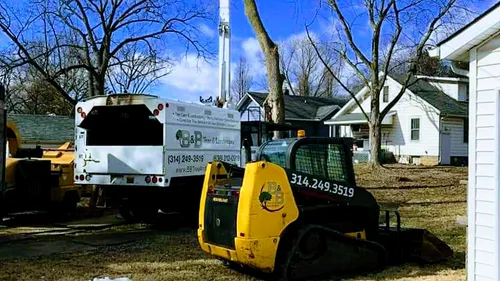
B&B Tree and Landscapes LLC
9845 St Charles Rock Rd Suite 108, St Ann, MO 63074
B&B Tree and Landscapes LLC is a full-service tree care and hardscape company based in St Louis, MO. They offer a wide range of services including tree pruning, trimming, cabling, fertilization, and deadwood removal, alongside hardscaping projects such as patios, walkways, and retaining walls using materials like pavers and flagstones. The company also provides green debris hauling, dump truck services, and Bobcat equipment operation for larger projects. Their team includes certified arborists trained in the latest tree care techniques, ensuring healthy and aesthetically pleasing trees. B&B Tree and Landscapes LLC is committed to customer satisfaction and safety in all their outdoor living space projects.
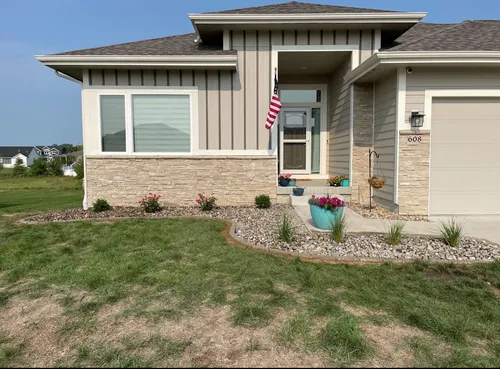
Nature's Touch Landscaping
3324 Rue Royale St #511, St Charles, MO 63301
Nature's Touch Landscaping is a landscaping company based near St Louis, MO, serving the St. Charles and Lake Saint Louis areas. They focus on landscape design and outdoor space transformation using quality materials and innovative approaches. The company emphasizes customer satisfaction in their landscaping projects.
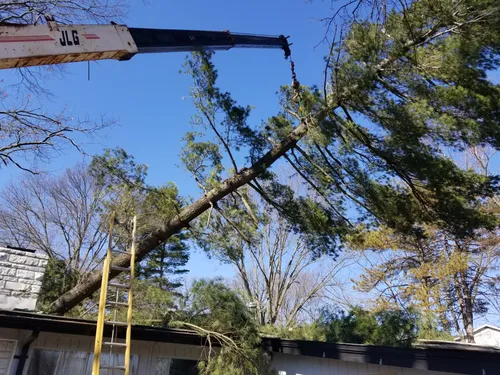
Southfork Tree Services
4539 Old Grn Pk Rd, St. Louis, MO 63123
Southfork Tree Services is a locally owned and operated company in St. Louis, MO, offering a wide range of tree care and landscaping services. Their expertise includes tree removal, tree pruning, stump grinding, landscape design, retaining walls, paver patios, and landscape lighting. The company has been serving St. Louis and St. Louis County since 1990, with owner Doug Alsip bringing over 25 years of experience and being present on every job. Southfork Tree Services also provides 24-hour emergency service for urgent tree care needs. They use premium equipment such as bucket trucks and stump grinders to ensure efficient and safe work.
Fresh Start Outdoors
4411 Woodson Rd #103, St. Louis, MO 63134
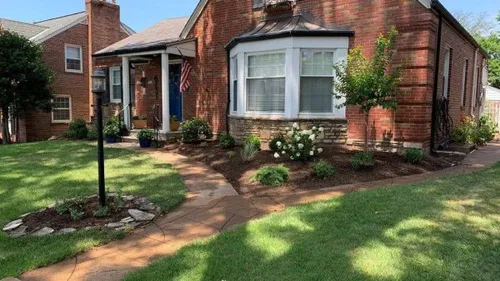
Fresh Start Outdoors is a landscaping and hardscaping company based in St Louis, MO. They provide custom landscape design and installation services, including retaining walls, patios, walkways, grading, drainage solutions, and sod installation. Their work focuses on creating outdoor spaces that balance beauty, function, and long-term value. Serving St Louis and Saint Charles County, they follow a detailed process from consultation to project completion to ensure tailored, high-quality results.
Timberline Landscapes
2827 Breckenridge Industrial Ct, Webster Groves, MO 63144
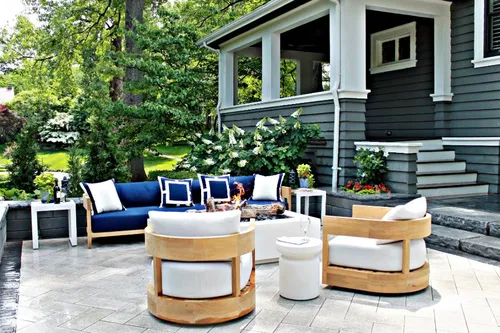
Timberline Landscapes is a full-service, family-owned landscape design and build company based in St Louis, MO. They specialize in creating custom outdoor living spaces, handling everything from concept and design to permits, material selection, and installation. Their services include landscape maintenance for residential and commercial properties, with a focus on enhancing curb appeal and ensuring compliance with local HOA requirements. Timberline Landscapes has over 20 years of experience serving the St Louis metro area and offers expertise in both residential and commercial landscaping projects.
Understanding Florissant's Landscape Canvas
Every great outdoor design starts with the site itself. In Florissant, two primary factors dictate what will thrive in your yard: climate and soil.
Climate Considerations: Being in USDA Hardiness Zone 6 means Florissant experiences a full range of seasons. Plants must withstand summer heat and humidity as well as winter cold. This makes native and adapted plants, like coneflowers, rudbeckia, oaks, and maples, excellent choices for their resilience and lower maintenance needs. Planning for seasonal interest-color in spring and summer, structure and evergreens in winter-is a hallmark of good design.
Soil Fundamentals: The clay-rich and loamy soils common in our area can be both a blessing and a challenge. While they hold nutrients well, they can also compact easily and drain poorly. The University of Missouri Extension notes that amending soil with organic matter like compost is often a crucial first step to improve drainage and root health for your plantings. A professional site analysis often includes a soil test, which can guide these amendments and plant selection.
Core Principles of Effective Garden Design
Whether you're drawn to formal symmetry or a naturalistic flow, successful outdoor spaces are built on timeless design principles. These concepts help create a cohesive and pleasing environment.
- Unity and Harmony: This principle ensures all parts of the landscape work together as a whole. It can be achieved through repetition of plants, colors, or materials, and by creating a clear style throughout the property.
- Balance: Balance provides stability and can be symmetrical (formal) or asymmetrical (informal). For example, a large tree on one side of a house can be balanced by a grouping of smaller trees or a structure on the other.
- Scale and Proportion: This involves the size relationship between elements. A massive patio can overwhelm a small yard, just as a tiny flower bed can get lost on a large property. Features should be in proportion to your home and to each other 1.
- Rhythm and Line: Rhythm is created by the repetition of elements, guiding the eye through the space. Lines-formed by walkways, bed edges, or plant rows-direct movement and can create feelings of formality (straight lines) or relaxation (curving lines).
- Texture and Color: Plant and material textures (fine, coarse, smooth, rough) add depth and interest. Color schemes can evoke mood, from calming greens and blues to vibrant, energetic reds and yellows. Planning for sequential bloom times ensures color throughout the growing season 2.
Defining Your Outdoor Zones and Style
A functional landscape is divided into purposeful areas, or "rooms." Defining these zones helps organize the design process.
- Public/Entry Zone (Front Yard): This area focuses on curb appeal. Design elements often include a welcoming walkway, foundation plantings that frame the house, and a low-maintenance, attractive lawn or ground cover.
- Private/Living Zone (Backyard): This is the primary area for relaxation and entertainment. It may include a patio or deck, dining area, fire pit, play space, or garden room defined by plantings or structures.
- Utility/Service Zone: Often located to the side or rear, this area houses practical items like trash bins, compost piles, storage sheds, or vegetable gardens. Screening with fences or hedges can integrate these zones seamlessly.
Your personal style should guide the design of these zones. Popular approaches include:
- Traditional/Informal: Features natural, flowing plant beds, curved lines, and a mix of ornamental plants. It often aims for a cottage-garden feel.
- Formal: Characterized by symmetry, geometric shapes, clipped hedges, and structured layouts. It conveys order and elegance.
- Contemporary/Modern: Emphasizes clean lines, geometric forms, minimalist plant palettes, and the strategic use of hardscape materials like concrete, steel, and stone 3 4 5.
Find the perfect landscape design companies for your needs
Get personalized recommendations and expert advice
Key Elements: Hardscaping and Softscaping
A balanced landscape harmonizes the built environment (hardscape) with the living elements (softscape).
Hardscaping forms the backbone of your outdoor living space. These non-living features provide structure and function:
- Patios & Walkways: Create stable surfaces for entertainment and circulation. Materials like pavers, flagstone, or concrete offer durability and style.
- Retaining Walls & Steps: Manage slopes, prevent erosion, and add visual interest with tiered planting beds.
- Structures: Pergolas, gazebos, and arbors define spaces and provide partial shade. An outdoor kitchen or fire pit becomes a focal point for gathering.
- Lighting: Extends the usability of your space into the evening, enhances safety on paths, and highlights architectural or botanical features.
Softscaping encompasses all the horticultural components:
- Plant Selection: Choose a layered mix of trees, shrubs, perennials, and annuals suited to Florissant's Zone 6 climate. Consider factors like mature size, sun/shade requirements, and bloom time. Native plants support local pollinators and typically require less water and care 6.
- Lawns & Ground Covers: A healthy lawn provides open space for play and visual relief. In shady or sloped areas, ground covers can be an attractive, low-maintenance alternative to grass.
- Garden Beds: These areas allow for creativity with color, texture, and form. Consider themed gardens, such as pollinator gardens, rain gardens to manage runoff, or edible landscapes.
Planning for Investment and Implementation
The cost of a landscape design project in Florissant varies dramatically based on scope, materials, and labor. Understanding typical investment ranges can help you plan.
- Simple Planting & Mulching: For refreshing existing beds or adding new plants, budgets often range from $500 to $2,000, with potential for DIY involvement.
- Basic Patio & Bed Installation: A professionally designed and installed small patio with accompanying planting beds can range from $2,000 to $8,000, depending on materials like pavers versus natural stone 7.
- Comprehensive Backyard Transformation: A full makeover involving a large patio, outdoor kitchen, fire feature, lighting, and extensive new plantings is a significant investment, often starting around $10,000 and easily reaching $50,000 or more for high-end materials and complex designs 8.
A successful project begins with a clear plan. Many professionals start with a site analysis and a master plan, which can be implemented in phases over time to manage budget. This plan becomes your roadmap, ensuring every element-from the oak tree to the patio stone-works together to create a harmonious, functional, and beautiful extension of your Florissant home 9 10.
Frequently asked questions
Sources
Footnotes
-
Principles of Landscape Design - Colorado Master Gardener - https://cmg.extension.colostate.edu/Gardennotes/413.pdf ↩
-
Elements of a Landscape Design - Oklahoma State University Extension - https://extension.okstate.edu/announcements/grow-gardening-columns/august-27-2023.html ↩
-
Learn how modern landscape design can harness the beauty of nature. - https://www.mymodernhome.com/blog/modern-landscape-design-ideas-for-your-dream-home/ ↩
-
(PDF) Types of Landscape design - ResearchGate - https://www.researchgate.net/publication/385893312_Types_of_Landscape_design ↩
-
Landscape Plans - Make Free Landscape Designs Online - Canva - https://www.canva.com/create/landscape-plans/ ↩
-
Plant Selection Guides for a Beautiful Garden - https://www.gardenia.net/guides/plant-selection-guides ↩
-
Bobby K Designs: Expert St. Louis Outdoor Living Contractor - https://bobbykdesigns.com/ ↩
-
back yard landscape design: 5 Powerful Ways to Transform 2025 - https://maslandscaping.com/back-yard-landscape-design/ ↩
-
Residential Landscaping | MU Extension - University of Missouri - https://extension.missouri.edu/publications/mg11 ↩
-
landscape design definition - https://www.toddhaimanlandscapedesign.com/blog/what-is-landscape-design ↩