Find the Best Lawn Care Companies for Your Business
No obligation • Fast responses • Nationwide coverage

Why you can trust Landscape Atlas
Landscape Atlas is a leading United States resource for evaluating landscaping, lawn care, and outdoor service providers. Our team researches each category in depth, focusing on service quality, safety, and customer experience. Listings and rankings are based on independent criteria and user feedback, and companies cannot pay to influence our assessments or recommendations.
Search providers near you
Top Lawn Care Companies in Fort Wayne, Indiana Ranked
Maintaining a healthy, vibrant lawn in Fort Wayne requires consistent care tailored to our distinct seasons. Professional lawn care services provide the expertise and regular maintenance needed to cultivate a thick, green turf that enhances your property's curb appeal and withstands the Midwest climate. This guide outlines the common services, typical costs, and key considerations for finding a local lawn maintenance provider to keep your yard looking its best.
Signature Lawn & TreeMasters
4415 Earth Dr, Fort Wayne, IN 46809
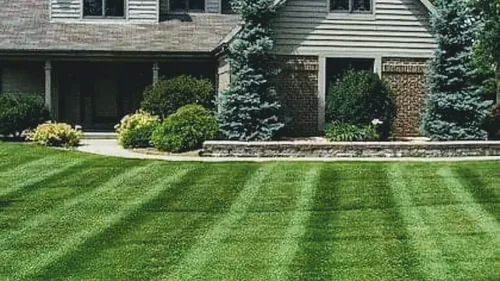
Signature Lawn & TreeMasters is a locally owned lawn and tree care company based in Fort Wayne, IN. They provide a range of services including lawn fertilization, weed control, tree and shrub care, aeration, overseeding, insect and disease management, and perimeter pest control. Their certified arborist offers expert tree trimming and care to maintain healthy and safe trees. With over 100 years of combined experience, they design customized programs to improve the health and appearance of lawns and trees throughout the area.
SuperGreen
513 Incentive Dr, Fort Wayne, IN 46825
SuperGreen is a lawn care company based in Fort Wayne, IN, offering services such as lawn mowing, fertilization, weed control, aeration, and pest and grub control. They focus on understanding soil and grass types to create customized lawn care plans that improve lawn health and appearance. Their approach includes addressing soil conditions directly to promote a lush, green lawn. SuperGreen is family owned and operated, emphasizing safe, EPA-registered products suitable for pets and families.
Spring Green
5719 W Dupont Rd, Fort Wayne, IN 46818
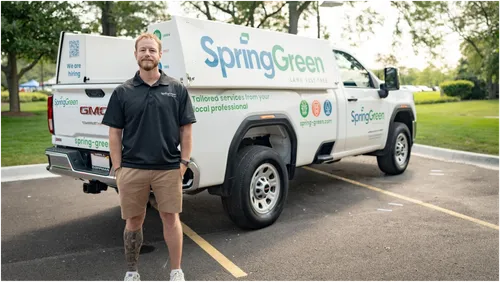
Spring Green is a locally owned lawn care and tree service company based in Fort Wayne, IN. Since 2005, they have provided tailored lawn fertilization, weed control, pest control, and tree care services to Fort Wayne and nearby communities including Columbia City, Warsaw, and New Haven. Their offerings include core aeration, grub control, overseeding, lawn disease control, mosquito control, and total lawn insect control, helping maintain healthy lawns with species like bluegrass and ryegrass. Spring Green focuses on comprehensive lawn and landscape care with a satisfaction guarantee.
Crown and Blade, LLC
429 E Dupont Rd #275, Fort Wayne, IN 46825
Crown and Blade, LLC is a lawn care company based in Fort Wayne, IN, specializing in lawn fertilization, weed control, aeration, overseeding, and pest management. Established in 2015 as a dedicated lawn fertilization team, the company serves Fort Wayne and Northeast Indiana with licensed and trained professionals. Their services include establishing new lawns, flea and tick control, and perimeter pest control. Crown and Blade uses specialized equipment for aeration and offers tailored fertilization programs to improve lawn health and environmental benefits.
Golden Gates Lawn Care & Landscaping LLC
Fort Wayne, IN
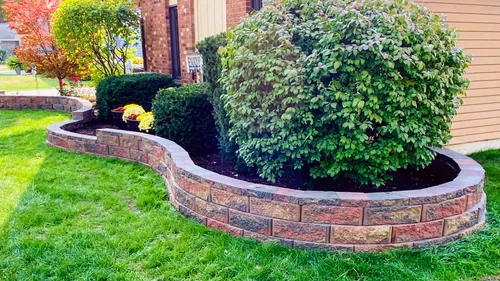
Golden Gates Lawn Care & Landscaping LLC offers a wide range of landscaping and lawn care services in Fort Wayne, IN. They serve both residential and commercial properties with services including custom landscape design, lawn fertilization, weed control, fence installation, yard drainage solutions, and hardscaping such as patios and retaining walls. The company also provides seasonal maintenance like spring planting, fall leaf removal, and snow management to keep properties looking their best year-round. Their approach emphasizes attention to detail and personalized outdoor spaces, including features like fire pits, water elements, and outdoor kitchens. Golden Gates is known for its licensed and insured team, clear pricing, and a comprehensive approach to maintaining healthy and attractive green spaces.
Core Lawn Maintenance Services
A professional lawn care regimen typically involves a combination of recurring tasks and seasonal treatments designed to promote healthy grass growth and manage weeds.
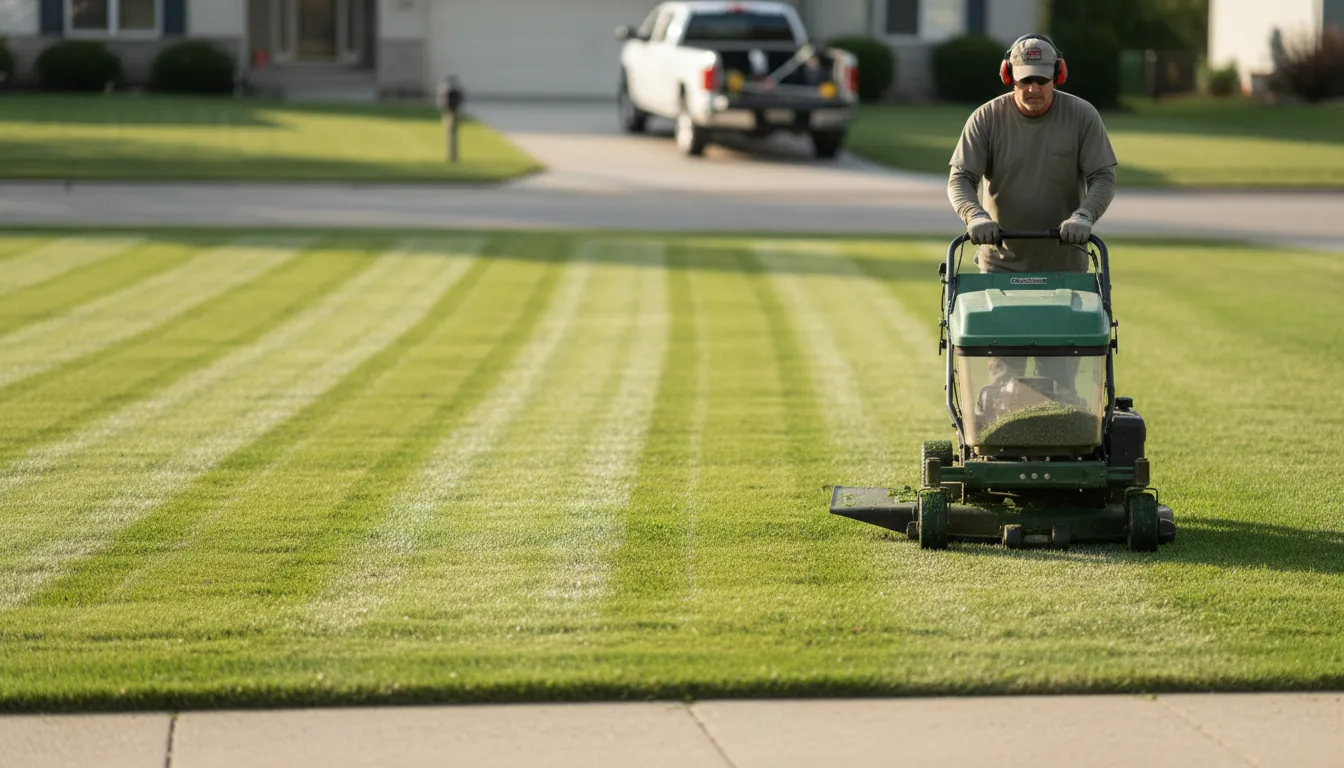
Regular Mowing, Trimming, and Edging The foundation of any lawn maintenance plan is regular mowing. In Fort Wayne, most providers offer weekly or bi-weekly service during the growing season, which includes cutting the grass to an optimal height, trimming around obstacles, and edging along sidewalks and driveways for a crisp, clean look. A thorough service concludes with blowing off clippings from hard surfaces. Consistent mowing at the right height encourages deeper root growth and helps your lawn outcompete weeds.
Fertilization and Nutrient Management Grass in our region needs a steady supply of nutrients to thrive. Professional fertilization programs involve multiple timed applications throughout the year, often six or more treatments, to deliver the specific nutrients (like nitrogen, phosphorus, and potassium) your soil needs each season. These programs are designed to strengthen grass roots, improve color, and increase drought tolerance, creating a resilient lawn.
Weed Control Strategies Effective weed management is a two-part process. Lawn care experts apply pre-emergent herbicides in early spring to prevent common invaders like crabgrass from germinating. Throughout the season, they use post-emergent treatments to spot-treat weeds like dandelions and clover that do appear, ensuring they don't spread and choke out your desirable grass.
Additional Lawn Health Services
Beyond the basics, several supplemental services address specific lawn health issues common in Fort Wayne yards.
Core Aeration Over time, soil becomes compacted from foot traffic and weather, preventing water, air, and nutrients from reaching grass roots. Core aeration involves mechanically removing small plugs of soil from your lawn. This process relieves compaction, reduces thatch buildup, and improves the effectiveness of fertilization and watering. It's often recommended as a key part of a fall or spring lawn care program.
Insect and Grub Control Pests like grubs-the larvae of beetles-can cause significant damage by feeding on grass roots, leading to brown, dead patches that peel back like loose carpet. Many full-service lawn care programs include preventative or curative treatments for grubs and other damaging insects to protect your turf investment.
Seasonal Cleanups Spring and fall cleanups are vital for lawn health. A spring cleanup typically involves thorough raking to remove winter debris, dead grass, and matted leaves to allow for new growth. Fall cleanups focus on leaf removal and preparing the lawn for winter, which can help prevent disease and snow mold 1.
Find the perfect lawn care companies for your needs
Get personalized recommendations and expert advice
Understanding Lawn Care Costs in Fort Wayne
Pricing for lawn maintenance depends on several factors, with yard size being the primary driver. Other variables include the complexity of the landscape, the frequency of service, and the specific bundle of treatments you select.
Pricing for Basic Mowing Services For standard mowing, trimming, and blowing, homeowners in Fort Wayne can expect to pay between $40 and $60 per visit for a typical residential yard, with some quotes starting as low as $36 or reaching $68 for larger or more complex properties 2. Opting for bi-weekly service may offer a slightly lower per-visit cost compared to a weekly schedule, though the total seasonal cost will be higher for more frequent care 3 2.
Investing in Comprehensive Lawn Care Programs Many companies offer annual programs that bundle fertilization, weed control, and other health services. These provide scheduled, proactive care. For example, a "Gold" level annual program for a 5,000 square foot lawn in Fort Wayne might start around $329 per year for a series of treatments 4. A more inclusive "Platinum" plan, which often adds core aeration, could start around $420 annually for the same size yard 4. These bundled plans often provide better value than purchasing each service separately.
Costs for Individual Add-On Services If you handle basic mowing yourself but need specific treatments, you can hire them à la carte. Core aeration as a standalone service in Fort Wayne typically ranges from $120 to over $300, depending on lawn size 5 6. Treatments for grub control or other pests are usually priced based on the square footage requiring application.
Choosing a Lawn Service Provider
Selecting the right company involves more than just comparing prices. Start by clarifying your needs: do you want simple grass cutting, or a full health program that includes weed and feed applications? Get detailed written estimates that itemize all services included in the quoted price, such as the number of mows, fertilizer applications, and weed treatments 7 8.
Verify that the provider is properly licensed and insured to protect yourself from liability. Ask about their experience with lawns in the Fort Wayne area and their familiarity with local soil conditions and grass types. Finally, read reviews from other local customers and ask for references to gauge their reliability and quality of work 9. A trustworthy lawn care company will be transparent, communicative, and happy to answer all your questions.
Frequently asked questions
Sources
Footnotes
-
Weekly Lawn Maintenance Fort Wayne, IN - https://lawnandturfland.com/fort-wayne-commercial-lawn-maintenance/weekly-lawn-mowing/ ↩
-
Trusted Lawn Mowing in Fort Wayne, IN Starting at $36 - LawnGuru - https://lawnguru.co/cities/fort-wayne-in/lawn-mowing ↩ ↩2
-
Lawn Mowing Pricing: How It Varies by Location and Service - https://atlaslawnandsnow.com/lawn-mowing-pricing-how-it-varies-by-location-and-service/ ↩
-
Indiana (IN) Lawn Care Services & Mowing Companies - https://www.yourgreenpal.com/indiana-lawn-care-services ↩ ↩2
-
Fort Wayne Lawn Care & Weed Control Services - https://galbraithsinc.com/services/lawn-care-services/lawn-care-and-weed-control-program/ ↩
-
2025 Lawn Mowing & Care Services | Get Estimates - Thumbtack - https://www.thumbtack.com/p/lawn-service-prices ↩
-
How Much Does Lawn Care Cost? (2026) - HomeGuide - https://homeguide.com/costs/lawn-care-prices ↩
-
Lawn Care Services in Fort Wayne, IN - GreenPal - https://www.yourgreenpal.com/local/lawn-care-fort-wayne-in ↩
-
How Much to Charge For Lawn Mowing: Pricing Charts and Formula - https://www.getjobber.com/academy/lawn-care/how-to-price-out-lawn-care-services/ ↩