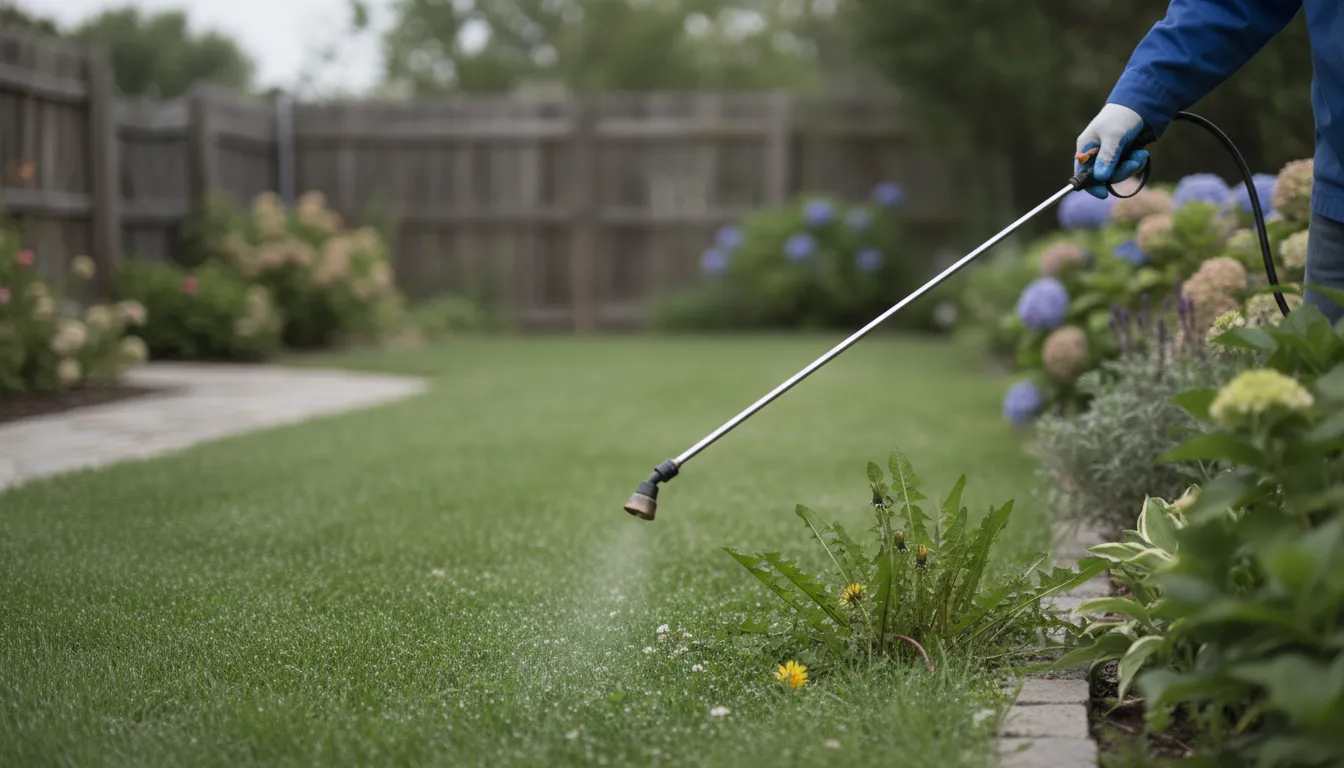
Find the Best Lawn Treatment Companies for Your Business
No obligation • Fast responses • Nationwide coverage

Why you can trust Landscape Atlas
Landscape Atlas is a leading United States resource for evaluating landscaping, lawn care, and outdoor service providers. Our team researches each category in depth, focusing on service quality, safety, and customer experience. Listings and rankings are based on independent criteria and user feedback, and companies cannot pay to influence our assessments or recommendations.
Search providers near you
Top Lawn Treatment Companies in Linden, New Jersey Ranked
A healthy, vibrant lawn is more than just a patch of green; it's a living ecosystem that enhances your property's curb appeal and provides a space for relaxation. Achieving this in Linden requires a strategic approach to lawn fertilization and weed control, tailored to the unique challenges of New Jersey's climate. This guide explains the science and schedule behind effective lawn nutrition and weed prevention, helping you understand the services available to maintain a resilient, beautiful yard throughout the year.
Lawn Buddies
267 NJ-33, Manalapan Township, NJ 07726
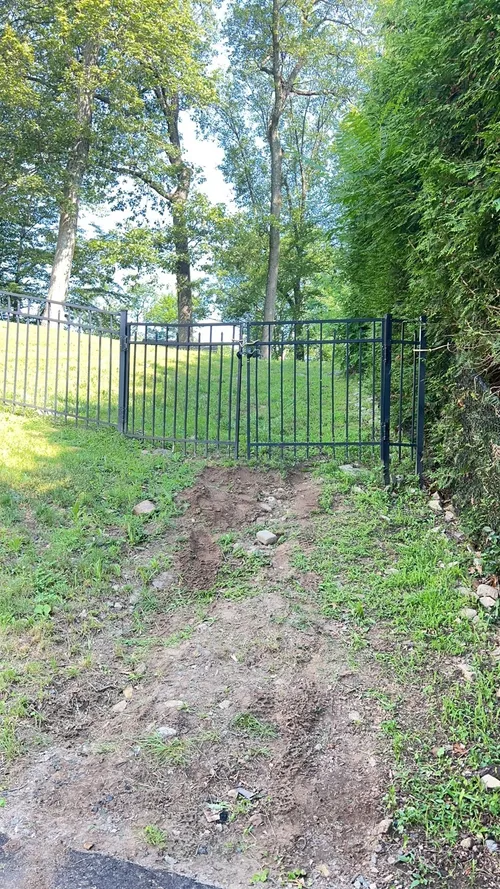
Lawn Buddies is a lawn care company serving New York, NY, specializing in lawn fertilization, weed control, and pest management. Their services include seasonal lawn fertilizer, weed and grub control, lime application, and mosquito and tick guard treatments. The company offers a satisfaction guarantee with unlimited service calls to maintain a healthy, pest-free lawn.
Lawn Buddies
200 Daniels Way, Freehold, NJ 07728
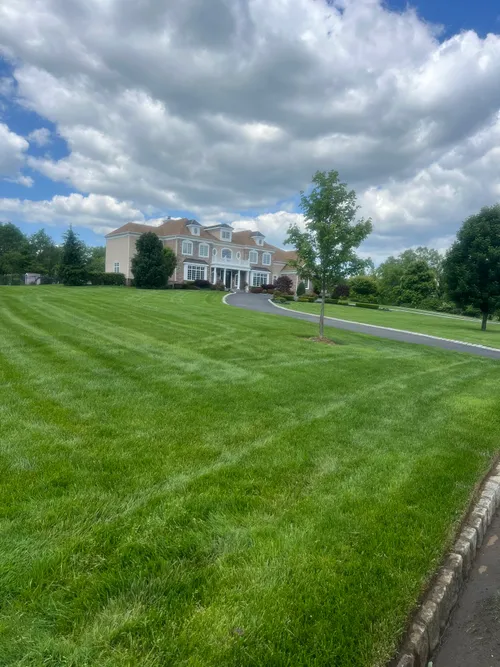
Lawn Buddies is a lawn care company serving New York, NY, specializing in lawn fertilization, weed control, and pest management. Their services include seasonal lawn fertilizer and weed control, grub control, lime application, and mosquito and tick guard treatments. The company offers a satisfaction guarantee with unlimited free service calls to maintain a weed-free and pest-free lawn.
Heroes Lawn Care
231 Herbert Ave Space E, Closter, NJ 07624
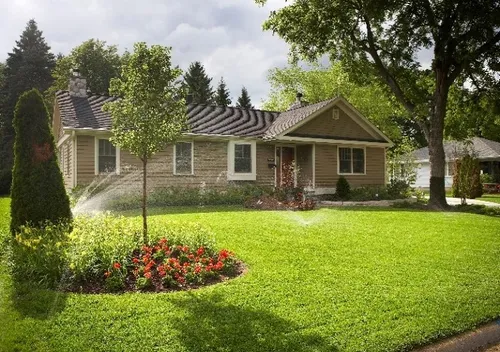
Heroes Lawn Care provides lawn fertilization, weed control, sprinkler installation, and irrigation repair services in New York, NY. They focus on eco-conscious lawn care using environmentally responsible products and techniques. Their licensed team offers comprehensive lawn maintenance, including aeration and pet waste removal, tailored to each property. Heroes Lawn Care serves Northeast Bergen County and nearby areas with a proactive approach and quality assurance on every project.
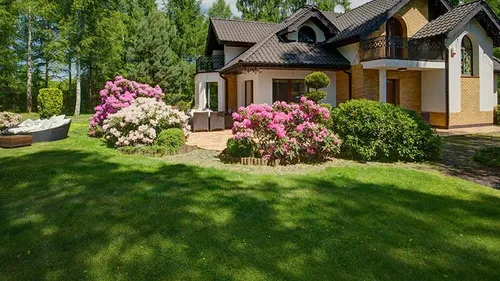
Robert Thieling Landscaping LLC
Newark, NJ
Robert Thieling Landscaping LLC is a full-service landscaping company based in Newark, NJ, serving both residential and commercial property owners. They offer a wide range of services including landscape design and construction, lawn care, sodding and seeding, garden maintenance, weed control, mulching, and hardscaping. The company is known for its personalized service and deep understanding of local regulations and landscaping best practices. Robert Thieling Landscaping LLC emphasizes sustainable maintenance and innovative design to create and preserve healthy, attractive outdoor spaces. Their approach includes efficient business practices to provide affordable landscaping solutions without hidden fees.
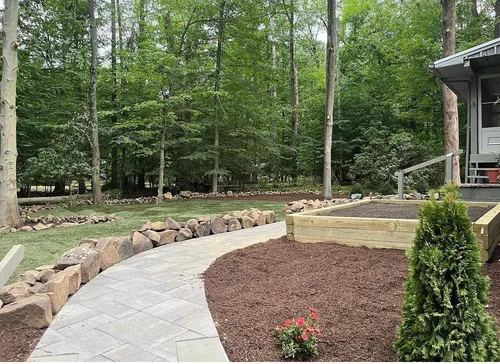
Haughey Brothers Landscaping LLC
New York, NY
Haughey Brothers Landscaping LLC is a family-owned landscaping company serving New York, NY, and nearby areas in Union County, New Jersey. They specialize in creating luxury outdoor living spaces, offering services such as landscape design, custom hardscaping, lawn care, fence installation, sod and artificial turf installation, yard drainage, and landscape lighting. Their team focuses on transforming yards into functional and beautiful retreats with attention to detail and craftsmanship. The company has several years of experience and provides services for both residential and commercial properties. They also offer snow removal and winter maintenance services to support year-round outdoor care.
Understanding Your Linden Lawn's Needs
Linden, like much of Northern New Jersey, is firmly in the cool-season grass zone. The most common turfgrasses here are Kentucky Bluegrass, Tall Fescue, Fine Fescue, and Perennial Ryegrass 1. These grasses have two primary growth spurts: in the cool temperatures of spring and, more importantly, in the fall. A successful lawn feeding and weed management program is built around supporting these natural growth cycles while proactively combating invasive weeds and pests that thrive in the same conditions.
The goal of professional lawn care is not just to make grass green quickly but to build a thick, deep-rooted, and drought-resistant turf. A dense lawn is your first and best defense against weeds, as it leaves little room for unwanted plants to establish. This is achieved through a balanced regimen of timely nutrients and targeted weed prevention treatments.
The Seasonal Blueprint for Linden Lawn Care
Professional programs in Linden typically involve between five to seven carefully timed applications throughout the year. Each visit has a specific objective, aligning with soil temperature, grass growth stage, and weed life cycles.
Early Spring (March - April): The Foundation
The first application of the year is critical. As soil temperatures approach 55°F, crabgrass seeds begin to germinate. The focus here is on applying a fertilizer to kick-start green-up combined with a pre-emergent herbicide. This product creates a barrier in the soil that prevents crabgrass and other grassy weeds from sprouting, stopping problems before they even appear. This proactive step is far more effective than trying to control these weeds later in the season.
Late Spring (April - May): Broadleaf Weed Control
Following the initial green-up, dandelions, clover, and other broadleaf weeds become highly visible. The late spring treatment typically includes another round of fertilizer to sustain growth and a post-emergent broadleaf weed control application. This targets existing weeds, causing them to wither while leaving your desirable grass unharmed.
Early Summer (June): Strengthening Defenses
Summer stress is just around the corner. The early summer application often shifts to a fertilizer formulation with slightly less nitrogen and more potassium to promote stronger cell walls and improve heat and drought tolerance. This visit also commonly includes a preventive grub and insect control treatment. Controlling grubs in June is key to preventing the root damage and animal digging (from skunks and raccoons) that can devastate a lawn in late summer.
Late Summer (July - August): Stress Management
During the peak of summer heat, grass growth slows. A light feeding may be applied, but the focus is often on monitoring and spot-treating any breakthrough weeds, such as spurge or prostrate knotweed, that thrive in drought-stressed areas. The emphasis is on maintaining lawn health without forcing excessive growth during stressful conditions.
Find the perfect lawn treatment companies for your needs
Get personalized recommendations and expert advice
Early Fall (September - October): The Most Important Feeding
Fall is the cornerstone season for cool-season lawns in Linden. With cooler temperatures and ample moisture, grass focuses energy on root development. A balanced fertilizer application during this period fuels this root growth and helps recover from summer stress. It is also a prime time for a second round of broadleaf weed control, as weeds are actively transporting nutrients to their roots, making them more susceptible to herbicides 2 3.
Late Fall (November): The Winterizer
The final application of the year is the winterizing treatment. This fertilizer is typically high in potassium, which enhances the grass plant's hardiness, disease resistance, and root strength to survive the winter 4. It does not aim to produce top growth but to "fortify" the lawn, ensuring it goes into dormancy healthy and emerges strong the following spring.
Complementary Services for Total Lawn Health
While fertilization and weed management form the core program, truly outstanding results often involve integrating additional cultural practices.
- Core Aeration: Performed in the fall, aeration involves removing small plugs of soil to alleviate compaction, improve water and nutrient penetration, and enhance root growth.
- Overseeding: Also ideal in early fall, overseeding introduces new, improved grass seed into thin areas of an existing lawn. This helps increase turf density, improve color, and introduce more disease-resistant varieties, further crowding out weeds 5 6.
Understanding Investment and Program Value
The cost for professional lawn fertilization and weed control services in Linden varies based primarily on the size of your lawn and the comprehensiveness of the program. A common pricing model is a per-application fee.
- Per Application Cost: You can expect costs to range from approximately $50 to $150 or more per visit, with the price scaling directly with the square footage of your property 7 8 9. For example, a smaller lot might be on the lower end of that range, while a larger property would be higher.
- Annual Program Cost: Most providers offer bundled programs covering the full season (typically 5-7 visits). The total annual investment will reflect the number of treatments and lawn size, but these plans often provide better value and guaranteed scheduling compared to one-off services 10.
When evaluating services, look for companies that use slow-release fertilizers, which feed the lawn gradually over time for more even growth, and that offer tailored plans based on a property assessment. Transparency about the products used and the timing of each service is a hallmark of a reputable provider.
Frequently asked questions
Sources
Footnotes
-
Fertilizer Program For New Jersey Lawns - https://dirtandturf.com/nj-fertilizer-program/ ↩
-
Top Rated Lawn Fertilization & Weed Control In Old Bridge, NJ - https://www.healthylawnnj.com/weed-control-fertilization ↩
-
Comprehensive Lawn Fertilizing & Weed Control Plan in NJ and PA - https://www.fairwaygreeninc.com/lawn-care-programs/gold-lawn-care-program/ ↩
-
Affordable Lawn Care Plans & Pricing Options - TruGreen - https://www.trugreen.com/products-and-services ↩
-
Lawn Care Program | Perennial Services | New Jersey - https://www.perenniallawncare.com/lawn-care/lawn-care-plan/ ↩
-
Turf & Lawn Care Program for Northern NJ Yards - Aspen Tree Service - https://www.aspentreeinc.com/turf-lawn-care-program/ ↩
-
Professional Lawn Fertilizing & Weed Control Services in PA, NJ & DE - https://www.greenlawnfertilizing.com/services/lawn-care-programs/ ↩
-
Navigating New Jersey Lawn Care Costs: A Comprehensive ... - https://www.njlawnbuddies.com/blog/lawn-care-service/navigating-new-jersey-lawn-care-costs-a-comprehensive-guide/ ↩
-
How much does lawn care service cost? - https://www.greenlawnfertilizing.com/blog/how-much-does-lawn-care-service-cost ↩
-
Lawn Fertilization & Weed Control - Simply Green - https://gosimplygreen.com/?page_id=233 ↩