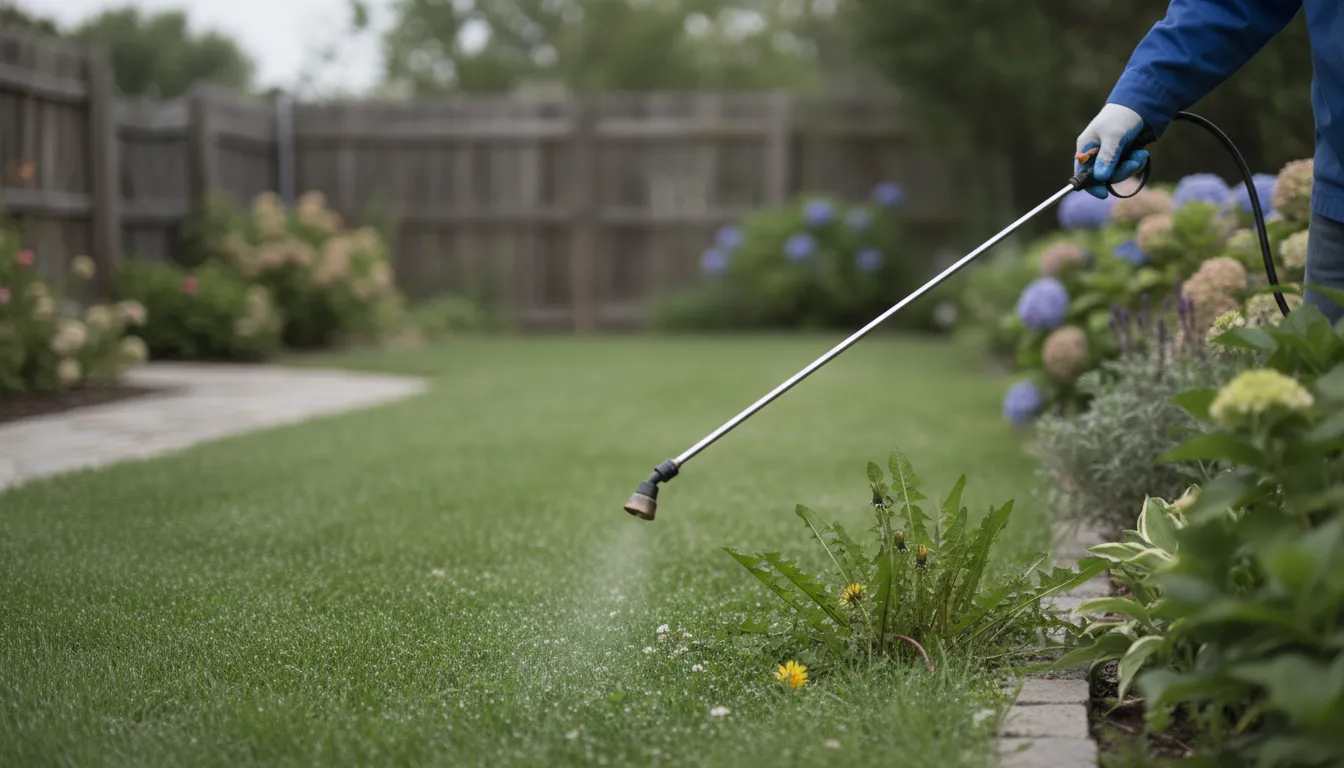
Find the Best Lawn Treatment Companies for Your Business
No obligation • Fast responses • Nationwide coverage

Why you can trust Landscape Atlas
Landscape Atlas is a leading United States resource for evaluating landscaping, lawn care, and outdoor service providers. Our team researches each category in depth, focusing on service quality, safety, and customer experience. Listings and rankings are based on independent criteria and user feedback, and companies cannot pay to influence our assessments or recommendations.
Search providers near you
Best Lawn Treatment Companies in South Carolina Ranked
Maintaining a healthy, vibrant lawn in South Carolina requires a tailored approach that accounts for the state's warm, humid climate and its dominant warm-season grasses. Proper fertilization and weed control are the cornerstones of this effort, providing essential nutrients to your turf while preventing invasive plants from taking over. This guide provides a clear, science-backed roadmap for South Carolina homeowners, whether you're managing your lawn yourself or seeking professional assistance. You can use the information here to understand the essential schedule, products, and practices, and to find qualified local experts who can help you achieve your lawn goals.
Understanding South Carolina's Lawn Environment
Successful lawn care in the Palmetto State starts with understanding the local conditions. The climate varies from the humid subtropical coast to the slightly cooler piedmont, but universally supports warm-season grasses. These grasses, including Bermuda, Zoysia, Centipede, and St. Augustine, thrive in the heat, growing most actively from late spring through summer and going dormant (turning brown) in the winter.
The single most important first step for any lawn care program is a soil test. This simple analysis, available through the Clemson University Cooperative Extension Service, reveals your soil's pH and exact nutrient levels 1. Applying fertilizer without this knowledge can waste money, harm the environment, and even damage your grass. For instance, Centipede grass is particularly sensitive to over-fertilization and requires less phosphorus than other types.
The Essential Seasonal Schedule for SC Lawns
Adhering to a seasonally appropriate schedule is critical. Treating your lawn at the right time maximizes benefits and minimizes problems like disease, weed outbreaks, and winter damage.
Early Spring (February - March)
As soil temperatures approach a consistent 55°F, it's time for the first critical application: a pre-emergent herbicide. This product creates a barrier in the soil that prevents crabgrass and other summer annual weed seeds from germinating. Timing is everything-apply too early and the barrier degrades before seeds sprout; apply too late and weeds will already have emerged.
Late Spring (April - May)
Once your grass has fully "greened up" and is actively growing, apply the first fertilization of the year. Use a balanced, slow-release nitrogen fertilizer. A common formulation for South Carolina lawns is 15-0-15 or 16-4-8, which provides steady nutrition without a damaging surge of growth 2. This is also the ideal time for spot-treating any existing broadleaf weeds like dandelions or clover with a post-emergent herbicide.
Summer (June - August)
Apply a second round of fertilizer, often with a higher potassium content (e.g., 20-0-25) to help the grass withstand summer stress 3. Crucially, avoid high-nitrogen fertilizers during periods of extreme heat or drought, as they can burn the lawn. Summer is also prime time for fungal diseases like brown patch and for insect pests like chinch bugs. Many homeowners opt for preventative fungicide and insecticide applications during this period 4.
Fall (September - October)
This is arguably the most important season for lawn health. As nighttime temperatures drop to 55-60°F, apply a fall pre-emergent herbicide to prevent winter annual weeds like Poa annua (annual bluegrass). Follow this with a "winterizer" fertilizer that is high in potassium (the third number in the NPK ratio, such as 0-0-7 or 10-0-14) 5 6. Potassium strengthens grass roots and improves cold tolerance, helping your lawn survive the winter and green up more vigorously next spring.
Find the perfect lawn treatment companies for your needs
Get personalized recommendations and expert advice
Product Guide: Fertilizers, Herbicides, and More
Navigating the garden center aisle can be overwhelming. Here's a breakdown of common active ingredients and product types suitable for South Carolina lawns.
Pre-emergent Herbicides:
- Prodiamine: A common active ingredient in products like "Crabgrass Control Plus 0-0-7." It's a cornerstone for both spring and fall prevention programs 7.
- Atrazine: A selective herbicide effective for post-emergent control of broadleaf weeds in St. Augustine and Centipedegrass. Always check the label for grass type compatibility.
Fertilizer & Weed Control Combos (Weed & Feed): These products can save time but must be used carefully.
- For St. Augustinegrass: Products like Ferti-lome St. Augustine Weed and Feed 15-0-4 are formulated specifically for this grass type.
- For Multiple Grass Types: Scotts Turf Builder Southern Triple Action is labeled for use on Bermuda, Centipede, Zoysia, and St. Augustine grasses, combining fertilizer, weed control, and insect control 8.
Fungicides and Insecticides:
- Fungicides: Active ingredients like propiconazole (e.g., Eagle 20EW) and azoxystrobin (e.g., Heritage G) are effective against common Southern lawn diseases.
- Insecticides/Grub Control: Products containing chlorantraniliprole (Acelepryn) or bifenthrin are widely used by professionals for controlling surface pests and subsurface grubs 9.
A Critical Reminder: Always read the product label thoroughly. The label will tell you if it is safe for your specific grass type, the correct application rate, and proper safety precautions. Applying the wrong product can severely damage or kill a sensitive grass like Centipede.
Professional Services vs. DIY: Costs and Considerations
Many South Carolina homeowners choose to hire a professional lawn care company for their fertilization and weed control needs. Professionals have access to commercial-grade products, the expertise to diagnose problems, and the equipment to apply treatments uniformly and efficiently.
Cost of Professional Lawn Care in South Carolina: Professional services typically offer annual programs that include multiple applications (usually 4-6 visits) throughout the year. These bundled plans often provide the best value.
- Fertilizing Only: $65 - $150 per application.
- Weed Control Only: $50 - $125 per application.
- Complete Annual Program (Fertilization, Weed, Pest & Disease Control): $250 - $1,000 for a basic program, with more comprehensive plans ranging from $1,000 to $2,400+ annually 10 11 12.
Prices vary significantly based on your lawn's square footage, its condition, your location in the state, and the specific services included.
Cost of a DIY Approach: Managing your own lawn can be more cost-effective but requires an investment of time, knowledge, and equipment (a spreader and sprayer).
- Fertilizer: $40 - $80 per product, enough for an average lawn application.
- Weed Control Concentrates: $15 - $40 per quart, which can make multiple gallons of spray solution.
The DIY route gives you complete control over the schedule and products used, but it also places the responsibility for correct identification, timing, and application squarely on you.
Tailoring Care to Your Grass Type
A one-size-fits-all approach doesn't work in South Carolina. Here's a quick guide to the major warm-season grasses:
- Bermudagrass: Durable and drought-tolerant, responds well to regular fertilization. Requires more nitrogen than other types.
- Zoysiagrass: Slow-growing and dense, crowds out weeds. Has moderate fertilizer needs.
- Centipedegrass: "The lazy man's grass," requires the least fertilizer. Very sensitive to over-fertilization and certain herbicides. Prefers acidic soil.
- St. Augustinegrass: Shade-tolerant and aggressive, but prone to thatch and certain diseases like brown patch. Has specific herbicide requirements (e.g., Atrazine is safe) 13 14.
Sustainable Lawn Care Practices
Effective lawn care is also responsible lawn care. Consider these practices to protect South Carolina's environment:
- Mow High: Keep your mower blade sharp and set to the recommended height for your grass type (often 2.5-3 inches). Taller grass shades the soil, reducing weed germination and promoting deeper roots.
- Water Deeply and Infrequently: Water early in the morning to reduce evaporation and fungal growth. Provide about 1 inch of water per week, including rainfall, to encourage deep root systems.
- Leave Grass Clippings: They decompose quickly and return valuable nutrients to the soil, acting as a natural fertilizer.
- Calibrate Your Spreader: Whether DIY or professional, improper calibration is a leading cause of fertilizer burn and uneven application. Always follow the product label's spreader settings.
By combining the right seasonal schedule, appropriate products for your grass type, and sustainable practices, you can cultivate a lawn that is not only beautiful but also resilient. For many, partnering with a knowledgeable local professional provides peace of mind and consistently excellent results.
Frequently asked questions
Sources
Footnotes
-
Managing Weeds in Warm Season Lawns - Clemson HGIC - https://hgic.clemson.edu/factsheet/managing-weeds-in-warm-season-lawns/ ↩
-
Spring Lawn Care Tips for Homeowners in the Carolinas - https://sodsolutions.com/lawn-care/spring-lawn-care-tips-for-homeowners-in-the-carolinas/ ↩
-
Summer Fertilizer Programs for Your Lawn - Carolina Fresh Farms - https://carolinafreshfarms.com/summer-fertilizer-programs-for-your-lawn/ ↩
-
August Lawn Care Schedule - Carolina Fresh Farms - https://carolinafreshfarms.com/august-lawn-care-schedule/ ↩
-
Month-by-Month Lawn Care Guide for the Carolinas - https://carolinafreshfarms.com/month-by-month-lawn-care-guide-for-the-carolinas/ ↩
-
The Best Time to Fertilize Your Lawn for Maximum Growth - https://www.longleafturfpros.com/lawn-care-articles/the-best-time-to-fertilize-your-lawn-for-maximum-growth ↩
-
Lawn Care Schedule For Warm Season Grasses - DoMyOwn - https://www.domyown.com/lawn-care-schedule-for-warm-season-grasses-a-538.html ↩
-
Scotts Turf Builder Southern Triple Action - Weed Killer, Fire Ant ... - https://www.amazon.com/Scotts-Builder-Southern-Triple-Action/dp/B0758L58YY ↩
-
Google's Shopping Data - https://blog.google/products/shopping/shopping-graph-explained/ ↩
-
average cost of lawn fertilization service: 7 Best 2025 Wins - https://ajmgrounds.com/average-cost-of-lawn-fertilization-service/ ↩
-
How Much Does Lawn Care Cost? (2026) - HomeGuide - https://homeguide.com/costs/lawn-care-prices ↩
-
How Much Does It Cost to Fertilize Your Lawn? [2026 Data] - https://www.angi.com/articles/how-much-does-it-cost-fertilize-your-yard.htm ↩
-
Managing Weeds in Warm Season Lawns - Clemson HGIC - https://hgic.clemson.edu/factsheet/managing-weeds-in-warm-season-lawns/ ↩
-
St. Augustinegrass Lawn Maintenance Calendar - https://content.ces.ncsu.edu/st-augustinegrass-lawn-maintenance-calendar ↩