Find the Best Lawn Treatment Companies for Your Business
No obligation • Fast responses • Nationwide coverage

Why you can trust Landscape Atlas
Landscape Atlas is a leading United States resource for evaluating landscaping, lawn care, and outdoor service providers. Our team researches each category in depth, focusing on service quality, safety, and customer experience. Listings and rankings are based on independent criteria and user feedback, and companies cannot pay to influence our assessments or recommendations.
Search providers near you
Best Lawn Treatment Companies in Utah Ranked
Maintaining a healthy, green lawn in Utah requires a strategic approach to feeding your grass and managing weeds. The state's unique climate, with its hot, dry summers and cold winters, along with its predominantly clay-rich, alkaline soils, presents specific challenges for turfgrass. A consistent fertilization and weed control program is essential for building a resilient lawn that can withstand these conditions, conserve water, and resist pests and disease. This guide outlines the key principles, schedules, and options for effective lawn nutrition and weed management, helping you understand the process and connect with local expertise for your property.
Understanding Utah's Lawn Environment
Success starts with understanding what you're working with. Utah's most common lawn grasses are cool-season varieties like Kentucky Bluegrass, Tall Fescue, and Perennial Ryegrass. These grasses thrive in the spring and fall but can struggle during the summer heat. The soil in many parts of the state is heavy clay, which compacts easily, drains poorly, and tends to be alkaline (high pH). This alkaline soil can lock up essential nutrients, making them unavailable to grass roots even if they are present in the soil. Furthermore, common weeds in Utah, such as crabgrass, dandelion, clover, and spurge, are adept at exploiting weak, underfed turf. A proactive program that strengthens the grass is the first and best line of defense against weeds.
The Core of a Utah Lawn Program: Fertilization
Fertilization is not just about making grass green; it's about building a robust root system and dense turf that naturally crowds out weeds and uses water efficiently.
Types of Fertilizer For Utah lawns, slow-release nitrogen fertilizers are highly recommended. They feed the grass gradually over 6-8 weeks, providing steady growth without the excessive, unsustainable surge that quick-release fertilizers cause. This leads to a stronger root system, less nutrient runoff, and fewer required applications per season 1. Look for fertilizers formulated for cool-season grasses. Many local providers and garden centers offer blends specifically designed for Utah's soil conditions.
Key Nutrients While nitrogen (N) is crucial for green, leafy growth, a balanced approach is vital:
- Nitrogen (N): Promotes vigorous top growth and green color.
- Phosphorus (P): Supports strong root development and seedling establishment.
- Potassium (K): Enhances overall plant health, drought tolerance, and winter hardiness. A soil test, available through your local county extension office, is the best way to determine your lawn's exact nutrient needs and pH level.
A Seasonal Fertilization Schedule for Utah
Following a timed schedule aligns your lawn care with the natural growth cycles of cool-season grass.
- Early Spring (March-April): Apply a balanced, slow-release fertilizer as the grass begins to green up. This kick-starts growth and helps the lawn recover from winter. This application often pairs with a pre-emergent herbicide.
- Late Spring (May): A second feeding with a slow-release fertilizer sustains growth heading into the warmer months.
- Summer (June-August): Fertilization is generally minimized. If needed, a very light application of a slow-release product can be used, but the focus should be on proper watering and mowing to reduce stress. Over-fertilizing in summer can promote disease and excessive growth that demands more water.
- Early Fall (September): This is the most important feeding of the year. Apply a fertilizer higher in potassium to promote deep root growth, improve winter hardiness, and store energy for a quick green-up the following spring 2.
- Late Fall (October-November): A "winterizer" fertilizer application, done after the last mowing but before the ground freezes, provides nutrients that are absorbed and stored in the roots, ensuring your lawn wakes up healthy and green the next spring 3 4.
Strategic Weed Control for Utah Lawns
Weed control is most effective when it's preventive and targeted. Weeds are indicators of underlying lawn health issues, often filling in thin or bare spots.
Pre-Emergent Herbicides This is a proactive strategy. Pre-emergent herbicides create a barrier in the soil that prevents weed seeds (particularly annuals like crabgrass and spurge) from germinating. Timing is critical-they must be applied before seeds germinate, typically in early spring when soil temperatures consistently reach 50-55°F, and often again in late summer for winter annual weeds 5.
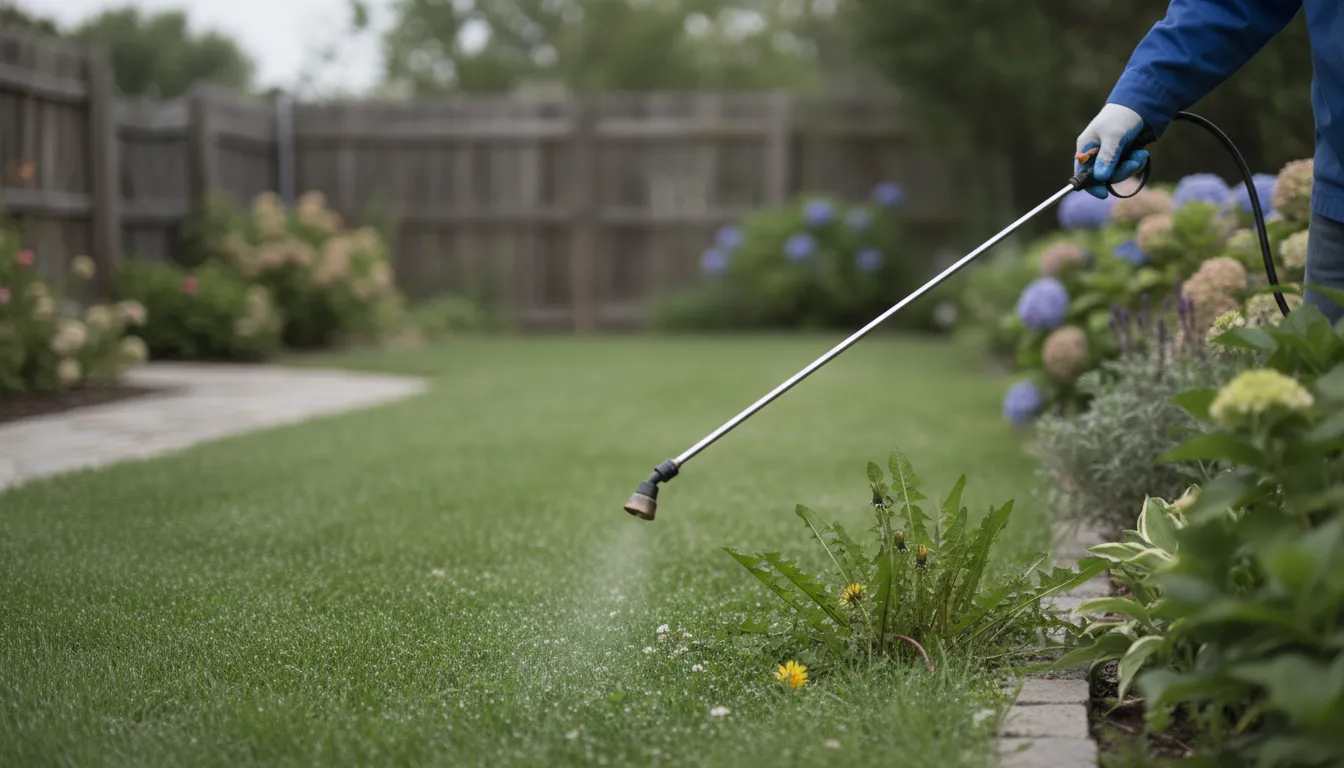
Post-Emergent Herbicides These are used to kill weeds that are already visible. They are most effective when applied to young, actively growing weeds. For broadleaf weeds like dandelions and clover, selective herbicides (like those containing 2,4-D, dicamba, or mecoprop) will kill the weed without harming the grass 6 7. It's often best to spot-treat problem areas rather than apply blanket treatments. Always follow label instructions carefully, especially regarding temperature, as some herbicides can volatilize and damage nearby plants in high heat.
The "Weed & Feed" Consideration Combination fertilizer and herbicide products can be convenient but are not always the best choice. Their timing may not align perfectly with your lawn's needs-for instance, you may need weed control when the grass does not need fertilizer. Spot-treating weeds and following a separate fertilization schedule often yields better, more customized results.
Find the perfect lawn treatment companies for your needs
Get personalized recommendations and expert advice
Soil Health: The Foundation of Your Lawn
In Utah, improving your soil can dramatically improve your fertilization results. Amending clay soil with organic matter like compost, humate, or gypsum improves drainage, aeration, and nutrient availability 8. Products labeled as soil conditioners or surfactants (like those containing alkyl polyglycoside) can help water penetrate hydrophobic soils and spread evenly, ensuring your fertilizer and water reach the root zone 9. Healthy soil supports a thriving microbial ecosystem that naturally breaks down thatch and makes nutrients available to grass plants.
Professional Services vs. DIY Lawn Care
Many homeowners choose between managing their lawn care themselves or hiring a professional service.
The DIY Approach This offers maximum control and can be cost-effective for smaller lawns. It requires an investment in time, equipment (a quality spreader and sprayer), and knowledge to correctly select products, calibrate application rates, and time treatments properly. The annual cost for DIY materials for a medium-sized lawn typically ranges from $80 to $200.
Professional Lawn Care Services Professional providers bring expertise, commercial-grade products, and consistent scheduling. They can accurately diagnose problems, customize programs based on your specific lawn conditions, and often guarantee results. Services typically include 4 to 6 seasonal visits encompassing fertilization, weed control, and sometimes insect or disease monitoring. For an average-sized lawn, professional fertilization can cost $50 to $100 per application, with weed control ranging from $40 to $70 per treatment 10. Many companies offer annual program packages, which can provide a discount over individual services and typically range from $200 to $500 or more per year for a medium lawn 10 11.
Watering and Mowing: Supporting Your Program
Even the best fertilizer and weed control program will underperform without proper cultural practices.
- Watering: Water deeply and infrequently to encourage deep roots. Utah lawns generally need about 1-1.5 inches of water per week, including rainfall. Water in the early morning to reduce evaporation and fungal disease.
- Mowing: Keep your mower blades sharp and mow at a higher height (2.5-3.5 inches for cool-season grasses). Taller grass shades the soil, conserves moisture, and prevents weed seeds from germinating. Never remove more than one-third of the grass blade in a single mowing.
Frequently asked questions
Sources
Footnotes
-
Lawn Fertilizers for Cool Season Turf | USU - https://extension.usu.edu/yardandgarden/research/lawn-fertilizers-for-cool-season-turf ↩
-
Get your grass ready for winter - Utah Division of Water Resources - https://water.utah.gov/get-your-grass-ready-for-winter/ ↩
-
IFA's 4Plus Lawn Care Program | IFA's Helping to Grow Blog - https://grow.ifa.coop/lawn-care/four-easy-steps-for-a-beautiful-lawn ↩
-
Utah Lawn Fertilizing Schedule | Stewart's Lawn Care - https://stewartslawn.com/blog/utah-lawn-fertilization-schedule/ ↩
-
825 Lawn Care and Maintenance Calendar - Utah - Star Nursery - https://www.starnursery.com/star-notes/825-lawn-care-and-maintenance-calendar-utah/ ↩
-
Weed Control Options for Residential Lawns in Utah | USU - https://extension.usu.edu/yardandgarden/research/weed-control-options-for-residential-lawns-in-utah ↩
-
Weed Control Options for Residential Lawns in Utah | USU - https://extension.usu.edu/yardandgarden/research/weed-control-options-for-residential-lawns-in-utah ↩
-
The Science of Soil in Utah: How to Build a Healthier Lawn from ... - https://millburnlandscape.com/the-science-of-soil-in-utah-how-to-build-a-healthier-lawn-from-the-ground-up/ ↩
-
Year Round Lawn Care Schedule and Tips For Maintaining ... - https://scottsmiraclegro.com/en-us/learn/lawn-care/your-seasonal-guide-to-a-lush-lawn.html ↩
-
Cost of Fertilizer in Utah: DIY vs. Professional Lawn Care - https://www.greengroundsservices.com/blog/cost-of-fertilizer-in-utah ↩ ↩2
-
average cost of lawn fertilization service: 7 Best 2025 Wins - https://ajmgrounds.com/average-cost-of-lawn-fertilization-service/ ↩