Find the Best Lawn Treatment Companies for Your Business
No obligation • Fast responses • Nationwide coverage

Why you can trust Landscape Atlas
Landscape Atlas is a leading United States resource for evaluating landscaping, lawn care, and outdoor service providers. Our team researches each category in depth, focusing on service quality, safety, and customer experience. Listings and rankings are based on independent criteria and user feedback, and companies cannot pay to influence our assessments or recommendations.
Search providers near you
Best Lawn Treatment Companies in Virginia Ranked
Maintaining a healthy, vibrant lawn in Virginia requires a strategic approach to feeding and protecting your grass. Lawn fertilization provides essential nutrients for growth and resilience, while targeted weed control prevents invasive plants from competing for resources. Given Virginia's unique transition-zone climate, the timing and products used are critical to success. This guide provides a clear, science-backed overview of best practices, schedules, and considerations for both DIY enthusiasts and those seeking professional help, so you can make informed decisions for your property.
Agronomic Lawn Management
2401 Bowland Pkwy, Virginia Beach, VA 23454
Agronomic Lawn Management is a locally owned lawn care company serving Virginia Beach, VA. Since 1998, they have provided lawn fertilization, weed control, disease and fungus treatments, and specialized services like slit seeding and warm-season aeration. Their certified technicians tailor treatments to each lawn's needs and offer a germination guarantee for their seeding services. The company emphasizes timely service, aiming to respond within 48 hours of a customer call.
Agronomic Lawn Management
1258 Progress Rd, Suffolk, VA 23434
Agronomic Lawn Management is a lawn care company serving Norfolk, VA, and nearby communities. Locally owned since 1998, they provide comprehensive lawn care services including fertilization, weed control, grub control, pest management, and lawn disease treatment. The company uses state-of-the-art technology and eco-friendly products to maintain healthy lawns year-round. They offer tailored treatment plans based on soil tests and provide up to 14 seasonal treatments to ensure optimal lawn health. Agronomic Lawn Management also specializes in slit seeding to rejuvenate thin or patchy lawns. Their pest control service targets mosquitoes, fleas, and ticks with family- and pet-safe treatments during the warmer months.
Greener Creations Lawn Care
2841 Darbytown Rd, Richmond, VA 23231
Greener Creations Lawn Care is a lawn care company based in Richmond, VA, serving the Richmond Metro area and surrounding counties including Mechanicsville, Henrico, Hanover, Quinton, and Chesterfield. They offer lawn mowing, lawn fertilization, and weed control services to maintain healthy and attractive lawns. Greener Creations provides lawn evaluations and estimates to help customers understand their lawn care needs.
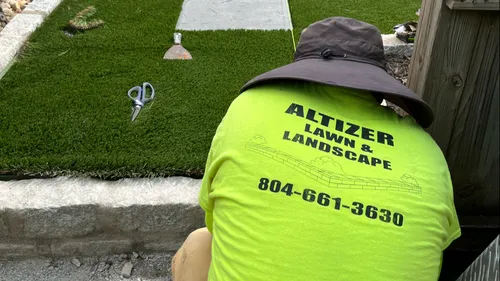
Altizer Lawn & Landscape LLC
Richmond, VA
Altizer Lawn & Landscape LLC is a licensed and insured lawn care and landscaping company based in Richmond, VA. They offer a wide range of services including lawn mowing, fertilization, weed control, yard drainage, grading, land clearing, hardscaping with pavers and retaining walls, and stormwater management to protect home foundations. The company is certified in pesticide, herbicide, and fertilizer application and provides excavation and gravel driveway installation and maintenance. Founded and operated by Britt Altizer, a Richmond resident with a background in Environmental Studies and Urban Planning, the business emphasizes creative solutions and skilled workmanship.
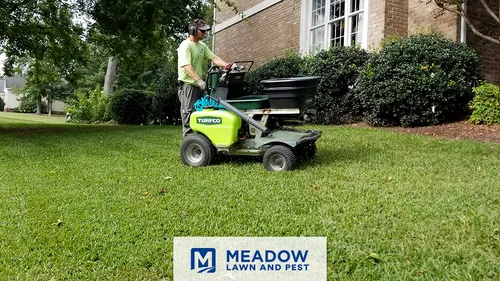
Meadow Lawn & Pest
21401 Brewers Neck Blvd, Carrollton, VA 23314
Meadow Lawn & Pest is a family-owned lawn care and pest control company serving Norfolk, VA, and surrounding areas including Carrollton, Smithfield, and Newport News. Established in 2008, they offer a range of services such as lawn mowing, fertilization, weed control, irrigation and sprinkler repair, landscaping, tree removal, and landscape lighting installation. Their team is licensed, certified, and insured, providing expertise in both indoor and outdoor pest control as well as yard drainage solutions. With over 16 years of experience, Meadow Lawn & Pest emphasizes consistent quality through regular maintenance and staff training.
Understanding Virginia's Lawn Care Climate
Virginia sits in a challenging "transition zone" for turfgrass, meaning it experiences both cold northern winters and hot, humid southern summers. This climate supports both cool-season and warm-season grasses, but each type has a completely different biological clock. Your entire fertilization and weed control strategy depends on which grass type you have.
- Cool-Season Grasses: These grasses, such as Tall Fescue, Kentucky Bluegrass, and Perennial Ryegrass, thrive in cooler temperatures. They grow most vigorously in the spring and fall and can go dormant or struggle during the summer heat. They are common in Northern Virginia and higher elevations.
- Warm-Season Grasses: Varieties like Bermudagrass, Zoysiagrass, and Centipedegrass love the heat. They green up in late spring, grow actively through the summer, and go dormant (turn brown) after the first hard frost in fall. They are more common in Southern and Coastal Virginia.
Applying fertilizer or herbicide at the wrong time for your grass type can waste money, damage your lawn, and even promote weed growth. The first step in any effective program is correctly identifying your grass.
The Critical Role of Soil Testing
Before you apply any product, a soil test is the most important step you can take. It's like getting a blood test before prescribing medicine. A soil test, available through your local Virginia Cooperative Extension (VCE) office, will tell you:
- Soil pH: Virginia soils often tend toward acidity. Grass prefers a slightly acidic pH (6.0-7.0). If the pH is too low (acidic), nutrients become "locked up" and unavailable to the grass, no matter how much fertilizer you add. Lime may be recommended to raise the pH.
- Nutrient Levels: The test reveals the levels of essential nutrients like Phosphorus (P) and Potassium (K). Virginia law generally restricts the application of phosphorus on established lawns unless a deficiency is proven by a soil test. This prevents nutrient runoff into waterways.
- Fertilizer Recommendations: The report provides a customized prescription for the exact type and amount of fertilizer your lawn needs.
Experts recommend a soil test every 3-4 years.
Annual Lawn Care Schedule for Virginia
Following a calendar tailored to your grass type is the key to a healthy lawn. The Virginia Cooperative Extension provides authoritative guidelines that form the basis of the schedules below 1.
For Cool-Season Grasses (Fescue, Bluegrass, Ryegrass)
| Season | Key Tasks for Fertilization & Weed Control |
|---|---|
| Late Winter / Early Spring (Feb-Mar) | Primary Focus: Crabgrass Prevention. Apply a pre-emergent herbicide before soil temperatures consistently reach 55°F (often when forsythia blooms). This creates a barrier that stops crabgrass seeds from sprouting. Fertilizer is not a priority; if needed, limit nitrogen to a light 0.5 lb per 1,000 sq ft 2. |
| Late Spring (Apr-May) | Primary Focus: Broadleaf Weed Control. As temperatures rise above 60°F, spot-treat active broadleaf weeds like dandelions, clover, and chickweed. Use a post-emergent herbicide containing a combination of active ingredients like 2,4-D and dicamba for best results 3 4. Avoid heavy nitrogen fertilization. |
| Summer (Jun-Aug) | Primary Focus: Survival. Do not apply nitrogen fertilizer. It can stress the grass and promote disease. Focus on deep, infrequent watering (about 1 inch per week) and spot-treat any persistent weeds. Mow high to shade the soil and conserve moisture. |
| Fall (Sep-Nov) | Primary Focus: Fertilization & Repair. This is the most important season for cool-season lawns. Follow the "SON" rule: fertilize in September, October, and November. Apply about 0.7-0.9 lbs of nitrogen per 1,000 sq ft per application, 4 weeks apart 5 6. This builds strong roots for winter and a green-up next spring. Overseed thin areas in early fall. Apply a fall pre-emergent for winter annual weeds like henbit if needed. |
For Warm-Season Grasses (Bermuda, Zoysia)
| Season | Key Tasks for Fertilization & Weed Control |
|---|---|
| Late Winter / Early Spring (Feb-Mar) | Primary Focus: Crabgrass Prevention. Similar to cool-season lawns, apply a pre-emergent herbicide before the 55°F soil temperature threshold. Wait for full "green-up" before any fertilization. |
| Late Spring (May) | Primary Focus: Start Fertilization. Once the grass is actively growing (usually late May), begin your fertilization program. Apply 0.7 to 1.0 lb of nitrogen per 1,000 sq ft 7. |
| Summer (Jun-Aug) | Primary Focus: Growth & Maintenance. Continue fertilization applications every 4-6 weeks through the summer. Ensure consistent watering during dry periods. Monitor for and spot-treat summer weeds. |
| Early Fall (Sep) | Primary Focus: Prepare for Dormancy. Stop all nitrogen fertilization by mid-August to early September. A late application can promote tender growth that will be damaged by frost. You may apply a "winterizer" fertilizer high in potassium (the last number in the N-P-K ratio) in early fall to enhance winter hardiness. |
Find the perfect lawn treatment companies for your needs
Get personalized recommendations and expert advice
Choosing the Right Products
Walking into a garden center can be overwhelming. Here's what to look for on the label.
Fertilizer Analysis: Look for the three-number N-P-K ratio (e.g., 24-0-6 or 32-0-4).
- Nitrogen (N): Promotes green, leafy growth. For Virginia lawns, choose a fertilizer where at least 30-50% of the nitrogen is listed as "slow-release" or "water-insoluble nitrogen (WIN)." This feeds the lawn gradually, reduces burn risk, and provides longer-lasting results 8 9.
- Phosphorus (P): The middle number. Often zero in standard bags, as Virginia law restricts its use unless a soil test shows a deficiency 10.
- Potassium (K): The last number. Strengthens roots and improves stress tolerance from drought, cold, and disease.
Weed Control Products:
- Pre-emergent: Used before weeds appear. Active ingredients like Pendimethalin or Prodiamine are common. Timing is everything-apply in late winter/early spring for crabgrass and in fall for winter weeds.
- Post-emergent: Used to kill existing weeds. For broadleaf weeds, combination herbicides with 2,4-D, dicamba, and mecoprop (MCPP) are highly effective 11 12. For grassy weeds like crabgrass that escaped pre-emergent control, look for products with quinclorac.
"Weed & Feed" Products: These combination products can be convenient but are often less effective than separate applications. The timing for fertilization and weed control doesn't always align perfectly. For example, applying a weed & feed in spring may deliver nitrogen when cool-season grasses don't need it. Professionals often use higher-grade, separate products for more targeted results 13 14.
Professional Services vs. DIY
Both approaches have their place, and the right choice depends on your budget, time, and interest.
Professional Lawn Care Services: Companies offer scheduled programs that typically include 7-9 visits per year, covering fertilization, weed control, and sometimes insect/disease monitoring.
- Pros: Expertise, convenience, consistent scheduling, access to commercial-grade products, and often guarantees. Bundled programs can be cost-effective over time 15.
- Cost in Virginia: Professional fertilization typically costs $50 to $100 per application, and weed control runs $40 to $80 per application. A full annual program usually starts between $450 and $1,000+, depending on lawn size and service scope 16 17 18.
- What to Look For: Choose a licensed, insured company that understands Virginia's transition zone challenges and VCE recommendations. Ask about their fertilizer analysis and the percentage of slow-release nitrogen they use.
DIY Lawn Care: Managing your own lawn can be rewarding and save on labor costs.
- Pros: Full control over products and timing, potential cost savings on labor, and the satisfaction of hands-on care.
- Cons: Requires an investment in equipment (spreader, sprayer), time for research and application, and the risk of making costly mistakes through misapplication 19.
- Getting Started: Begin with a soil test from the VCE. Invest in a quality broadcast spreader for even fertilizer application. Calibrate your equipment according to the product label-applying too much can burn the lawn, and too little is ineffective. Always follow label directions precisely for both fertilizer and herbicides.
Environmental & Regulatory Considerations
Being a responsible lawn owner in Virginia means protecting the Chesapeake Bay watershed.
- Phosphorus Restrictions: As noted, avoid phosphorus-containing fertilizers unless a soil test confirms a need.
- Proper Application: Never apply fertilizer or herbicides before a heavy rain, as they will wash away (runoff) into storm drains and local waterways. Keep a buffer zone when applying near streams, ponds, or ditches.
- Integrated Pest Management (IPM): The healthiest defense against weeds is a thick, vigorous lawn. Proper mowing (never removing more than 1/3 of the blade height at once), watering, and fertilization will crowd out many weeds naturally, reducing the need for herbicides.
Frequently asked questions
Sources
Footnotes
-
Month-to-Month Lawn Care Schedule for Virginia - LawnStarter ↩
-
Spring and Summer Lawn Management Considerations for Warm-Season Grasses ↩
-
Lawn Care Pricing | Monthly Programs Starting at $55 | Southern Green ↩
-
Lawn Care Costs & Landscape Maintenance Pricing for Alexandria ↩
-
2026 Lawn Care Costs | Gardener Services Prices - HomeAdvisor ↩