Find the Best Lawn Treatment Companies for Your Business
No obligation • Fast responses • Nationwide coverage

Why you can trust Landscape Atlas
Landscape Atlas is a leading United States resource for evaluating landscaping, lawn care, and outdoor service providers. Our team researches each category in depth, focusing on service quality, safety, and customer experience. Listings and rankings are based on independent criteria and user feedback, and companies cannot pay to influence our assessments or recommendations.
Search providers near you
Best Lawn Treatment Companies in West Virginia Ranked
A healthy, vibrant lawn in West Virginia requires a consistent, science-backed approach to feeding your grass and managing weeds. Lawn fertilization provides essential nutrients for growth and resilience, while targeted weed control prevents invasive plants from competing for resources and spoiling your yard's appearance. This guide explains the best practices, schedules, and product considerations for West Virginia's unique climate, helping you understand your options and connect with local professionals who can tailor a plan for your property.
Understanding West Virginia's Lawn Environment
Successful lawn care starts with understanding your local conditions. West Virginia's climate is characterized by four distinct seasons, with humid summers and cold winters. The state's topography, from the rolling hills to the river valleys, can create microclimates that affect your lawn. Most lawns in the Mountain State are composed of cool-season grasses like Kentucky bluegrass, tall fescue, and perennial ryegrass. These grasses thrive in the cooler temperatures of spring and fall and can go dormant or struggle during the peak summer heat 1.
The soil in many parts of West Virginia tends to be acidic, which can lock away essential nutrients and hinder grass growth. This makes a foundational step-conducting a soil test-particularly important. A test reveals your soil's pH level and nutrient profile, allowing you to apply exactly what your lawn needs, whether that's a specific fertilizer blend or lime to raise the pH.
The Essential Annual Schedule for Cool-Season Grasses
Timing is everything in lawn care. Applying the right product at the wrong time can be ineffective or even harmful. For West Virginia lawns, a typical professional program involves 4-6 applications per year, timed to coincide with the natural growth cycles of cool-season grasses. Here's a breakdown of the optimal seasonal schedule:
Early Spring (March - April)
As soil temperatures consistently reach the 50-55°F range, your lawn wakes from winter dormancy. This is the critical window for applying a pre-emergent herbicide. This product creates a barrier in the soil that prevents annual grassy weeds like crabgrass from germinating. It must be applied before weed seeds sprout, making timing crucial. This application is often combined with a light, slow-release fertilizer to give the grass a gentle green-up boost without encouraging excessive top growth that can weaken the plant before summer 2 3.
Late Spring (May - June)
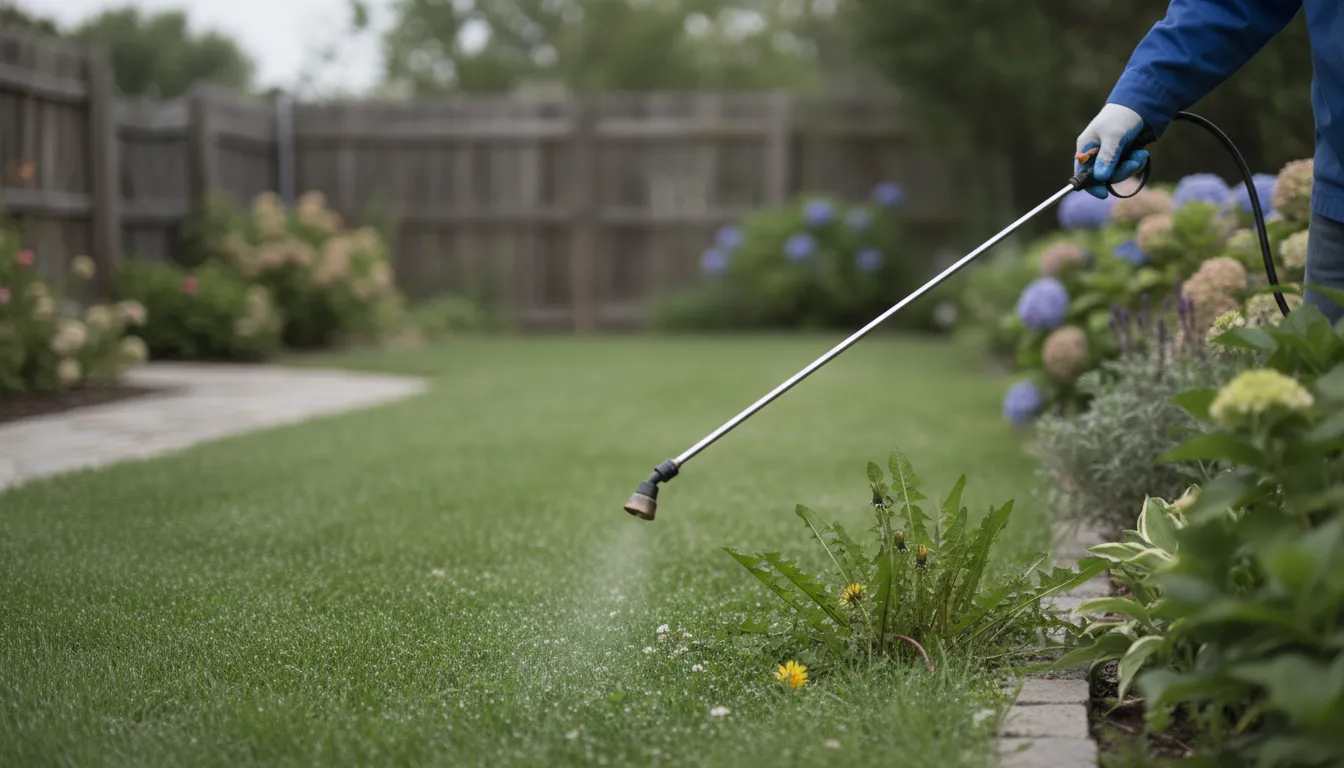
By late spring, broadleaf weeds like dandelions, clover, and plantain are actively growing and flowering. This is the ideal time for a post-emergent weed control application or a "weed and feed" product. The goal is to eliminate existing weeds while providing nutrients to strengthen the lawn's root system before the stress of summer arrives. Choose selective herbicides that target broadleaf plants without harming your grass.
Summer (July - August)
The primary focus shifts from feeding to preservation. Fertilization is generally minimized, as high-nitrogen applications during heat can burn the grass and promote disease. The best summer lawn care is proper cultural practice: deep, infrequent watering early in the morning. If needed, a light, low-nitrogen, slow-release fertilizer can be applied. This is also a good time to monitor for and treat insect problems, such as grubs 4 5.
Early Fall (September - October)
This is the most important season for lawn care in West Virginia. Cooler temperatures and autumn rains create perfect conditions for grass to grow strong roots and recover from summer stress. Apply a high-quality maintenance fertilizer with adequate nitrogen to fuel this growth. Fall is also the absolute best time for overseeding to fill in thin or bare spots, as the new grass has time to establish before winter 6 7.
Late Fall (October - November)
Just before the ground freezes, a final application of a slow-release "winterizer" fertilizer is key. This product is typically higher in potassium, which helps strengthen cell walls and improve cold tolerance. It allows the grass to store nutrients in its root system, leading to a healthier, earlier green-up the following spring 8 9.
Find the perfect lawn treatment companies for your needs
Get personalized recommendations and expert advice
Choosing the Right Products and Ingredients
Navigating the fertilizer and herbicide aisle can be confusing. Knowing what to look for empowers you to make better decisions, whether you're DIY-ing or evaluating a professional's plan.
Fertilizers: The three numbers on a bag (e.g., 24-0-6) represent the N-P-K ratio-the percentage by weight of Nitrogen (N), Phosphorus (P), and Potassium (K). A soil test will indicate what ratio your lawn needs. For general maintenance, look for a balanced product. Slow-release nitrogen is highly recommended as it feeds the grass gradually over several weeks, reducing the risk of burn and providing more consistent growth. Organic options like Milorganite are popular slow-release choices 10 11.
Weed Control:
- Pre-emergent Herbicides: Effective ingredients for crabgrass prevention include pendimethalin and dithiopyr (often sold as Dimension). Apply these in early spring.
- Post-emergent Herbicides: For existing broadleaf weeds, look for products containing a combination of active ingredients like 2,4-D, dicamba, and mecoprop. These are selective, meaning they kill the weed but not the grass 12.
Soil Amendments: Given West Virginia's tendency for acidic soil, lime is a common amendment. Never guess-apply lime only if a soil test recommends it to raise the pH to an optimal level (typically between 6.0 and 7.0 for cool-season grasses) 13 14.
The Value of Professional Lawn Care Programs
While diligent homeowners can manage their own lawn care, there are clear advantages to hiring a professional service. Experts bring calibrated equipment, in-depth knowledge of local weed pressures and soil conditions, and access to commercial-grade products that are often more effective and longer-lasting than retail versions.
Professionals typically bundle fertilization and weed control into annual programs. These scheduled visits ensure treatments are applied at the scientifically optimal times throughout the year. This proactive approach is often more effective and cost-efficient than reacting to problems as they appear. A full annual program addresses the lawn's needs holistically, which can include aeration, overseeding, and insect control in addition to core feeding and weed management 15 16.
Understanding Service Costs in West Virginia
The cost of professional lawn fertilization and weed control in West Virginia depends on several factors: the size of your lawn, its condition, your location in the state, and the specific services included. Most companies price per application or offer a discounted rate for a seasonal package.
Based on industry data, here are typical cost ranges for West Virginia:
- Basic Fertilization Application: $40 - $150
- Targeted Weed Control Treatment: $40 - $210
- Combined "Weed & Feed" Application: $60 - $185
- Full Annual Program (4-6 visits): $400 - $1,200 for a quarter-acre lawn
These programs represent an investment in your property's curb appeal and long-term health, preventing costly weed invasions and soil depletion 17 18 19.
Key Considerations for a Healthier Lawn
Beyond products and schedules, long-term lawn health is built on good practices.
- Mow High: Keep your cool-season grass at a height of 3 to 4 inches. Taller grass shades the soil, conserves moisture, and outcompetes weed seedlings.
- Water Deeply: When watering is needed, provide about 1 inch of water per week, all at once, to encourage deep root growth. Early morning is the best time to water.
- Core Aeration: Performing core aeration every year or two alleviates soil compaction, improves water and nutrient penetration, and strengthens the root system.
- Overseed Annually: Even a healthy lawn thins over time. Overseeding in the fall introduces new, vigorous grass plants to keep your lawn dense and resistant to weeds.
By combining these cultural practices with a tailored fertilization and weed control strategy, you can cultivate a thick, green, and resilient lawn that enhances your West Virginia home.
Frequently asked questions
Sources
Footnotes
-
Best Grass Seed for West Virginia - https://www.lawnstarter.com/blog/west-virginia/best-grass-seed-west-virginia/ ↩
-
Lawn Care Tips for Charleston, WV - LawnStarter - https://www.lawnstarter.com/blog/west-virginia/charleston-wv/lawn-care-tips-charleston/ ↩
-
Crabgrass - WVU Extension - https://extension.wvu.edu/lawn-gardening-pests/weeds/crabgrass ↩
-
New to the area with questions about grass (the kind you mow). - https://www.reddit.com/r/nova/comments/lyw8n8/new_to_the_area_with_questions_about_grass_the/ ↩
-
Lawn Care Month by Month - Weston Nurseries - https://www.westonnurseries.com/lawn-care-month-by-month/ ↩
-
Lawn Fertilizing Schedule for Your Yard - https://www.lawndoctor.com/blog/lawn-fertilizer-schedule/ ↩
-
When to Fertilize Lawn for the Best Results - https://completelandscapingservice.com/blog/when-to-fertilize-lawn-for-the-best-results/ ↩
-
Lawn Fertilizer Schedule - Jonathan Green - https://www.jonathangreen.com/resources/lawn-fertilizer-schedule/ ↩
-
Lawn Treatment Schedule: How to Plan Lawn Care Maintenance - https://www.lawndoctor.com/blog/lawn-care-schedule/ ↩
-
Lawn Fertilizer for Healthy Grass Growth - Lowe's - https://www.lowes.com/pl/lawn-care/lawn-fertilizer/2610376442062 ↩
-
Google's Shopping Data - https://blog.google/products/shopping/shopping-graph-explained/ ↩
-
Lawn Care Schedule For Cool Season Grasses - https://www.domyown.com/lawn-care-schedule-for-cool-season-grasses-a-539.html ↩
-
Lawn Care Tips for Charleston, WV - LawnStarter - https://www.lawnstarter.com/blog/west-virginia/charleston-wv/lawn-care-tips-charleston/ ↩
-
Establishing a Lawn | Extension | West Virginia University - https://extension.wvu.edu/lawn-gardening-pests/lawn/establishing-a-lawn ↩
-
How Much Does Lawn Fertilization Cost in 2026? - https://lawnlove.com/blog/lawn-fertilization-cost/ ↩
-
Lawn Care Prices in 2025: Average Costs, Factors, and Ways to Save - https://www.percyslawncare.com/blog-posts/lawn-care-prices-2025 ↩
-
Lawn Care Pricing Chart: Your Guide to Fair Lawn Service Costs - https://invoicefly.com/academy/lawn-care-pricing-chart/ ↩
-
average cost of lawn fertilization service: 7 Best 2025 Wins - https://ajmgrounds.com/average-cost-of-lawn-fertilization-service/ ↩
-
West Virginia Lawn Care Company - Services from $29 - https://lawnlove.com/west-virginia ↩