Find the Best Sod and Turf Lawn Installers for Your Business
No obligation • Fast responses • Nationwide coverage

Why you can trust Landscape Atlas
Landscape Atlas is a leading United States resource for evaluating landscaping, lawn care, and outdoor service providers. Our team researches each category in depth, focusing on service quality, safety, and customer experience. Listings and rankings are based on independent criteria and user feedback, and companies cannot pay to influence our assessments or recommendations.
Search providers near you
Best Sod and Turf Lawn Installers in Arkansas Ranked
Transforming a bare patch of dirt or a tired, weedy lawn into a lush, green carpet is one of the most impactful upgrades you can make to your Arkansas home. New lawn installation, whether with natural sod or modern artificial turf, provides immediate beauty, increases property value, and creates a usable outdoor space for your family. The key to long-term success lies in choosing the right material for your lifestyle and ensuring proper site preparation. This guide will walk you through the essential steps, from selecting the best grass type for the Natural State to understanding installation and care, helping you connect with the knowledge and local professionals needed for a thriving lawn.
Choosing the Right Grass for Arkansas Climates
Arkansas sits in a challenging "transition zone," where both blistering summers and occasional cold winters test the limits of grass types. Selecting a variety suited to this climate is the most critical decision you'll make.
Warm-Season Grasses are the top choice for most Arkansas lawns, as they thrive in the intense summer heat. They green up in late spring, grow vigorously through summer, and go dormant (turn brown) after the first frost.
- Bermudagrass: Extremely common due to its durability, drought tolerance, and ability to handle heavy foot traffic. It requires full sun to perform well and can be invasive into flower beds.
- Zoysiagrass: A premium choice known for its dense, carpet-like feel and good shade tolerance compared to Bermuda. It establishes more slowly but forms a very tough, weed-resistant lawn 1.
- Centipedegrass: Often called the "lazy man's grass," it grows slowly, requiring less mowing and fertilizer. It prefers acidic soils common in parts of Arkansas but is less tolerant of heavy traffic.
- St. Augustinegrass: Excellent for shaded areas and tolerates heat well. It is less cold-tolerant than other warm-season grasses and may suffer in northern Arkansas winters.
Cool-Season Grasses, like Tall Fescue, are sometimes used. They stay green through much of the winter but require significant watering and care to survive Arkansas summers, often struggling with heat stress and disease 2.
Critical Site Preparation for Natural Sod
Proper preparation is non-negotiable for sod to root successfully and establish a healthy lawn. Rushing this step is the leading cause of installation failure.
- Clear and Grade: Remove all existing grass, weeds, rocks, and debris. The final grade should slope away from your home's foundation at a 1-2% grade to ensure proper drainage and prevent water pooling 3 4.
- Conduct a Soil Test: This free service from your local University of Arkansas Cooperative Extension Service office is invaluable. The test reveals your soil's pH and nutrient levels. For most grasses, a pH between 6.0 and 7.5 is ideal. The report will provide specific recommendations for amendments 5.
- Amend and Till: Based on your soil test, you may need to add lime (to raise pH) or sulfur (to lower pH). Incorporating 1-2 inches of organic compost or topsoil can improve soil structure and fertility. Till the soil to a depth of 4-6 inches to loosen it for easy root penetration.
- Fertilize and Moisturize: Apply a starter fertilizer high in phosphorus to encourage strong root development. Just before your sod arrives, give the prepared soil a light watering to create a moist planting bed 6.
The Sod Installation Process
Once your site is prepped, installing sod is a time-sensitive process. Have all tools ready and plan to install the pallets immediately upon delivery.
- Lay the Rolls: Start along a straight edge, like a driveway or sidewalk. Stagger the seams in a brick-like pattern, ensuring pieces are snug but not overlapping. Use a sharp knife to cut pieces to fit around curves and obstacles.
- Water Immediately and Deeply: Begin watering within 30 minutes of laying the first piece. The goal is to soak both the sod and the top inch of soil beneath it. Proper initial hydration is critical.
Caring for Your New Sod Lawn
The first few weeks are all about consistent moisture to prevent the sod from drying out and dying before its roots penetrate the native soil.
- First 3 Days: Water daily, applying enough to keep the sod and soil beneath consistently moist. This may require multiple short waterings per day in hot, sunny weather to prevent drying.
- First Two Weeks: After the first few days, you can transition to watering every other day, applying about 1/2 inch of water per session. Avoid creating soggy, puddled conditions 7.
- Checking for Establishment: After about 10-14 days, gently tug on a corner of the sod. If it resists, roots have established. You can then begin to mow (with a sharp blade) and gradually reduce watering frequency, encouraging deeper root growth 8.
Find the perfect sod and turf lawn installers for your needs
Get personalized recommendations and expert advice
Artificial Turf as a Modern Alternative
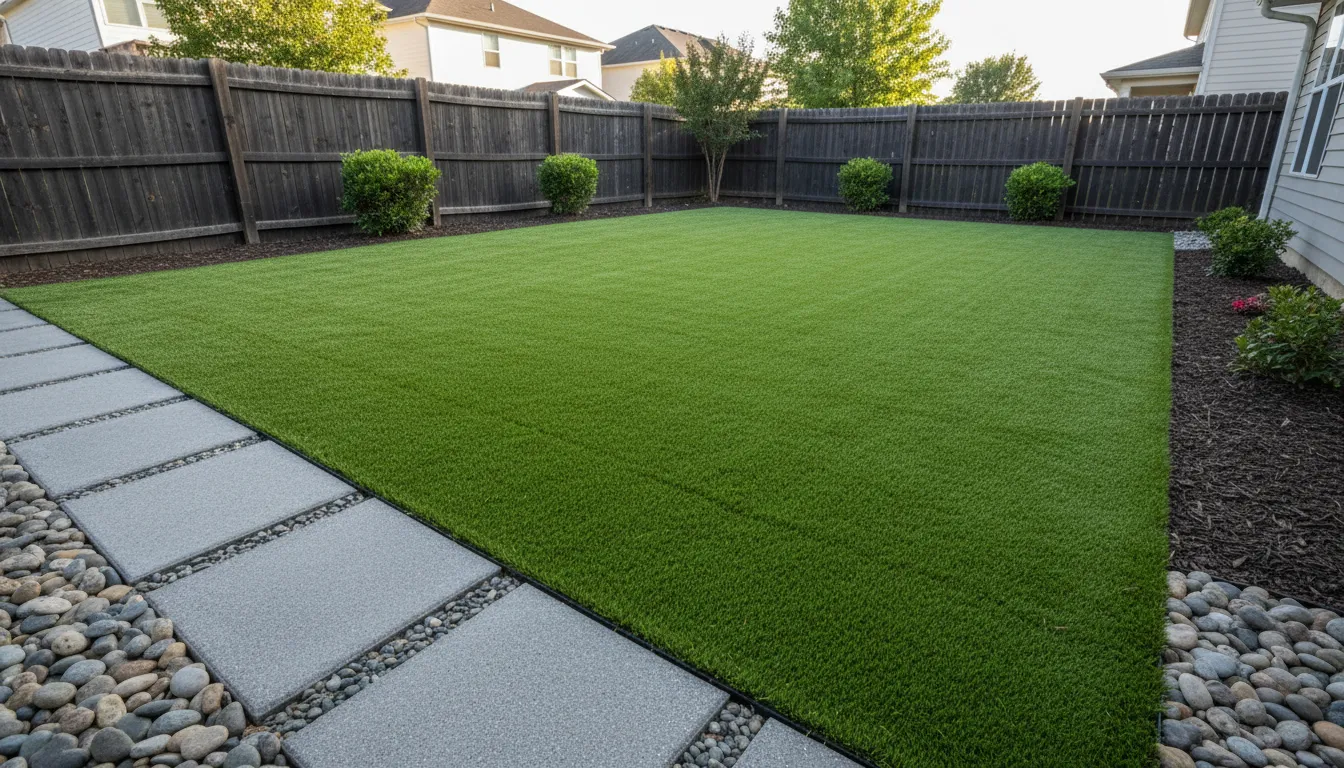
For homeowners seeking a perpetually green lawn with minimal upkeep, artificial turf is a compelling option. It requires no mowing, watering, or fertilizing, making it ideal for difficult shady areas, pet runs, or high-traffic zones.
Installation is a multi-step process that demands precision:
- Excavation: Remove 3-4 inches of existing soil and vegetation.
- Base Layer: Add and meticulously compact a layer of crushed stone or decomposed granite. This base provides drainage and a stable, level surface, preventing lumps and dips in the final lawn.
- Turf Installation: Rolls of synthetic grass are laid out, seams are joined with specialized tape and adhesive, and the perimeter is secured with landscape stakes or nails.
- Infill Application: Silica sand or rubber granules are brushed into the turf pile. This infill weighs down the turf, helps the blades stand upright, and provides cushioning 9.
While the upfront cost is typically higher than natural sod, the long-term savings on water, chemicals, and lawn care equipment can be significant for many Arkansas homeowners.
Understanding Project Costs
Costs for new lawn installation in Arkansas vary widely based on size, site conditions, material choice, and whether you tackle it yourself or hire a professional.
- DIY Sod Installation: For a 1,000 sq. ft. area, material costs for sod typically range from $400 to $700, depending on the grass variety. When you factor in soil amendments, rental equipment (tiller, roller), and supplies, the total DIY project cost often falls between $700 and $1,900 10.
- Professional Sod Installation: Hiring a professional for the same 1,000 sq. ft. lawn usually ranges from $1,000 to $6,000. This price includes all labor, site preparation, sod, and a warranty, and it reflects the complexity of your specific site grading and prep needs 11 12.
- Artificial Turf: As a premium, permanent installation, artificial turf has a higher initial investment. Professional installation is strongly recommended due to the technical base work required, and costs can vary greatly based on the quality of materials and site preparation.
Frequently asked questions
Sources
Footnotes
-
Best Grass Seed for Arkansas: Top Picks for Your Lawn - https://lawnsynergy.com/blogs/lawn-guides/best-grass-seed-for-arkansas ↩
-
Choosing the Right Grass for Your Arkansas Lawn - https://www.facebook.com/montgomerycountyextension/posts/choosing-the-right-grass-for-your-arkansas-lawnwhen-it-comes-to-cultivating-a-lu/1139455414873566/ ↩
-
Establishing a Lawn From Sod - FSA-2042 - https://www.uaex.uada.edu/publications/PDF/FSA-2042.pdf ↩
-
Prepare Your Lawn for Sod Installation: A Step-By-Step Guide - https://www.southdallasturfandsupply.com/blog/prepare-your-lawn-for-sod/ ↩
-
Seeding a Lawn in Arkansas FSA2113 - https://www.uaex.uada.edu/publications/PDF/FSA-2113.pdf ↩
-
How to Prepare Your Soil for a Successful Sod Installation? - https://mccallsodfarm.net/how-do-i-install-a-new-lawn/ ↩
-
Establishing a Lawn from Sod - https://www.uaex.uada.edu/counties/garland/news/anr/2016/Establishing%20a%20Lawn%20from%20Sod.aspx ↩
-
Water Requirements - A Guide On Watering Your New Grass - https://www.turfmastersod.com/water-requirements ↩
-
New Lawn Installation: How to Plant Grass - Landscaping Network - https://www.landscapingnetwork.com/lawns/installing.html ↩
-
Artificial Grass vs. Sod: Which Is the Best Choice for Your Lawn? - https://www.lawnpop.com/artificial-grass-vs-sod-which-one-is-best-for-you/ ↩
-
Turf Lawn Installation: Step-By-Step Instructions - Turf Tek USA - https://www.turftekusa.com/blog/turf-lawn-installation-step-by-step-instructions ↩
-
Artificial Turf Installation Austin TX - https://www.sullivanslandscapingservice.com/artificial-turf-installation-austin-tx/ ↩