Find the Best Sod and Turf Lawn Installers for Your Business
No obligation • Fast responses • Nationwide coverage

Why you can trust Landscape Atlas
Landscape Atlas is a leading United States resource for evaluating landscaping, lawn care, and outdoor service providers. Our team researches each category in depth, focusing on service quality, safety, and customer experience. Listings and rankings are based on independent criteria and user feedback, and companies cannot pay to influence our assessments or recommendations.
Search providers near you
Best Sod and Turf Lawn Installers in New Hampshire Ranked
A lush, green lawn can transform your New Hampshire property, providing a beautiful space for family activities and enhancing your home's curb appeal. Whether you're starting from scratch or renovating a patchy yard, installing a new lawn is a significant project that requires careful planning and execution. This guide covers the essential steps for both sod and artificial turf installation, helping you understand the process, costs, and long-term care to make an informed decision for your landscape.
Understanding Your Options: Natural Sod vs. Artificial Turf
The first major decision in new lawn installation is choosing between natural grass sod and synthetic turf. Each offers distinct advantages and considerations for New Hampshire homeowners.
Natural Grass Sod provides a living, breathing lawn. It offers the classic feel, cooling effect, and environmental benefits of real grass. Once established, it can be a durable and resilient surface. However, it requires a consistent commitment to watering, mowing, and fertilizing, especially during the critical establishment phase and New Hampshire's sometimes dry summer months.
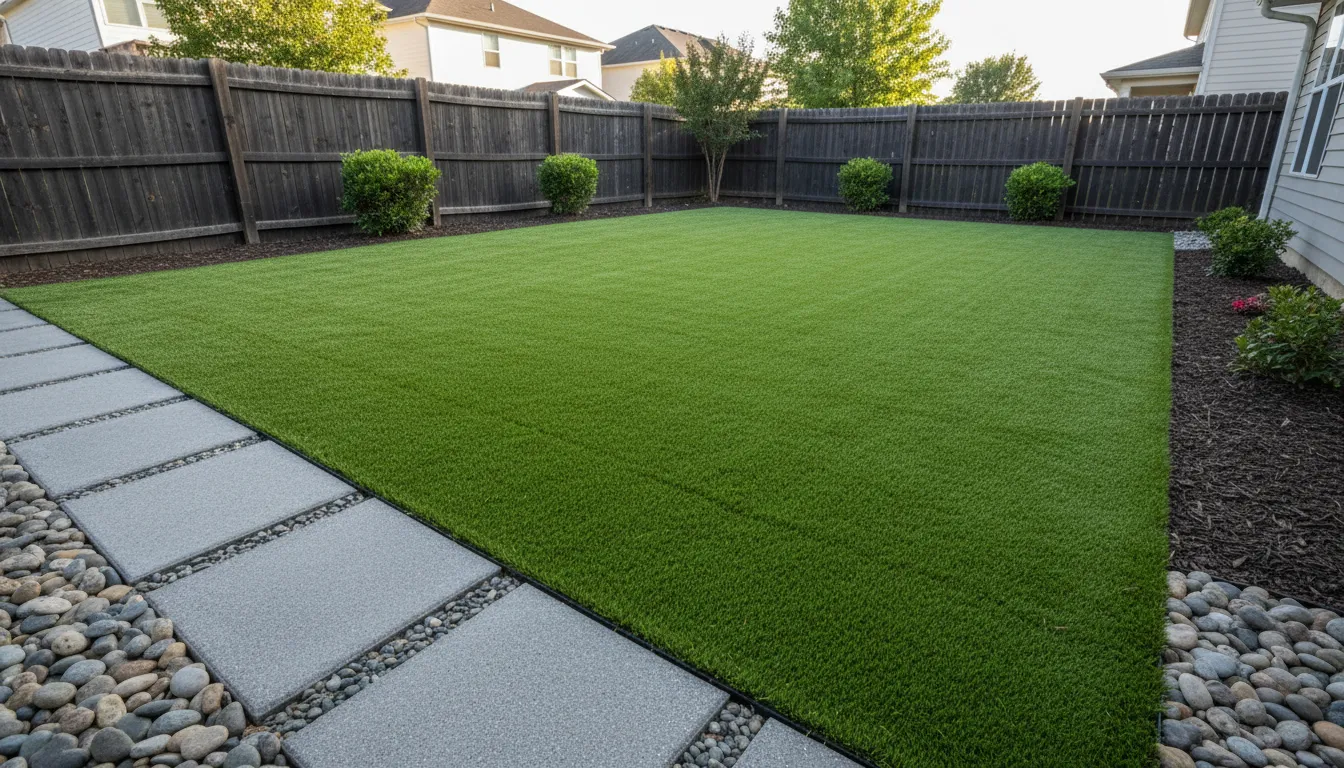
Artificial Turf is a synthetic surface designed to mimic the look of grass with virtually no maintenance. It stays green year-round without watering, mowing, or fertilizing. The primary trade-offs are a higher initial installation cost and the fact that it is a non-living surface, which can get hot in direct sun and has a different environmental footprint 1.
Critical First Step: Soil Preparation
Proper ground preparation is the most crucial factor for a successful lawn, whether you choose sod or turf. Skipping or rushing this step can lead to drainage problems, uneven surfaces, and poor root establishment for sod.
1. Test Your Soil: Before any digging begins, send a soil sample to the University of New Hampshire Cooperative Extension. Their analysis will provide your soil's pH and nutrient levels, offering specific recommendations for amendments like lime or sulfur to create the ideal growing environment for grass.
2. Clear and Grade the Area: Remove all existing vegetation, rocks, and debris. The goal is a smooth, stable base. The area should be graded to slope gently away from your home's foundation to ensure proper drainage, preventing water from pooling on your new lawn 2 3.
3. Amend the Soil: For natural sod, fertile, well-draining soil is non-negotiable. Experts recommend tilling 4 to 6 inches of a high-quality loam and compost mixture into the top 6 to 12 inches of your existing subsoil. This improves fertility, texture, and drainage, giving grass roots the best environment to thrive.
4. Firm the Base: After grading and amending, the soil must be firmed. For a sod base, lightly rolling or watering the area helps settle it and eliminates air pockets that can cause roots to dry out. For artificial turf, the base (often compacted stone dust or decomposed granite) must be meticulously leveled and compacted to create a perfectly smooth, stable surface.
Find the perfect sod and turf lawn installers for your needs
Get personalized recommendations and expert advice
Installation Process: Step-by-Step
The installation techniques for sod and artificial turf differ significantly. Following best practices is key to longevity and appearance.
Installing Natural Grass Sod
- Lay the Sod Rolls: Begin laying sod along a straight edge, like a driveway or sidewalk. Stagger the joints in a brick-like pattern and butt the edges together tightly without stretching or overlapping. It's critical to install sod on the same day it's delivered to prevent the grass from drying out and dying.
- Roll and Water: Once the entire area is covered, use a lawn roller (half-filled with water) over the sod. This presses the roots into firm contact with the soil, eliminating air pockets. Then, water the sod immediately and thoroughly. The goal is to moisten both the sod and the top inch of soil beneath it 4.
- Initial Watering Schedule: For the first two weeks, the sod must be kept consistently moist. This typically means watering daily, or even twice daily in hot, dry weather, with short sessions (10-20 minutes) to prevent runoff. The sod should not be allowed to dry out until roots have established into the native soil 5.
Installing Artificial Turf
- Roll Out and Trim: Unroll the synthetic turf and let it acclimate, then trim edges to fit the prepared area precisely using a utility knife.
- Join Seams: If multiple rolls are needed, seams are joined using special seam tape and adhesive applied to the backing, ensuring a seamless, invisible connection.
- Secure the Perimeter: The turf must be stretched taut and secured around the entire perimeter. This is typically done with 6-7 inch galvanized nails or staples, placed every 6 inches along the edges.
- Add Infill and Brush: A layer of silica sand or rubber infill is spread across the turf and brushed deep into the pile with a power broom. This helps weigh down the turf, protect the backing, and keep the synthetic blades upright for a natural look 6.
Watering and Ongoing Maintenance
Your responsibilities after installation depend entirely on your choice of lawn material.
For a New Sod Lawn: The initial, frequent watering schedule is critical. After the first two weeks, you can begin to water less frequently but more deeply to encourage deep root growth. The general guideline for an established lawn in New Hampshire is about 1 inch of water per week, including rainfall. Watering deeply and infrequently is better than daily light sprinklings. You can begin mowing once the sod is firmly rooted (you can't easily pull it up), typically after 2-3 weeks, ensuring your mower blade is sharp 7.
For Artificial Turf: Maintenance is minimal. It requires no watering, mowing, or fertilizing. Occasional rinsing to remove dust, debris, and pet waste, along with periodic brushing to keep the blades upright, is all that's needed to maintain its appearance.
Cost Considerations in New Hampshire
Understanding the cost structure-both upfront and long-term-is vital for budgeting.
- Natural Sod: The cost for sod installation in New Hampshire typically ranges from $1.65 to $2.00 per square foot for a professionally installed lawn, which includes materials (sod rolls), soil preparation, labor, and initial care. The sod material alone may cost around $0.60 per square foot for a DIY project 8.
- Artificial Turf: The upfront cost for synthetic grass is higher, often starting around $3 to $5 or more per square foot for professional installation. This cost reflects the price of the turf material itself, the more intensive site preparation required, and specialized installation labor 9 10.
While sod has a lower initial cost, it carries recurring expenses for water, fertilizer, mowing fuel, and your time. Artificial turf has a high initial investment but virtually eliminates these ongoing maintenance costs, which can make it cost-competitive over many years.
Environmental and Practical Factors for NH Climates
New Hampshire's climate presents specific considerations. The state receives an average of about 3.75 inches of rain per month, but summer droughts can occur 11 12. A natural lawn's water needs during dry spells are a key factor. The UNH Extension and the NH Department of Environmental Services promote water-efficient landscaping practices, such as choosing drought-tolerant grass species and watering wisely, which are important for sod lawn owners 13 12 14.
Artificial turf requires no water for maintenance, which is a significant advantage in terms of water conservation. However, it's important to note that synthetic surfaces do not provide the cooling effect of living grass, can contribute to stormwater runoff if not installed over a proper permeable base, and will eventually need to be replaced and disposed of 15.
Frequently asked questions
Sources
Footnotes
-
INSTALLING - Imperial Synthetic Turf - https://imperialsyntheticturf.com/wp-content/uploads/2021/03/IST-installation-guide-20-page-061520-ver2.pdf ↩
-
New Lawn Installation - Groundhog Landscaping - https://groundhognh.com/landscape-construction/new-lawn-installation/ ↩
-
Seeding a New Lawn [video] | Extension - https://extension.unh.edu/resource/seeding-new-lawn-video ↩
-
Sod Installation | Litchfield, NH, 03052 - https://www.timsturf.com/sod-installation ↩
-
New Sod - Roy Water Conservancy District - https://www.roywater.gov/new-sod ↩
-
New Lawn Installation: How to Plant Grass - Landscaping Network - https://www.landscapingnetwork.com/lawns/installing.html ↩
-
Installing and Maintaining a Sod Lawn - UNH Extension - https://extension.unh.edu/sites/default/files/migrated_unmanaged_files/Resource000516_Rep538.pdf ↩
-
How to plant a lawn from sod - Randall Landscaping - https://randalllandscaping.com/how-to-plant-a-lawn-from-sod/ ↩
-
Real Grass Installation Near Me: Perfect Lawn 2025 - https://randalllandscaping.com/real-grass-installation-near-me/ ↩
-
How Much Does Sod Cost in 2026? - LawnStarter - https://www.lawnstarter.com/blog/cost/sod-price/ ↩
-
Green Grass & Clear Water [fact sheet] - UNH Cooperative Extension - https://extension.unh.edu/resource/green-grass-clear-water-fact-sheet ↩
-
Home Water Efficiency: Lawn Watering and Maintenance - NH.gov - https://www.des.nh.gov/sites/g/files/ehbemt341/files/documents/2020-01/dwgb-26-20.pdf ↩ ↩2
-
Planting Low Maintenance Lawns and Landscapes - https://www.des.nh.gov/sites/g/files/ehbemt341/files/documents/2020-01/dwgb-26-21.pdf ↩
-
Model Water Efficient Landscaping Regulation for Municipalities - https://www.des.nh.gov/sites/g/files/ehbemt341/files/documents/2020-01/mo-municipal-water-efficient-landscaping.pdf ↩
-
Drawbacks of Artificial Turf - sod.com - YouTube - https://www.youtube.com/watch?v=YN79to1ZxJ0 ↩