Find the Best Sod and Turf Lawn Installers for Your Business
No obligation • Fast responses • Nationwide coverage

Why you can trust Landscape Atlas
Landscape Atlas is a leading United States resource for evaluating landscaping, lawn care, and outdoor service providers. Our team researches each category in depth, focusing on service quality, safety, and customer experience. Listings and rankings are based on independent criteria and user feedback, and companies cannot pay to influence our assessments or recommendations.
Search providers near you
Best Sod and Turf Lawn Installers in South Dakota Ranked
Establishing a new lawn is a significant investment that can dramatically enhance your property's curb appeal and usability. In South Dakota's variable climate, choosing the right method-whether it's laying fresh sod, installing artificial turf, or seeding-is crucial for long-term success. This guide provides clear, practical information on the processes, costs, and considerations for new lawn installation in the Mount Rushmore State, helping you understand your options and connect with qualified local professionals who can bring your vision to life.
Understanding Your Lawn Options in South Dakota
South Dakota's continental climate, with its cold winters, hot summers, and variable precipitation, presents unique challenges for lawn establishment. The three primary methods for installing a new lawn are sodding, artificial turf installation, and seeding. Each offers distinct advantages depending on your goals for water use, maintenance, budget, and timeline.
Sod provides an "instant lawn" effect, offering immediate erosion control, weed suppression, and a mature look. It's ideal for quickly establishing a functional yard. For South Dakota, cool-season grasses like Kentucky Bluegrass and Fescue blends are the standard choices for sod, as they are bred to thrive in the region's temperature swings 1 2. Artificial turf, while a higher upfront investment, offers a perpetually green appearance with zero irrigation needs after installation, making it a compelling option for water conservation in drier areas. Seeding is the most cost-effective method but requires more time for establishment and careful management of watering and weeds during the vulnerable germination phase.
Critical First Steps: Site Preparation
Regardless of the installation method you choose, thorough site preparation is the non-negotiable foundation for a successful, long-lasting lawn. Rushing or skipping these steps often leads to drainage issues, poor root establishment, and an uneven surface.
Clearing and Testing: Begin by completely removing any existing grass, weeds, rocks, and debris from the area. This is also the ideal time to conduct a soil test. A simple test from your local cooperative extension office will reveal your soil's pH and nutrient levels. Most grasses prefer a pH between 6.0 and 7.5; South Dakota soils often lean alkaline and may require amendments like sulfur to adjust the pH 3.
Grading for Drainage: Proper grading is perhaps the most important preparatory step. The goal is to create a gentle slope of 1-2% away from your home's foundation and other structures. This ensures water drains away from buildings, preventing basement flooding and foundation issues, and avoids creating low spots where water can pool and drown grass roots or create muddy areas on artificial turf 4 5. Use a long level or string lines to check your grade as you work.
Preparing for Natural Sod Installation
For a lush, living sod lawn, soil preparation goes beyond simple grading. The goal is to create a loose, fertile, and well-draining seedbed that encourages rapid root growth into the native soil.
Tilling and Amending: Once cleared and graded, till the soil to a depth of 4 to 6 inches. This breaks up compaction, allowing roots, air, and water to penetrate easily. Based on your soil test results, work amendments into the tilled soil. Common additions include compost to improve texture and nutrient-holding capacity, and a starter fertilizer high in phosphorus (the middle number on the bag), which is essential for strong root development 6.
Final Leveling and Pre-Watering: After tilling and amending, rake the area thoroughly to create a smooth, level surface free of large clumps or depressions. Lightly roll the area with a water-filled roller to firm the seedbed just enough so your footprints are shallow. Just before the sod arrives, give the prepared soil a light watering to moisten the top few inches. This helps the sod roots make immediate contact with the moist soil, reducing transplant shock.
Find the perfect sod and turf lawn installers for your needs
Get personalized recommendations and expert advice
The Artificial Turf Installation Process
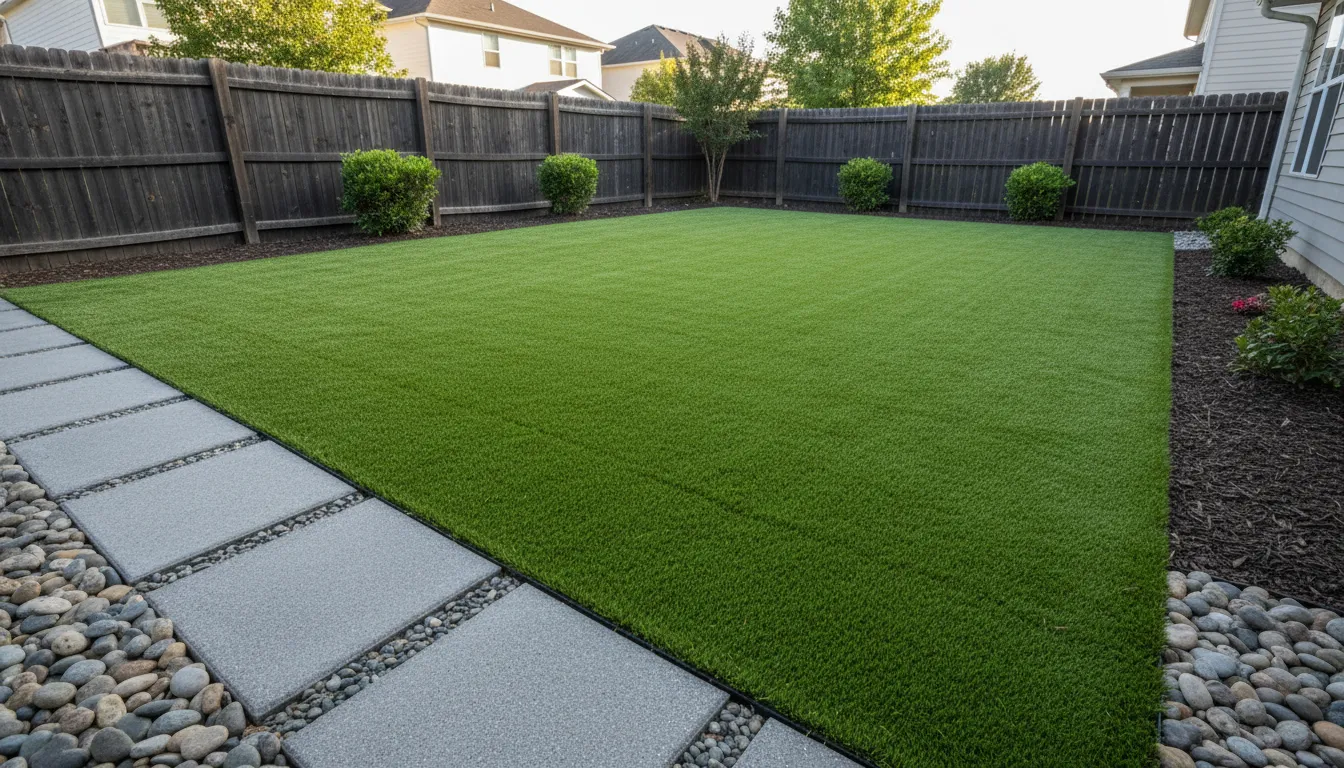
Installing synthetic grass is a more involved construction process than laying sod, as it involves creating a stable, permeable base system.
Excavation and Base Layer: The existing soil and vegetation must be removed. Typically, 3 to 4 inches of soil is excavated, especially important in areas with heavy clay to ensure proper drainage. This space is then filled with a compacted base layer of crushed rock or gravel (often 3/8" minus). This layer is critical-it provides stability, prevents settling, and allows water to drain through quickly.
Installing the Turf: The compacted base is graded with the same 1-2% slope for drainage. The artificial turf rolls are laid out, seams are joined with specialized tape and adhesive, and the perimeter is secured with landscape spikes or nails. Finally, an infill material-usually silica sand or crumb rubber-is brushed into the turf blades. This infill weighs the turf down, helps the blades stand upright, and provides cushioning 7 8.
Key Considerations for South Dakota Climates
Your choice of lawn and installation timing should be heavily influenced by local climate conditions.
Best Time to Install: For natural sod, the optimal windows in South Dakota are late April through May and early September. These periods offer cooler air temperatures and more reliable soil moisture, which reduces the stress on new grass and allows roots to establish before the summer heat or winter freeze sets in. Artificial turf can be installed whenever the ground is not frozen, though spring and fall are most comfortable for the work.
Water Conservation: Water use is a major consideration. While established cool-season grasses are relatively drought-tolerant, new sod requires an intensive watering schedule to survive. Artificial turf eliminates irrigation needs entirely after installation. For a natural look with minimal water, consider native grass alternatives like buffalograss, which is exceptionally drought-tolerant once established and well-suited to South Dakota's plains 9.
Cost Analysis: Sod vs. Artificial Turf
Understanding the cost structure of each option helps in budget planning. Prices can vary based on material quality, site complexity, and regional labor rates.
Sod Installation Costs: The cost for a sod lawn includes both materials and extensive preparation labor. Sod itself typically ranges from $1.00 to $3.00+ per square foot, depending on the grass variety. However, the total installed cost, which includes site clearing, soil amendment, grading, and the labor for laying and initial watering, can be significantly higher. The investment is in the immediate result and the living system 10 11.
Artificial Turf Installation Costs: Artificial turf has a higher upfront price, generally ranging from $5.00 to $15.00+ per square foot installed. This cost encompasses the high-quality synthetic grass material, the excavation, the crushed rock base, and the specialized installation labor. The financial rationale is long-term savings: you eliminate costs for water, fertilizer, lawn mowing, and weed control for a decade or more 12 13.
Post-Installation Care for Success
The work isn't over once the lawn is installed. Proper initial care dictates long-term health and appearance.
Caring for New Sod: The first two weeks are critical. Water deeply immediately after installation, ensuring moisture penetrates 3 to 4 inches down into the soil and the sod itself. For the first week, you may need to water lightly 2-3 times a day to prevent the seams and edges from drying out. Gradually reduce frequency but increase depth over the next few weeks. Avoid heavy foot traffic for at least a month. You can check for root establishment by gently lifting a corner of the sod; if it resists, roots are taking hold 14.
Maintaining Artificial Turf: Maintenance is minimal but necessary. Regularly remove leaves and debris with a leaf blower or plastic rake. Rinse the surface occasionally to remove dust and pollen. For areas used by pets, prompt rinsing is recommended. The infill may need to be topped up every few years to maintain cushion and blade support.
Frequently asked questions
Sources
Footnotes
-
Living Landscapes in South Dakota: A Guide to Native ... - https://nrcs.usda.gov/plantmaterials/ndpmcbk7831.pdf ↩
-
When to Plant Grass Seed in South Dakota - LawnStarter - https://www.lawnstarter.com/blog/south-dakota/when-to-plant-grass-seed/ ↩
-
Preparing for your NEW LAWN - Greenfields Turf, Inc. - https://www.greenfieldsturf.com/wp-content/uploads/2023/08/GTI-New-Lawn-Preparations.pdf ↩
-
Prepare Your Lawn for Sod Installation: A Step-By-Step Guide - https://www.southdallasturfandsupply.com/blog/prepare-your-lawn-for-sod/ ↩
-
How to Prepare Your Soil for a Successful Sod Installation? - https://mccallsodfarm.net/how-do-i-install-a-new-lawn/ ↩
-
Soil Preparation - Seven Cities Sod - https://sevencitiessod.com/installation/soil-preparation/ ↩
-
How to Prepare Ground for Artificial Turf Installation - https://www.turfkingz.com/articles/how-to-prepare-ground-for-artificial-turf ↩
-
Pre-Sod Installation Checklist - Bethel Farms - https://bethelfarms.com/blogs/bethel-blog/ready-for-sod-follow-this-pre-sod-installation-checklist ↩
-
When to Overseed Lawn in South Dakota | Jonathan Green - https://www.jonathangreen.com/resources/when-overseed-lawn-south-dakota/ ↩
-
How to soil prep for sod - Green Valley Turf, Residential - https://gvt.net/resources/how-to-soil-prep-for-sod/ ↩
-
Soil Preparation For A Beautiful Lawn - https://www.awsod.com/keep-in-touch-with-site-visitors-and-boost-loyalty ↩
-
How to Install Artificial Turf in South Dakota - https://www.globalsynturf.com/south-dakota ↩
-
New Lawn Installation: How to Plant Grass - Landscaping Network - https://www.landscapingnetwork.com/lawns/installing.html ↩
-
The Step-by-Step Guide to Successful Sod Installation - https://couturegrounds.com/blog/guide-to-successful-sod-installation/ ↩