Find the Best Sod and Turf Lawn Installers for Your Business
No obligation • Fast responses • Nationwide coverage

Why you can trust Landscape Atlas
Landscape Atlas is a leading United States resource for evaluating landscaping, lawn care, and outdoor service providers. Our team researches each category in depth, focusing on service quality, safety, and customer experience. Listings and rankings are based on independent criteria and user feedback, and companies cannot pay to influence our assessments or recommendations.
Search providers near you
Best Sod and Turf Lawn Installers in Wyoming Ranked
Establishing a lush, green lawn in Wyoming is a rewarding project that enhances your property's beauty and value. However, the state's unique climate-characterized by arid conditions, alkaline soils, and high winds-demands a strategic approach. Whether you're considering natural sod or modern artificial turf, proper planning and installation are critical for long-term success. This guide provides essential information on grass selection, soil preparation, watering schedules, and cost considerations to help you navigate your lawn installation project in the Cowboy State.
Understanding Wyoming's Lawn Environment
Wyoming presents a distinct set of challenges for establishing and maintaining a lawn. The climate ranges from arid to semi-arid, with short growing seasons and the potential for dramatic temperature swings 1. High winds can quickly dry out soil and young grass. Furthermore, soils across much of the state tend to be alkaline, which can affect nutrient availability for turfgrass. These factors make choosing the right grass and meticulous preparation non-negotiable for a healthy lawn.
For natural grass, the goal is to select a species that can thrive with less water and withstand the elements. For synthetic turf, the focus shifts to creating a durable, well-drained base that can last for years. Both options require an upfront investment in proper site work to ensure optimal results.
Choosing the Right Turf for Your Wyoming Property
Your choice between natural sod and artificial turf will depend on your priorities for water use, maintenance, budget, and aesthetics.
Natural Sod Selection
The most common and well-adapted choice for Wyoming is Kentucky Bluegrass. It's known for its durability and ability to form a dense, attractive lawn 2. However, pure Kentucky Bluegrass requires consistent moisture. For better drought and shade tolerance, consider a blend that includes Fine Fescues or Turf-Type Tall Fescues 3. These blends are often more resilient in Wyoming's variable conditions. When purchasing sod, look for fresh, healthy rolls from a reputable grower and plan to install them within 24 hours of delivery.
Artificial Turf Considerations
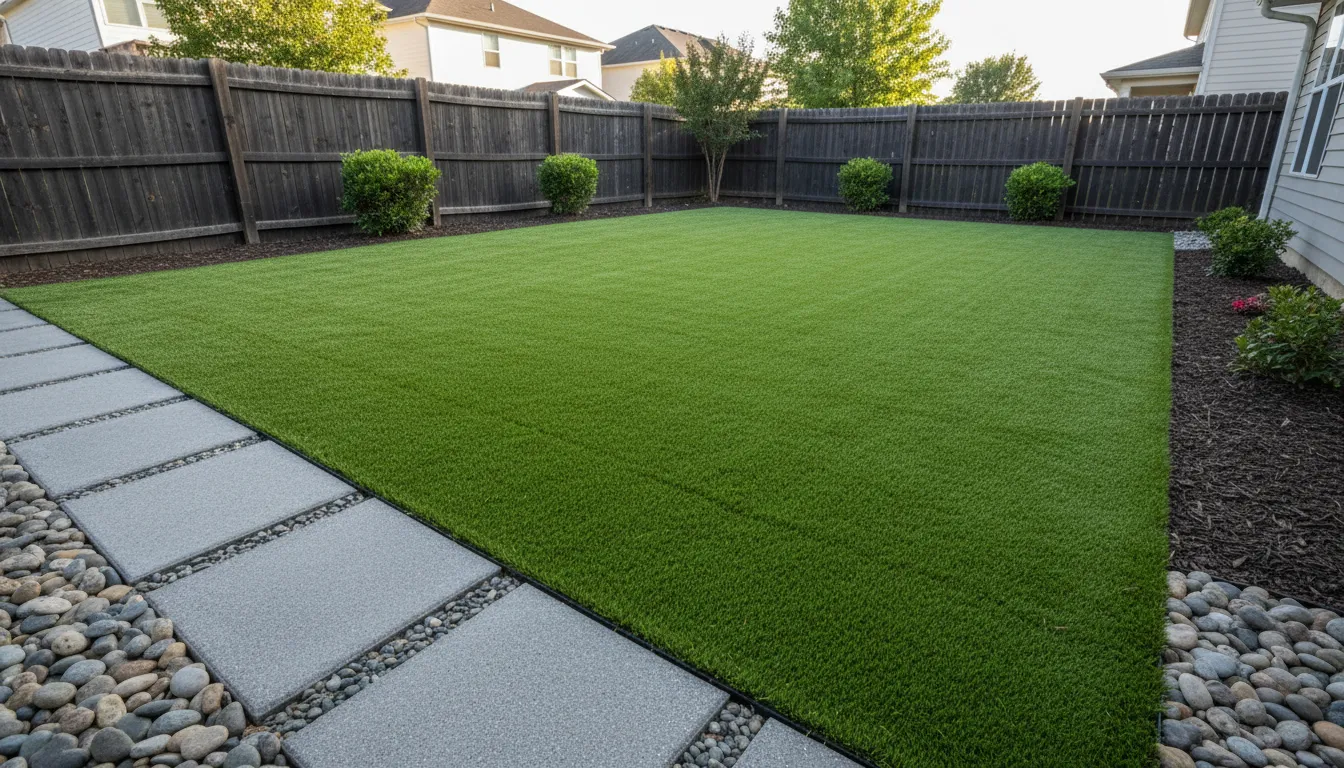
Synthetic grass is an increasingly popular option in dry regions like Wyoming due to its significant water savings and year-round green appearance 4. Modern artificial turf looks realistic and can handle high traffic. A key consideration is that it can become hot in direct, intense sunlight. The success of an artificial lawn hinges almost entirely on the quality of the base installation, which must provide excellent drainage to prevent pooling and matting.
Critical Step: Soil Preparation for Sod
The single most important factor for successful sod establishment is thorough soil preparation. Skipping or rushing this step is the leading cause of lawn failure.
- Clear and Grade: Begin by removing all existing vegetation, rocks, and debris. The area should be graded to slope gently away from your home's foundation (about a 1-2% slope) to ensure proper surface drainage 5.
- Test Your Soil: Conduct a soil test through your local University of Wyoming Extension office or with a home test kit. This will tell you the soil pH (ideal range for grass is 6.0 to 7.5) and nutrient levels 6. Wyoming's often-alkaline soils may require amendments like elemental sulfur to lower the pH.
- Amend the Soil: Based on your soil test, till in recommended amendments. For most Wyoming soils, incorporating 4 to 6 inches of organic compost is highly beneficial 7 8. This improves soil structure, water retention, and nutrient availability. Also till in any starter fertilizer or lime as indicated by your test.
- Till and Level: Use a rototiller to loosen the soil to a depth of at least 6 inches. After tilling, rake the area thoroughly to create a fine, level seedbed. The final surface should be firm but not compacted-you should leave only a slight impression when walking on it.
- Final Firming: Lightly roll the prepared area with a lawn roller (one-third filled with water) to firm the soil surface and eliminate air pockets. This provides a solid base for the sod roots to make immediate contact 9.
Base Preparation for Artificial Turf
The installation base for synthetic grass is a engineered system designed for stability and drainage. Proper construction is crucial for longevity and performance.
- Excavation: Remove existing grass and soil to a depth of 6 to 8 inches, depending on the specific system requirements.
- Sub-Base: Lay down a geotextile landscape fabric to suppress weed growth. Then, add and compact a 4-inch layer of crushed rock or gravel (typically 3/4" minus). This layer provides the primary structural support and drainage.
- Leveling Layer: Add a 1-2 inch layer of decomposed granite or coarse sand on top of the compacted rock. This layer is meticulously leveled and smoothed to create the final surface contour for the turf.
- Edging: Install secure, non-flexible edging around the perimeter (such as plastic bender board, metal, or concrete) to anchor the artificial turf firmly in place.
Find the perfect sod and turf lawn installers for your needs
Get personalized recommendations and expert advice
Installation and Initial Care
Laying Natural Sod
Install sod as soon as it's delivered. Start along a straight edge, like a driveway or sidewalk, laying rolls in a staggered brick-like pattern. Butt edges together tightly without stretching or overlapping. Use a sharp knife to trim around curves and obstacles. Immediately after installing a section, water it thoroughly.
Watering Your New Natural Lawn
Proper irrigation is critical for sod to "knit" with the soil beneath.
- First 2 Weeks: Water 1 to 3 times daily for about 20-30 minutes per session, keeping the soil consistently moist to a depth of 4 inches 10. Avoid runoff.
- Weeks 3-4: Gradually reduce frequency to watering every other day, then twice a week, encouraging deeper root growth.
- Established Lawn: Once rooted, aim for about 1 inch of water per week, applied in one or two deep watering sessions rather than frequent light sprinklings 11. Always be mindful of local water use ordinances, which are common in Wyoming municipalities like Cheyenne and Cody 11.
Installing Artificial Turf
Roll out the synthetic grass and allow it to acclimate and relax in the sun. Trim to fit, then seam sections together using specialized tape and adhesive. Secure the perimeter by nailing or stapling it into the edging. Finally, spread silica sand infill over the turf and brush it in with a power broom. This sand helps weigh down the turf, keeps blades upright, and provides cooling.
Cost Considerations for Wyoming Lawns
Costs for lawn installation in Wyoming vary based on project size, materials, site accessibility, and labor.
- Natural Sod: The sod itself typically costs between $0.50 and $1.50+ per square foot. Professional installation, which includes all site preparation, adds significantly to the total, with complete project costs often ranging from $2 to $5+ per square foot 12 13. Soil amendments like compost (approximately 4 cubic yards per 1,000 sq ft) are an additional cost factor.
- Artificial Turf: This option has a higher upfront investment due to material costs and the intensive base work required. Installed costs for synthetic grass generally range from $5 to $15+ per square foot 14. The long-term savings on water, mowing, and fertilization can offset this initial cost over time, making it a compelling option for water-conscious homeowners.
Frequently asked questions
Sources
Footnotes
-
Wyoming Rural Living Resources A Practical Guide - https://www.uwyo.edu/barnbackyard/_files/documents/magazine/2012guide/rural_living_resources_guide-2019-web.pdf ↩
-
Selecting turfgrass for Wyoming no easy walk in the park - https://www.uwyo.edu/barnbackyard/_files/documents/magazine/2020/fall/0920selectturf.pdf ↩
-
Best Grass Seed for Wyoming - Lawn Synergy Guide - https://lawnsynergy.com/blogs/lawn-guides/best-grass-seed-for-wyoming ↩
-
Pros and Cons of Artificial Grass For Your Backyard - https://www.patioproductions.com/blog/features/pros-and-cons-of-artificial-grass-for-your-backyard/ ↩
-
Essential Steps for Preparing Your Yard for Sod Installation - https://southernlovelandscaping.com/2025/02/24/how-to-prepare-a-yard-for-sod-installation/ ↩
-
The Ultimate Guide to Preparing Soil for Turf Installation - https://lavingtonturf.com/the-ultimate-guide-to-preparing-soil-for-turf-installation/ ↩
-
Prepare Your Lawn for Sod Installation: A Step-By-Step Guide - https://www.southdallasturfandsupply.com/blog/prepare-your-lawn-for-sod/ ↩
-
How to soil prep for sod - Green Valley Turf, Residential - https://gvt.net/resources/how-to-soil-prep-for-sod/ ↩
-
The Step-by-Step Guide to Successful Sod Installation - https://couturegrounds.com/blog/guide-to-successful-sod-installation/ ↩
-
Grass Sod Installation: Ultimate Lush Lawn 2025 - https://randalllandscaping.com/grass-sod-installation-guide-2025/ ↩
-
Watering Guidelines - Cody, WY - https://www.codywy.gov/DocumentCenter/View/222/Raw-Water-Brochure---Watering-Guidelines ↩ ↩2
-
Residential Sod Installation: Costs, Planning & What to Expect - https://gvt.net/residential-sod-installation-costs-planning/ ↩
-
How Much Does Sod Installation Cost in New York, NY? | Angi - https://www.angi.com/articles/how-much-does-it-cost-lay-sod/ny/new-york ↩
-
New Lawn Permit - Cheyenne Board of Public Utilities - https://www.cheyennebopu.org/Water/Water-Conservation/New-Lawn-Permit ↩