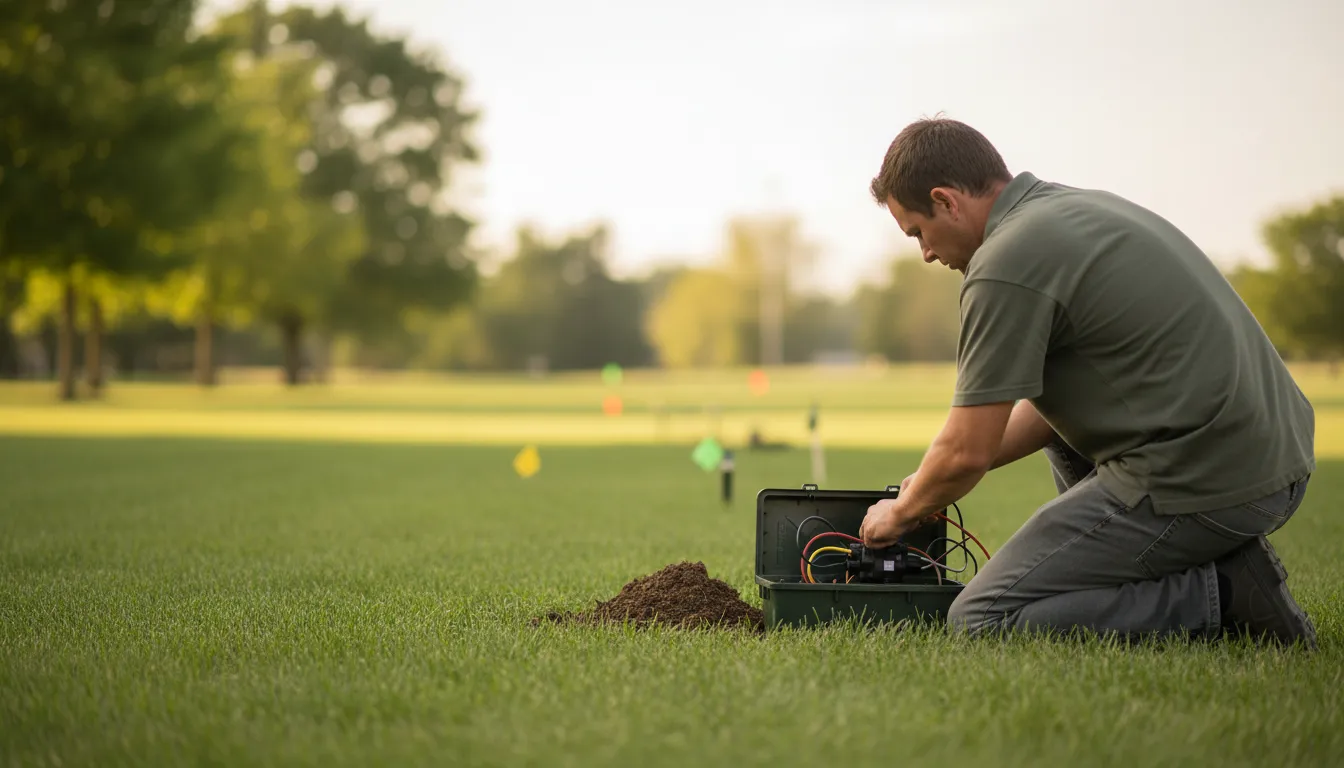
Find the Best Sprinkler & Irrigation Companies for Your Business
No obligation • Fast responses • Nationwide coverage

Why you can trust Landscape Atlas
Landscape Atlas is a leading United States resource for evaluating landscaping, lawn care, and outdoor service providers. Our team researches each category in depth, focusing on service quality, safety, and customer experience. Listings and rankings are based on independent criteria and user feedback, and companies cannot pay to influence our assessments or recommendations.
Search providers near you
Top Sprinkler & Irrigation Companies in Hoffman Estates, Illinois Ranked
A well-designed sprinkler and irrigation system is the key to a healthy, vibrant landscape without the hassle of manual watering. These automated systems deliver water efficiently and precisely to your lawn and garden beds, conserving water and protecting your investment in your property. For Hoffman Estates homeowners, understanding the components, benefits, and local options for landscape watering systems is the first step toward a greener, more manageable yard. This guide will help you navigate the process of planning, installing, and maintaining an efficient irrigation setup.
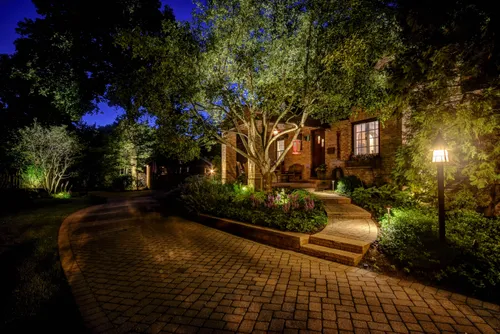
American National Sprinkler & Lighting
924 Turret Ct, Mundelein, IL 60060
American National Sprinkler & Lighting is a Chicago, IL-based company specializing in lawn sprinkler system installation, repair, and outdoor lighting services. Established in 1984, the company has grown from a small team to a large operation with over 40 vehicles and 80 employees. They focus on designing and maintaining reliable sprinkler and lighting systems, with a service approach that emphasizes quick scheduling and efficient repairs, often completed within one to two days. The company operates seven days a week to accommodate customer schedules and prioritizes minimizing the time clients need to be at home.
Advanced Sprinkler Systems, Inc
954 Marvell Ln, Highland Park, IL 60035
Advanced Sprinkler Systems, Inc provides sprinkler installation, repair, and irrigation services in Chicago, IL. They specialize in testing, certifying, and servicing RPZ (backflow) devices, which are required by Illinois law to prevent contamination of water supplies. Their licensed professionals ensure irrigation systems comply with state regulations. The company also offers seasonal services such as system winterization to protect equipment from freezing damage.
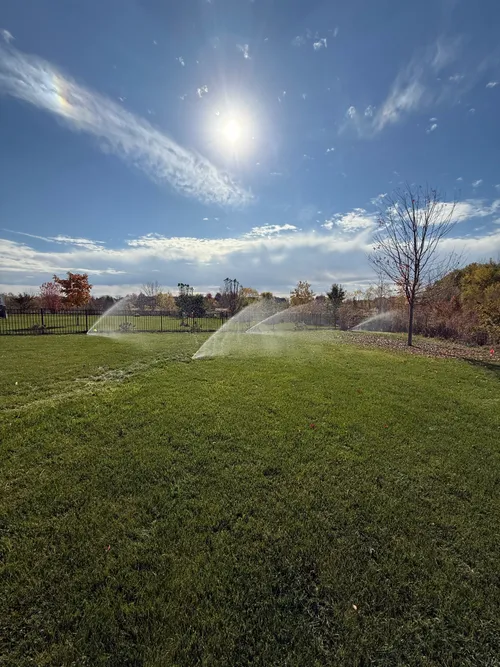
Ascend Irrigation, Inc
813 E Washington St, West Chicago, IL 60185
Ascend Irrigation, Inc is a Chicago, IL-based company specializing in landscape lighting installation, yard drainage, grading, and sprinkler system services. They design and install tailored irrigation and drainage solutions that promote efficient water use and help maintain healthy, vibrant outdoor spaces. Their expertise includes advanced irrigation technologies aimed at minimizing water waste and comprehensive drainage systems to prevent water buildup and erosion. With years of experience, Ascend Irrigation, Inc serves both residential and commercial properties, focusing on sustainable landscaping and outdoor lighting enhancements.
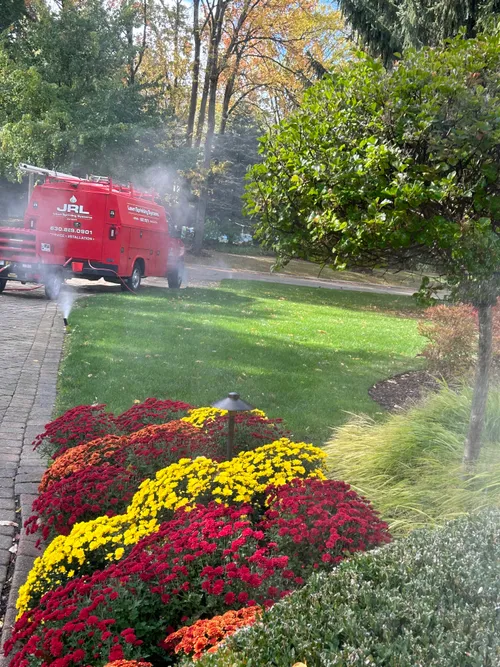
JRL Lawn Sprinkling Systems
Chicago, IL
JRL Lawn Sprinkling Systems has been designing and installing home irrigation systems in Chicago, IL since 1977. They specialize in sprinkler installation and repair, focusing on creating and maintaining lawn sprinkler systems with state-of-the-art equipment and professional staff. Their experience spans over four decades, serving the Chicagoland area with precise and reliable irrigation solutions.
Allscape Services
452 Scotland Rd, Lakemoor, IL 60051
Allscape Services is an outdoor landscape and lawn sprinkler service provider based in Chicago, IL. They offer a full range of services including lawn irrigation, landscape lighting installation, yard drainage, grading, and holiday lighting. With over 25 years of experience, they serve customers throughout northern Illinois and specialize in design, installation, maintenance, and repairs to enhance outdoor spaces year-round. Their capabilities include lawn sprinkler system installation and comprehensive holiday lighting services.
How an Automatic Irrigation System Works
At its core, an automatic sprinkler system is a network of underground pipes and valves controlled by a central timer. The magic lies in its zoned design. Your property is divided into separate areas, or zones, based on factors like plant type and sun exposure. For example, your sunny front lawn, shaded backyard, and flower beds would each be their own zone.
When the system activates, here's what happens:
- Controller Signal: Your irrigation controller (the timer) sends a low-voltage signal to a specific zone.
- Valve Activation: This signal opens a solenoid valve for that zone, allowing pressurized water from your main line to flow.
- Water Delivery: The water travels through PVC pipes to the sprinkler heads or drip emitters in that zone.
- Precise Application: Sprinkler heads pop up to water the area, then retract when the cycle is complete. Different head types-like rotors for large lawns or fixed spray heads for smaller areas-ensure even coverage 1 2.
This zoned approach is crucial for efficiency, as it allows you to give a thirsty lawn more water than a drought-tolerant shrub bed, all on the same system.
Key Components of Your System
Understanding the parts of your irrigation setup helps with maintenance and informed conversations with local providers.
- Controller: The brain of the operation. Modern smart controllers can adjust watering schedules based on local weather data, saving significant water.
- Backflow Preventer: A critical safety device that stops contaminated water from siphoning back into your home's drinking water supply. This is often required by local code.
- Valves: Each watering zone has its own valve, which opens and closes on command from the controller.
- Piping: Typically schedule 40 PVC pipe, buried underground to distribute water.
- Sprinkler Heads: These are the workhorses. Rotors are for large areas, spray heads for smaller zones, and drip irrigation uses emitters for precise watering at the root zone of plants, trees, and gardens 3.
- Sensors: Rain sensors and soil moisture sensors can override the controller to prevent unnecessary watering, a smart feature for Hoffman Estates' variable climate.
Designing an Efficient System for Your Yard
A one-size-fits-all approach doesn't work for irrigation. A proper design considers your specific landscape.
- Zone by Plant Need: Grass, perennial beds, shrubs, and vegetable gardens all have different water requirements. They should be on separate zones.
- Head-to-Head Coverage: Sprinkler heads should be placed so the water from one head reaches the adjacent head. This eliminates dry spots and ensures uniform watering 4.
- Sun vs. Shade: Sunny areas lose water to evaporation faster than shaded spots and often need separate programming.
- Mixing Methods: The most efficient systems often combine spray heads for turf with drip irrigation lines for planting beds and foundation plantings, delivering water exactly where it's needed with minimal waste 5.
Find the perfect sprinkler & irrigation companies for your needs
Get personalized recommendations and expert advice
Smart Watering Practices for Hoffman Estates
Installing a system is just the beginning. Programming it correctly saves water and promotes deeper, healthier roots.
- Weekly Water Goal: A general guideline is to provide about 1 inch of water per week to your lawn, including rainfall. This can be measured with a simple rain gauge.
- Seasonal Adjustments: Watering needs change dramatically with the weather. During peak summer heat (90°F+), you may need to water 3-4 times per week. In cooler spring or fall temperatures (60-70°F), 1-2 times may be sufficient 6.
- Time of Day: Always water in the early morning, ideally before 10 a.m. This reduces water loss from evaporation and wind, and allows grass blades to dry before nightfall, helping prevent fungal disease.
- Cycle and Soak: For sloped areas or clay-heavy soils common in the region, use the "cycle and soak" method. Instead of one long watering cycle, program two or three shorter cycles (e.g., 10 minutes each) with a 30-60 minute break in between. This allows water to soak in deeply and prevents wasteful runoff 7.
Understanding Installation and Repair Costs
Investing in an in-ground sprinkler system is a significant home improvement. Costs are typically broken down by the size of your property and the number of zones.
- Small Lot (up to 1/4 acre): Installation can range from approximately $6,000 to $12,000.
- Medium Lot (1/4 to 1/2 acre): Costs often fall between $11,000 and $16,000.
- Per-Zone Cost: Adding individual zones can cost roughly $590 to $1,340 per zone, in addition to broader per-square-foot estimates 8 9.
These figures cover design, trenching, pipe, heads, valves, controller, and professional installation. Repairs are a different matter and vary widely based on the issue-fixing a leaky valve, replacing a broken head, or performing annual winterization and spring startup services all have separate labor and part costs. Getting multiple detailed quotes from local irrigation specialists is the best way to understand the investment for your specific home.
Maintaining Your Irrigation Investment
Regular maintenance keeps your system running efficiently and prevents small problems from becoming costly repairs.
- Spring Startup: A professional will pressurize the system, check for winter damage, clean filters, and program the controller. They ensure the backflow preventer is working and that all zones are operating correctly.
- Monthly Checks: During the watering season, visually inspect each zone while it runs. Look for misaligned heads, clogged nozzles, or leaks that create soggy areas.
- Autumn Winterization: This is critical in Illinois to prevent frozen, burst pipes. The system must be completely drained of water using compressed air (blow-out). Hiring a professional for this service is highly recommended.
- Controller Updates: Remember to adjust your watering schedule at least seasonally, and use a rain sensor to automatically skip cycles after adequate rainfall.
Frequently asked questions
Sources
Footnotes
-
Irrigation System Explained | Installation and Maintenance Guide - https://bluejayirrigation.com/irrigation-installation-explained/ ↩
-
In-Ground Sprinkler System 101 | How Do Sprinklers Work? - https://www.commerciallawnirrigation.com/blog-posts/how-do-sprinklers-work ↩
-
How to Install an In-Ground Sprinkler System - This Old House - https://www.thisoldhouse.com/landscaping/21016605/how-to-install-in-ground-sprinklers ↩
-
Precipitation rate - https://waterwisegardenplanner.org/precipitation-rate/ ↩
-
How to Plan Your Automatic Sprinkler System - https://www.rainbird.com/homeowners/blog/planning-an-irrigation-system ↩
-
Irrigation 101 - https://www.fresnogardening.org/Garden-Resources/Irrigation101.php ↩
-
Irrigation System Guides - Metropolitan North Georgia Water ... - https://northgeorgiawater.org/residents-schools-businesses/conserve-our-water/irrigation-system-guides-watering-and-maintenance-guides/ ↩
-
Sprinkler System Cost: Installation & Maintenance Guide - https://heartlandsprinklers.com/green-tips/sprinkler-system-cost-guide/ ↩
-
How Much Does it Cost to Install a Sprinkler System in 2026? - https://lawnlove.com/blog/sprinkler-system-cost/ ↩