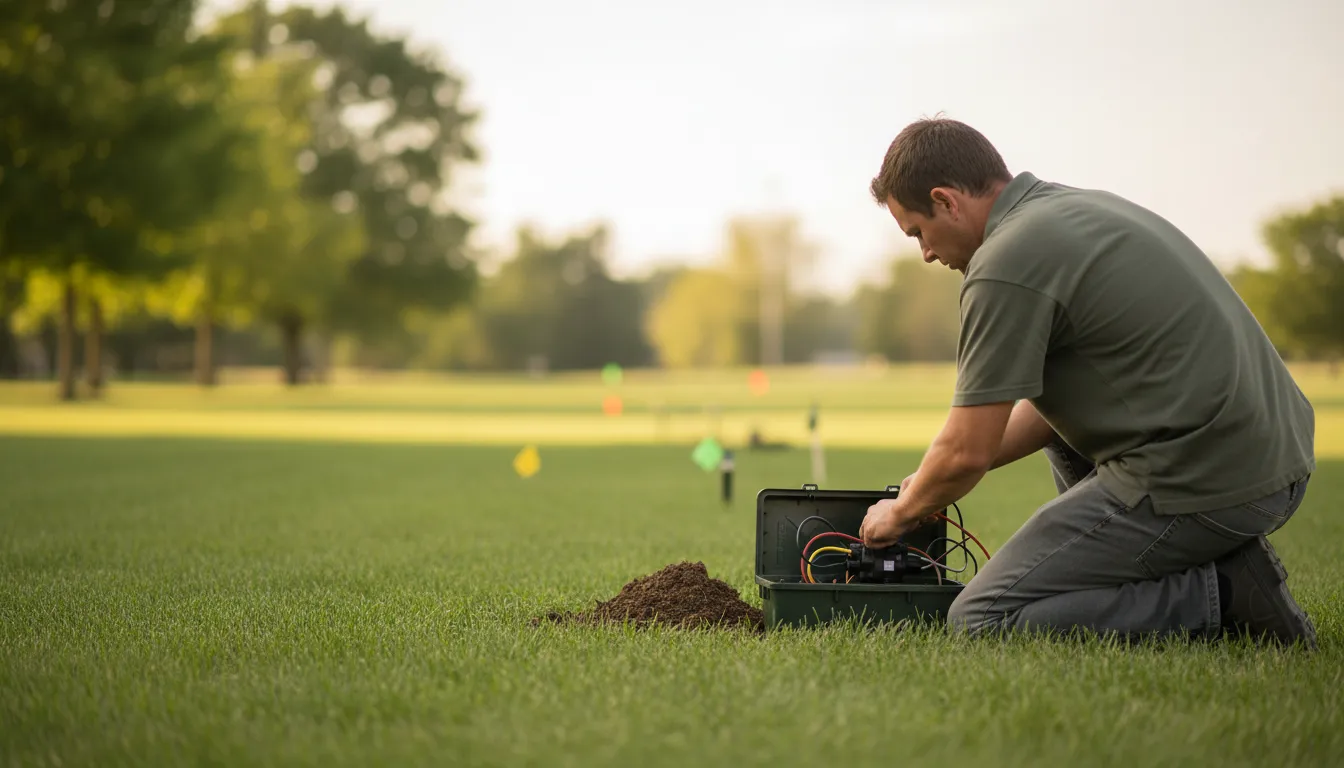
Find the Best Sprinkler & Irrigation Companies for Your Business
No obligation • Fast responses • Nationwide coverage

Why you can trust Landscape Atlas
Landscape Atlas is a leading United States resource for evaluating landscaping, lawn care, and outdoor service providers. Our team researches each category in depth, focusing on service quality, safety, and customer experience. Listings and rankings are based on independent criteria and user feedback, and companies cannot pay to influence our assessments or recommendations.
Search providers near you
Top Sprinkler & Irrigation Companies in Greenwood, Indiana Ranked
A well-designed sprinkler and irrigation system is the key to a healthy, vibrant landscape while conserving water and saving you time. In Greenwood's climate, an automated watering system ensures your lawn and garden receive the right amount of moisture at the optimal time, protecting your investment in your property. This guide will help you understand the components, design principles, and maintenance of a residential irrigation system, empowering you to make informed decisions and connect with local experts for your project.
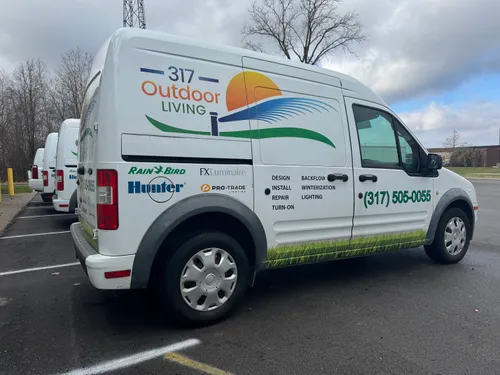
Indy Irrigation Inc
647 Sayre Ct suite b, Greenwood, IN 46143
Indy Irrigation Inc is a landscaping and irrigation company serving Indianapolis, IN. They provide irrigation system installation, repair, and maintenance for residential, commercial, and landscaping clients. Their services include sprinkler system revamps, LED landscape lighting installation, and outdoor audio system setup. With 30 years of experience servicing Central Indiana, Indy Irrigation offers comprehensive irrigation care including system opening, backflow testing, and winterization. They also provide an all-inclusive maintenance package covering parts and service calls throughout the year.
Fralich's
959 W 100 N, Greenfield, IN 46140
Fralich's is a landscaping company serving Indianapolis, IN, with over 20 years of combined experience. They offer a wide range of services including lawn mowing, fertilization, weed control, landscape design and installation, yard drainage and grading, sprinkler installation and repair, land clearing, and hardscaping such as pavers and retaining walls. Their team uses professional equipment for land grading to ensure lawns are even and free of standing water. Established in 2006, Fralich's has grown from a one-man operation to a seasonal crew of 15, focusing on both residential and commercial landscaping projects.

Fine Touch Services
12175 Visionary Way Suite 929, Fishers, IN 46038
Fine Touch Services is a landscaping and lawn care company based in Indianapolis, IN. They offer a wide range of services including lawn mowing, fertilization, weed control, sod installation, fence installation, landscape lighting, tree and stump removal, yard drainage, sprinkler system installation and repair, land clearing, and hardscaping such as patios and retaining walls. Serving the Greater Indianapolis area, including Carmel, Fishers, Noblesville, and surrounding communities, Fine Touch provides custom irrigation and drainage solutions along with comprehensive landscape design and installation. Their capabilities include outdoor living spaces, fire pits, water features, and seasonal lawn maintenance.

Haulstr - Patios, Dumpster Rental, Irrigation, Mulch, Landscaping
2117 Burning Tree Ln, Carmel, IN 46032
Haulstr - Patios, Dumpster Rental, Irrigation, Mulch, Landscaping is based in Indianapolis, IN. While Haulstr now focuses on dumpster rentals, its landscaping and hardscaping services are managed through TT Renovations, operated by the same team. They provide landscape design, sprinkler installation and repair, and hardscaping including patios and retaining walls. The team oversees projects from design through installation and final walkthrough, ensuring consistent standards under one ownership.
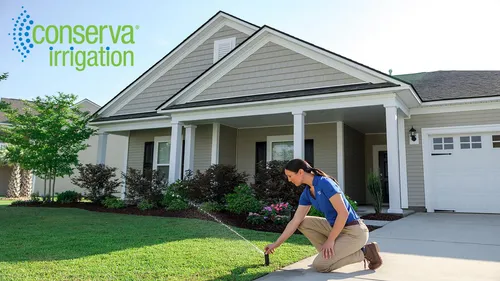
Conserva Irrigation of North Indianapolis
8481 Bash St #1300, Indianapolis, IN 46250
Conserva Irrigation of North Indianapolis provides irrigation system design, installation, repair, and maintenance services in Indianapolis, IN, and surrounding areas including Carmel, Fishers, Noblesville, Westfield, and Zionsville. They specialize in sprinkler system installation and repair, yard drainage, grading, and smart irrigation solutions that help conserve water and improve lawn health. Their services include system inspections, winterization, backflow testing, and upgrades to intelligent controllers and sensors. Conserva Irrigation emphasizes efficient water use and offers comprehensive expertise in irrigation system components and layout. The company has built a reputation for thorough diagnostics and clean repairs, serving the community with a focus on water conservation and system optimization.
Understanding Your Irrigation System's Anatomy
An automatic sprinkler system is more than just heads popping up from the ground. It's a coordinated network of components working together. The process typically starts at your home's main water supply or a well, where a backflow prevention device is critically installed to protect your drinking water from contamination. From there, water flows through underground PVC or polyethylene piping to various zones in your yard.
Each zone is controlled by an electric valve that opens and closes on command from the irrigation controller (often called a timer), which is the brain of the operation1 2. Finally, sprinkler heads-which come in spray, rotary, or drip varieties-distribute the water across the landscape. Understanding this basic anatomy is the first step in planning a new installation or troubleshooting an existing one.
The Core Principle: Zoning and Head-to-Head Coverage
Effective irrigation isn't about randomly placing sprinklers. The two most important design concepts are zoning and head-to-head coverage.
Zoning involves dividing your property into sections based on plant type, sun exposure, and soil conditions. For example, a sunny lawn area would be on a different zone than a shaded flower bed or a sloped hillside. This allows the controller to water each area for a specific duration and frequency that matches its needs, preventing both underwatering and wasteful overwatering.
Head-to-head coverage is the gold standard for ensuring uniform water distribution 3. This means the water from one sprinkler head reaches the adjacent head, so every square foot of the zone receives equal precipitation. Properly designed layouts avoid dry brown spots and soggy puddles, creating an evenly green lawn. In Greenwood, where summer heat can stress turf, this precision is especially valuable.
Smart Watering Schedules for Central Indiana Climates
Setting your controller correctly is where water conservation and plant health meet. A common goal is to provide about 1 inch of water per week to established turfgrass, including rainfall. The timing of this watering is crucial.
The best practice is to water between 4:00 AM and 10:00 AM. Watering in the early morning minimizes loss to evaporation from wind and sun, allows foliage to dry before nightfall (reducing disease risk), and avoids peak water usage times in the community. Your schedule should also adapt to the season:
- 90°F+ (Summer): Water 3-4 times per week.
- 70-80°F (Spring/Fall): Water approximately 3 times per week.
- 60°F and below: Reduce to 1-2 times per week4.
For sloped or clay-heavy soils common in the area, using a cycle-and-soak method-applying water in shorter, repeated cycles-can prevent runoff and ensure deeper root penetration.
Find the perfect sprinkler & irrigation companies for your needs
Get personalized recommendations and expert advice
Installation and Investment: What to Expect in Greenwood
Installing an in-ground sprinkler system is a significant home improvement project. The process involves designing the layout, trenching for pipes, assembling the valve manifolds, placing the heads, wiring the controller, and finally backfilling and restoring the turf. Due to this complexity, professional installation is highly recommended.
Costs are highly variable and depend on your property's size, landscape complexity, the number of zones, and the type of equipment used. As a general range:
- A system for a quarter-acre lot might range from $1,700 to $5,500.
- A system for a one-acre property could range from $6,500 to over $20,0005 6.
These figures include design, labor, materials, and trenching. The best way to get an accurate price for your specific Greenwood home is to obtain detailed estimates from local irrigation specialists.
Maintenance, Repairs, and System Longevity
Like any mechanical system, your sprinkler system requires periodic maintenance and occasional repairs. Common issues include clogged or broken sprinkler heads from lawn mowers, leaking valves, and damaged pipes from root intrusion or freezing.
Spring startup (winterization removal) and fall winterization (blowing out the lines to prevent freeze damage) are essential annual services in Indiana's climate. Repair costs vary widely based on the problem's location and complexity. Simple head replacements may cost a small service fee plus parts, while repairing a leak deep in a main line or replacing a faulty valve manifold will be more involved 7. Regular inspections can catch small problems before they lead to wasted water or landscape damage.
Choosing the Right Components and Technology
Modern irrigation systems offer smart technology that goes beyond basic timers. Smart controllers can connect to Wi-Fi and use local weather data or soil moisture sensors to automatically adjust the watering schedule, skipping cycles after rain and increasing watering during heat waves. This technology can lead to significant water savings.
The choice of sprinkler heads is also important. Rotary nozzles are often preferred for larger lawn areas as they apply water more slowly and evenly than traditional spray heads, reducing runoff. Drip irrigation zones are ideal for flower beds, gardens, and foundation plantings, delivering water directly to the root zone with minimal evaporation. Discussing these options with a professional can optimize your system's efficiency and performance.
Frequently asked questions
Sources
Footnotes
-
Anatomy of an Automatic Sprinkler System - Rain Bird - https://www.rainbird.com/homeowners/blog/anatomy-of-an-automatic-sprinkler-system ↩
-
In-Ground Sprinkler System 101 | How Do Sprinklers Work? - https://www.commerciallawnirrigation.com/blog-posts/how-do-sprinklers-work ↩
-
Easy, step-by-step, underground sprinkler system layout guide - https://images.thdstatic.com/catalog/pdfImages/a9/a9564496-8fb7-4141-8758-5f660a7a9310.pdf ↩
-
Landscape Irrigation Watering Guide - https://northgeorgiawater.org/wp-content/uploads/2017/02/Landscape-Irrigation-Watering-Guide.pdf ↩
-
Basics of a Indiana 2023 Lawn Sprinkler System Design - https://www.artificialrainllc.com/basics-of-a-indiana-2023-lawn-sprinkler-system-design/ ↩
-
Best Cost of Garden Irrigation System: Ultimate 2025 Guide - https://randalllandscaping.com/cost-of-garden-irrigation-system/ ↩
-
Indianapolis Sprinkler Installation: Complete Guide - https://wewatergrass.com/how-to-plan-your-lawn-sprinkler-system-installation-in-indianapolis/ ↩