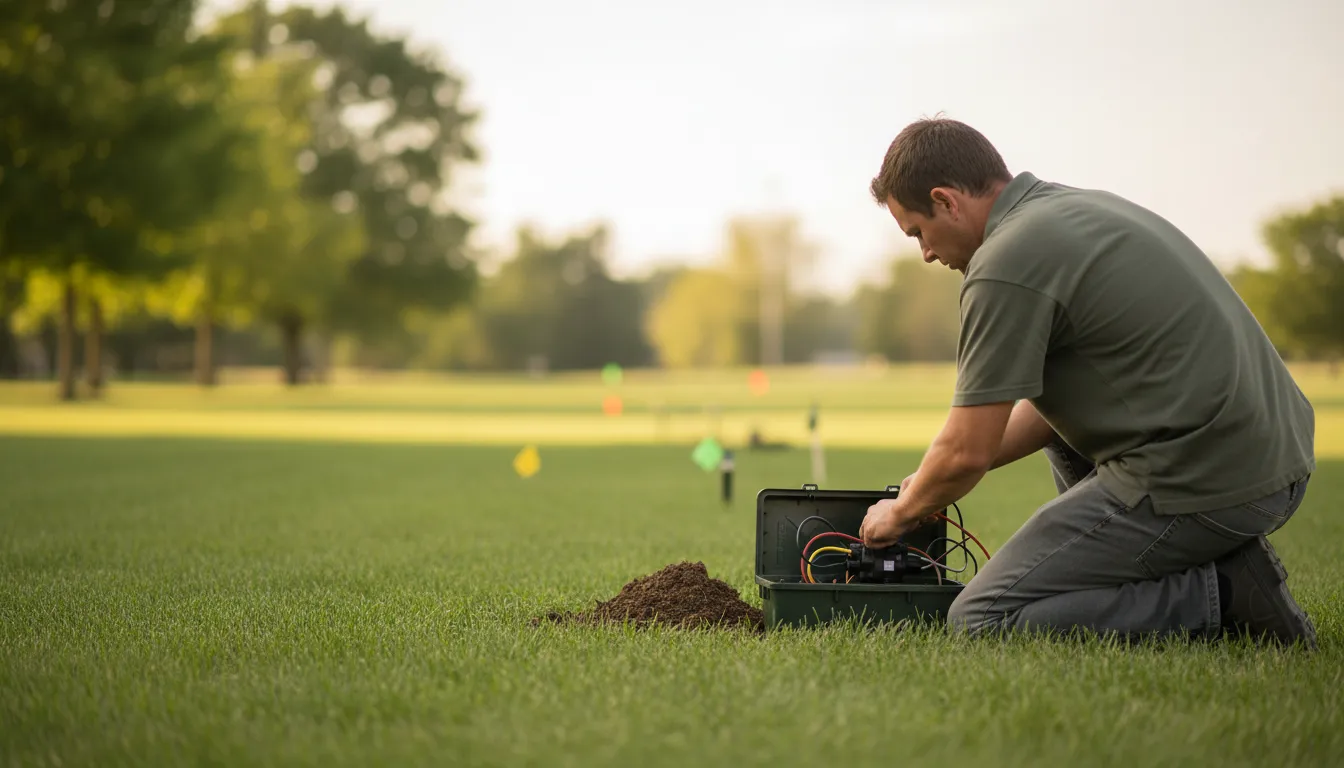
Find the Best Sprinkler & Irrigation Companies for Your Business
No obligation • Fast responses • Nationwide coverage

Why you can trust Landscape Atlas
Landscape Atlas is a leading United States resource for evaluating landscaping, lawn care, and outdoor service providers. Our team researches each category in depth, focusing on service quality, safety, and customer experience. Listings and rankings are based on independent criteria and user feedback, and companies cannot pay to influence our assessments or recommendations.
Search providers near you
Top Sprinkler & Irrigation Companies in Buffalo, New York Ranked
A well-designed sprinkler or irrigation system is more than just a convenience; it's a strategic investment in the health and beauty of your Buffalo property. These automated watering systems deliver precise amounts of water exactly where your lawn and plants need it, conserving water and saving you time. For homeowners in Western New York, navigating the specific challenges of our climate-from summer heat to deep winter freezes-makes choosing the right system and provider essential. This guide will help you understand your options, from basic sprinkler setups to advanced smart irrigation, so you can make an informed decision for your home.
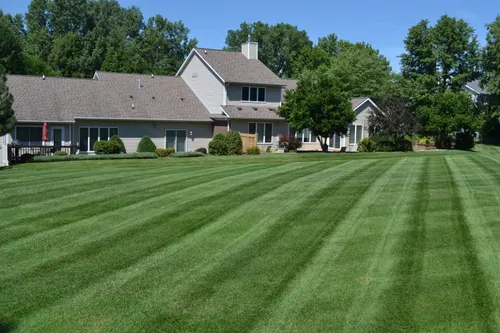
Buffalo Lawn & Pest Services
224 Dingens St, Buffalo, NY 14206
Buffalo Lawn & Pest Services is a family-owned business based in Buffalo, NY, offering a wide range of lawn care, pest control, and landscaping services. With over 45 years of experience, their certified technicians provide lawn mowing, fertilization, weed control, tree and shrub care, outdoor lighting installation, irrigation system services, and snow and ice removal. They serve the Buffalo area with a focus on maintaining healthy, vibrant outdoor spaces using environmentally responsible methods. Their expertise includes pest and rodent control, as well as landscape maintenance tailored to each property's needs.
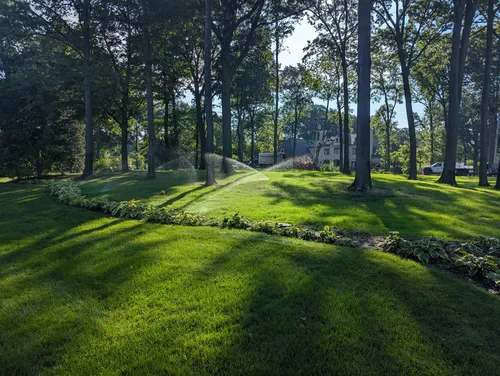
Buffa-Lawn Irrigation
Buffalo, NY
Buffa-Lawn Irrigation is a full-service irrigation company based in Buffalo, NY, serving the local area and Western New York. They specialize in sprinkler installation, repair, and maintenance using the latest irrigation technology. Their services include smart irrigation system installations with features like Wi-Fi connectivity, weather-adaptive scheduling, and remote monitoring to optimize water use. With over 20 years of experience, Buffa-Lawn offers seasonal services such as spring start-ups, winterizations, and system revamps to ensure efficient irrigation year-round.
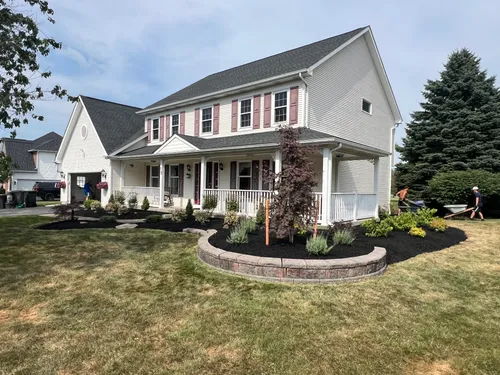
Craig's Landscaping Inc.
Buffalo, NY
Craig's Landscaping Inc. is a locally owned landscaping company serving Buffalo, NY, and the surrounding Western New York region. They offer a wide range of services including landscape design, sod installation, plant installation, bed maintenance, mulching, and hardscaping. The company specializes in addressing local challenges such as drainage issues, harsh weather, and limited sunlight by providing tailored solutions like grading, soil conditioning, and planting climate-appropriate vegetation. With over 15 years of experience, Craig's Landscaping provides full-service landscaping from design to installation and care guidance, ensuring projects are suited to the region's climate and customer needs. They maintain all-season service availability to support clients throughout the year.
5 Star Plowing & Landscaping
195 Lehigh St, Lackawanna, NY 14218
5 Star Plowing & Landscaping is a full-service landscaping and snow removal company based in Buffalo, NY. They offer a wide range of services including lawn mowing, fertilization, weed control, sod installation, tree care, sprinkler installation, and landscape design. The company also provides snow plowing and removal services using advanced equipment to keep properties safe and accessible during winter. Serving Buffalo and surrounding communities, 5 Star Plowing & Landscaping combines years of experience with a commitment to transforming outdoor spaces throughout Erie County.

Oasis Sprinkler Systems
7 Anna Dr, Bowmansville, NY 14026
Oasis Sprinkler Systems is a family-owned business serving Buffalo, NY, and the surrounding Western New York area. They specialize in custom designing, installing, and repairing lawn sprinkler and irrigation systems for both residential and commercial properties. With over 20 years of experience, Oasis Sprinkler Systems focuses on quality products and carefully planned irrigation solutions tailored to each customer's specific watering needs.
How Irrigation Systems Work
At its core, a residential irrigation system is a network designed to automate watering. The process begins at your main water line, which connects to a backflow preventer (a crucial safety device) and then branches into underground PVC pipes. These pipes feed water to various zones in your yard. Each zone is controlled by an electric valve that opens and closes on command from a central controller, often called a timer or clock 1.
The controller is the brain of the operation. Traditional models run on a set schedule, but modern smart controllers can adjust watering based on local weather data, soil moisture, and plant type, offering significant water savings. When a zone valve opens, water pressure pushes through the pipes to the emission devices-typically pop-up sprinkler heads for lawns or drip emitters for garden beds and shrubs.
Key Components of Your System
Understanding the parts of your irrigation setup helps in maintenance and troubleshooting.
- Controller/Timer: Schedules watering cycles. Smart models with Wi-Fi connectivity allow for remote control and automatic seasonal adjustments.
- Valves: Usually housed in valve boxes in the ground, these electrically operated gates control water flow to individual zones.
- Sprinkler Heads: These pop up to water and retract when not in use. Types include fixed spray heads for small areas and rotary heads for larger lawns.
- Piping: Schedule 40 PVC is standard for main lines, while flexible polyethylene tubing is often used for lateral lines to heads.
- Drip Irrigation: A network of tubing with emitters that deliver water slowly and directly to plant root zones, minimizing evaporation and runoff2.
Designing for Efficiency and Even Coverage
A successful system isn't just about installing parts; it's about intelligent design. The goal is uniform water distribution without dry spots or wasteful overspray.
Zoning is the first critical step. Your yard should be divided into separate zones based on sun exposure, soil type, and plant material. For example, a sunny lawn, a shaded lawn, and perennial beds should all be on different zones to meet their unique water needs.
Head-to-Head Coverage is the golden rule for sprinkler layout. This means the water from one sprinkler head should reach the adjacent head. This overlap ensures every square foot of turf receives an even amount of water, preventing those frustrating brown circles3.
Selecting the right nozzles and heads is also vital. Modern matched-precipitation rate nozzles and high-efficiency rotary heads apply water more slowly and evenly than old-fashioned spray heads, reducing runoff and allowing for better soil absorption4.
Find the perfect sprinkler & irrigation companies for your needs
Get personalized recommendations and expert advice
Watering Guidelines for Buffalo Lawns
How much and how often should you water? The general guideline is to provide about 1 inch of water per week, combining rainfall and irrigation5. This promotes deep, drought-resistant root systems.
- Frequency: It's typically better to water deeply 2-3 times per week rather than a little every day6 7.
- Duration: To apply 1 inch of water, most systems need to run for about 30-45 minutes per zone, but this can vary. The "tuna can test"-placing empty cans around your yard to measure accumulation-is a perfect way to calibrate your system's output8.
- Timing: The best time to water is early in the morning, between 4 AM and 10 AM. This minimizes water loss from evaporation and wind, and allows grass blades to dry before nightfall, reducing the risk of fungal disease9.
The Buffalo Climate Factor
Our local weather presents specific challenges that must be addressed in both system design and annual maintenance.
Seasonal Adjustments are non-negotiable. Your watering schedule in cool, rainy spring should be vastly different from that in the hot, dry peak of summer. Smart controllers automate this, but manual timers require quarterly adjustments.
Winterization is the most critical annual service for any Buffalo irrigation system. Before the first hard freeze, a professional must use a commercial air compressor to "blow out" all water from the pipes, valves, and heads. Any remaining water can freeze, expand, and crack components, leading to costly repairs come spring10 11. This is a specialized task best left to experienced local technicians.
Installation, Repair, and Maintenance Costs
Investing in an irrigation system involves upfront and ongoing costs that vary based on your property's size and complexity.
New Installation costs can range widely. A basic system for a small property might start around $1,500, while a comprehensive, smart system for a large lot with multiple zones and drip lines can exceed $5,00012. Factors include property size, terrain, the type of controller, and the number of zones.
Repairs are inevitable over time. Common issues like a cracked sprinkler head or a leak in a lateral line may cost $100-$300 to fix. Replacing a faulty valve or controller can run several hundred dollars13.
Routine Maintenance extends system life and performance. Beyond winterization, this includes a spring start-up (checking for damage, adjusting heads, programming the controller), mid-season audits for coverage and leaks, and nozzle cleanings. Many local providers offer annual maintenance plans14.
Choosing Technology and a Local Provider
Embracing technology can maximize convenience and conservation. Smart Irrigation Controllers connect to Wi-Fi and use local weather station data or on-site sensors to skip watering before or after rain. They can adjust run times daily, potentially saving thousands of gallons per season 15.
When looking for a provider in the Buffalo area, seek out companies with proven experience in our climate. They should offer a full range of services: design, installation, maintenance, winterization, and repair. Look for expertise in both traditional sprinkler systems and water-wise drip irrigation. A reputable company will conduct a thorough site evaluation, explain the design plan clearly, and provide a detailed written estimate.
Frequently asked questions
Sources
Footnotes
-
New Irrigation System Installation & Maintenance: Everything You Need to Know - https://www.rainmasterlawn.com/blog/new-irrigation-system-installation-maintenance-everything-need-to-know ↩
-
Selecting an Irrigation System - https://www.nrcs.usda.gov/sites/default/files/2022-09/stelprdb1167474-selecting-irrigation-system.pdf ↩
-
Easy, step-by-step, underground sprinkler system layout guide - https://images.thdstatic.com/catalog/pdfImages/a9/a9564496-8fb7-4141-8758-5f660a7a9310.pdf ↩
-
How Does a Lawn Irrigation System Work: #1 Best Benefits - https://mcleodlandscaping.com/how-does-a-lawn-irrigation-system-work/ ↩
-
Installing a Lawn Sprinkler System? Pros and Cons - https://falcolawn.com/installing-a-lawn-sprinkler-system-pros-and-cons/ ↩
-
How Long to Run Sprinklers - Irrigreen - https://irrigreen.com/blogs/sprinkler-systems/how-long-to-run-sprinklers ↩
-
Landscape Irrigation Watering Guide - https://northgeorgiawater.org/wp-content/uploads/2017/02/Landscape-Irrigation-Watering-Guide.pdf ↩
-
How Long to Run a Sprinkler for 1 Inch of Water - Sod Solutions - https://sodsolutions.com/advanced-how-to/how-long-to-run-a-sprinkler-for-1-inch-of-water/ ↩
-
LAWN IRRIGATION GUIDE - USDA - https://www.nrcs.usda.gov/plantmaterials/idpmsbr5464.pdf ↩
-
Home - Buffa-Lawn Irrigation - Buffalo, NY - https://buffa-lawn.com/ ↩
-
Irrigation Services | Buffalo, NY - https://www.buffalolawns.com/irrigation-services ↩
-
Complete Guide to Irrigation System Upgrades in Texas - https://smartearthsprinklers.com/complete-guide-to-irrigation-system-upgrades-in-texas/ ↩
-
Cost of new lawn irrigation system installation Smart 2025 - https://lawncareplusma.com/cost-of-new-lawn-irrigation-system-installation/ ↩
-
Best Lawn Irrigation Cost Estimate: Precise Details for 2025 - https://bostonlandscapeco.com/lawn-irrigation-cost-estimate/ ↩
-
Sprinkler System Success: Step-by-Step Guide - https://advice.onekeymls.com/sprinkler-system-success-step-by-step-guide ↩