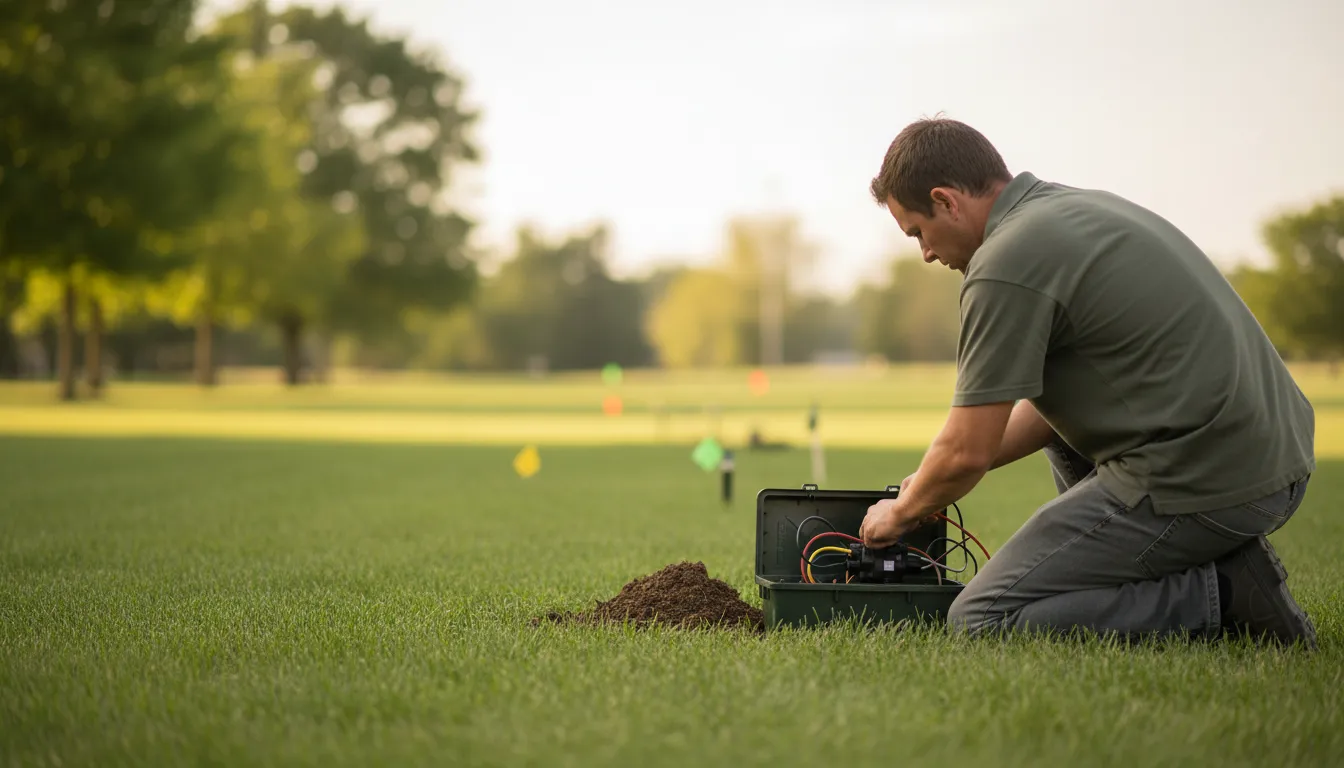
Find the Best Sprinkler & Irrigation Companies for Your Business
No obligation • Fast responses • Nationwide coverage

Why you can trust Landscape Atlas
Landscape Atlas is a leading United States resource for evaluating landscaping, lawn care, and outdoor service providers. Our team researches each category in depth, focusing on service quality, safety, and customer experience. Listings and rankings are based on independent criteria and user feedback, and companies cannot pay to influence our assessments or recommendations.
Search providers near you
Top Sprinkler & Irrigation Companies in New Rochelle, New York Ranked
A well-designed sprinkler and irrigation system is the key to a healthy, vibrant lawn and garden without the hassle of manual watering. These automated systems deliver precise amounts of water exactly where and when your landscape needs it, conserving water and protecting your investment in your property. This guide will help you understand the components, benefits, and considerations for installing or maintaining a lawn watering system in New Rochelle, so you can find the right local expertise for your project.
Old Mill Sprinkler Company
1862 Newbridge Rd Suite B, Bellmore, NY 11710
Old Mill Sprinkler Company is a landscaping and irrigation service provider based in New York, NY. They specialize in sprinkler installation, sprinkler repair, landscape lighting installation, and landscape design. Their team is trained to handle both residential and commercial irrigation systems, offering services such as routine maintenance, troubleshooting, and system monitoring that can adjust watering based on weather conditions. The company emphasizes using premium equipment to ensure long-term functionality and supports healthy plant and tree care through proper irrigation. They also provide landscape design and planting services.
Heroes Lawn Care
231 Herbert Ave Space E, Closter, NJ 07624
Heroes Lawn Care provides lawn fertilization, weed control, sprinkler installation, and irrigation repair services in New York, NY. They focus on eco-conscious lawn care using environmentally responsible products and techniques. Their licensed team offers comprehensive lawn maintenance, including aeration and pet waste removal, tailored to each property. Heroes Lawn Care serves Northeast Bergen County and nearby areas with a proactive approach and quality assurance on every project.
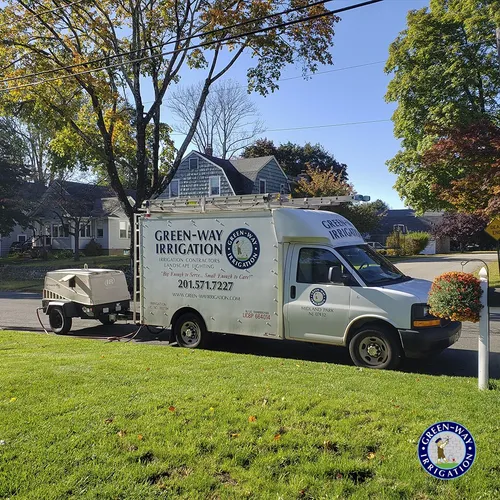
Green-Way Irrigation
34 Grove St, Midland Park, NJ 07432
Green-Way Irrigation is a family-owned company based near New York, NY, offering comprehensive irrigation, outdoor lighting, and yard drainage solutions. Serving multiple communities in Bergen County, they specialize in installing and maintaining water-efficient irrigation systems, low-voltage outdoor lighting, and custom drainage systems designed to protect lawns and homes from water damage. With over 35 years of experience, Green-Way Irrigation also provides outdoor audio system installations to enhance outdoor living spaces. They offer emergency services and are fully licensed and insured.
Aquascape Irrigation
634 NY-303, Blauvelt, NY 10913
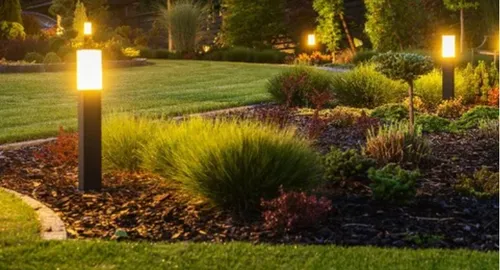
Aquascape Irrigation is a family-owned and operated company based in New York, NY, specializing in irrigation and landscape lighting services. With 40 years of experience, they offer sprinkler installation, sprinkler repair, and outdoor lighting installation. Their licensed and certified team focuses on professionalism and attention to detail to deliver quality results.
Sullivan & Son Landscaping Management
18 Belltown Rd, Stamford, CT 06905
Sullivan & Son Landscaping Management is a landscaping and hardscaping company serving New York, NY, with over 30 years of experience. They provide a wide range of services including lawn care, fertilization, weed control, sod installation, landscape lighting, tree services, yard drainage, sprinkler installation and repair, as well as hardscaping such as pavers and retaining walls. The company specializes in landscape construction and maintenance, offering expertise in retaining walls, patios, walkways, and outdoor living spaces. They also provide snow and ice management and junk removal services. Sullivan & Son is known for their detailed consultations and comprehensive project management to meet customer expectations.
Understanding Your Lawn Watering System
At its core, a residential irrigation system is a network designed to automate watering. It consists of a few key components working together. The controller (often called a timer) is the brain, sending signals to open and close valves. These valves control the flow of water to different sections of your yard, known as zones. From the valves, water travels through underground pipes to various types of sprinkler heads or drip emitters that distribute the water across your landscape.
The concept of zoning is crucial for efficiency. Your property is divided into areas based on plant type, sun exposure, and soil conditions. For example, a sunny lawn zone will have a different watering schedule than a shaded flower bed or a vegetable garden. This zoning allows the system to apply the perfect amount of water to each unique area, preventing overwatering and underwatering.
Key Components: From Controllers to Sprinkler Heads
- Controllers: Modern controllers range from simple dial timers to advanced smart controllers with Wi-Fi connectivity. Smart controllers can adjust schedules automatically based on local weather data, saving significant water over time.
- Sprinkler Heads: There are several types, each for a specific purpose. Rotor heads rotate streams of water and are ideal for covering large, open lawn areas. Spray heads pop up and deliver a fixed fan of water, best for smaller, rectangular sections. For garden beds, shrubs, or vegetable plots, drip irrigation uses tubing and emitters to deliver water slowly and directly to the root zone, minimizing evaporation and runoff.
- Valves & Sensors: Valves are typically housed in underground valve boxes for protection. Additional components like rain sensors or soil moisture sensors can be integrated to shut off the system during rainfall or when the soil is already wet, providing another layer of efficiency and protection.
The Importance of Professional System Design
A successful automatic watering system starts with a professional design. The goal is to achieve uniform water distribution, which professionals call "head-to-head coverage." This means the spray from one sprinkler head should reach the adjacent head, ensuring every square foot of the zone receives an even amount of water. Poor design leads to dry spots, muddy areas, and wasted water.
A designer will map your property, noting sun patterns, soil type, plant material, and water pressure. They select the appropriate head types and nozzle sizes for each zone and calculate the precise layout to achieve optimal coverage. This careful planning is what separates a high-performing system from a problematic one and is a critical step before any installation begins 1 2.
Best Practices for Watering in New Rochelle
Effective irrigation is about more than just turning on the water. Following core principles will keep your landscape healthy while conserving our local water resources.
- Water Deeply and Infrequently: It's better to water for longer periods, less often. This encourages grass and plant roots to grow deeper into the soil, making them more drought-tolerant and resilient. In the summer, this might mean running each zone for 20-30 minutes, 2-3 times per week, rather than a short daily sprinkle.
- Water in the Early Morning: The best time to water is between 4 a.m. and 10 a.m. Winds are usually calm, temperatures are lower, and evaporation is minimal. Watering in the evening can leave grass blades wet overnight, potentially promoting fungal diseases.
- Adjust for the Seasons: Your watering needs change dramatically from spring to summer to fall. A smart controller can automate these adjustments, but even with a standard timer, you should manually reduce runtime and frequency during cooler spring and fall months.
Find the perfect sprinkler & irrigation companies for your needs
Get personalized recommendations and expert advice
Installation and Investment Considerations
The cost to install an in-ground sprinkler system in New Rochelle varies based on your property size, the complexity of the design, the quality of components, and local Westchester County labor rates. For a typical small to medium yard (around a quarter-acre), homeowners can expect installation costs to range from approximately $1,700 to $3,500 for a basic system. Larger or more complex properties with numerous zones, advanced smart technology, or specialty drip irrigation for extensive gardens will increase the investment, with some projects reaching $10,000 or more 3.
Costs are often broken down per zone, with each additional zone adding between $590 and $1,340 to the project total. Upgrading to a Wi-Fi-enabled smart controller with weather monitoring capabilities typically adds an additional $200 to $400 but can offer substantial water savings over time 4. It is highly recommended to obtain multiple detailed quotes from established local irrigation companies to compare designs, equipment brands, and pricing.
Maintenance and Common Repairs
Like any mechanical system, an irrigation system requires periodic maintenance and occasional repairs to function optimally. Common issues include clogged nozzles, broken sprinkler heads from lawn mowers or winter damage, leaking valves, and electrical problems with the controller.
- Basic Maintenance: This includes checking for and cleaning clogged spray heads, adjusting heads that are misaligned, and inspecting for obvious leaks. Manually running each zone at the start and end of the season is a good way to spot problems.
- Professional Repairs: For more complex issues, professional repair is advised. Fixing a faulty solenoid (the electrical component that opens a valve) or replacing a valve diaphragm can cost between $75 and $225+ 5. Repairing a broken underground pipe, which involves locating the leak and excavating, typically ranges from $150 to $300 or more, depending on depth and accessibility 5. Reprogramming a controller or fixing its wiring might cost between $50 and $250+ 5.
Regular professional check-ups, often called a "spring start-up" and "fall winterization," can prevent major problems. Winterization is especially critical in our climate to blow pressurized air through the lines and remove all water, preventing freeze damage to pipes and valves.
Choosing the Right System for Your Needs
When planning your project, consider your landscape's unique requirements. A traditional pop-up sprinkler system is ideal for turfgrass lawns. For mixed landscapes with planting beds, a hybrid system that combines rotors for the lawn with drip zones for the beds is often the most efficient solution. For those focused solely on gardens, trees, or shrubs, a dedicated drip irrigation system can be installed, which is highly water-efficient and can often be connected to an existing outdoor faucet.
The choice between a standard timer and a smart irrigation controller is another key decision. Smart controllers offer convenience and precision, automatically adjusting for real-time weather conditions, which can lead to water savings of 15-30% or more, paying for the upgrade over time 6 7.
Frequently asked questions
Sources
Footnotes
-
RESIDENTIAL SPRINKLER SYSTEM - Hunter Industries - https://www.hunterirrigation.com/sites/default/files/design_guide_Residential_System_LIT-226-US.pdf ↩
-
Easy, step-by-step, underground sprinkler system layout guide - https://images.thdstatic.com/catalog/pdfImages/a9/a9564496-8fb7-4141-8758-5f660a7a9310.pdf ↩
-
How Much Does an Irrigation System Cost? - https://www.nvslandscapes.com/irrigation-sprinklers/home-irrigation-system-cost-guide/ ↩
-
How Much Does it Cost to Install a Sprinkler System in 2026? - https://lawnlove.com/blog/sprinkler-system-cost/ ↩
-
Sprinkler System Cost: Installation & Maintenance Guide - https://heartlandsprinklers.com/green-tips/sprinkler-system-cost-guide/ ↩ ↩2 ↩3
-
The Ultimate Guide to Sprinkler and Irrigation Systems for Your Lawn and Garden - https://heartlandsprinklers.com/green-tips/ultimate-guide-to-sprinkler-and-irrigation-systems/ ↩
-
Benefits of Sprinkler and Irrigation Companies - Burkholder Landscape - https://www.burkholderlandscape.com/sprinkler-and-irrigation-companies/ ↩