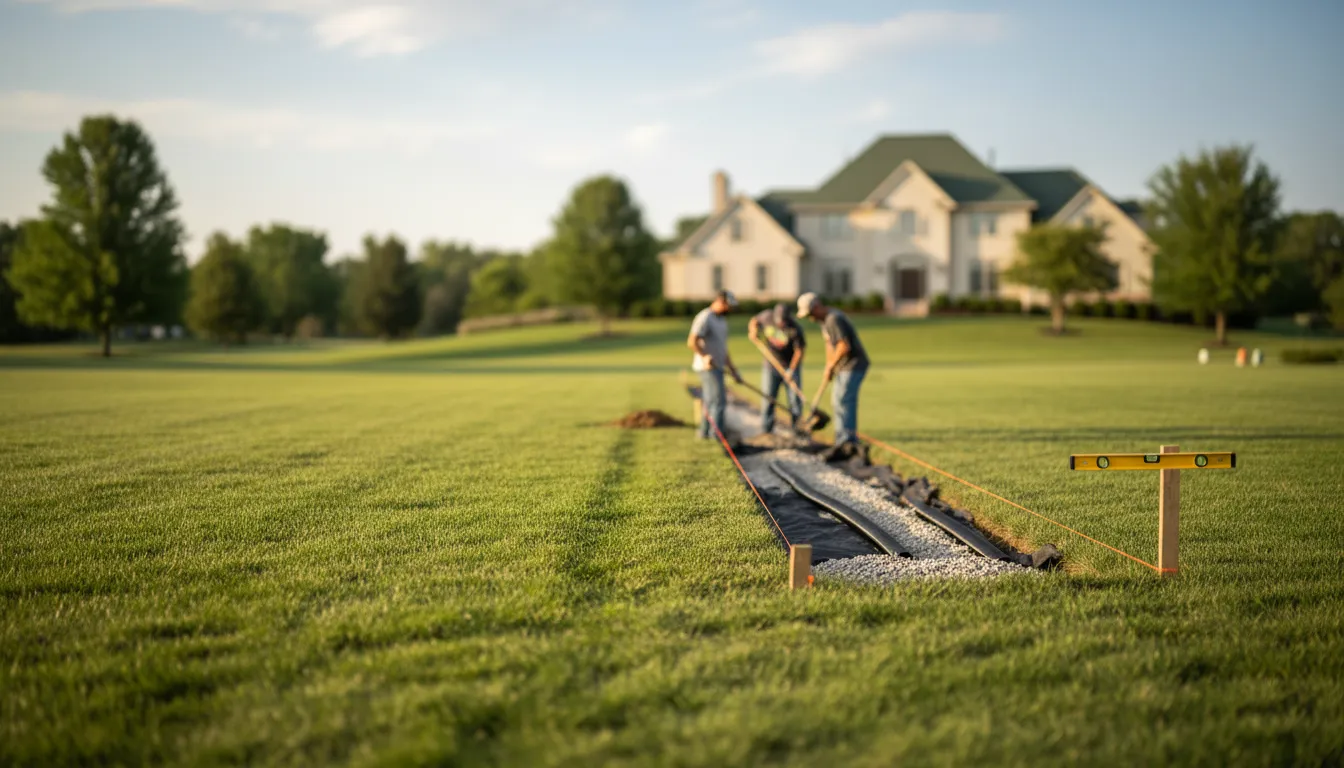
Find the Best Yard Drainage Contractors for Your Business
No obligation • Fast responses • Nationwide coverage

Why you can trust Landscape Atlas
Landscape Atlas is a leading United States resource for evaluating landscaping, lawn care, and outdoor service providers. Our team researches each category in depth, focusing on service quality, safety, and customer experience. Listings and rankings are based on independent criteria and user feedback, and companies cannot pay to influence our assessments or recommendations.
Search providers near you
Best Yard Drainage Contractors in Colorado Ranked
Effective yard drainage and grading are essential for protecting your Colorado home from water damage. The state's unique climate, with intense storms and rapid snowmelt, can quickly overwhelm a poorly managed landscape, leading to basement flooding, soil erosion, and foundation issues. This guide explains the critical drainage solutions for Colorado properties and how you can connect with qualified local professionals to assess your needs and implement a lasting fix.
Woodland Tree Service
Colorado Springs, CO
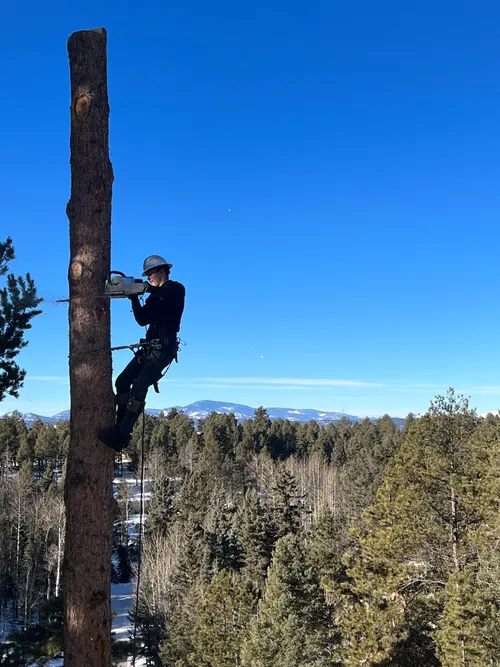
Woodland Tree Service is based in Colorado Springs, CO, offering tree removal, fire mitigation, and yard drainage services including grading and skid steer dirt work. The company focuses on enhancing property safety and landscape functionality through safe tree removal and expert land preparation. Owner Jake Kent brings years of experience in the tree service industry, having worked in Colorado Springs and co-owned a tree service before founding Woodland Tree Service. The business serves the local community with a strong commitment to quality and family values.
Modern Concepts Landscape
2650 W Warren Ave, Denver, CO 80219
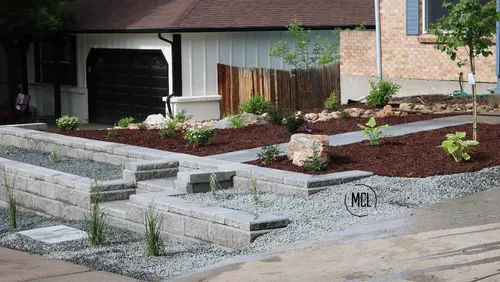
Modern Concepts Landscape is a landscaping company based in Denver, CO, offering a wide range of services including landscape design, tree removal, stump grinding, yard drainage, grading, sprinkler installation and repair, lawn care, and hardscaping such as pavers and retaining walls. With over 20 years of experience, they provide expertise in irrigation systems and xeriscape designs to support low-water landscaping options. Their services aim to enhance and maintain outdoor spaces while addressing practical concerns like tree health and yard drainage.
Alpine Landscaping LLC
1618 Calvert Ave, Colorado Springs, CO 80904
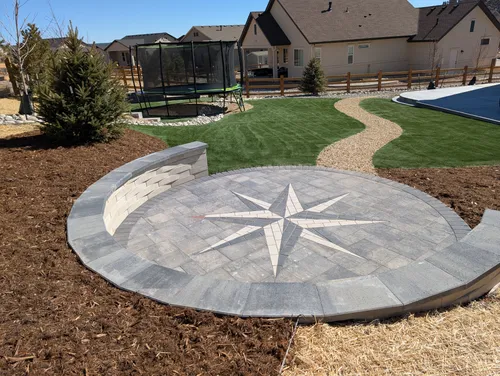
Alpine Landscaping LLC is a landscaping company based in Colorado Springs, CO, offering a wide range of services including landscape design, sod and xeriscaping installation, hardscaping, tree services, irrigation, and outdoor lighting. They specialize in creating sustainable, water-efficient landscapes using native plants and smart irrigation techniques. Their expertise includes custom patios, retaining walls, fire pits, outdoor kitchens, and artificial turf installation, designed to enhance both residential and commercial outdoor spaces. The company uses 3D modeling to help clients visualize projects before installation and provides solutions for challenging terrain and drainage issues.
Rocky Excavation
Colorado Springs, CO
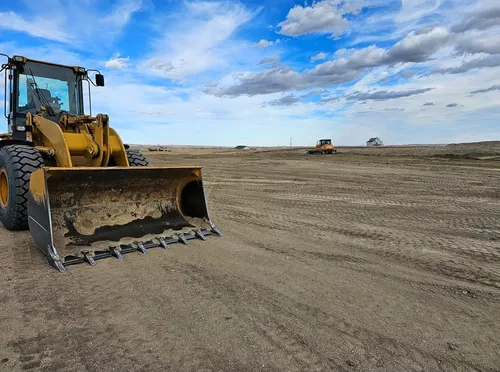
Rocky Excavation is a yard drainage and grading contractor based in Colorado Springs, CO. The company specializes in driveways, access roads, site preparation, building pads, drainage, erosion control, debris removal, demolition, and material supply. They use appropriately sized equipment for each job and focus on local projects rather than volume, with the owner personally overseeing each project from start to finish.
First Place Contracting Solutions
Colorado Springs, CO
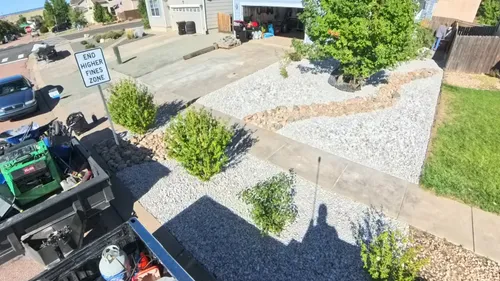
First Place Contracting Solutions is a locally owned landscaping and contracting company based in Colorado Springs, CO. They offer a range of services including landscape design, irrigation system installation and repair, hardscaping with retaining walls and concrete patios, sod installation, grading, and excavation. Their team manages projects with attention to detail and uses appropriate equipment for excavation and yard preparation. The company also provides yard waste and bulk trash removal services.
Why Colorado Properties Need Specialized Drainage
Colorado's climate and geography present specific challenges that make proper water management non-negotiable for homeowners. The combination of intense, sporadic thunderstorms and significant seasonal snowmelt generates large volumes of water in short periods 1. Without a system to quickly move this water away from your home or allow it to infiltrate the soil safely, you risk serious property damage.
Furthermore, Colorado soils, especially the compacted clay common in newer developments, have low permeability. This means water runs off the surface instead of soaking in, increasing the risk of pooling and flooding around your foundation 2. In winter, improper drainage can lead to dangerous ice buildup on walkways and driveways as snowmelt refreezes. A professionally designed drainage system addresses these regional issues head-on, protecting your investment and your safety.
Core Principles of Effective Water Management
Before exploring specific solutions, it's helpful to understand the two primary goals of residential drainage:
- Surface Water Control: Managing water that flows across the ground from rain or melting snow. The goal is to capture and redirect it before it reaches vulnerable areas.
- Subsurface Water Control: Managing water that saturates the soil below the surface, which can exert hydrostatic pressure against foundation walls and basement floors.
A comprehensive plan often combines strategies to handle both. The first and most critical step is always ensuring your property has the correct grading-the slope of the land.
Essential Drainage & Grading Solutions for Colorado
1. Grading and Re-Grading
This is the foundation of any good drainage plan. Proper grading ensures the soil slopes away from your home's foundation, directing surface water toward a safe discharge point like a street gutter, drainage ditch, or dry well.
- How it Works: Landscape professionals reshape the soil to create a consistent slope. The Building America Solution Center recommends a minimum slope of 2% (a 2-inch drop per 10 feet) for at least 10 feet away from the foundation.
- Best For: Every home. It's the first line of defense and is often required by local building codes. It's especially crucial after new construction or landscaping projects that may have altered the original grade.
- Colorado Consideration: In areas with expansive clay soils, using proper fill material (like loam) that compacts well and maintains its slope is vital.
2. Swales
A swale is a broad, shallow, vegetated channel designed to capture and slowly convey stormwater runoff. Unlike a ditch, it's gently sloped and often landscaped with grass or water-tolerant plants.
- How it Works: Swales intercept sheet flow from lawns or hardscapes, reducing its speed and allowing water to infiltrate the soil gradually. They are typically designed with a 2-4% slope 3.
- Best For: Larger yards with ample space, where they can serve as an attractive, natural-looking drainage feature that also filters pollutants from runoff.
- Colorado Consideration: Swales are excellent for managing runoff from Colorado's intense rains, as they reduce erosion and can be integrated into xeriscaped or native plant gardens.
3. French Drains
A French drain is a subsurface solution for redirecting groundwater. It's a trench filled with gravel or rock containing a perforated pipe that collects and channels water away.
- How it Works: The trench is dug to a depth where it can intercept waterlogged soil. Water seeps through the gravel, into the perforated pipe, and is carried to a daylight outlet or a dry well.
- Best For: Solving persistent wet spots in a yard, relieving hydrostatic pressure against basement walls, and intercepting water at the base of slopes.
- Colorado Consideration: Proper installation is key. The pipe must be wrapped in filter fabric to prevent Colorado's fine silt and clay from clogging the system. Outlets must be designed to prevent freezing.
4. Channel Drains (Trench Drains)
These are linear drains installed across surface areas like driveways, patios, or walkways where water tends to pool.
- How it Works: A narrow trench is cut into the concrete or pavers, and a grated drain channel is set in place. Surface water flows into the grate and is piped underground to a discharge point.
- Best For: Preventing ice on driveways and walkways by quickly removing snowmelt. Essential for hardscape areas that trap water against the house.
- Colorado Consideration: Channel drains are highly effective for dealing with snowmelt runoff from paved surfaces before it can refreeze into hazardous ice 4.
5. Rain Gardens and Dry Wells
These are infiltration-based solutions that manage water by storing it temporarily so it can soak into the ground.
- Rain Gardens: A shallow depression planted with native, water-tolerant vegetation. It collects runoff from roofs or driveways, allowing it to pond and slowly infiltrate while being filtered by the plants and soil.
- Dry Wells: An underground chamber filled with gravel or a prefabricated vault that collects water from downspouts or drains, storing it until it can percolate into the surrounding soil.
- Colorado Consideration: While beneficial, their effectiveness can be limited in dense clay soils. A professional can perform a percolation test to see if your soil is suitable. They are often used in conjunction with other drainage methods.
Find the perfect yard drainage contractors for your needs
Get personalized recommendations and expert advice
Understanding Costs and Professional Planning
Costs for drainage work in Colorado vary widely based on the solution, the size and complexity of your property, soil conditions, and labor. Here's a general range based on common projects:
- Basic Grading/Re-Grading: For minor soil reshaping and adding topsoil to improve slope, projects can range from $500 to $2,000 or more.
- French Drains: Typically priced per linear foot, including excavation, pipe, gravel, and fabric. Expect costs between $15 to $30+ per linear foot installed 5 6.
- Channel Drain Installation: For a standard driveway application, installed costs can range from $500 to $1,500+, depending on length and connection complexity 7 8.
- Rain Garden Installation: Costs are primarily for excavation, soil amendments, and plants, often ranging from $300 to $1,000+ for a residential-scale garden 9 10.
These are estimates, and a detailed quote from a professional is essential. The most critical investment is in a proper site assessment and design. A qualified contractor will evaluate your property's slope, soil type, water flow patterns, and local regulations (like those from the Mile High Flood District) to create an integrated system that works 11. Trying to solve a complex drainage problem with a single, piecemeal solution often leads to continued issues and wasted money.
Navigating Local Standards and Permits
In Colorado, drainage work may be subject to local ordinances designed to manage stormwater and prevent flooding impacts on neighboring properties and public infrastructure. Many municipalities, including Denver, have specific Storm Drainage Design and Technical Criteria that professionals follow 12. Some jurisdictions may require a permit for significant regrading or for installing drainage structures that tie into municipal systems. A reputable local professional will be familiar with these requirements and can handle the permitting process, ensuring your project is compliant and effective.
Frequently asked questions
Sources
Footnotes
-
Stormwater Ordinance - Planning for Hazards - https://planningforhazards.colorado.gov/stormwater-ordinance ↩
-
Landscaping Ordinance Model and Commentary - https://planningforhazards.colorado.gov/landscaping-ordinance-model-and-commentary ↩
-
Swales, Drains, and Site Grading for Stormwater Control - https://basc.pnnl.gov/resource-guides/swales-drains-and-site-grading-stormwater-control ↩
-
Objective of the Manual - Aspen GOV - https://www.aspen.gov/DocumentCenter/View/533 ↩
-
French Drains vs. Yard Drainage: The Ultimate Colorado ... - https://bouldercontractors.com/french-drains-vs-yard-drainage-colorado/ ↩
-
Protecting Your Property from Water Damage | The Belmire Blog - https://www.belmire.com/post/mastering-landscape-drainage-protecting-your-property-from-water-damage ↩
-
Landscape Grading and Drainage for Yard Landscaping - https://denversprinklerservices.com/landscape-grading/ ↩
-
Best Drainage Solutions for Homes Near Cherry Creek State Park - https://crushexcavation.com/best-drainage-solutions/ ↩
-
Stormwater Best Management Practices - https://spcwater.org/topics/stormwater-management/stormwater-best-management-practices-2/ ↩
-
French Drains & Dry Wells in Colorado: Water Management Solutions - https://www.abetteredge.com/french-drains-dry-wells-colorado/ ↩
-
Yard Drainage and Grading Broomfield CO - Olson Outdoors - https://olsonoutdoors.com/landscape-design-build/drainage-grading/ ↩
-
DENVER STORM DRAINAGE DESIGN AND TECHNICAL ... - https://www.denvergov.org/files/assets/public/doti/documents/standards/pwes-005.1-storm_drainage_design_and_technical_criteria.pdf ↩