Find the Best Yard Drainage Contractors for Your Business
No obligation • Fast responses • Nationwide coverage

Why you can trust Landscape Atlas
Landscape Atlas is a leading United States resource for evaluating landscaping, lawn care, and outdoor service providers. Our team researches each category in depth, focusing on service quality, safety, and customer experience. Listings and rankings are based on independent criteria and user feedback, and companies cannot pay to influence our assessments or recommendations.
Search providers near you
Top Yard Drainage Contractors in Wilmington, Delaware Ranked
Effective yard drainage and grading are essential for protecting your Delaware home from water damage. The state's flat terrain, high water table, and coastal storms create unique challenges, making proper water management a critical component of property maintenance. This guide explains the key principles, common solutions, and local regulations for managing stormwater on residential properties, helping you understand your options and connect with qualified professionals who can assess and solve your specific drainage issues.
Beerman and Sons Landscaping
230 Bells Lake Rd, Turnersville, NJ 08012
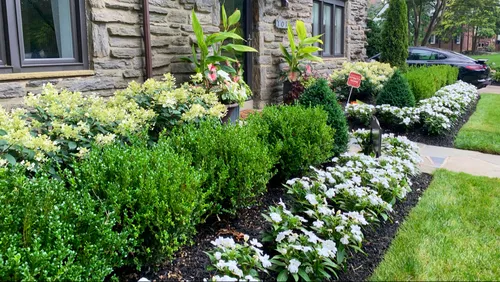
Beerman and Sons Landscaping is based in Turnersville, NJ, serving Philadelphia, PA, and surrounding counties. Founded by Bill Beerman, a Penn State graduate with over 20 years of experience, the company offers comprehensive landscaping services including landscape design, hardscaping with durable pavers and natural stone, sod installation, grading, drainage solutions, lawn establishment, and landscape lighting. Their approach combines formal horticultural education with practical expertise to create outdoor spaces that thrive year-round and enhance residential properties.
E&J Landscaping LLC
31 Upland Rd, Brookhaven, PA 19015
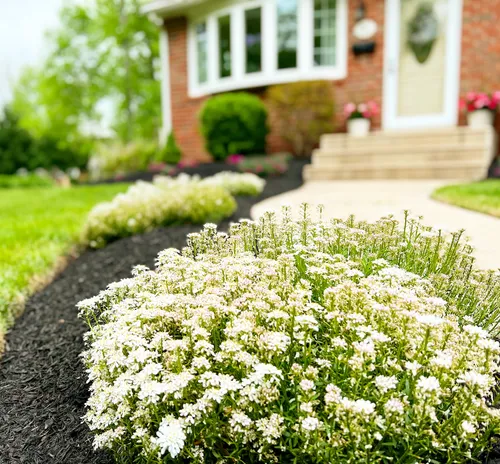
E&J Landscaping LLC provides comprehensive lawn care, landscaping, drainage, and outdoor improvement services in Philadelphia, PA. They offer routine property maintenance such as mowing, bush trimming, garden care, and seasonal cleanups, along with custom landscape design and installation of paver and flagstone patios. Their expertise includes yard grading and stormwater management solutions like French drains and catch basins to protect home foundations. Serving Delaware County communities, E&J Landscaping LLC is licensed and insured, focusing on quality materials and construction to maintain healthy, attractive outdoor spaces.
Greenstone Gardens
Philadelphia, PA
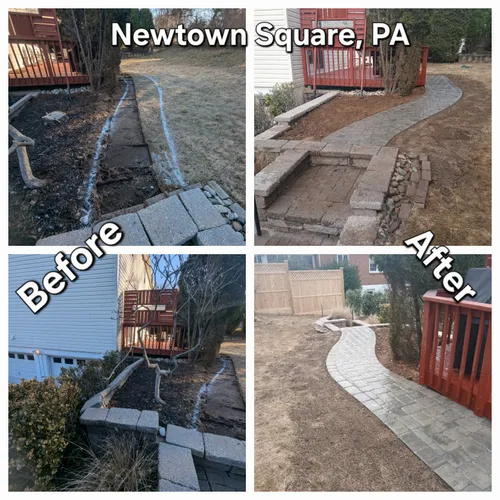
Greenstone Gardens is a family-owned landscaping and hardscaping company serving Philadelphia, PA, and the surrounding areas. With 44 years of experience, they offer a wide range of services including landscape design, hardscaping, drainage solutions, tree planting, and outdoor kitchen installation. Their expertise includes building patios, retaining walls, and effective water management systems to enhance both the beauty and functionality of outdoor spaces. As a second-generation company, Greenstone Gardens combines traditional craftsmanship with innovative techniques to create personalized outdoor environments.
Lawn Boy Landscaping & Hardscaping
186 Green Ln, Philadelphia, PA 19127
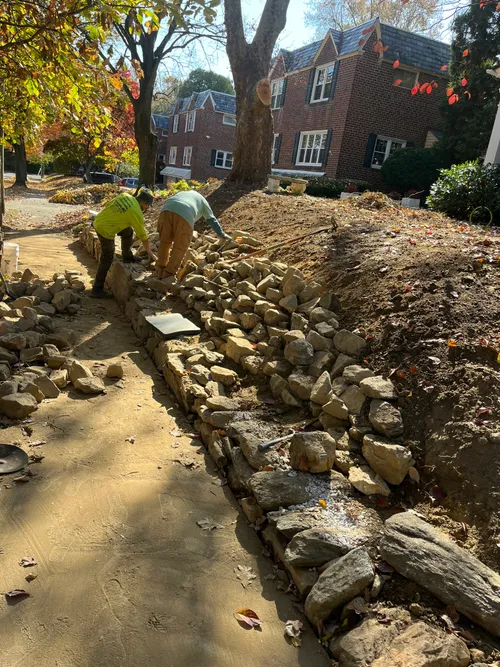
Lawn Boy Landscaping & Hardscaping is a full-service landscaping and hardscaping company based in Philadelphia, PA. They offer a wide range of services including lawn mowing, fertilization, weed control, sod installation, fence installation, tree removal, yard drainage, land clearing, and hardscaping projects such as patios, walkways, and retaining walls. The company serves both residential and commercial clients throughout the Greater Philadelphia area. One of their notable capabilities is constructing and repairing retaining walls that help manage erosion and improve landscape usability. Lawn Boy Landscaping & Hardscaping has experience handling emergency masonry repairs and large-scale yard transformations, demonstrating their expertise in both maintenance and construction projects.
Santivasci Landscaping LLC
34 Yale Ave, Morton, PA 19070
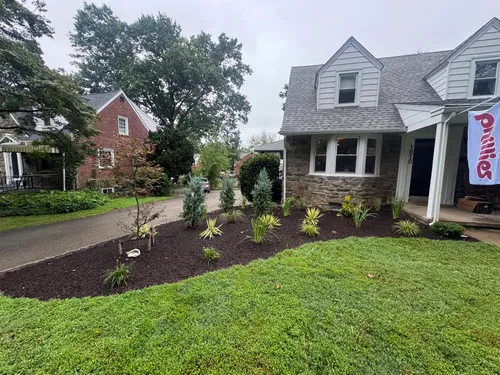
Santivasci Landscaping LLC is a landscaping company based in Philadelphia, PA, serving Springfield, Delaware County, and surrounding areas. They offer a range of lawn care and landscaping services including weekly lawn maintenance, landscape and hardscape design and installation, outdoor lighting, and yard drainage solutions. With over 10 years of experience, they specialize in creating outdoor living spaces such as patios, retaining walls, and fire pits, as well as addressing drainage issues to improve property usability.
Why Drainage is Critical in Delaware
Delaware's landscape presents specific hurdles for homeowners. Its low elevation and naturally high water table mean the ground can become saturated quickly, leading to persistent dampness in yards and basements. Furthermore, the state's coastal location exposes it to heavy rainfall from northeasters and hurricanes, which can overwhelm inadequate drainage systems in a short time 1. Without a plan to manage this runoff, water will find its own path-often toward your home's foundation, leading to cracks, leaks, and costly structural repairs. Proper grading and drainage systems work together to mimic natural water flow, directing runoff safely away from structures and into appropriate discharge points or infiltration areas.
Common Drainage & Grading Solutions
A range of techniques is used to combat water issues, from simple regrading to more engineered systems. The right solution depends on your property's slope, soil type, and the volume of water you need to manage.
Grading and Swales
The first line of defense is ensuring your yard slopes away from your home. Professionals recommend a slope of 5-25% near the foundation to actively channel water away 2 3. For larger properties, swales-gentle, vegetated depressions-can be constructed to guide surface runoff around the home and toward a street, ditch, or other safe outlet 4. These are often the most cost-effective solutions when the overall property layout allows for it.
Subsurface Drainage Systems
When surface grading isn't enough, subsurface systems are installed to manage water below ground.
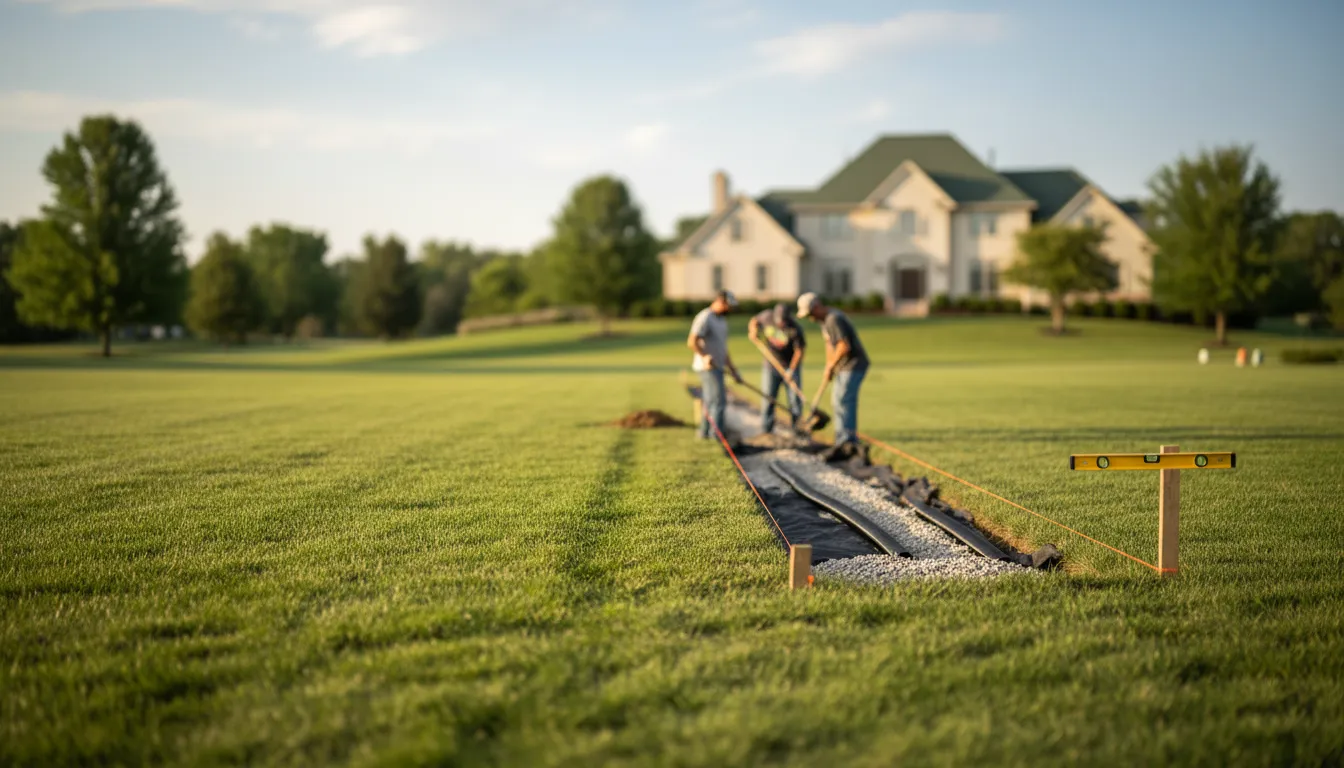
- French Drains: A trench is dug, lined with fabric, filled with gravel, and contains a perforated pipe to collect and redirect groundwater and surface seepage 5. This is a highly effective solution for yards with soggy spots or where water pools against a foundation.
- Dry Wells: For properties with significant runoff from downspouts or paved areas, a dry well acts as an underground storage tank. It's a pit filled with gravel or a chamber that temporarily holds water, allowing it to slowly percolate into the surrounding soil. This is ideal where direct discharge isn't possible.
- Infiltration Trenches/Basins: These are larger-scale, engineered versions of a dry well, designed to handle greater volumes of stormwater. They often include pretreatment filters to remove pollutants before water soaks into the ground.
Conveyance and Collection
These components tie the system together.
- Catch Basins: These are in-ground boxes with grates that collect surface water from driveways or low points, connecting to underground piping.
- Downspout Extensions and Drainage Pipes: Simply extending a downspout several feet from the house can prevent foundation problems. For more permanent solutions, downspouts can be connected to solid drainage pipes that feed into a swale, dry well, or storm sewer.
Find the perfect yard drainage contractors for your needs
Get personalized recommendations and expert advice
Delaware's Terrain and Regulatory Landscape
Understanding local conditions and rules is key to a successful project. Delaware's soil permeability-how quickly water soaks in-varies greatly. Infiltration practices like dry wells work best where soil allows more than one inch of water per hour to pass through; in denser clay soils, systems focused on conveying water away are often necessary.
Local counties have codes to ensure drainage work is effective and protects community stormwater systems. For example, New Castle County requires a minimum 2% slope on pervious surfaces like lawns, though this may be reduced to 1% with a professional geotechnical assessment 6 7. The goal is to prevent standing water for more than 48 hours after a storm. The Delaware Department of Natural Resources and Environmental Control (DNREC) sets statewide standards that encourage "green" stormwater practices which reduce runoff and filter pollutants, aligning with efforts to protect the state's waterways 8 9.
Erosion control is another regulated aspect. Any newly graded slopes or channels must be stabilized promptly with sod, erosion control mats, or deep-rooted plants to prevent soil from washing away.
What to Expect: Process and Investment
A professional drainage project typically starts with a detailed site assessment. An expert will examine your property's slope, identify low points, test soil, and locate all downspouts and existing drainage to diagnose the core issue. They will then design a tailored system, which may combine several of the solutions mentioned above.
Costs vary significantly based on the complexity and scale of the problem and solution.
- Basic Grading: Adjusting the slope of a yard typically ranges from $300 to over $1,000, depending on the area and machinery required 10.
- French Drains: Installed costs generally run $20 to $50 or more per linear foot, factoring in trenching, materials, and labor.
- Dry Wells: A standard residential dry well installation can cost between $500 and $2,000, influenced by its size and the difficulty of excavation 11 12.
- Engineered Systems: For larger properties or complex issues requiring designed infiltration basins or extensive piping, projects can range from $2,000 to $10,000 or more 13.
While DIY solutions exist for minor issues, most drainage work benefits from professional expertise. A specialist ensures the system is pitched correctly, has adequate capacity, complies with local codes, and includes proper erosion controls for a lasting solution that protects your property's value.
Frequently asked questions
Sources
Footnotes
-
Infiltration Guidelines - https://scvurppp.org/wp-content/uploads/2024/07/Appendices_combined_2024_0718.pdf ↩
-
Grade Lawn Away From Structure - Delaware.gov - https://documents.dnrec.delaware.gov/I-ADAPT/AdaptationStrategies/Grade%20Lawn%20Away%20From%20Structure.pdf ↩
-
Landscape Grading in DE & PA: A Comprehensive Guide - https://www.borsellolandscaping.com/all-about-landscape-grading-the-what-the-why-and-the-how/ ↩
-
Drainage Around Your Home - https://soilandwater.co.delaware.oh.us/wp-content/uploads/sites/20/2018/03/drainage_around_your_home.pdf ↩
-
French Drain for Yard - Delaware.gov - https://documents.dnrec.delaware.gov/I-ADAPT/AdaptationStrategies/French%20Drain%20for%20Yard.pdf ↩
-
Drainage Code Enhanced Factsheet - New Castle County - https://www.newcastlede.gov/DocumentCenter/View/34459/Drainage-Code-Enhanced-Factsheet-82119?bidId= ↩
-
Code of Ordinances | New Castle County, DE | Municode Library - https://library.municode.com/de/new_castle_county/codes/code_of_ordinances?nodeId=CH40UNDECO_ART22DRUTSESYPALOLI ↩
-
Topic: Drainage and Stormwater - DNREC - Delaware.gov - https://dnrec.delaware.gov/drainage-stormwater/ ↩
-
Landscaping Guidance for Stormwater BMPs - https://mde.maryland.gov/programs/water/stormwatermanagementprogram/documents/md%20swm%20volume%202.pdf ↩
-
Drainage and Grading - Arborvine Landscaping - https://www.arborvinelandscaping.com/drainage-and-grading/ ↩
-
Delaware Post Construction Stormwater BMP Standards ... - https://documents.dnrec.delaware.gov/Watershed/Sediment-Stormwater/Regulatory-Guidance/BMP%20Stds%20and%20Specs%20-%20EFF%20FEB%202019.pdf ↩
-
3.06.2 Post Construction Stormwater BMP Standards ... - Delaware.gov - https://documents.dnrec.delaware.gov/swc/Drainage/Documents/Sediment%20and%20Stormwater%20Program/Technical%20Document/Latest%20Version%20of%20all%20Articles/3.06.2%20Post%20Construction%20Stormwater%20BMP%20Standards%20and%20Specifications.pdf ↩
-
Yard Drainage Specialist in Delaware - A Waterproofing Solution, Inc. - https://awaterproofingsolution.com/yard-drainage-specialist/yard-drainage-specialist-delaware/ ↩