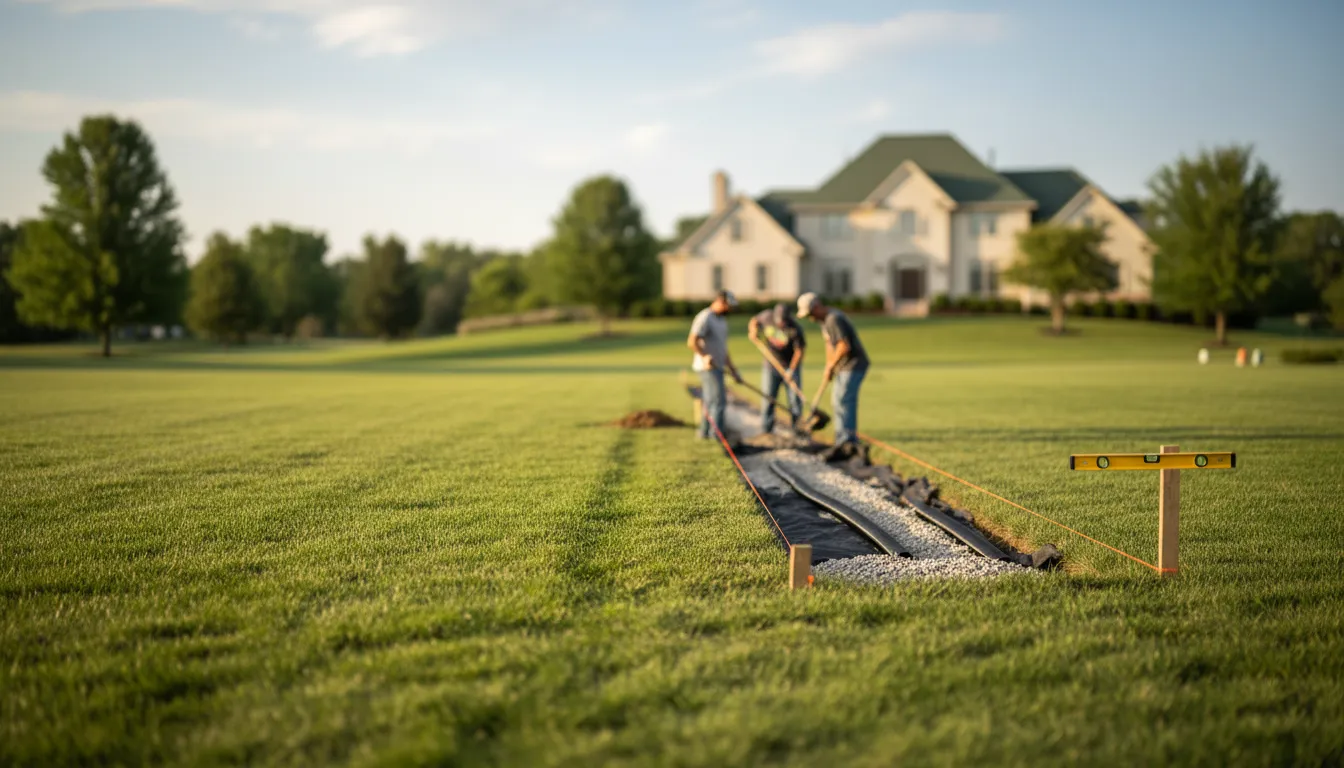
Find the Best Yard Drainage Contractors for Your Business
No obligation • Fast responses • Nationwide coverage

Why you can trust Landscape Atlas
Landscape Atlas is a leading United States resource for evaluating landscaping, lawn care, and outdoor service providers. Our team researches each category in depth, focusing on service quality, safety, and customer experience. Listings and rankings are based on independent criteria and user feedback, and companies cannot pay to influence our assessments or recommendations.
Search providers near you
Best Yard Drainage Contractors in Maryland Ranked
Proper yard drainage and grading are essential for protecting your Maryland home's foundation, preventing basement flooding, and maintaining a healthy, usable landscape. In a state with heavy clay soils and intense seasonal storms, managing stormwater runoff is not just a convenience-it's a critical component of home maintenance. This guide explains the key principles, common solutions, and local considerations for effective water management on your property, helping you understand your options and connect with qualified professionals who can assess and solve your drainage issues.
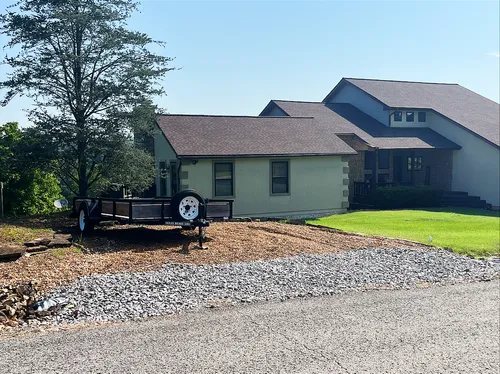
MD Lawn Care & Landscaping
5993 Sandy Ridge, Elkridge, MD 21075
MD Lawn Care & Landscaping is a full-service lawn care and landscaping company based in Baltimore, MD. They offer a wide range of services including lawn mowing, fertilization, weed control, sod installation, landscape lighting, tree services, yard drainage, land clearing, and seasonal cleanups. Their expertise includes professional sod installation with soil preparation and grading to ensure healthy, long-lasting lawns. The company focuses on maintaining clean, polished outdoor spaces through regular upkeep and specialized landscaping projects.
Y&L Landscaping & Tree Service
62 Gwynns Mill Ct, Owings Mills, MD 21117
Y&L Landscaping & Tree Service is a full-service landscaping company based in Baltimore, MD. They offer a wide range of services including landscape design, installation, maintenance, lawn care, tree services, drainage solutions, hardscaping, and snow and ice management for both residential and commercial properties. Their team is licensed and insured, with over 25 years of experience, providing expertise in tree pruning, stump grinding, sod and artificial turf installation, French drain installation, and retaining wall construction. Y&L Landscaping & Tree Service also provides 24-hour response for urgent needs, ensuring comprehensive care throughout the year.
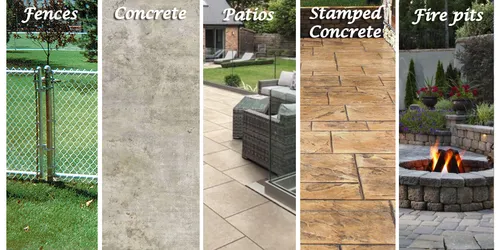
Original Hardscape
Baltimore, MD
Original Hardscape is a contractor based in Baltimore, MD, specializing in yard drainage, grading, and hardscaping services including pavers and retaining walls. They serve the Baltimore area as well as Maryland, Virginia, and Washington DC. The company offers advanced drainage solutions to keep properties dry and flood-free, alongside a range of masonry and outdoor living enhancements such as stamped concrete and patios. With over 15 years of experience, Original Hardscape combines quality materials and skilled craftsmanship to create functional and elegant outdoor spaces.
AJ's Lawn & Landscape LLC
Baltimore, MD
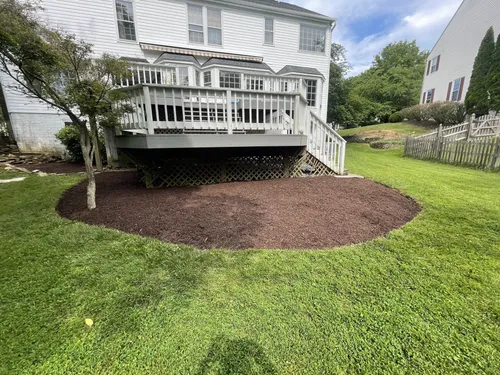
AJ's Lawn & Landscape LLC is a lawn care and landscaping company based in Baltimore, MD. They provide a range of services including lawn fertilization, weed control, tree removal, stump grinding, yard drainage, grading, hardscaping, and snow removal. Their capabilities include detailed landscape maintenance such as pruning, mulching, and grading to improve yard health and appearance. The company is known for handling various outdoor projects efficiently and has received positive feedback for their thorough work and reasonable pricing.
PTG Landscape & Hardscape
707 Back River Neck Rd, Essex, MD 21221
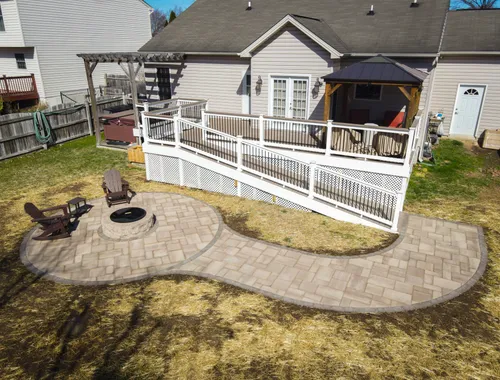
PTG Landscape & Hardscape is a landscaping and hardscaping company based in Baltimore, MD. They offer a range of services including custom patios, walkways, retaining walls, lawn care, yard grading, and advanced drainage solutions designed for Maryland's climate. Established in 2018, PTG Landscape combines over seven years of local experience with decades of combined expertise to create durable outdoor living spaces that protect properties from heavy rainfall and challenging soil conditions. Their capabilities include ICPI-compliant hardscaping and 3D landscape design to help clients visualize projects before construction begins. PTG Landscape serves Baltimore County and surrounding areas, providing tailored solutions for residential properties.
Why Drainage is Critical in Maryland
Maryland's climate and geology present unique challenges for homeowners. The state experiences periods of intense rainfall, which can deliver large volumes of water in a short time. When this rain falls on Maryland's prevalent heavy clay soils, which have very slow natural infiltration rates, the result is often rapid surface runoff. Without a properly designed drainage system, this water pools in low spots, saturates lawns, and relentlessly presses against your home's foundation. Over time, this leads to soil erosion, basement moisture, cracked foundations, and damaged landscaping. Effective drainage systems are designed to intercept, channel, and safely disperse this water away from your home.
Core Principles of Effective Drainage Design
Successful water management in Maryland follows several key engineering and environmental principles endorsed by state and local guidelines.
- Slope and Grade: The first line of defense is proper grading. The ground should slope away from your foundation at a minimum of 2% (about 2.5 inches drop over 10 feet) 1. This gentle but consistent grade directs surface water away from the house before it becomes a problem.
- Erosion and Sediment Control (ESC): Maryland's stormwater management guidelines prioritize controlling erosion during and after installation. Any channel or swale that carries water must be stabilized with grass, sod, or erosion control mats to prevent the water flow from washing away soil.
- Non-Erosive Outlets: A drainage system is only as good as its endpoint. Water must be discharged at a low velocity to a "non-erosive outlet," such as a storm drain, wooded area, or a pop-up emitter in a safe part of the yard, where it won't create a new erosion problem.
- Infiltration and Treatment: Where conditions allow, the goal is to encourage water to soak into the ground. Techniques like dry wells and bio-retention areas not only manage volume but also filter pollutants before water recharges the groundwater.
Common Yard Drainage Solutions for Maryland Homes
A variety of systems can be used alone or in combination to address different drainage issues. The right solution depends on your specific problem, soil type, and property layout.
1. Regrading and Surface Grading
This is the process of reshaping the soil on your property to create the proper slopes. It's often the most fundamental fix for yards where the land slopes toward the house or has significant low spots that collect water. Regrading establishes positive drainage, ensuring water flows away from structures.
2. French Drains
A French drain is a subsurface solution for collecting and redirecting groundwater. It consists of a perforated pipe laid in a gravel-filled trench. Water from saturated soil enters the pipe through the perforations and is carried away to a discharge point. French drains are highly effective for solving "wet spot" problems in the middle of a yard or for relieving hydrostatic pressure against foundation walls.
3. Dry Wells
A dry well is an underground storage chamber, typically a large pit filled with gravel or a pre-fabricated tank. It captures runoff from downspouts or drainage pipes and allows it to slowly percolate into the surrounding soil. Dry wells are an excellent solution for properties with poor infiltration, as they manage water volume and reduce the burden on municipal storm systems.
4. Catch Basins and Channel Drains
These are surface-level inlets designed to capture large volumes of water quickly. A catch basin is a grated drain connected to an underground pipe. Channel drains are long, narrow grates often installed across driveways or walkways. They are ideal for solving problems where water collects on paved surfaces or in specific low points.
5. Swales and Berms
Swales are broad, shallow, vegetated channels designed to convey water slowly. Berms are raised mounds of soil used to divert water flow. These are more natural, landscaped approaches to managing surface runoff across a property. When planted with deep-rooted native grasses, swales also help filter and absorb water 2.
6. Downspout Management
Often overlooked, this is one of the simplest and most cost-effective steps. Extending downspouts at least 5 to 10 feet away from your foundation, using either above-ground extensions or buried pipes, prevents concentrated roof runoff from pooling right next to your home3.
Find the perfect yard drainage contractors for your needs
Get personalized recommendations and expert advice
Adapting Solutions for Maryland's Heavy Clay Soils
Heavy clay is a defining feature of much of Maryland's soil. Its tiny, dense particles hold water tightly, leading to very slow drainage and prolonged saturation. This reality must shape your drainage strategy:
- Steeper Grades May Be Needed: On pure clay, the standard 2% slope may be insufficient. Contractors often recommend a steeper grade (closer to 3%) to ensure water moves off quickly before it can pool4.
- Soil Amendment: In planting beds or bio-retention areas, amending clay soil with compost can improve its structure and increase infiltration rates over time.
- System Selection: Clay's poor infiltration makes subsurface solutions like French drains (which collect water before it hits the clay surface) and dry wells (which provide a large storage volume for slow release) particularly valuable. Surface solutions must be designed with extra capacity to handle the rapid runoff clay soils produce.
Incorporating Native Plants and Bio-Retention
Maryland encourages the use of "Environmental Site Design" (ESD), which uses natural processes to manage stormwater5. A prime example is a bio-retention area or rain garden. This is a shallow depression planted with native, water-tolerant plants. Runoff is directed into the basin, where it ponds briefly and soaks into a specially prepared soil mix. The plants and soil filter pollutants, and the water infiltrates or is taken up by plant roots 6. Using native plants is crucial-they are adapted to Maryland's climate, require less maintenance, have deep root systems that enhance infiltration, and provide habitat for local wildlife5 7.
Understanding Costs and Planning Your Project
The investment for a drainage solution varies widely based on the system's complexity, the size of your yard, and the extent of the problem. Here is a general range for common systems in Maryland, though obtaining a site-specific quote is essential8:
- Yard Grading/Regrading: $800 - $3,000
- French Drain Installation: $2,000 - $6,000+
- Dry Well Installation: $1,800 - $4,500
- Downspout Extension/Management: $200 - $1,000
A professional assessment is the critical first step. A qualified contractor will evaluate your property's slope, soil type, water flow patterns, and local regulations to design a system that is both effective and compliant with Maryland and county-level stormwater management guidelines9 10.
Frequently asked questions
Sources
Footnotes
-
Protect Your Home: Essential Yard Drainage Tips - https://www.allentucklandscaping.com/grading-for-yard-drainage/ ↩
-
Guidelines for Control of Water Runoff on Small Lots - https://www.montgomerycountymd.gov/DPS/Resources/Files/Land_Development/GuidelinesForControlOfWaterRunoffOnSmallLots.pdf ↩
-
5 Cost-Effective Stormwater Solutions for Maryland Homes - https://prolandscapesmd.com/5-cost-effective-stormwater-solutions-for-maryland-homes/ ↩
-
Proper Yard Grading for Drainage: Essential Tips for MD & VA ... - https://www.bluecollarscholars.net/yard-grading-for-drainage/ ↩
-
Landscaping Guidance for Stormwater BMPs - https://mde.maryland.gov/programs/water/stormwatermanagementprogram/documents/md%20swm%20volume%202.pdf ↩ ↩2
-
Top Yard Drainage Solutions for Annapolis Homeowners - https://paradisescapes.com/top-yard-drainage-solutions-for-annapolis-homeowners/ ↩
-
Ultimate Guide To Yard Drainage Systems In Maryland - https://prolandscapesmd.com/ultimate-guide-to-yard-drainage-systems-in-maryland/ ↩
-
Yard Drainage Repair Costs in Maryland - Pro Landscapes MD - https://prolandscapesmd.com/yard-drainage-repair-costs-in-maryland/ ↩
-
The Most Effective Yard Drainage Systems for Maryland ... - https://www.tlcincorporated.com/%F0%9F%93%98-the-most-effective-yard-drainage-systems-for-maryland-homes-2026-comparison-guide/ ↩
-
MARYLAND STORMWATER MANAGEMENT GUIDELINES - https://mde.maryland.gov/programs/Water/StormwaterManagementProgram/Documents/www.mde.state.md.us/assets/document/State%20and%20Federal%20SWM%20Guidelines%20final.pdf ↩