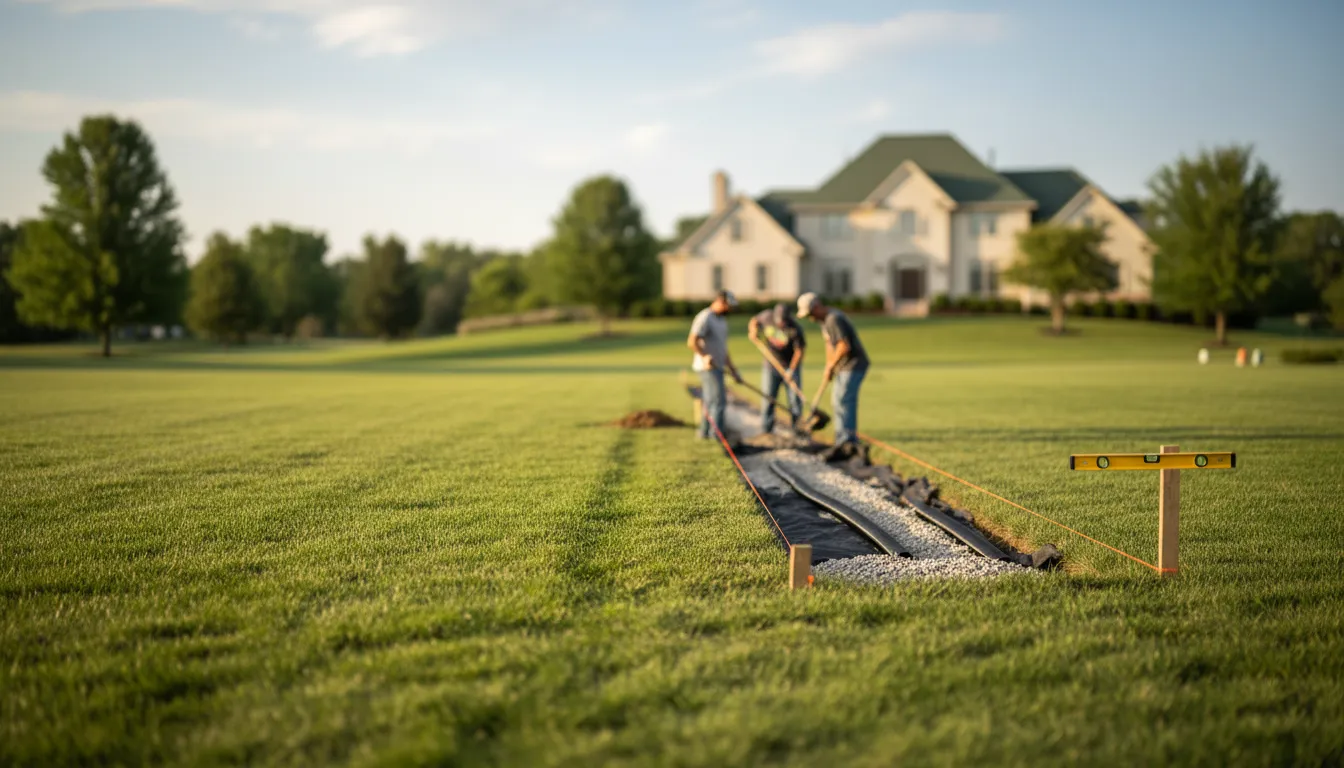
Find the Best Yard Drainage Contractors for Your Business
No obligation • Fast responses • Nationwide coverage

Why you can trust Landscape Atlas
Landscape Atlas is a leading United States resource for evaluating landscaping, lawn care, and outdoor service providers. Our team researches each category in depth, focusing on service quality, safety, and customer experience. Listings and rankings are based on independent criteria and user feedback, and companies cannot pay to influence our assessments or recommendations.
Search providers near you
Best Yard Drainage Contractors in Minnesota Ranked
Proper yard drainage and grading are essential for protecting your Minnesota home from water damage. The state's unique climate-with heavy snowmelt, spring rains, and clay-rich soils-can lead to significant water pooling, foundation issues, and landscape erosion if water isn't managed correctly. This guide explains the core principles of effective water management for Minnesota properties and outlines the common solutions professionals use to direct water away from structures and into safe discharge areas. You can use the information here to understand your property's needs and connect with local experts who provide site-specific assessments and installations.
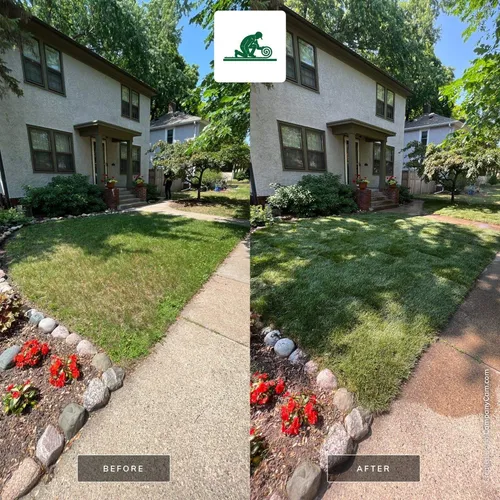
Sod Smith LLC
6417 Penn Ave S Ste. 8, Richfield, MN 55423
Sod Smith LLC is a lawn care company based in Minneapolis, MN, specializing in sod installation and a variety of lawn maintenance services. They offer efficient sod installation that provides instant curb appeal and support new lawns with a proprietary Establishment Plan to promote healthy root growth. The company also installs digital sprinkler systems designed to reduce water use by up to 50%, contributing to sustainable lawn irrigation. Sod Smith emphasizes precise soil preparation and tailored care suited to Minnesota's conditions to ensure successful lawn transformations. Their services are available throughout Minneapolis, with quick booking and transparent communication to keep customers informed throughout the process.
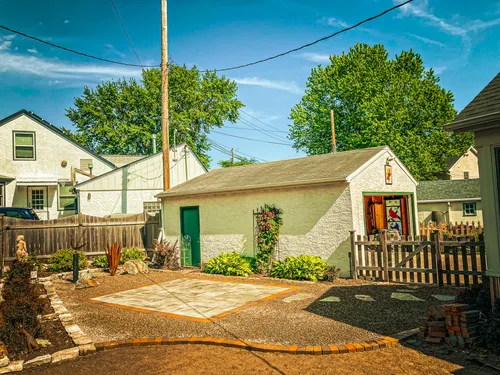
Outdoor Aesthetix LLC
616 Summit Ave, St Paul, MN 55102
Outdoor Aesthetix LLC is a landscape design and installation company based in St Paul, MN. They serve Eastern Minnesota and Western Wisconsin, offering services that include landscape design, yard renovations, grading, retaining walls, patios, and seasonal maintenance. Their work combines natural beauty with thoughtful design, focusing on native plants and sustainable materials to create functional and attractive outdoor spaces. The company emphasizes detailed craftsmanship and long-term client relationships.
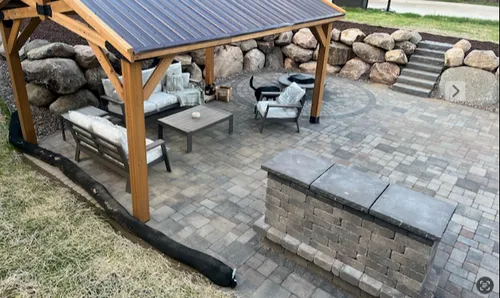
McDowell Landscapes
5265 Neal Ave N, Stillwater, MN 55082
McDowell Landscapes is a landscaping and hardscaping contractor based in St Paul, MN. They offer a range of services including grading, drainage corrections, boulder retaining wall installation, paver patios and walkways, hydroseeding, mulch installation, and seasonal landscaping. The company serves multiple communities in Minnesota such as Stillwater, Lake Elmo, Oakdale, and Woodbury. McDowell Landscapes also provides snow plowing, hauling, and removal services, demonstrating a broad capability in outdoor property maintenance and improvement.
Refuge Design & Landscape
3021 10th Ave S, Minneapolis, MN 55407
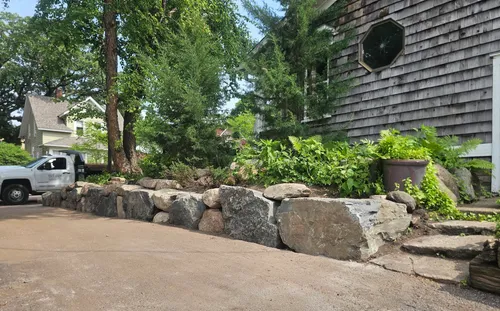
Refuge Design & Landscape is a landscaping design company based in Minneapolis, MN. They specialize in creating lush, inspired outdoor spaces that serve as extensions of living areas. Their services include landscape design, yard drainage solutions, grading, and general landscaping. The company focuses on innovative and creative solutions tailored to each client's needs, with an emphasis on long-term garden health and functionality. Refuge Design & Landscape is a licensed and insured general contractor committed to providing thorough information and support throughout the design and installation process.
Minnehaha Falls Landscaping
4549 41st Ave S, Minneapolis, MN 55406
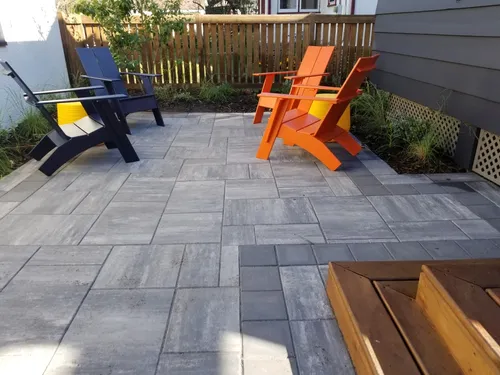
Minnehaha Falls Landscaping is a landscaping company based in Minneapolis, MN, offering a wide range of services including lawn fertilization, weed control, landscape design, yard drainage, land clearing, and hardscaping. They focus on creating sustainable, eco-friendly landscapes that support local ecosystems, using organic and chemical-free methods. With over 60 years of experience, they provide personalized landscaping plans that incorporate native plants, soil health, and water conservation. Their capabilities include designing and building patios, retaining walls, and other hardscaping features that enhance outdoor living spaces while promoting biodiversity.
Why Drainage is Critical in Minnesota
Minnesota's climate presents specific challenges that make a well-designed drainage system non-negotiable for homeowners. The primary threats come from a combination of soil composition and seasonal weather patterns.
Freeze/Thaw Cycles: The repeated freezing and thawing of ground moisture in spring and fall can wreak havoc on improperly graded land. If water pools near your foundation, it can freeze, expand, and create pressure cracks. As it thaws, it seeps into these cracks, leading to basement leaks and structural stress. Consistent drainage slopes are vital to prevent ice dams and water accumulation close to your home's foundation during these transitional seasons.
Clay Soils: Much of Minnesota has dense clay soil, which is highly impermeable. Water infiltrates clay very slowly, meaning it often sits on the surface or moves laterally just below it. This characteristic makes solutions that rely solely on deep soil absorption, like dry wells, less effective on their own. Instead, successful systems for clay areas typically focus on moving water over the surface or capturing and redirecting it via underground pipes.
Heavy Snowmelt and Rain Events: Spring snowmelt can generate a massive volume of runoff over a short period. Summer and fall can also bring intense rainstorms. Your drainage system must have the capacity and clearly defined channels to handle these peak volumes without overflowing or backing up, emphasizing the need for professional design that accounts for local precipitation data.
Core Principles of Effective Drainage
Before exploring specific solutions, it's important to understand the foundational goals of any residential drainage plan in Minnesota.
- Create Positive Slope: The first and most critical rule is to ensure the ground slopes away from your home's foundation on all sides. This is often called "positive grading." A minimum slope of 1-33% (about 1 inch of drop for every 8-10 feet of horizontal distance) is recommended to effectively channel water away1 2.
- Intercept and Redirect: For water that flows across your property from neighboring land or from large impervious surfaces (like driveways), you need to intercept it before it reaches problem areas. Swales, channel drains, and properly placed French drains act as interceptors.
- Collect and Convey: In low spots or areas where water naturally pools, collection points like catch basins are used. The collected water is then conveyed through a buried pipe system to a safe discharge point, such as a storm sewer, dry well, or rain garden.
- Infiltrate When Possible: Where soil conditions allow, encouraging water to soak into the ground is ideal. Rain gardens and specially designed infiltration basins use native plants and engineered soils to clean and absorb runoff, reducing the overall volume that enters municipal systems.
Common Drainage & Grading Solutions
Professional contractors in Minnesota utilize a toolkit of solutions, often combining several for a complete system.
Grading and Regrading
This is the most fundamental solution. It involves shaping the soil to create the necessary slope away from structures. Regrading may be a standalone fix for minor issues or the first step in a larger project. It's often the most cost-effective way to solve surface water problems.
Swales
Swales are broad, shallow, vegetated channels designed to guide surface water across your landscape. They are excellent for managing runoff from large lawns, directing water from downspouts, or channeling water around a home. When planted with deep-rooted native grasses and plants, swales also help filter pollutants and slow water flow.
French Drains
A French drain is a trench filled with gravel or rock containing a perforated pipe. It's designed to collect and redirect subsurface water (groundwater) and surface runoff. The water enters the pipe through the perforations and is carried away. French drains are highly effective for solving chronically soggy yards, basement water pressure issues, and for intercepting water at the base of a slope.
Catch Basins and Channel Drains
These are grated inlets that capture surface water. A catch basin is typically a square or round basin set in the ground, ideal for low spots or the bottom of a downspout. A channel drain is a long, linear grate, perfect for driveways, walkways, or along garage doors. Both connect to underground piping that carries the water to a discharge point.
Rain Gardens
A rain garden is a landscaped depression planted with native, water-tolerant vegetation. It's designed to capture runoff from roofs or paved areas and allow it to slowly infiltrate the soil. Rain gardens reduce pollution, recharge groundwater, and can be an attractive landscape feature. They are a key tool in managing stormwater sustainably.
Find the perfect yard drainage contractors for your needs
Get personalized recommendations and expert advice
Implementing a Drainage Plan: What to Expect
A professional drainage project typically starts with a thorough site evaluation. A contractor will assess your property's topography, soil type, problem areas, and existing structures. They will identify where water is coming from and where it needs to go. Based on this, they will design a system that may integrate several of the solutions above.
Typical Project Scope: A simple regrading project might take a day or two. Installing a French drain for a specific problem area could take a few days. A comprehensive system involving multiple catch basins, extensive piping, and a rain garden is a more significant undertaking, potentially lasting a week or more.
Working with Professionals: Given the impact on your home's foundation and the complexity of local codes, working with an experienced Minnesota drainage contractor is crucial. They understand how to design for clay soils and freeze-thaw cycles, can obtain necessary permits, and will ensure the system is installed to last.
Cost Considerations for Drainage Work
Costs for drainage solutions in Minnesota vary widely based on the size of your property, the complexity of the problem, the solutions chosen, and the materials required. The following are general price ranges to help set expectations 3:
- DIY Regrading: If you handle the labor, costs may be in the hundreds of dollars for soil and equipment rental.
- French Drain (per linear foot): Professional installation typically ranges from $20 to $100+ per foot, depending on depth, materials, and site difficulty.
- Catch Basin Installation: Each basin, including piping and labor, can cost between $500 and $1,500+.
- Rain Garden (small residential): A professionally installed rain garden can range from $300 to $1,000+ for plants, amended soil, and labor.
- Full Yard Drainage System: For complex problems requiring a comprehensive solution (e.g., regrading, multiple drains, and basins), total project costs often range from $2,000 to $10,000 or more.
The most important step is to get a site-specific consultation. A reputable contractor will provide a detailed quote that outlines the scope of work, materials, and expected outcomes, ensuring the investment effectively protects your property.
Frequently asked questions
Sources
Footnotes
-
Minnesota's Drainage Experts | Solve Water Problems for Good - https://www.diversifieddrainage.com/ ↩
-
Design criteria for filtration - Minnesota Stormwater Manual - https://stormwater.pca.state.mn.us/design_criteria_for_filtration ↩
-
10 Things You Can Do to Prevent Stormwater Runoff Pollution - https://www.farmington-ct.org/departments/engineering/stormwater/10-things-to-prevent-stormwater-pollution ↩