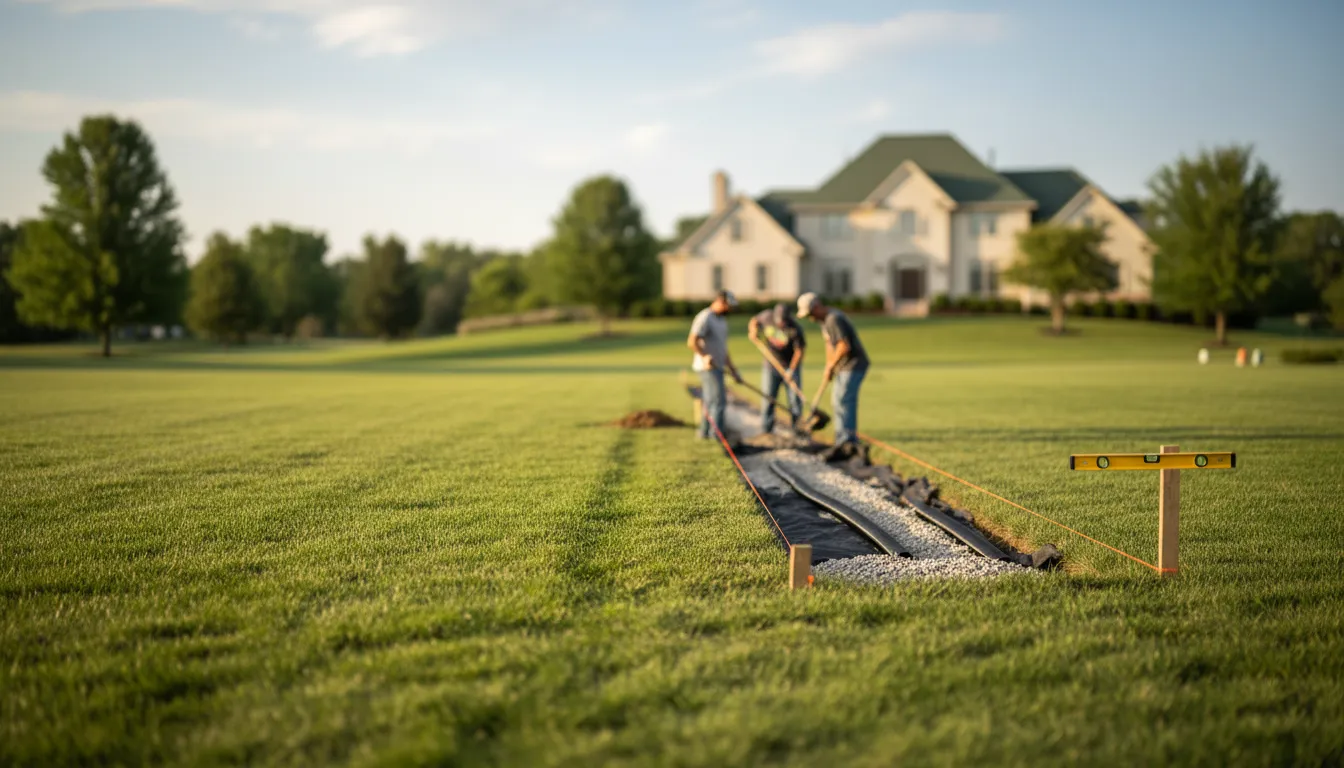
Find the Best Yard Drainage Contractors for Your Business
No obligation • Fast responses • Nationwide coverage
Why you can trust Landscape Atlas
Landscape Atlas is a leading United States resource for evaluating landscaping, lawn care, and outdoor service providers. Our team researches each category in depth, focusing on service quality, safety, and customer experience. Listings and rankings are based on independent criteria and user feedback, and companies cannot pay to influence our assessments or recommendations.
Search providers near you
Best Yard Drainage Contractors in New Jersey Ranked
Proper yard drainage and grading are essential for protecting your New Jersey home from water damage. With the state's increasingly intense rainfall and common clay soils, managing stormwater runoff is not just a landscaping concern-it's a critical component of home maintenance. Effective solutions, from simple grading to sophisticated green infrastructure, prevent foundation cracks, basement flooding, and landscape erosion. This guide explains the key techniques, local considerations, and how to connect with qualified professionals who can assess your property and implement the right system for your needs.
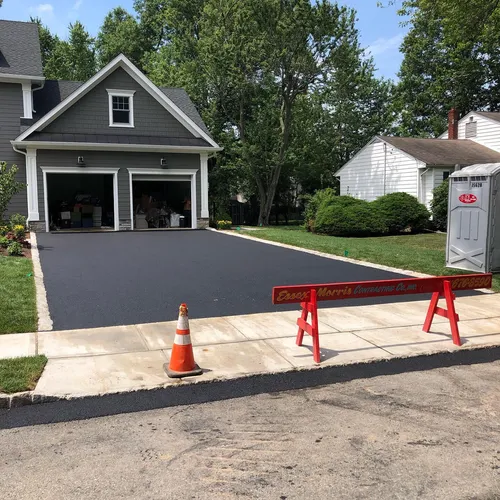
Essex Morris Contracting Co
460 Alden St, City of Orange, NJ 07051
Essex Morris Contracting Co is a paving, concrete, and masonry contractor located near Newark, NJ. They serve residential and commercial clients in Essex and Morris Counties, offering services such as yard drainage, grading, hardscaping, pavers, and retaining walls. With over 30 years of experience, the company specializes in projects including patios, sidewalks, curbing, and asphalt paving. Essex Morris Contracting Co is led by the Trezza family and focuses on using quality materials and methods to achieve both visual and structural results.
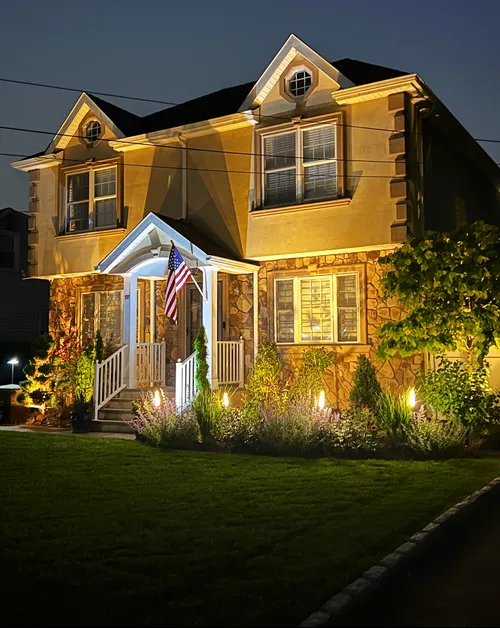
Green Acres Landscape Construction
Newark, NJ
Green Acres Landscape Construction has been providing landscaping design, irrigation, and construction services in Newark, NJ, and throughout New Jersey for over 15 years. They offer a wide range of services including lawn maintenance, sod installation, fence construction, drainage solutions, hardscape lighting, and outdoor kitchen installations. The company handles both residential and commercial properties with a focus on treating each property with care and respect. Their capabilities include brick paver installation and comprehensive landscape design and maintenance.
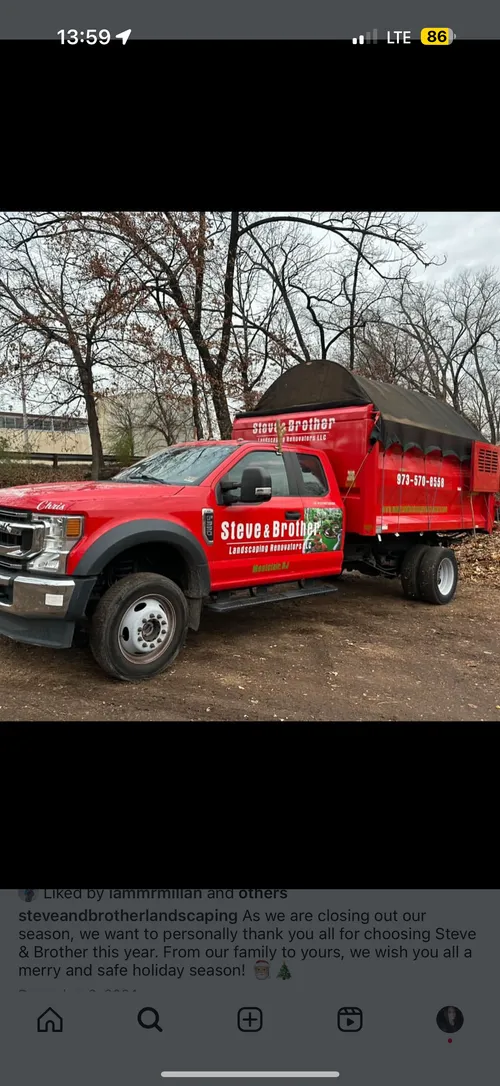
Steve & Brother Landscaping
28 Fulton St, Montclair, NJ 07042
Steve & Brother Landscaping Renovators, LLC is a landscaping company based in Newark, NJ, serving Montclair and surrounding areas. They offer a wide range of services including lawn care, mowing, fertilization, weed control, sod installation, fence installation, landscape design, yard drainage, and hardscaping such as flagstone patios and retaining walls. Their team handles both routine maintenance and complete outdoor transformations, focusing on efficient and correct completion of each job. The company provides flexible scheduling to fit clients' needs and emphasizes quality results and customer satisfaction.
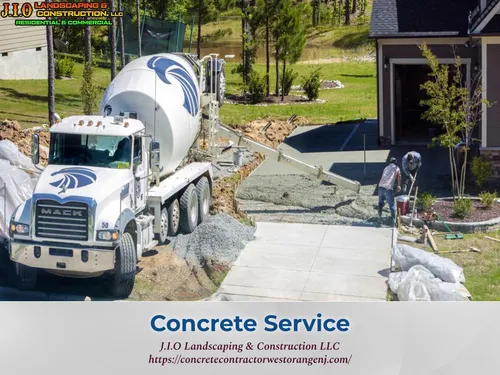
J.I.O Landscaping & Construction LLC
Newark, NJ
J.I.O Landscaping & Construction LLC is a construction and landscaping company based in Newark, NJ. With 15 years of experience, they offer a wide range of services including tree removal, stump grinding, yard drainage, grading, sprinkler installation and repair, as well as hardscaping projects like retaining walls and pavers. Their capabilities extend to excavation, concrete work, and driveway sealing, serving both residential and commercial clients in the New Jersey area.
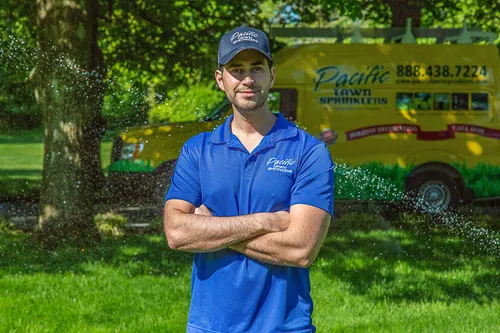
Pacific Lawn Sprinklers
Jersey City, NJ
Pacific Lawn Sprinklers is a comprehensive outdoor service provider based in Jersey City, NJ, specializing in lawn sprinkler installation, irrigation system maintenance, landscape lighting, holiday lighting, and yard drainage solutions. They serve residential and commercial clients, offering expertise in designing and maintaining irrigation systems, including winterization to prevent freeze damage and improve water efficiency. Known for handling large-scale commercial projects such as municipal sites and sports fields, Pacific Lawn Sprinklers has been active since 1999. Their services include advanced capabilities like low-voltage landscape lighting and backflow prevention testing, with customer support available 24/7 online.
Why New Jersey Homes Need Specialized Drainage
New Jersey's climate and geology create unique challenges for homeowners. The state is experiencing more frequent and intense rain events due to climate change, which places significant stress on older or inadequate drainage systems 1. Compounding this issue is the prevalence of clay soils across much of the state. Clay has very small particles that compact easily, leading to extremely slow water infiltration and a high potential for surface pooling and saturation. Without proper management, this combination of heavy rain and poor-draining soil directs water toward your home's foundation, leading to costly structural issues and unhealthy indoor conditions.
Core Principles of Effective Drainage
Successful water management in your landscape is built on three foundational principles:
- Positive Grading: This is the first and most crucial line of defense. The ground should slope away from your home's foundation at a minimum rate of 1/4 inch per foot for at least the first six feet 2. This ensures surface water flows away from the structure, not toward it.
- Intercepting Water: When grading alone isn't enough, subsurface and collection systems are used to intercept water. French drains and catch basins capture water before it can saturate the soil around your foundation, safely redirecting it to a suitable discharge point.
- Green Infrastructure (GI): This approach manages water by mimicking natural processes. Techniques like rain gardens and bioswales reduce runoff volume by allowing water to soak into the ground and be used by plants, which lessens the burden on municipal storm systems and reduces pollution.
Common Yard Drainage Solutions for NJ Properties
A range of solutions exists to address water problems, from simple corrections to complex engineered systems. The right choice depends on your property's specific issues, soil type, and budget.
1. Grading and Re-Grading
Grading is the process of shaping the land's surface to control water flow. Re-grading may involve adding soil (fill) to create the proper slope away from the foundation or re-contouring low spots in the yard where water collects. This is often the most cost-effective first step and is essential for any other drainage system to function correctly.
2. French Drains
A French drain is a gravel-filled trench containing a perforated pipe. It is designed to collect and redirect subsurface water, making it an ideal solution for yards with soggy soil or water seepage in basements, especially in areas with clay. The pipe is sloped to carry water to a storm drain, dry well, or a lower, safer part of the property.
3. Rain Gardens and Bioswales
These are landscaped depressions that capture runoff from roofs, driveways, and lawns. They are planted with deep-rooted native plants that absorb water, filter out pollutants, and allow for gradual infiltration into the soil. The New Jersey Rain Garden Manual provides extensive guidance on their design and benefits, promoting them as a beautiful and ecological solution.
4. Catch Basins and Dry Wells
A catch basin is an inlet with a grate that collects surface water, connecting to an underground pipe. This pipe often leads to a dry well-a large, underground chamber filled with gravel or rubble that stores stormwater and allows it to slowly percolate into the surrounding soil. This system is excellent for managing large volumes of runoff from downspouts or paved areas.
5. Downspout and Gutter Management
Often overlooked, your roof drainage system is a primary source of water. Ensuring gutters are clean and securely attached is vital. More importantly, downspouts should extend at least 5 to 10 feet away from the foundation, using splash blocks or underground piping to discharge water into a drainage system or a well-drained area of the yard.
Find the perfect yard drainage contractors for your needs
Get personalized recommendations and expert advice
Understanding Costs for Drainage Projects in NJ
Pricing for drainage work varies widely based on the solution's complexity, the size of your property, and the materials used. Here is a general overview of what homeowners might expect:
- Grading/Re-grading: A fundamental correction can range from $500 to $2,000 or more, depending on the area size and amount of fill or excavation required 3.
- French Drain: Installed costs typically range from $1,000 to $4,000+, with the final price heavily dependent on the drain's length, depth, and the difficulty of excavation 4.
- Rain Garden: Creating a residential rain garden can cost between $500 and $2,500, influenced by its size, the plants selected, and whether any soil amendments are needed 5.
- Catch Basin & Dry Well System: These more involved installations can range from $800 to $2,500 or more, based on the depth, size of the dry well, and piping needed 6.
It's crucial to get a detailed, on-site assessment and quote from a professional, as hidden issues like bedrock or utility lines can affect the final price.
New Jersey Regulations and Best Practices
New Jersey has robust stormwater management rules designed to protect water quality and reduce flooding. The NJDEP Stormwater Best Management Practices (BMP) Manual is the key guide for these regulations 7. While single-family homeowners doing minor work are often exempt from major permit requirements, the principles in the manual represent the best available techniques.
Local municipalities enforce these state standards, often through the Residential Site Improvement Standards (RSIS) 8. If your project is extensive (e.g., involving significant impervious cover or connecting to a municipal system), you may need local approval. A knowledgeable contractor will understand these requirements and can help navigate any necessary permits, ensuring your system is effective and compliant.
Choosing the Right Professional
Given the technical and regulatory landscape, selecting the right contractor is critical. Look for professionals with specific experience in yard drainage, site grading, and stormwater management. They should conduct a thorough evaluation of your property, asking about problem areas during heavy rain and checking soil conditions. A reputable provider will explain their proposed solution clearly, provide a written contract detailing the work and materials, and be familiar with NJDEP guidelines for green infrastructure and erosion control 9.
Frequently asked questions
Sources
Footnotes
-
NJDEP| Division of Water Quality | Green Infrastructure - https://dep.nj.gov/dwq/green-infrastructure/ ↩
-
Exterior Grading Problems and New Jersey Home Inspections - https://www.looksmarthomeinspections.com/blog/exterior/exterior-grading-problems-and-new-jersey-home-inspections/ ↩
-
Drainage and Landscape Grading - https://landscape-solutions.net/drainage-and-grading/ ↩
-
Yard Drainage Solutions for New Jersey Homes - Guide #002 - https://phrlandscapes.com/yard-drainage-solutions-for-new-jersey-guide-002/ ↩
-
RAIN GARDEN MANUAL OF NEW JERSEY - https://npsnj.org/wp-content/uploads/2023/04/rain-garden-manual.pdf ↩
-
12 Residential Backyard Drainage Solutions - Protect Your Yard - https://wilsonslawncare.com/12-residential-backyard-drainage-solutions/2024/ ↩
-
NJ Stormwater Best Management Practices Manual - https://dep.nj.gov/stormwater/bmp-manual/ ↩
-
NJDEP| Stormwater | FAQs - https://dep.nj.gov/stormwater/sw_rule_faqs/ ↩
-
EC Site and Stormwater Management | NJ Green Building Manual - https://greenmanual.rutgers.edu/ec-site-and-stormwater-management/ ↩