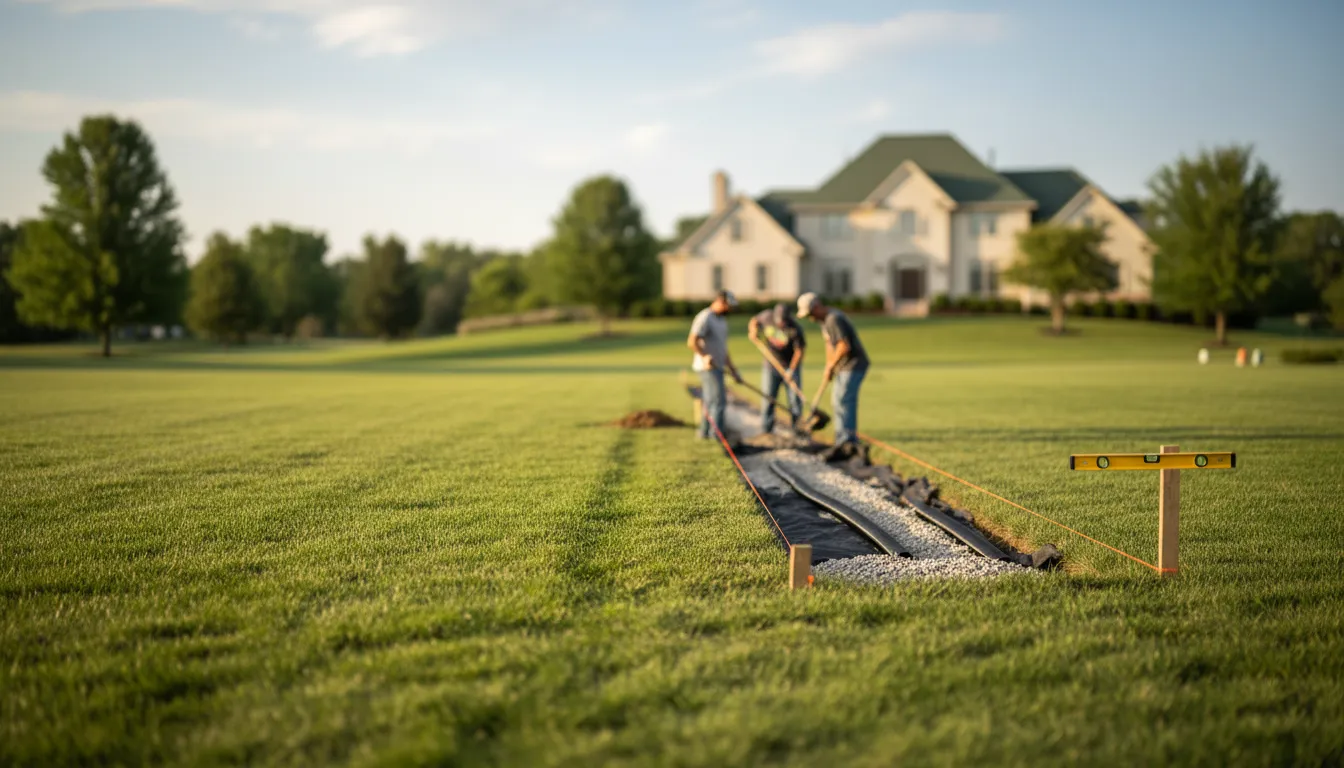
Find the Best Yard Drainage Contractors for Your Business
No obligation • Fast responses • Nationwide coverage

Why you can trust Landscape Atlas
Landscape Atlas is a leading United States resource for evaluating landscaping, lawn care, and outdoor service providers. Our team researches each category in depth, focusing on service quality, safety, and customer experience. Listings and rankings are based on independent criteria and user feedback, and companies cannot pay to influence our assessments or recommendations.
Search providers near you
Top Yard Drainage Contractors in Rio Rancho, New Mexico Ranked
Proper yard drainage and grading are essential for protecting your Rio Rancho home from water damage, preventing soil erosion, and creating a healthy, sustainable landscape. In our semi-arid climate, managing stormwater effectively is not just about solving puddles; it's about conserving precious water resources and preventing costly foundation issues. This guide will help you understand the core principles of landscape drainage, explore solutions tailored to our local environment, and connect with the knowledge needed to implement effective water management on your property.
ASAP Sands Outdoor Services
310a Ranchitos Rd NE, Albuquerque, NM 87113
ASAP Sands Outdoor Services is a full-service landscaping company based in Albuquerque, NM. Serving both residential and commercial clients, they offer a wide range of services including lawn fertilization, weed control, landscape lighting installation, tree removal, yard drainage, sprinkler installation and repair, land clearing, and hardscaping such as patios and retaining walls. With over 40 years of experience since 1984, ASAP Sands Outdoor Services has established a strong presence in the local landscaping industry.
2 Brothers Landscaping
Albuquerque, NM
2 Brothers Landscaping is a family-owned landscaping and hardscaping company based in Albuquerque, NM. They offer a wide range of services including lawn mowing, fertilization, weed control, sod installation, artificial turf, landscape design, tree care, yard drainage, sprinkler installation and repair, land clearing, and hardscaping such as patios and retaining walls. Their team is experienced in transforming outdoor spaces with attention to detail and personalized service. They serve Albuquerque and surrounding areas including Rio Rancho and South Valley. 2 Brothers Landscaping is known for their expertise in sod installation and irrigation system repairs, ensuring healthy and well-maintained lawns.
ABQ Landscaping
Albuquerque, NM
ABQ Landscaping in Albuquerque, NM offers a wide range of landscaping and outdoor services including sod and artificial turf installation, tree removal and trimming, yard drainage and grading, sprinkler system installation and repair, land clearing, hardscaping with pavers and retaining walls, and more. They specialize in efficient irrigation solutions, Xeriscape and gravel installations, and concrete and block wall construction, providing tailored designs that consider local climate and soil conditions. Their capabilities include precise grading and excavation using Bobcat equipment, as well as professional installation of drip irrigation systems and artificial grass. ABQ Landscaping emphasizes craftsmanship, punctuality, and clear communication to deliver projects that meet high standards while fostering lasting customer relationships.
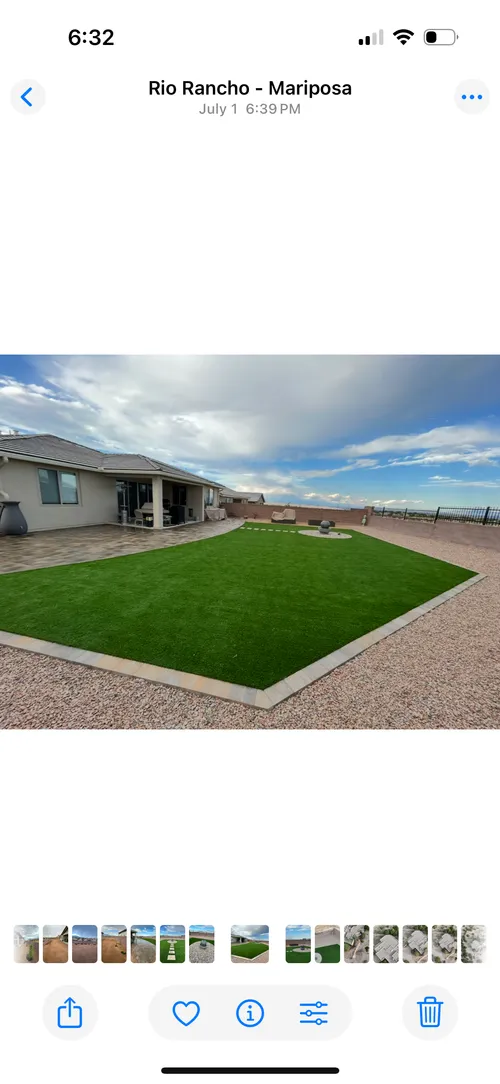
Zia Valley Landscaping LLC
Albuquerque, NM
Zia Valley Landscaping LLC is a landscaping company based in Albuquerque, NM, offering a broad range of services including lawn care, landscape design, irrigation installation, and tree removal. With over 15 years of experience, they provide year-round maintenance and construction services such as sod installation, retaining walls, and drainage systems. They serve Albuquerque and surrounding areas including Rio Rancho, Bernalillo, and Sandia Park. Their capabilities include designing and installing irrigation and drip systems tailored to property needs, as well as xeriscape design for low-maintenance landscapes.
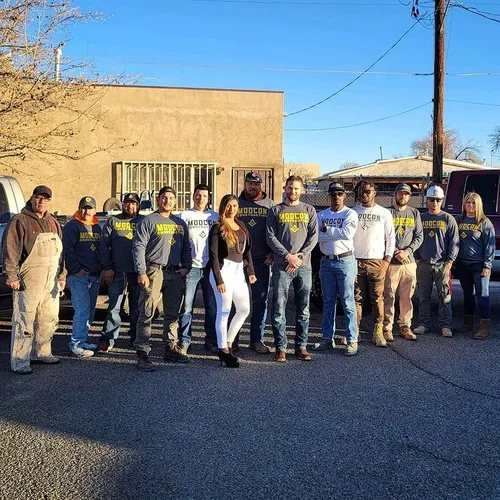
Modern Rock Contractors
5415 Academy Rd NE Suite B, Albuquerque, NM 87109
Modern Rock Contractors is a general contracting company based in Albuquerque, NM, specializing in yard drainage, grading, and full-service asphalt asset maintenance. With nearly 25 years of experience in the heavy civil industry, they provide services including pothole repair, parking lot maintenance, concrete, asphalt, road building, gravel, culverts, underground work, and erosion control throughout New Mexico. They also offer parking lot striping using quality products from SealMaster, Craftco, and Sherwin Williams.
Why Drainage Matters in Rio Rancho
While Rio Rancho enjoys plenty of sunshine, our intense, short-duration monsoon rains can quickly overwhelm poorly graded yards. Without proper stormwater management, runoff can pool against your home's foundation, leading to cracks, basement moisture, and structural damage. It can also wash away topsoil, create muddy bogs in your lawn, and contribute to neighborhood flooding. Effective drainage solutions work to slow down, spread out, and soak in rainwater, turning a potential problem into a benefit for your garden and the local aquifer. Adopting these practices aligns with the city's encouragement of xeriscaping-landscaping that reduces or eliminates the need for irrigation.
Core Principles of Effective Yard Drainage
Successful water management hinges on a few key concepts. The goal is to control the flow of water across your property, guiding it safely away from structures and allowing it to infiltrate the soil where it's beneficial.
- Grading and Sloping: This is the first and most fundamental step. The ground should slope away from your home's foundation at a minimum rate of 1/2 inch per foot for at least 6-10 feet. This simple reshaping of the soil directs surface water to drainage features or safe dispersal areas.
- Infiltration Over Diversion: Where possible, it's better to help water soak into the ground on your property rather than just piping it to the street. This recharges groundwater, reduces strain on municipal storm systems, and nourishes your landscape.
- Slowing Runoff: Slowing the flow of water gives it more time to infiltrate and reduces its erosive power. Techniques like swales (shallow, vegetated channels) and berms (mounded soil) are designed for this purpose.
Common Drainage & Grading Solutions for Your Property
A variety of techniques can be employed, often in combination, to solve different water issues. Here's a look at the most effective methods for Rio Rancho homes.
Regrading and Re-sloping Land
If your yard is flat or slopes toward your house, regrading is the essential corrective measure. This involves moving soil to create the proper slope away from foundations and toward designated drainage paths. It's often the first step before installing other drainage features. For severe issues, professional equipment and expertise ensure the slope is precise and long-lasting.
French Drains and Channel Drains
These are workhorses for moving water from problem areas.
- French Drains: A French drain is a trench filled with gravel or rock containing a perforated pipe. It's designed to collect and redirect subsurface water, making it ideal for yards with soggy soil or water seeping into basements. The pipe carries the water to a daylight point, dry well, or rain garden.
- Channel Drains: These are surface-level drains, often covered with a grate, that are perfect for capturing water that runs across driveways, patios, or walkways. They connect to underground piping to move the water away.
Dry Wells and Infiltration Basins
A dry well is an underground structure, typically a large pit filled with gravel or a pre-made chamber, that collects runoff from downspouts or drainage pipes and allows it to slowly percolate into the surrounding soil. It's an excellent solution for dispersing water on properties with good percolation rates, effectively creating a hidden reservoir.
Rain Gardens and Bioswales
These are beautiful, functional landscaping features that manage water sustainably. A rain garden is a shallow, planted depression that collects runoff from roofs or paved areas. It is filled with native, water-tolerant plants and engineered soil that allows water to infiltrate within 24-48 hours, filtering pollutants in the process. A bioswale is a linear, vegetated channel that slows and treats runoff as it moves across the landscape. Both are highly encouraged in water-wise landscaping plans.
Permeable Hardscapes
Replacing solid concrete or asphalt with permeable materials is a proactive drainage strategy. Permeable pavers, porous concrete, and gravel driveways allow rainwater to pass through the surface and soak into a stone reservoir base below, drastically reducing runoff from your property 1. This is an effective solution for driveways, walkways, and patios.
Find the perfect yard drainage contractors for your needs
Get personalized recommendations and expert advice
The Process: From Assessment to Maintenance
Implementing a drainage solution is a systematic process.
- Assessment & Diagnosis: The first step is to identify the problem. Observe your yard during a heavy rain. Where does water pool? Where does it flow? Check for signs of erosion or damp walls in your basement. Understanding the source and path of water is critical.
- Design & Planning: Based on the assessment, a plan is developed. This may involve a single solution or a combination (e.g., regrading the lawn, adding a French drain to a low spot, and daylighting the pipe into a new rain garden). Local regulations and utility locations must be considered 2.
- Excavation & Installation: This is the construction phase. It involves digging trenches for drains, reshaping soil for grading, excavating for dry wells or rain gardens, and installing pipes, gravel, and other materials.
- Finishing & Landscaping: Once functional components are in place, the area is restored. This includes compacting soil, laying sod or seed, planting a rain garden with native species, and adding mulch. Downspouts are connected to the new drainage system.
- Ongoing Maintenance: All drainage systems require some upkeep. Keep catch basin grates clear of debris, ensure downspouts are connected, and occasionally flush French drain pipes. For rain gardens, manage weeds and replace mulch as needed 3.
Cost Considerations for Drainage Projects
Costs for drainage and grading work in Rio Rancho vary widely based on the complexity of the problem, the solutions chosen, the size of your property, and labor costs. Here is a general range to provide a frame of reference:
- Basic Grading/Re-sloping: For correcting slope on a small to medium area, costs might range from $300 to $1,500 or more, depending on the amount of earthmoving required 4.
- Rain Garden Installation: Creating a residential-scale rain garden, including excavation, soil amendment, plants, and mulch, can cost between $200 and $1,000+ 5.
- French Drain Installation: Professionally installed French drains are a more significant investment, typically ranging from $1,000 to $4,000 or more, with length, depth, and complexity being the main cost drivers 6.
- Permeable Pavers: Installing a permeable paver driveway or patio is a premium solution, with material and installation costs often ranging from $10 to $25 or more per square foot 7.
Remember, these are estimates. The specific conditions of your yard in Rio Rancho, including soil type and access, will determine the final price. Investing in proper drainage often prevents far more expensive repairs to your home's foundation or landscaping later.
Integrating Drainage with Xeriscape Principles
Rio Rancho actively promotes xeriscaping as a way to conserve water 8. Fortunately, effective drainage and beautiful, low-water landscaping go hand-in-hand. A rain garden is a perfect example of xeriscape in action, using native plants that are adapted to both drought and periodic inundation. Swales can be planted with deep-rooted native grasses that stabilize the soil. By directing runoff to these planted areas, you are irrigating your landscape with free rainwater, reducing your reliance on tap water for irrigation. When planning any drainage project, consider using native and drought-tolerant plants to finish the space, creating a system that is both functional and ecologically sound.
Frequently asked questions
Sources
Footnotes
-
Methods to Reduce Urban Runoff: AP® Environmental Science Review - https://www.albert.io/blog/methods-to-reduce-urban-runoff-ap-environmental-science-review/ ↩
-
Chapter 153 EROSION CONTROL; STORM DRAINAGE AND ... - https://www.codepublishing.com/NM/RioRancho/html/RioRancho150/RioRancho153.html ↩
-
10 Things You Can Do to Prevent Stormwater Runoff Pollution - https://www.farmington-ct.org/departments/engineering/stormwater/10-things-to-prevent-stormwater-pollution ↩
-
12 Residential Backyard Drainage Solutions - Protect Your Yard - https://wilsonslawncare.com/12-residential-backyard-drainage-solutions/2024/ ↩
-
Control Heavy Runoff - Solving Drainage and Erosion Problems - https://www.fairfaxcounty.gov/soil-water-conservation/drainage-problem-control-runoff ↩
-
How Landscaping Drainage Techniques Protect Your Yard - https://erosionmanagementservices.com/blog/best-yard-lawn-drainage-techniques-you-need-to-know/ ↩
-
What You Can Do to Soak Up the Rain | US EPA - https://www.epa.gov/soakuptherain/what-you-can-do-soak-rain ↩
-
Xeriscaping | The Official Site of Rio Rancho, NM - RRNM.gov - https://rrnm.gov/181/Xeriscaping ↩