Find the Best Yard Drainage Contractors for Your Business
No obligation • Fast responses • Nationwide coverage

Why you can trust Landscape Atlas
Landscape Atlas is a leading United States resource for evaluating landscaping, lawn care, and outdoor service providers. Our team researches each category in depth, focusing on service quality, safety, and customer experience. Listings and rankings are based on independent criteria and user feedback, and companies cannot pay to influence our assessments or recommendations.
Search providers near you
Best Yard Drainage Contractors in Nevada Ranked
Managing water flow on your property is a critical, yet often overlooked, aspect of home maintenance in Nevada. While the state is known for its arid climate, infrequent but intense rainstorms can pose a significant threat to your home's foundation, landscaping, and overall property value. Proper yard drainage and grading involves shaping the land and installing systems to direct stormwater away from structures, preventing costly damage from pooling, erosion, and soil saturation. This guide explains the unique considerations for Nevada properties and outlines the common solutions professionals use to protect your investment.
New View Landscapes, LLC
4262 Blue Diamond Rd #102-435, Las Vegas, NV 89139
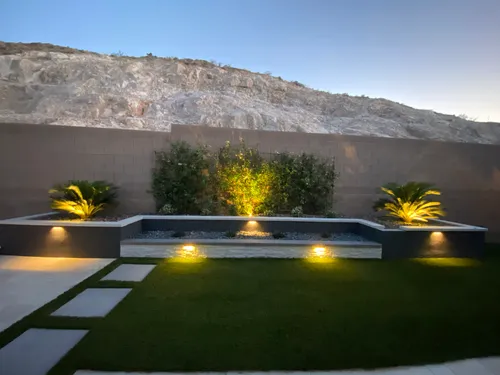
New View Landscapes, LLC is a landscaping company based in Las Vegas, NV, specializing in landscape design, sod and artificial turf installation, outdoor lighting, yard drainage, grading, and hardscaping. They serve areas including Summerlin, Henderson, and Southern Highlands. Their services include custom landscape designs that incorporate low-glare lighting, water features, and curated plant palettes, along with precise grading and masonry work for drainage and aesthetic appeal. With over 20 years of experience, they focus on creating refined and functional outdoor environments that complement the desert landscape and homeowners' lifestyles.
Pure Turf USA
5974 S Edmond St Building #4, Las Vegas, NV 89118
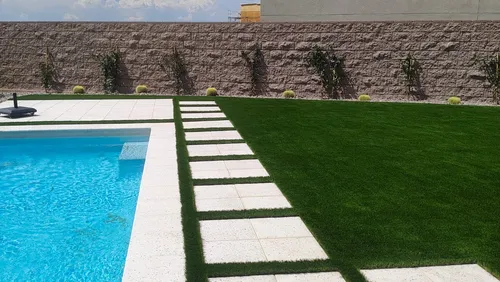
Pure Turf USA is a landscaping and turf installation company based in Las Vegas, NV. They specialize in artificial turf installation, landscape design, tree services including removal and stump grinding, yard drainage and grading, sprinkler installation and repair, land clearing, and hardscaping such as pavers and retaining walls. The company is known for delivering comprehensive yard transformations using high-quality synthetic turf and custom hardscape features. Their team handles projects efficiently, often completing installations within a few days while maintaining clean and precise work. Pure Turf USA also offers expert design consultations to tailor outdoor spaces to client needs, ensuring functional and aesthetic results.
On Time Landscaping
Las Vegas, NV
On Time Landscaping is a licensed landscaping and irrigation company serving Las Vegas, NV. They offer lawn fertilization, weed control, yard drainage, grading, sprinkler installation and repair, and general landscaping services. The company holds a Nevada C10 contractor's license for landscaping and irrigation work, as well as a C6 license for weed control spraying, ensuring compliance with state regulations. Established in 2008, On Time Landscaping focuses on quality workmanship and personalized service tailored to each property's needs.
LandTeck Inc. Landscape & Irrigation Contractor
4049 E Lake Mead Blvd, Las Vegas, NV 89115
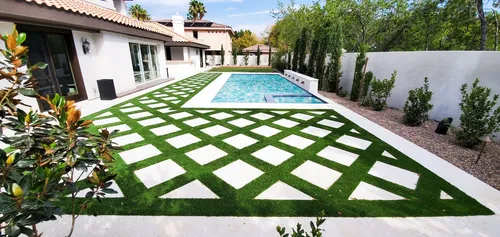
LandTeck Inc. Landscape & Irrigation Contractor is based in Las Vegas, NV, providing a wide range of outdoor services including landscape lighting installation, tree removal, yard drainage solutions, sprinkler system installation and repair, land clearing, landscaping, and lawn care. They serve multiple communities in and around Las Vegas, including Henderson, Summerlin, and North Las Vegas. Their expertise includes drainage systems such as French drains and grading, as well as irrigation leak detection and repairs. LandTeck specializes in maintaining and renovating existing landscapes and offers services like yard cleanups, rock and dirt removal, and outdoor lighting installation.
DRC Landscaping
910 Glendale Ave, Sparks, NV 89431
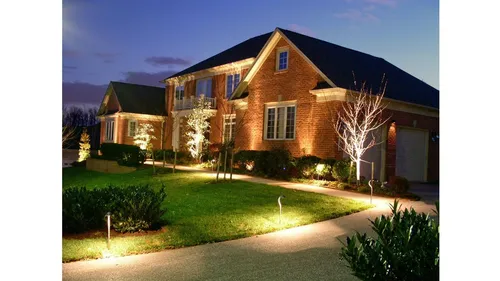
DRC Landscaping is a landscaping and hardscaping company based in Reno, NV, specializing in designing and building water-efficient outdoor living spaces suited for Northern Nevada's unique climate. Their services include landscape design, irrigation installation and repair, sod and artificial turf installation, yard drainage, grading, and hardscaping such as patios and retaining walls. They focus on creating resilient landscapes that handle arid summers, freeze-thaw cycles, and alkaline soils, using techniques like xeriscaping and interlocking pavers designed for local conditions. DRC Landscaping serves areas including Spanish Springs, Somersett, and Caughlin Ranch, bringing local expertise to each project. Their irrigation specialists work to minimize water runoff and evaporation, ensuring sustainable and effective watering systems.
Why Drainage is Different in the Nevada Desert
Effective water management in Nevada isn't about handling constant drizzle; it's about preparing for sudden, heavy downpours that the dry landscape isn't naturally equipped to absorb 1. The primary goal is to create prompt runoff diversion before water can seep toward your foundation. Two key local factors dictate the best approach:
- Soil Type: Nevada soils vary widely. Sandy soils allow for better water infiltration, while prevalent hardpan and clay soils are virtually impermeable, causing water to pool and run off quickly. Your soil type will determine whether you need simple surface grading or more extensive subsurface drainage systems.
- Water Conservation Synergy: Modern drainage planning can incorporate water-smart features. Solutions like rain gardens (bioswales) or rain barrels capture and utilize stormwater, aligning drainage needs with Nevada's focus on conservation.
Core Principles: Grading as Your First Defense
Before installing complex systems, evaluating and correcting your property's grading is the essential first step. Proper grading is the most effective and often most cost-efficient way to prevent water problems.
- The Gold Standard: The ground should slope away from your home's foundation at a minimum of 2% (about 1/4 inch per foot) for at least 10 feet, with 5% (1/2 inch per foot) being ideal for maximum protection 2 3.
- Foundation Focus: Ensure the final grade (soil level) is at least 6 inches below any wood siding or stucco to prevent moisture wicking and rot. The goal is to create a "positive grade" that acts like a gentle, paved roof for your soil, shedding water away from the structure.
Common Drainage & Grading Solutions for Nevada Homes
Professionals employ a combination of strategies tailored to your property's specific slope, soil, and problem areas.
1. Surface Grading and Recontouring
This involves mechanically moving soil to create the proper slopes away from foundations and toward safe dispersal areas like streets, swales, or dry wells. It's often the initial fix for standing water in yards or near house walls.
2. French Drains
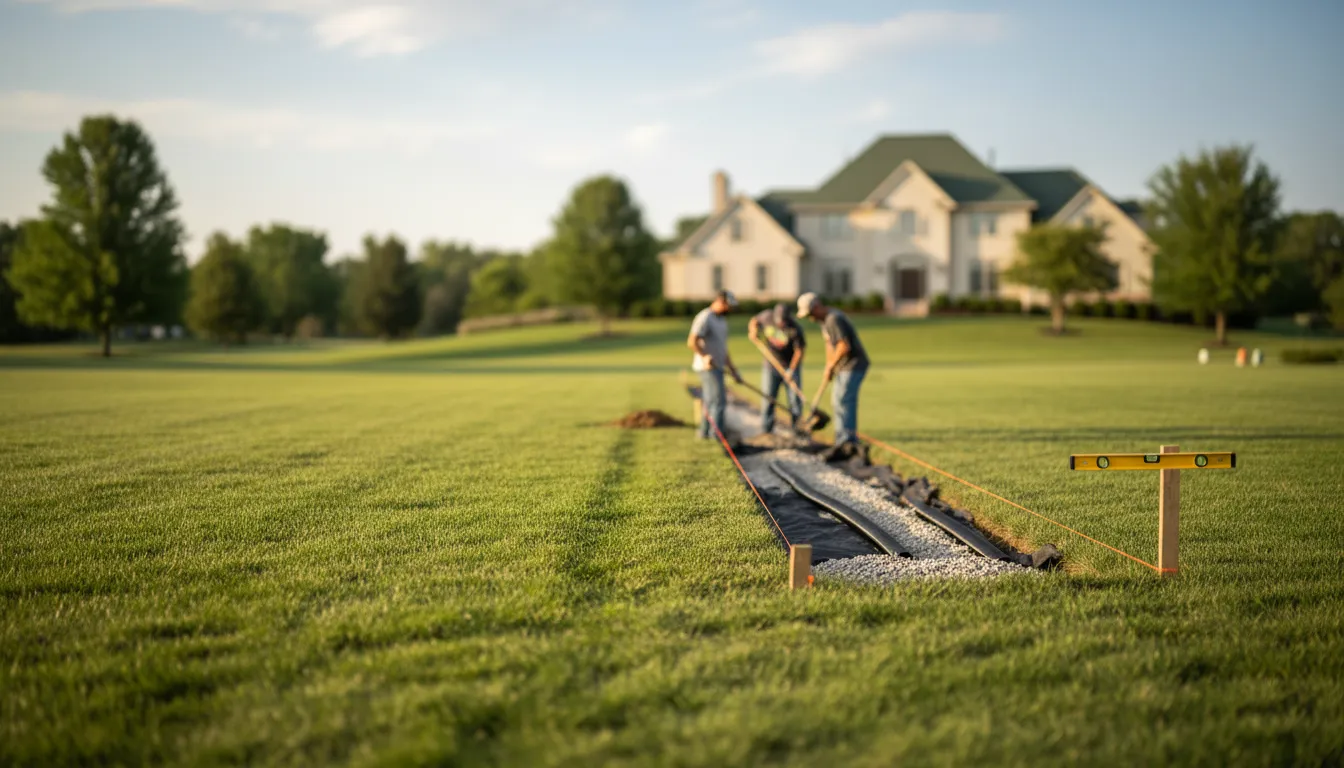
A French drain is a trench filled with gravel containing a perforated pipe, wrapped in geotextile fabric. It's designed to intercept subsurface water (hydrostatic pressure) and surface runoff, channeling it away from problem zones. They are particularly useful where clay soils prevent surface absorption.
3. Catch Basins and Channel Drains
These are grated inlets installed in low spots, driveways, or patio areas where water collects. They connect to underground piping that carries the water to a storm sewer, dry well, or daylighted outlet. Channel drains are ideal across driveway entrances or walkways.
4. Bioswales and Rain Gardens
These are landscaped depressions planted with native, deep-rooted plants and grasses. They are designed to temporarily hold, absorb, and filter stormwater runoff, reducing its volume and velocity while removing pollutants. This is a sustainable Best Management Practice (BMP) encouraged for managing runoff.
5. Downspout Management and Dry Wells
Simply extending downspouts 5-10 feet away from the foundation is a low-cost, high-impact step. For larger volumes of roof runoff, a dry well-an underground chamber filled with gravel that disperses water slowly into the soil-can be an effective solution.
Find the perfect yard drainage contractors for your needs
Get personalized recommendations and expert advice
Protecting Your Foundation: An Integrated Approach
A secure foundation relies on a combination of proper grading, effective drainage, and maintained gutters.
- Grade + Gutter: Proper landscape grading works in tandem with a functioning gutter system. Clean gutters and securely attached downspouts are useless if the ground at the foundation is flat or slopes inward.
- The Drainage Layer: Alongside grading, foundation waterproofing membranes and perimeter drain tile (a form of French drain at the footing level) are critical for comprehensive protection, especially in homes with basements or crawl spaces 4.
- Prevent Pooling: The ultimate goal is to prevent water from pooling around foundation walls, which is the leading cause of hydrostatic pressure, cracks, and moisture intrusion.
Understanding Costs for Drainage Work in Nevada
Project costs depend heavily on your property's size, slope, soil conditions, and the complexity of the solution. Below are general price ranges; always obtain multiple detailed bids from qualified contractors for your specific project.
- Basic Grading/Recontouring: For correcting slope near a foundation or filling a depression, professionals may charge between $200 and $800, depending on the machinery time and soil volume required.
- French Drain Installation: A basic 50-foot French drain system can range from $500 to $1,500 or more. Price increases with depth, length, and difficulty of tying into an outlet.
- Catch Basin or Channel Drain: Installing a single basin or linear drain channel typically costs between $300 and $1,000+, not including the extensive piping needed to route the water away 5.
- Rain Garden/Bioswale Installation: Creating a functional and attractive rain garden involves excavation, soil amendment, and planting. Costs can range from $500 for a small DIY-friendly site to $2,500+ for a large, professionally designed and planted system 6 7.
- Comprehensive Drainage System: For a whole-property solution combining regrading, multiple French drains, catch basins, and downspout tie-ins, homeowners can expect investments from $2,000 to $10,000 or higher 8 9.
Important Note: Costs can vary significantly between the Las Vegas Valley, Reno-Sparks area, and rural communities due to labor rates, material availability, and local permitting requirements.
Local Regulations and Best Practices
In Nevada, drainage work may be subject to local municipal codes or county standards, especially if it impacts public right-of-way or storm sewer systems.
- Permits: Significant regrading or new drainage infrastructure often requires a permit. Local building or public works departments can provide guidance.
- NDEP Guidelines: The Nevada Division of Environmental Protection (NDEP) issues general permits for stormwater discharge from construction activities, which can apply to larger landscaping and grading projects 10.
- Regional Manuals: Counties like Washoe have specific Regional Drainage Manuals that outline design criteria for conveyance and detention, which professional contractors follow 11.
Frequently asked questions
Sources
Footnotes
-
CHAPTER 4 DRAINAGE DESIGN - https://www.fao.org/4/t0099e/t0099e04.htm ↩
-
Proper Landscape Grading | Best Slope for Foundation Drainage - https://www.olshanfoundation.com/foundation-repair/foundation-problems-causes/foundation-drainage/ ↩
-
What Is Drainage Grading? - Castle Point Landscape Design - https://castlepointlandscape.com/what-is-drainage-grading/ ↩
-
Urbanization and Stormwater Runoff | US EPA - https://www.epa.gov/sourcewaterprotection/urbanization-and-stormwater-runoff ↩
-
8 Grading and Drainage Strategies for Florida's Landscapes - https://dtelandscape.com/8-grading-and-drainage-strategies-for-florida-landscapes/ ↩
-
Stormwater Best Management Practices - https://spcwater.org/topics/stormwater-management/stormwater-best-management-practices-2/ ↩
-
10 Things You Can Do to Prevent Stormwater Runoff Pollution - https://www.farmington-ct.org/departments/engineering/stormwater/10-things-to-prevent-stormwater-pollution ↩
-
Truckee Meadows Regional Drainage Manual - Washoe County - https://www.washoecounty.gov/csd/engineering_capitalprojects/files-engineering-capital-projects/tmrdm_final_043009.pdf ↩
-
Yard Grading 101: Everything you need to know - https://www.thisoldhouse.com/lawns/yard-grading ↩
-
NVR100000 - Nevada Division of Environmental Protection - https://ndep.nv.gov/uploads/documents/Construction_SW_GPermit_2015_.pdf ↩
-
Design Criteria and Improvement Standards NEVADA - https://cdnsm5-hosted.civiclive.com/UserFiles/Servers/Server_12493019/File/Community%20Development/Engineering/DEC2108_DCDCIS_Part%20II%20Complete%202020.pdf ↩