Find the Best Yard Drainage Contractors for Your Business
No obligation • Fast responses • Nationwide coverage

Why you can trust Landscape Atlas
Landscape Atlas is a leading United States resource for evaluating landscaping, lawn care, and outdoor service providers. Our team researches each category in depth, focusing on service quality, safety, and customer experience. Listings and rankings are based on independent criteria and user feedback, and companies cannot pay to influence our assessments or recommendations.
Search providers near you
Best Yard Drainage Contractors in Vermont Ranked
Effective water management is a cornerstone of responsible homeownership in Vermont. The state's unique climate, characterized by heavy snowfall, rapid spring thaws, and persistent freeze-thaw cycles, makes proper yard drainage and grading essential for protecting your property's foundation, preventing soil erosion, and managing stormwater runoff. This guide outlines practical solutions, from simple grading adjustments to more advanced green infrastructure, to help you keep your Vermont yard dry and stable. You can use this information to understand your options and connect with qualified local professionals who can assess your site and implement the right system for your needs.
Why Vermont's Climate Demands Special Attention
Vermont's beautiful seasons come with specific water management challenges that can threaten your home if not addressed. Understanding these forces is the first step toward an effective solution.
- Freeze-Thaw Cycles: Water that seeps into soil or foundation cracks expands when it freezes, exerting tremendous pressure that can crack foundations, heave pavement, and damage landscaping. A good drainage plan manages water before it has a chance to infiltrate and freeze.
- Snowmelt and Spring Runoff: The sudden melt of a winter's worth of snow releases large volumes of water over a short period. Standard drainage can be overwhelmed, leading to pooling, saturated soil, and potential basement flooding.
- Soil Saturation: Vermont soils, often heavy with clay, have a slow infiltration rate, especially when cold. This means water runs off the surface rather than soaking in, increasing the volume and speed of runoff that needs to be managed.
Ignoring these issues can lead to costly repairs from foundation damage, mold in basements, and landscape erosion. Proactive drainage and grading work to intercept and redirect this water safely away from your home.
Core Principles of Effective Water Management
Before diving into specific solutions, it's helpful to know the guiding principles for managing water on your Vermont property. The goal is to mimic natural water absorption and flow.
- Slow It Down: Reducing the speed of runoff prevents erosion and allows more time for water to infiltrate the soil.
- Spread It Out: Dispersing concentrated flows (like from a downspout) over a vegetated area reduces its destructive power.
- Soak It In: Encouraging water to infiltrate on your property replenishes groundwater and reduces the burden on municipal storm drains.
- Direct It Away: The most critical rule is to ensure all surface and subsurface water flows away from your home's foundation, with a minimum slope of 5% for at least 10 feet 1.
A Guide to Yard Drainage and Grading Solutions
From simple weekend projects to engineered systems, here are the most effective methods for handling water in your Vermont landscape.
1. Grading and Re-Grading
This is the first and most fundamental line of defense. Grading involves shaping the soil around your home to create a slope that directs surface water away. Proper grading is often the most cost-effective improvement you can make. In Vermont, ensuring this slope remains effective after winter frost heave is crucial. A professional can assess if your yard needs re-grading to restore the proper slope.
2. Downspout Management
Your roof collects thousands of gallons of water annually. Where that water lands is critical.
- Downspout Extensions: Simply adding a 4-to-6-foot extension to discharge water onto your lawn, away from the foundation, is a highly effective, low-cost fix.
- Downspout Disconnection & Diversion: For a more permanent solution, downspouts can be disconnected from the underground drain tile and redirected into a dry well, rain garden, or a shallow gravel-filled trench (a French drain). This keeps roof runoff on your property to soak in.
3. Green Stormwater Infrastructure (GSI)
GSI uses landscape features to manage water naturally. These are highly encouraged in Vermont to reduce runoff and improve water quality.
- Rain Gardens: A shallow, planted depression designed to collect and absorb runoff from roofs, driveways, or lawns. They are filled with special soil mix and deep-rooted native plants that can tolerate both wet and dry conditions, making them perfect for capturing snowmelt and stormwater 2.
- Dry Wells and Infiltration Trenches: An underground pit or trench filled with gravel or crushed stone that collects water from downspouts or paved areas and allows it to slowly percolate into the surrounding soil. They are excellent for sites with poor surface drainage.
- Rain Barrels and Cisterns: These systems capture roof water for later use in irrigation. In Vermont, they must be installed with an overflow plan and be drained between storms and before winter to prevent freezing damage.
4. Subsurface Drainage Systems
When surface water or a high water table is the issue, subsurface systems are needed.
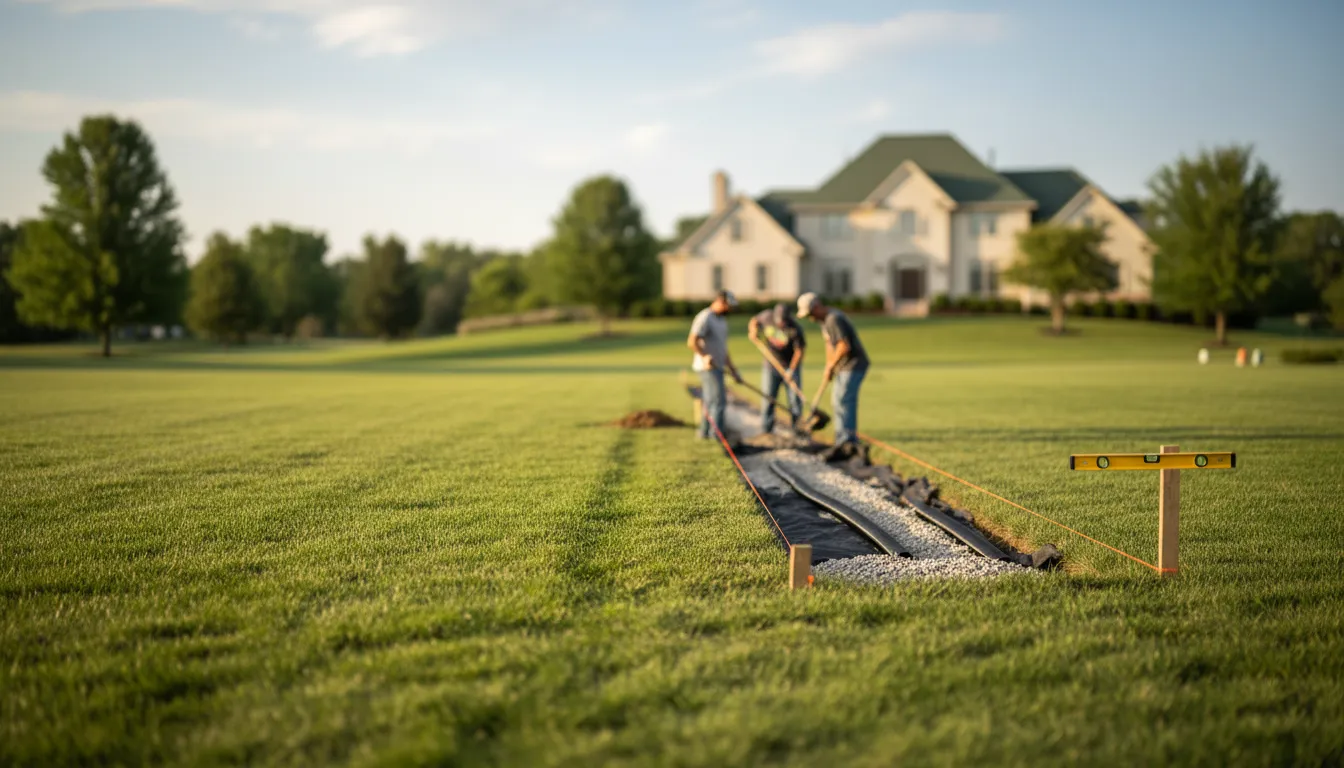
- French Drains: A perforated pipe laid in a gravel-filled trench. It collects water from soggy areas or along a foundation and channels it to a safe discharge point, like a dry well or a lower area of the yard.
- Curtain Drains: Similar to a French drain, these are installed uphill of a problem area to intercept groundwater before it reaches your foundation or yard.
5. Surface Solutions
- Swales: Broad, shallow ditches covered with grass or other vegetation that slow and channel runoff. They are a natural-looking way to direct water across a property.
- Permeable Pavers: Replacing solid concrete or asphalt with permeable pavers for patios, walkways, or driveways allows water to seep through the joints and into a gravel base below, significantly reducing runoff.
Find the perfect yard drainage contractors for your needs
Get personalized recommendations and expert advice
Understanding Costs and Investment
The cost of solving drainage problems in Vermont varies widely based on the solution's complexity, your property's size, and the materials used. Here's a general overview to help you budget:
- DIY Basic Solutions: Installing a rain barrel system can range from $50 to $200. Building a small rain garden yourself might cost $100 to $500 for plants, soil, and mulch.
- Professional Downspout Work: Having a professional disconnect and extend downspouts with proper piping can cost between $200 and $800, depending on the length and materials 3.
- Professional Green Infrastructure: Installing a professionally designed and built rain garden or dry well system typically ranges from $1,000 to $5,000 or more 4 5.
- Subsurface Drainage Systems: Installing a French drain is a larger investment due to excavation and materials, often ranging from $2,000 to $10,000+ based on length, depth, and site accessibility 6 7.
While these are upfront costs, they should be weighed against the potential expense of repairing a cracked foundation, a flooded basement, or failed septic system due to chronic water problems.
Planning Your Project: A Step-by-Step Approach
- Observe: During the next rainstorm or snowmelt, put on your boots and watch where the water flows, pools, and collects. Note any areas near your foundation.
- Start Simple: Address the easiest fixes first. Ensure your gutters are clean, downspouts are extended, and the grading slopes away from your home.
- Consult Resources: The Vermont Department of Environmental Conservation and University of Vermont Extension offer excellent guides for homeowners on stormwater management 8 9.
- Get a Professional Assessment: For persistent issues or complex projects like French drains or dry wells, a site assessment by a landscaping or drainage professional is invaluable. They can identify the core problem and recommend the most effective engineered solution.
- Implement and Maintain: Whether you install a rain garden or a French drain, remember that these systems require occasional maintenance, like clearing debris from inlets, weeding, and checking for settlement.
Taking a proactive approach to yard drainage and grading is an investment in your Vermont home's longevity, safety, and beauty. By managing water wisely, you protect your property and contribute to the health of local streams and Lake Champlain.