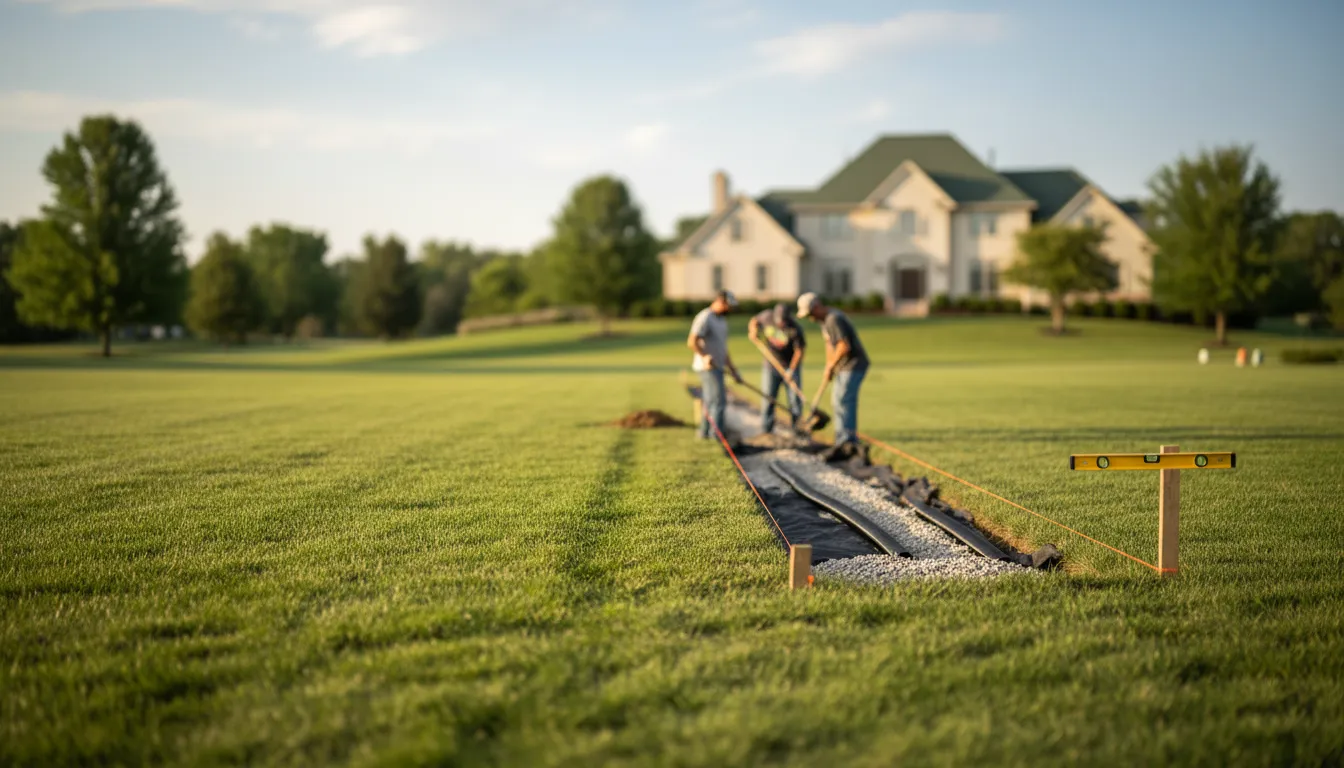
Find the Best Yard Drainage Contractors for Your Business
No obligation • Fast responses • Nationwide coverage

Why you can trust Landscape Atlas
Landscape Atlas is a leading United States resource for evaluating landscaping, lawn care, and outdoor service providers. Our team researches each category in depth, focusing on service quality, safety, and customer experience. Listings and rankings are based on independent criteria and user feedback, and companies cannot pay to influence our assessments or recommendations.
Search providers near you
Best Yard Drainage Contractors in Wisconsin Ranked
Proper yard drainage and grading are essential for protecting your Wisconsin home from water damage, preserving your landscape, and preventing foundation issues. Managing stormwater effectively keeps your basement dry, your yard usable, and contributes to healthier local waterways. This guide explains common drainage problems in Wisconsin, outlines proven solutions like grading, swales, and rain gardens, and helps you understand how to connect with local professionals who can assess your property and implement the right fix.
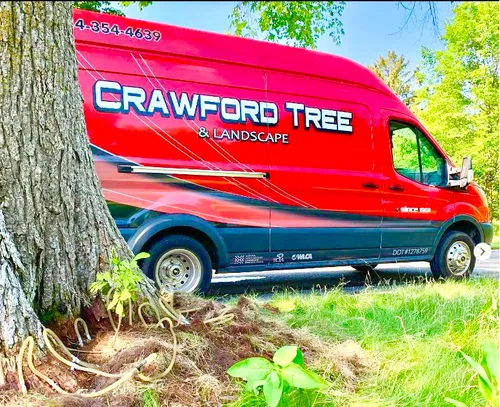
Crawford Tree & Landscape Services, Inc.
8760 W Calumet Rd, Milwaukee, WI 53224
Crawford Tree & Landscape Services, Inc. is a full-service tree and landscape care company based in Milwaukee, WI. They offer a wide range of services including tree risk assessment, removal, pruning, shrub trimming, lawn mowing, landscaping, grading, drainage solutions, and hardscape installation. Their plant health care services include disease management, pest control, fertilization, and specialized treatments such as Emerald Ash Borer protection. Established in 1969, Crawford Tree & Landscape Services provides 24/7 availability for urgent needs and uses advanced equipment to ensure safe and efficient operations.
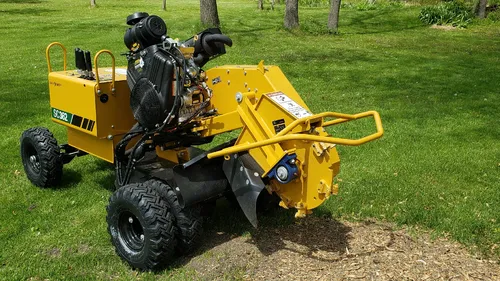
Badgerland LLC
Milwaukee, WI
Badgerland LLC is a Milwaukee, WI-based company offering fence installation, tree services including stump grinding, and yard drainage solutions. They handle projects ranging from basic stump grinding for lawn restoration to more complex tasks like driveway expansion, pool installation, and regrading after tree removal. The company is certified to manage utility marking through Digger's Hotline ProPortal and provides custom saw milling and woodworking services tailored to client needs.
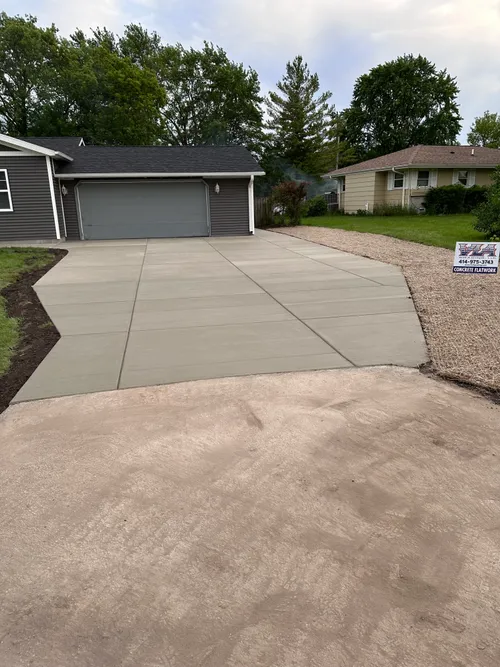
VLA Grading LLC - Concrete Flatwork
3920 W National Ave, Milwaukee, WI 53215
VLA Grading LLC - Concrete Flatwork is a yard drainage and grading contractor based in Milwaukee, WI. They provide specialized grading and concrete flatwork services for projects of various sizes. The company focuses on creating strong foundations to support construction needs.
Waukesha Lawn Service
675 N Brookfield Rd #107, Brookfield, WI 53045
Waukesha Lawn Service is a family-owned lawn care and landscaping company based in Milwaukee, WI. They provide full-season yard care services including lawn maintenance, landscape design, sod installation, yard drainage solutions, and snow removal. Serving the Waukesha County area and surrounding communities, they focus on creating healthy, well-maintained lawns and custom landscape renovations. Their team has over 30 years of experience and uses premium products to ensure lasting results. Waukesha Lawn Service offers year-round availability, including snow removal during winter months.
Four of Six Landscape
4246 Co Rd TT, Sun Prairie, WI 53590
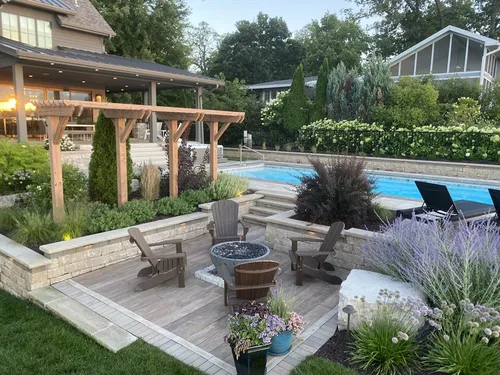
Four of Six Landscape is a landscape design and yard drainage company based near Madison, WI. They specialize in landscape design, grading services, and yard drainage solutions, creating outdoor spaces that balance aesthetics with proper water management. Their work includes designing gardens and outdoor living areas that incorporate a variety of plants and materials tailored to client preferences. The company is known for applying expert knowledge to manage rainwater effectively, protecting properties and nearby natural areas.
Why Drainage is Critical in Wisconsin
Wisconsin's climate presents unique challenges for property drainage. Heavy spring rains and rapid snowmelt can overwhelm poorly managed landscapes, leading to standing water, soggy lawns, and basement seepage. Furthermore, the state's freeze-thaw cycles can exacerbate soil shifting and damage improperly graded surfaces or gutters that direct water onto walkways, creating ice hazards. Effective drainage isn't just about moving water away; it's about managing it thoughtfully to protect your investment and comply with local guidelines that often encourage "green infrastructure" solutions that benefit the environment.
Core Principles of Effective Grading
The first line of defense against water intrusion is proper grading-the slope of the ground around your home. The fundamental rule is to create a slope that directs water away from your foundation.
- Minimum Slope: The recommended standard is a slope of at least 1/2 inch per foot for the first 10 feet away from your foundation. This ensures surface runoff flows away from the house rather than pooling against it.
- Hardscape Considerations: This principle applies not just to soil, but also to adjacent hardscapes like driveways, patios, and walkways. These should also be pitched to shed water toward lawns, swales, or storm drains.
- Inspection: After heavy rain or snowmelt, check for areas where water pools near your foundation. This is a clear sign that regrading or additional drainage solutions are needed.
Common Yard Drainage Solutions for Wisconsin Homes
When grading alone isn't enough, several effective drainage strategies can be employed. The best solution depends on your specific problem, soil type, and property layout.
Vegetated Swales
A swale is a broad, shallow, vegetated channel designed to convey runoff1. Unlike a ditch, it's gently graded and often landscaped with grass or other plants. Swales are excellent for redirecting water across a yard, from a downspout outlet to a safe discharge point, while allowing some water to infiltrate the soil along the way 2. They are a natural-looking solution that reduces runoff volume.
Rain Gardens
A rain garden is a depressed area planted with deep-rooted native plants that collects runoff from roofs, driveways, or lawns and allows it to soak into the ground3. Supported by the Wisconsin DNR as a green infrastructure practice, rain gardens are ideal for capturing and treating runoff from smaller drainage areas4. They require suitable soil conditions and proper placement (at least 10 feet from a foundation) but add beauty and ecological benefit while solving drainage problems3.
Subsurface Drains (French Drains & Curtain Drains)
For water that travels underground or saturates the soil, subsurface drains are the answer. A French drain typically consists of a perforated pipe laid in a gravel-filled trench to intercept and redirect groundwater. A curtain drain is a similar system often installed uphill of a problem area, like a basement wall, to "curtain" off subsurface flow. These are key solutions for chronic wet spots or foundation dampness that grading can't fix.
Catch Basins and Inlets
These are grated drains installed at low points in a yard or driveway to collect surface water. They connect to a buried pipe system that carries the water to a storm sewer or a designated outlet area. Catch basins are effective for dealing with specific pooling spots and are often integrated with other drainage systems.
Find the perfect yard drainage contractors for your needs
Get personalized recommendations and expert advice
Climate and Regulatory Considerations in Wisconsin
When planning a drainage project, Wisconsin homeowners should keep state-specific factors in mind:
- Soil Types: Much of Wisconsin has clay-rich soils that drain slowly. This makes infiltration-based solutions like rain gardens require careful site assessment and sometimes soil amendment.
- Winter Preparedness: Ensure downspouts and drainage outlets are positioned so melting snow and ice do not flow onto sidewalks or driveways, creating dangerous ice patches.
- Green Infrastructure: The Wisconsin DNR encourages practices that reduce runoff and improve water quality, such as rain gardens and permeable pavements5. Some municipalities may have guidelines or incentives for these approaches.
- Local Codes: Always check with your local municipality regarding permits, rules about tying drainage into municipal storm sewers, and regulations on where you can discharge water 6.
Understanding Costs for Drainage Projects
Costs vary significantly based on the solution's complexity, scale, and site conditions. Below are general estimate ranges to help you budget; obtaining quotes from local Wisconsin contractors is essential for accurate pricing.
- Grading & Swales: Minor regrading may cost a few hundred dollars. Installing a new vegetated swale, involving excavation and shaping, can range from $1,000 to over $3,000 depending on length and complexity7.
- Rain Gardens: A small, DIY-friendly rain garden might cost a few hundred dollars in plants and materials. Professionally designed and installed rain gardens, with proper soil prep and a variety of native plants, typically range from $1,000 to $4,000 or more8.
- French Drains: Installed costs often range from $15 to $30+ per linear foot. A 50-foot run could cost between $750 and $1,500, plus materials and connections9.
- Catch Basins/Inlets: The installed cost for a single catch basin can range from $300 to $800, not including the cost of connecting piping to carry water away10.
Important Note: These are illustrative estimates. The final cost for your Wisconsin property will depend on local labor rates, your specific soil (e.g., difficult clay), the presence of a high water table, and accessibility for equipment.
Finding the Right Professional
Solving drainage issues often requires professional expertise. Look for landscapers or drainage contractors with specific experience in grading, subsurface drainage, and Wisconsin's green infrastructure practices. A reliable professional will:
- Conduct a thorough site inspection during or after a rain event.
- Explain the cause of your drainage problem.
- Propose a clear solution (or combination of solutions) tailored to your property.
- Provide a detailed quote outlining labor, materials, and expected outcomes.
- Check for necessary permits and ensure the work complies with local codes.
Frequently asked questions
Sources
Footnotes
-
Swales, Drains, and Site Grading for Stormwater Control - https://basc.pnnl.gov/resource-guides/swales-drains-and-site-grading-stormwater-control ↩
-
FDM 10-35 Stormwater Control Measure Selection - https://wisconsindot.gov/rdwy/fdm/fd-10-35.pdf ↩
-
Rain Garden 1009 Definition - Wisconsin DNR - https://dnr.wisconsin.gov/sites/default/files/topic/Stormwater/1009RainGarden.pdf ↩ ↩2
-
wisconsin department of natural resources - https://socwisconsin.org/wp-content/uploads/2018/09/Rain-Garden-Standard-1009_Sept2018.pdf ↩
-
Green Infrastructure - Wisconsin DNR - https://dnr.wisconsin.gov/sites/default/files/topic/Stormwater/MS4/Green%20Infrastructure%20for%20Municpal%20and%20Parcel%20Scale.pdf ↩
-
SPS 321.125(3)(c) - Wisconsin Legislature - https://docs.legis.wisconsin.gov/document/administrativecode/SPS%20321.125%283%29%28c%29 ↩
-
Solving Grading and Drainage Issues in Appleton, Wisconsin with ... - https://stonehengebpl.com/backyard-drainage-solutions-appleton-wisconsin-with-stonehenge-brick-paving-landscaping/ ↩
-
RAIN GARDENS - Wisconsin DNR - https://dnr.wisconsin.gov/sites/default/files/topic/Stormwater/RainGardenManualPrint.pdf ↩
-
Flooded Backyard in Milwaukee? These Drainage Solutions Can Help - https://centralservicescompany.com/flooded-backyard-milwaukee-drainage-solutions-can-help/ ↩
-
Yard Drainage & Flooding - whitewater-wi.gov - https://www.whitewater-wi.gov/246/Yard-Drainage-Flooding ↩