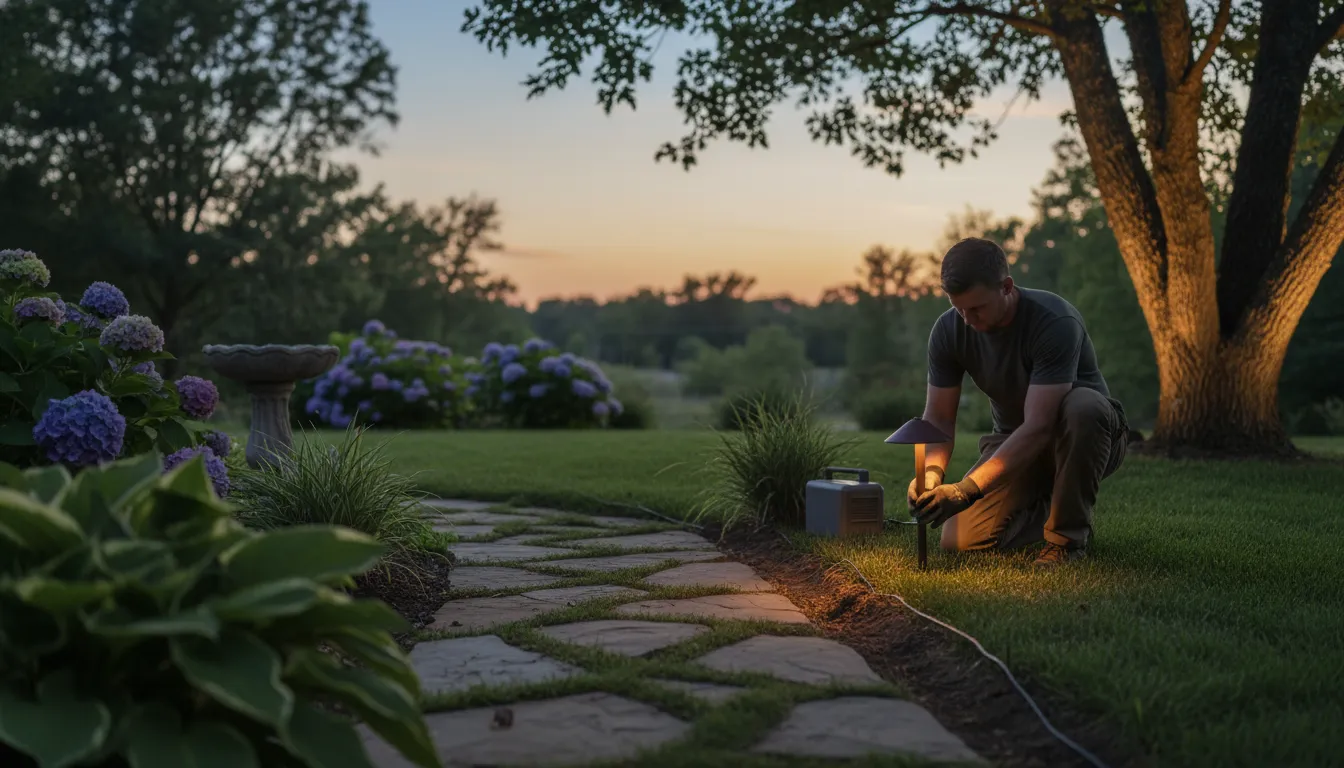
Find the Best Landscape Lighting Installers for Your Business
No obligation • Fast responses • Nationwide coverage

Why you can trust Landscape Atlas
Landscape Atlas is a leading United States resource for evaluating landscaping, lawn care, and outdoor service providers. Our team researches each category in depth, focusing on service quality, safety, and customer experience. Listings and rankings are based on independent criteria and user feedback, and companies cannot pay to influence our assessments or recommendations.
Search providers near you
Best Landscape Lighting Installers in Arizona Ranked
Outdoor lighting transforms your Arizona property from a dark space into a functional, beautiful, and secure extension of your home. A well-designed lighting plan enhances curb appeal, improves safety on pathways and steps, and allows you to enjoy your patio or pool area long after the sun sets. This guide provides essential information to help you understand your options, navigate local considerations, and connect with qualified professionals in Arizona who can bring your vision to life.
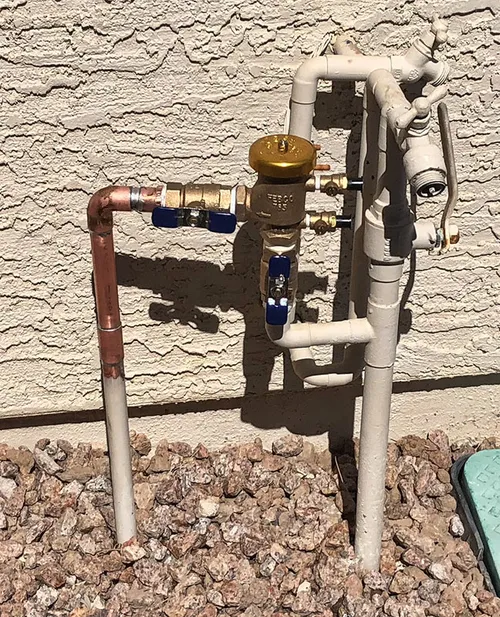
Repair Services
3961 E Chandler Blvd Suite 111-190, Phoenix, AZ 85048
Repair Services is a Phoenix, AZ-based company specializing in landscape lighting installation and sprinkler system services, including installation, repair, and replacement. They handle all irrigation components such as valves, controllers, back-flow preventers, and various sprinkler heads to help maintain healthy lawns and landscapes. Established in 2004, the company has over a decade of experience serving the local community. They also offer low voltage outdoor lighting installation through their sister company, AZ Lighting Pros.
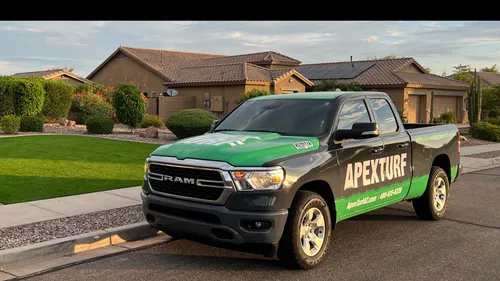
Apex Turf
8 S 132nd St, Chandler, AZ 85225
Apex Turf is a landscaping and artificial turf installation company based in Phoenix, AZ. They serve the entire Phoenix Metropolitan area, specializing in artificial grass lawns, pet-friendly turf, backyard putting greens, paver and travertine installation, retaining walls, hardscaping, and landscape lighting. Apex Turf uses high-quality USA-made turf with cooling blade technology to reduce surface temperatures, and they back their installations with a seam-free guarantee. The company also offers 24/7 availability to meet customer needs.
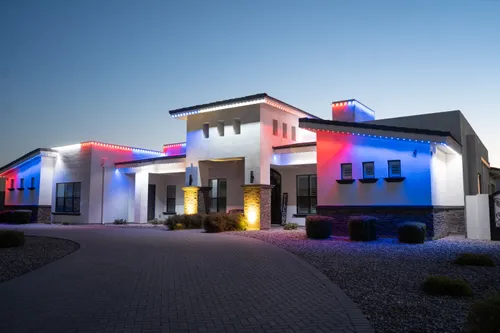
Big Pig Smart Lighting - Outdoor & Permanent Lighting Company
218 W Hampton Ave #11, Mesa, AZ 85210
Big Pig Smart Lighting - Outdoor & Permanent Lighting Company is a Phoenix, AZ-based provider specializing in permanent, app-controlled outdoor lighting for homes and small businesses. They focus on smart lighting solutions that offer year-round curb appeal, combining discreet installation with customizable control through a mobile app. Their services include accent lighting and commercial smart lighting designed to enhance property appearance and security throughout Arizona.
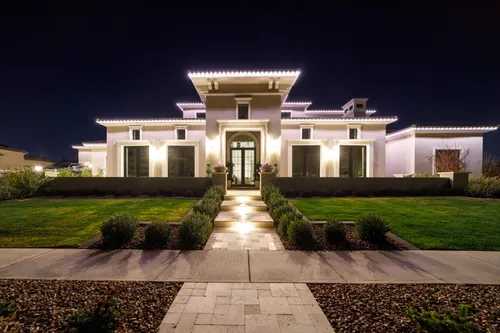
Level 5 Lighting
221 E Willis Rd Suite 18, Chandler, AZ 85286
Level 5 Lighting is a licensed, bonded, and insured outdoor lighting company based in Phoenix, AZ. They specialize in programmable, customizable permanent exterior LED lighting systems for residential and commercial properties. Their proprietary Jellyfish Lighting technology offers energy-efficient, long-lasting LED lights with over 50,000 burn hours and features such as custom color patterns, zoning, and remote control via a cloud app. The system is designed to be discreet and durable, suitable for accent, security, and holiday lighting. Level 5 Lighting provides a full service from consultation to installation with certified professionals.
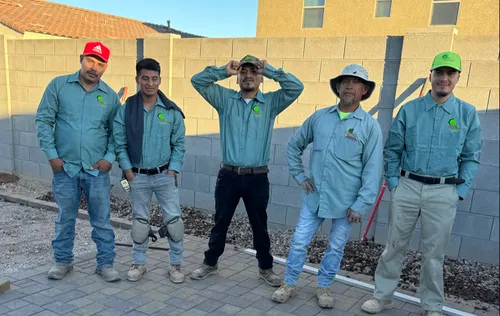
Glen C Landscaping & Hardscape
Phoenix, AZ
Glen C Landscaping & Hardscape is a family-owned landscaping company serving Phoenix, AZ, and surrounding areas including Scottsdale, Glendale, Surprise, and Avondale. With over 10 years of industry experience, they provide a wide range of services such as landscape design, lawn maintenance, irrigation and sprinkler installation, tree services, hardscaping including retaining walls and pavers, and artificial turf installation. Their team focuses on quality work and offers flexible financing options to meet client needs.
Why Install Landscape Lighting in Arizona?
The unique Arizona environment makes outdoor lighting particularly valuable. The intense sun can fade architectural details and landscaping during the day, while strategic lighting at night can restore depth and drama to your home's façade and plants. More practically, lighting pathways and stairways is crucial for preventing trips and falls in the dark. It also serves as a significant deterrent to crime, illuminating potential hiding spots and creating a sense of occupancy. Finally, with Arizona's many pleasant evenings, landscape lighting effectively extends your usable living space, allowing for dining, entertaining, or relaxing outdoors in comfort and style.
Understanding Your Lighting System Options
Choosing the right type of system is the most critical decision you'll make. The primary choice is between low-voltage and line-voltage systems, each with distinct advantages and applications.
Low-Voltage (12V) Lighting
This is the most common and recommended choice for residential landscape lighting in Arizona. A transformer steps down your standard household 120V current to a safer 12 volts.
- Safety & Ease: The 12V current poses a minimal shock hazard, making the system safer for DIY-intermediate homeowners and easier for professionals to install without extensive electrical licensing requirements in most municipalities.
- Flexibility & Efficiency: Low-voltage systems are highly flexible. Fixtures can be easily repositioned as your landscape evolves. When paired with modern LED bulbs, they are extremely energy-efficient, consuming up to 80% less power than traditional halogen options 1.
- Fixture Variety: A vast array of fixture styles is available for low-voltage systems, including path lights, well lights, spotlights (for accenting trees or architecture), and underwater lights for pools.
Line-Voltage (120V) Lighting
These systems use the full standard household current.
- Power & Application: They are capable of powering much brighter, larger fixtures, making them suitable for illuminating large commercial properties, parking areas, or providing very powerful security lighting 2.
- Installation & Regulation: Installation is significantly more complex and hazardous. It requires a licensed electrician, deep trenching (often 18 inches or more), and the use of conduit to protect the wires, all of which must be permitted and inspected to meet strict National Electrical Code (NEC) and local Arizona codes.
- Cost: The need for professional electricians, deeper burial, and conduit makes line-voltage installation more expensive than low-voltage for most residential projects.
Solar Lighting
Solar-powered fixtures are a wire-free, convenient option.
- Pros & Cons: They are easy to install and have no operating cost. However, their performance is entirely dependent on receiving ample sunlight, which can be inconsistent. They typically provide less consistent and less powerful light output than hardwired options, making them best suited for small accent areas or pathways where reliable, bright illumination is not critical 3.
Key Considerations for Arizona Homeowners
Beyond choosing a system type, several factors are specific to the Arizona climate and regulatory environment.
- Heat & UV Resistance: Arizona's extreme sun and heat demand fixtures with high-quality materials. Look for fixtures with UV-stable housing (like copper, brass, or high-grade polymers) to prevent fading, cracking, or warping.
- Local Codes & Permits: Electrical codes can vary by city (e.g., Phoenix, Tucson, Scottsdale). While low-voltage systems often fall under less stringent rules, any wiring buried at standard depths or connecting to your home's main panel may require a permit. Always check with your local building department or consult a professional to ensure compliance 4 5.
- Transformer Placement: The transformer for a low-voltage system should be placed in a shaded, well-ventilated area to prevent overheating, which is a common cause of transformer failure in hot climates.
- Light Pollution: Be a considerate neighbor and steward of Arizona's dark skies. Use shielded fixtures that direct light downward onto your property rather than allowing it to spill into the night sky or onto neighboring homes.
Find the perfect landscape lighting installers for your needs
Get personalized recommendations and expert advice
The Professional Design and Installation Process
Working with a professional ensures a cohesive, code-compliant, and beautiful result. The process typically follows these steps:
- Initial Consultation: A specialist will visit your property at dusk to assess the natural light fall and discuss your goals (e.g., security, ambiance, highlighting features).
- Design Plan: They will create a lighting plan that layers different types of light:
- Ambient Lighting: General illumination for safety and movement (e.g., path lights).
- Accent Lighting: Focused light to highlight architectural features, trees, or sculptures.
- Task Lighting: Functional light for areas like grilling stations or outdoor kitchens.
- Moonlighting: Fixtures placed high in trees to simulate natural moonlight filtering down.
- Equipment Selection: You'll choose fixtures that match your home's style and the Arizona environment. Professionals have access to commercial-grade fixtures not available in retail stores.
- Installation: The crew will trench for wires (at appropriate depths), install the transformer, place and secure all fixtures, and connect the system. For low-voltage, this is less invasive; for line-voltage, it is a major electrical project.
- Aiming & Final Adjustments: Once installed, each fixture is carefully aimed and adjusted to create the desired effect. This is often done at night for the best visual impact.
Understanding Costs in Arizona
The cost of a landscape lighting project in Arizona varies widely based on system type, fixture quality, and property size. Here is a general breakdown based on current industry data 6 7:
- Total Project Cost: For a professionally designed and installed low-voltage LED system on a typical Arizona home, you can expect a total cost ranging from $2,000 to $6,000, with an average around $3,500 for a comprehensive design.
- Cost Per Fixture: The fixture itself, plus the labor to install it, typically ranges from $100 to $500 per unit. High-end materials like solid copper or complex fixtures like moving-head lights will be at the top of this range.
- Small Project: A basic setup for a smaller yard, perhaps focusing on perimeter security or a simple pathway, might cost between $1,200 and $2,400.
- System Types: Remember that a line-voltage (120V) system will generally have a higher total cost due to the required electrician labor, permitting, and deeper burial requirements. A DIY solar project can be significantly cheaper upfront but may not deliver the same performance or longevity.
Essential Components of a System
Whether DIY or professional, a low-voltage system consists of a few key parts 8 9:
- Transformer: The heart of the system. It plugs into a standard outdoor GFCI outlet and converts 120V to 12V. Choose one with a wattage capacity at least 20% higher than the total wattage of all your lights to allow for future expansion.
- LED Light Fixtures: The most efficient and long-lasting option. They come in all styles-path, spot, well, deck, and step lights.
- Low-Voltage Cable: This specially rated wire runs from the transformer to all the fixtures. The gauge (thickness) is important; 12-gauge or 14-gauge wire is standard for most runs to prevent voltage drop, which causes lights at the end of the run to dim.
- Wire Connectors: Waterproof connectors are used to tap fixtures into the main cable run. Professional-grade direct-burial connectors are crucial for a reliable, long-lasting system.
Maintenance for Longevity in the Desert
Arizona's dust and heat require some basic upkeep to keep your system shining brightly:
- Monthly: Wipe fixture lenses with a soft, damp cloth to remove dust and dirt that can diminish light output.
- Seasonally: Check for any fixtures that may have been bumped out of alignment. Trim back any plant growth that is encroaching on the light beams.
- Annually: Have a professional inspect the transformer connections, check for wire damage (especially from landscaping equipment), and ensure all seals are intact to keep moisture out.
Frequently asked questions
Sources
Footnotes
-
Low Voltage Landscape Lighting Installation in Phoenix, AZ - https://www.outdoorlights.com/phoenix/residential/low-voltage-outdoor-lighting/ ↩
-
Line Voltage vs. Low Voltage for Your Landscape Lighting - https://www.lightingwarehouse.com/learn/low-voltage-vs-line-voltage ↩
-
How to Install Landscape Lighting - The Home Depot - https://www.homedepot.com/c/ah/how-to-install-landscape-lighting/9ba683603be9fa5395fab90d9f6978e ↩
-
Landscape Lighting: Low-Voltage (12V) vs Line-Voltage (120V) - https://www.voltlighting.com/learn/low-voltage-vs-line-voltage-landscape-lighting ↩
-
Do I Need to Be an Electrician to Install Landscape Lighting ... - https://www.youtube.com/watch?v=yra_PP4Qkso&t=3 ↩
-
How Much Does Landscape Lighting Cost in 2026? - LawnStarter - https://www.lawnstarter.com/blog/cost/landscape-lighting-price/ ↩
-
How Much Does Landscape Lighting Installation Cost? [2026 Data] - https://www.angi.com/articles/landscape-lighting-costs.htm ↩
-
How to Create a Landscape Lighting Installation Plan - VOLT Lighting - https://www.voltlighting.com/learn/create-a-landscape-lighting-plan ↩
-
Gauge Wires For Landscape Lighting - Kings Outdoor Lighting - https://kingsoutdoorlighting.com/blogs/news/gauge-wires-for-landscape-lighting ↩