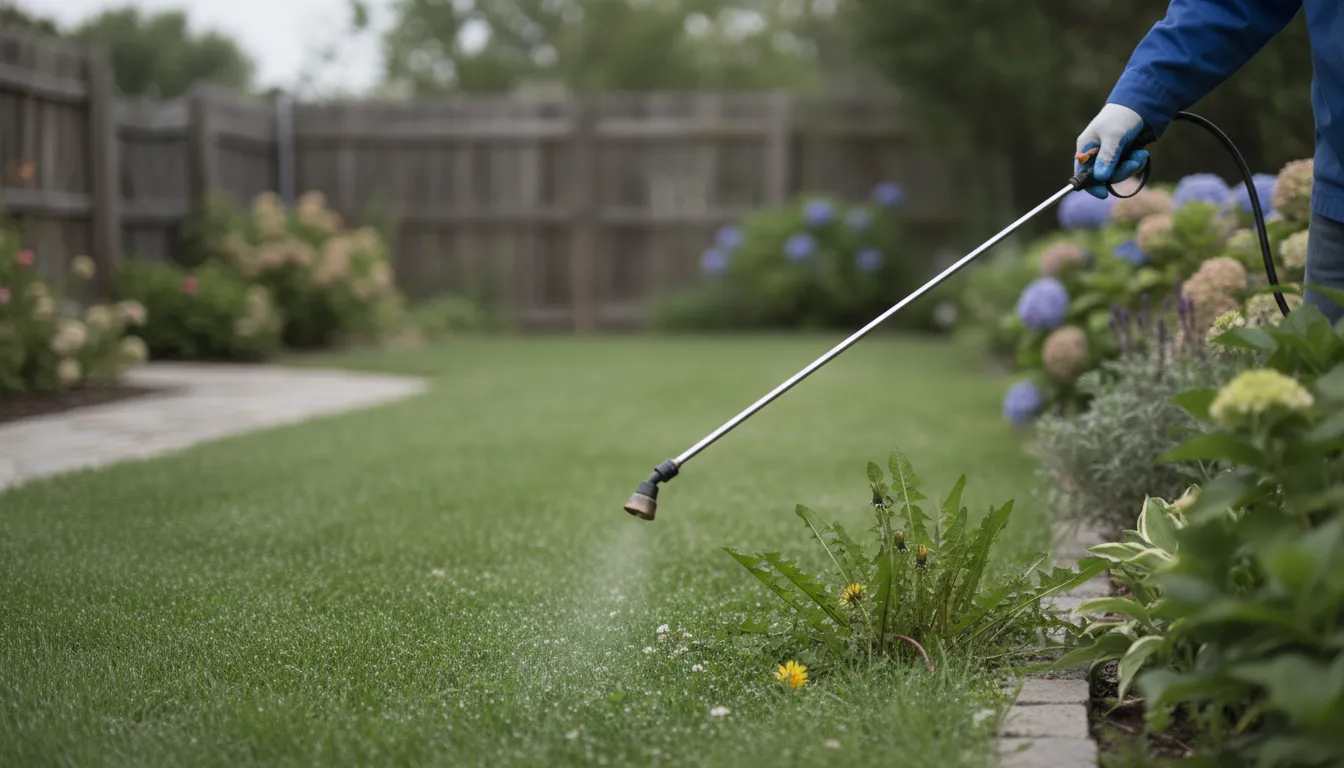
Find the Best Lawn Treatment Companies for Your Business
No obligation • Fast responses • Nationwide coverage

Why you can trust Landscape Atlas
Landscape Atlas is a leading United States resource for evaluating landscaping, lawn care, and outdoor service providers. Our team researches each category in depth, focusing on service quality, safety, and customer experience. Listings and rankings are based on independent criteria and user feedback, and companies cannot pay to influence our assessments or recommendations.
Search providers near you
Top Lawn Treatment Companies in Baltimore, Maryland Ranked
Maintaining a healthy, vibrant lawn in Baltimore requires a tailored approach that respects the local climate and adheres to state regulations. Professional lawn fertilization and weed control services provide a science-backed strategy to nurture cool-season grasses, suppress invasive weeds, and build a resilient turf that can withstand Maryland's seasonal shifts. This guide will help you understand the local lawn care cycle, typical service programs, and how to connect with providers who can create a customized plan for your property.
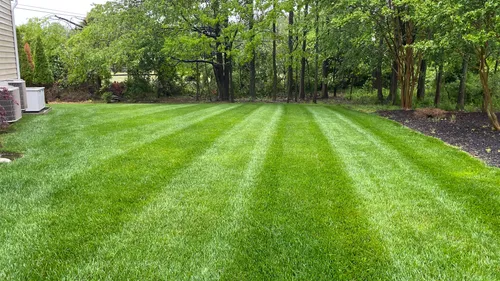
Organic Lawns
4800 Benson Ave, Baltimore, MD 21227
Organic Lawns is a family-owned lawn care company based in Baltimore, MD, specializing in organic lawn care solutions. They offer a range of services including lawn mowing, fertilization, and weed control using pet-friendly and eco-friendly products. Their approach focuses on improving soil health and promoting natural growth with treatments like organic fertilizers and soil testing. Organic Lawns serves Baltimore and surrounding communities, providing personalized lawn care plans tailored to each property's needs.
Lawn Doctor of Annapolis
212 Najoles Rd Suite A, Millersville, MD 21108
Lawn Doctor of Annapolis provides lawn care and pest control services in Baltimore, MD, and surrounding counties including Anne Arundel, Calvert, Prince George's, Howard, Queen Anne's, and southern Baltimore. They offer customized lawn treatment plans based on a free lawn analysis to address fertilization, pest control, and ongoing lawn maintenance needs. Their services include protection against common lawn pests such as grubs, fire ants, and sod webworms. Lawn Doctor of Annapolis emphasizes tailored care with flexible scheduling to maintain healthy lawns throughout the year.
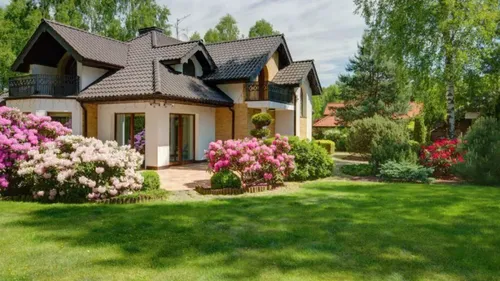
Scientific Plant Service, Inc.
6301 Blair Hill Ln, Baltimore, MD 21209
Scientific Plant Service, Inc. is a lawn care and tree service company based in Baltimore, MD. They provide customized lawn care, pest control, and tree and shrub care services throughout Maryland, including Anne Arundel, Baltimore, Baltimore County, Harford, and Howard counties. Their certified lawn care specialists and licensed arborists use POLYON controlled release fertilizers to support landscape health. Established in 1957, they have decades of experience in environmental lawn and landscape care.
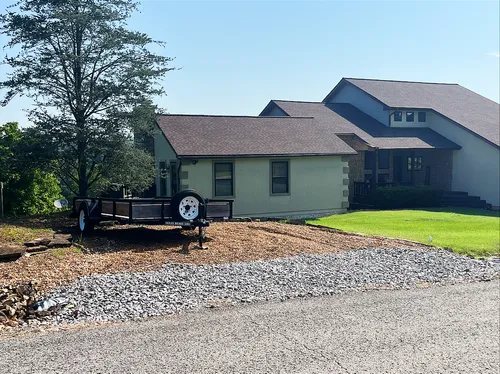
MD Lawn Care & Landscaping
5993 Sandy Ridge, Elkridge, MD 21075
MD Lawn Care & Landscaping is a full-service lawn care and landscaping company based in Baltimore, MD. They offer a wide range of services including lawn mowing, fertilization, weed control, sod installation, landscape lighting, tree services, yard drainage, land clearing, and seasonal cleanups. Their expertise includes professional sod installation with soil preparation and grading to ensure healthy, long-lasting lawns. The company focuses on maintaining clean, polished outdoor spaces through regular upkeep and specialized landscaping projects.
Y&L Landscaping & Tree Service
62 Gwynns Mill Ct, Owings Mills, MD 21117
Y&L Landscaping & Tree Service is a full-service landscaping company based in Baltimore, MD. They offer a wide range of services including landscape design, installation, maintenance, lawn care, tree services, drainage solutions, hardscaping, and snow and ice management for both residential and commercial properties. Their team is licensed and insured, with over 25 years of experience, providing expertise in tree pruning, stump grinding, sod and artificial turf installation, French drain installation, and retaining wall construction. Y&L Landscaping & Tree Service also provides 24-hour response for urgent needs, ensuring comprehensive care throughout the year.
Understanding Baltimore's Lawn Environment
The foundation of effective lawn care in Baltimore is recognizing that most lawns are composed of cool-season grasses like tall fescue, fine fescue, and Kentucky bluegrass. These grasses thrive in the cooler temperatures of spring and fall, which dictates the entire annual treatment schedule. A successful fertilization and weed management plan isn't about a single application; it's a year-round program designed to feed the grass when it's actively growing and proactively prevent weeds before they become an eyesore.
Maryland state law also plays a direct role in your lawn care calendar. To protect the Chesapeake Bay watershed, fertilizers applied by professionals must be phosphorus-free unless a soil test confirms a deficiency. Furthermore, there is a mandatory restriction on fertilizer application between November 15 and March 1 1. This makes proper timing in the late fall and early spring absolutely critical for maintaining lawn health within legal guidelines.
The Professional Lawn Care Calendar: A Seasonal Guide
Professional lawn treatment programs in Baltimore are typically built around 5-6 visits per year, each with a specific goal aligned with soil temperature and grass growth cycles.
Early Spring (March - April)
This visit is all about prevention and jump-starting growth. As soil temperatures rise, the primary focus is applying a crabgrass pre-emergent herbicide to stop this common weed before its seeds germinate. This is paired with the first round of slow-release nitrogen fertilizer to encourage green-up and strong initial growth after winter dormancy.
Late Spring (May)
As broadleaf weeds like dandelions and clover become more visible, this application targets post-emergent broadleaf weed control. A light fertilizer application may also be included to sustain growth as temperatures increase.
Early Summer (June)
Summer stress begins with heat and potential insect pressure. This visit often includes insect control, particularly for white grubs, which can cause significant root damage. Spot treatment for weeds that have emerged, such as nutsedge, is also common during this time.
Late Summer (August)
This is a key treatment window for suppressing persistent summer weeds. Applications focus on controlling broadleaf weeds, nutsedge, and any late-season crabgrass 2. Fertilizer is generally avoided during the peak summer heat to prevent burning the grass.
Find the perfect lawn treatment companies for your needs
Get personalized recommendations and expert advice
Early Fall (September - October)
Fall is the most important season for strengthening your lawn. The core treatment is a root-strengthening fertilizer high in potassium, which builds hardiness for the winter ahead. This is also an ideal time for a final broadleaf weed control application, as weeds are actively transporting nutrients to their roots, making them more susceptible to herbicides 3.
Late Fall (November)
The final visit of the year, conducted before the November 15 restriction begins, is the winterizer fertilizer application 4. This treatment is designed to promote root health and nutrient storage, giving your grass the resources it needs to survive the winter and green up quickly next spring.
Key Considerations for Baltimore Homeowners
Beyond the standard treatment schedule, several local factors influence the success of your lawn nutrition and weed management plan.
Soil Health: Baltimore's soil can vary widely. A professional soil test is the best way to determine pH and nutrient levels. If your soil pH is below 6.0, applying lime in the spring can help grasses access nutrients more effectively.
Mowing and Watering Practices: Professional treatments work best when paired with proper mowing and watering. For cool-season grasses, mowing high (3-4 inches) encourages deeper roots and shades out weed seeds 5 6. Watering deeply (about 1-1.5 inches) but infrequently is far better for lawn health than frequent, shallow watering.
Warm-Season Grasses: If your lawn features Zoysia grass, a warm-season variety, the schedule shifts significantly. Fertilization should occur in late May or early June, with no feeding in late summer, and weed control timing will differ from cool-season programs 7 8.
Understanding Service Programs and Investment
A comprehensive lawn fertilization and weed control program is an investment in your property's curb appeal and long-term health. In Baltimore, a basic annual program typically ranges from $300 to $600, covering the core seasonal applications. The final cost is influenced by your lawn's square footage, the complexity of the weed issues, and the specific products used.
Many providers offer tiered programs, with basic plans covering fertilization and broadleaf weed control, and premium plans adding services like grub control, soil amendments, or aeration9 10. Per-visit charges for additional spot treatments or one-time weed control can range from $50 to over $100, depending on the scope of work 11.
When evaluating providers, look for those who offer customized plans based on a property inspection, use high-quality slow-release fertilizers, and clearly explain their treatment schedule and the purpose of each visit. Their expertise in navigating Maryland's environmental regulations is a crucial component of responsible and effective lawn stewardship.
Frequently asked questions
Sources
Footnotes
-
Month-to-Month Lawn Care Calendar for Maryland - https://www.lawnstarter.com/blog/maryland/lawn-care-calendar-md/ ↩
-
Lawn Fertilization & Weed Control - Turf Connection - https://turfconnection.net/fertilizer-and-weed-control/ ↩
-
Expert Lawn Care Services in Maryland | TLC - https://tlcthelawncompany.com/service-areas/maryland ↩
-
Checklist for Maryland Lawn Care Year-Round - Pro Landscapes MD - https://prolandscapesmd.com/checklist-for-maryland-lawn-care-year-round/ ↩
-
Month-to-Month Maryland Lawn Care Schedule - Lawn Love - https://lawnlove.com/blog/maryland-lawn-care-schedule/ ↩
-
Maryland Lawn Fertilization Schedule - Pro Landscapes MD - https://prolandscapesmd.com/maryland-lawn-fertilization-schedule/ ↩
-
Lawn Fertilizer Schedule (Table) - University of Maryland Extension - https://extension.umd.edu/resource/lawn-fertilizer-schedule-table ↩
-
Month-to-Month Lawn Care Calendar for Maryland - LawnStarter - https://www.lawnstarter.com/blog/maryland/lawn-care-calendar-md/ ↩
-
Lawn Care Programs - prograsslawncare - https://prograsslawncare.com/lawn-programs/ ↩
-
How Much Does Lawn Fertilization Cost in 2026? - https://lawnlove.com/blog/lawn-fertilization-cost/ ↩
-
How much does lawn care service cost? - Green Lawn Fertilizing - https://www.greenlawnfertilizing.com/blog/how-much-does-lawn-care-service-cost ↩