Find the Best Lawn Treatment Companies for Your Business
No obligation • Fast responses • Nationwide coverage

Why you can trust Landscape Atlas
Landscape Atlas is a leading United States resource for evaluating landscaping, lawn care, and outdoor service providers. Our team researches each category in depth, focusing on service quality, safety, and customer experience. Listings and rankings are based on independent criteria and user feedback, and companies cannot pay to influence our assessments or recommendations.
Search providers near you
Top Lawn Treatment Companies in Concord, North Carolina Ranked
Maintaining a healthy, vibrant lawn in North Carolina requires a strategic approach to fertilization and weed management. The state's diverse climate, with its hot, humid summers and variable winters, creates unique challenges for turfgrass. A proper regimen provides essential nutrients to strengthen grass against stress, disease, and drought while proactively suppressing invasive weeds. This guide outlines the science-backed schedules, product considerations, and professional service insights you need to cultivate a resilient lawn tailored to North Carolina's conditions.
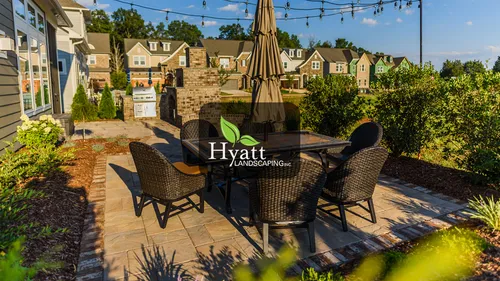
Hyatt Landscaping, Inc.
8332 Harvell Rd, Stanfield, NC 28163
Hyatt Landscaping, Inc. is a landscaping and lawn care company serving Charlotte, NC. They provide lawn fertilization, weed control, and comprehensive landscape design and installation services. Their team focuses on maintaining healthy turf through timely fertilizer treatments and preventative care against weeds, insects, and diseases. Hyatt Landscaping also offers hardscaping projects such as patios and retaining walls, combining design, planning, and execution to create outdoor living spaces. With over 45 years of experience, they emphasize horticultural excellence in all their services.
LawnStarter - Charlotte Landscaping
900 Friendly Pl, Charlotte, NC 28213
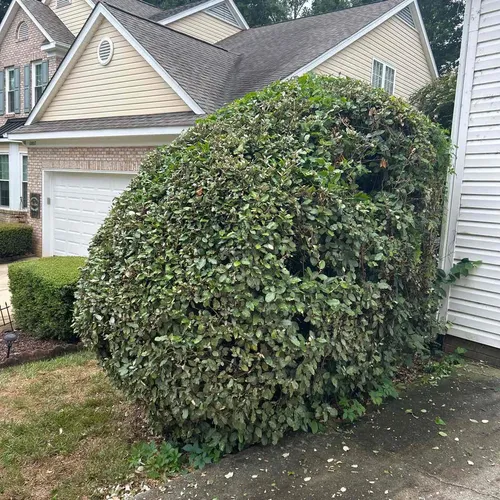
LawnStarter - Charlotte Landscaping offers a wide range of lawn care and landscaping services in Charlotte, NC. Their offerings include lawn mowing, fertilization, weed control, tree services, sprinkler installation and repair, landscape lighting, and general landscaping projects. They connect customers with local professionals who handle tasks such as grass cutting, shrub pruning, leaf removal, and outdoor lighting installation. LawnStarter emphasizes sustainable landscaping trends and seasonal yard care tailored to the Charlotte area. One notable capability is their ability to schedule services quickly, often within 48 hours, backed by a Done Right Guarantee that covers customer satisfaction and property protection.
Super-Sod of Charlotte
12600 Downs Cir, Pineville, NC 28134
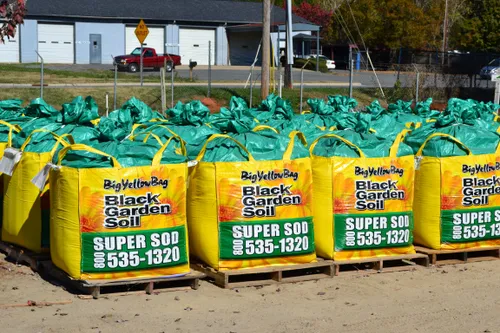
Super-Sod of Charlotte is a lawn care and landscaping supplier located in Charlotte, NC. They offer sod sales by the roll, pallet, or truckload, along with lawn care products such as fertilizers, pesticides, and weed control solutions. The company also provides consulting services for sod installation and grass selection. Their hardscaping products include wall blocks, pavers, and various natural stones. Customers can order online for pickup or delivery, with delivery service available for both small and large orders.

Tailor Made Lawns
11709 Fruehauf Dr suite 116, Charlotte, NC 28273
Tailor Made Lawns is a lawn care company based in Charlotte, NC, specializing in lawn fertilization, weed control, and comprehensive lawn care services. They offer a 9-step treatment plan designed to maintain strong, healthy grass throughout the year, including targeted fertilization, seasonal insect and disease control, lime application, and grub control. With over 25 years of experience serving Charlotte communities, Tailor Made Lawns uses family-friendly products and provides ongoing support to ensure customer satisfaction.
FineTurf Lawn Care
2168 Stevens Mill Rd, Matthews, NC 28104
FineTurf Lawn Care is a lawn care company based in Charlotte, NC, offering a range of services including lawn fertilization, weed control, tree and shrub care, pest control, and irrigation system installation and repair. They serve residential properties in the Charlotte area and select parts of South Carolina. Their services include deep root fertilization and outdoor pest control targeting mosquitoes, fleas, ticks, and fire ants. FineTurf emphasizes professionalism and attention to detail in maintaining healthy and attractive lawns.
Understanding North Carolina's Lawn Grasses
The first step to effective lawn care is identifying your primary grass type, as this dictates your entire annual schedule. North Carolina lawns are typically divided into two categories: cool-season and warm-season grasses.
- Cool-Season Grasses: The most common is tall fescue. It thrives in the cooler temperatures of fall and spring and stays green year-round in many parts of the state, though it can struggle in the peak summer heat. It requires more frequent watering and has a primary growth period in the fall.
- Warm-Season Grasses: These include bermudagrass, zoysiagrass, and centipedegrass. They grow vigorously during the hot summer months, turn brown (go dormant) after the first hard frost, and green up again in late spring. They are generally more drought-tolerant and require less fertilizer than fescue.
Applying the wrong fertilizer or herbicide at the wrong time can waste money, harm your lawn, and encourage weed growth. Always tailor your plan to your specific grass type 1.
The Critical Role of Soil Testing
Before you apply any product, conducting a soil test is the single most important action you can take. A soil test, available through your local NC State Extension office, provides a precise analysis of your soil's pH and nutrient levels.
- pH Adjustment: Many North Carolina soils are acidic. If your soil pH is too low, grass cannot access nutrients in the soil, even if they are present. Lime applications may be recommended every few years to raise the pH.
- Nutrient Guidance: The test will tell you exactly how much phosphorus (P) and potassium (K) your lawn needs, preventing over-application and environmental runoff. It takes the guesswork out of selecting the right fertilizer blend.
Annual Fertilization & Weed Control Schedule for North Carolina
Timing is everything in lawn care. The following tables provide a general calendar based on recommendations from NC State Extension. Always confirm timing with local conditions and soil test results 2.
For Tall Fescue (Cool-Season) Lawns
| Season | Key Actions for Fertilization & Weed Control |
|---|---|
| Late Winter / Early Spring (Feb-Mar) | Apply a pre-emergent herbicide in early March to prevent summer weeds like crabgrass. Fertilize lightly if needed, but focus is on weed prevention. |
| Spring (Apr-May) | Monitor for weeds; use post-emergent herbicides as spot treatments for broadleaf weeds. Light fertilization may be applied. Begin monitoring for fungal diseases like brown patch. |
| Summer (Jun-Aug) | Minimize stress. Avoid high-nitrogen fertilizers. Water deeply but infrequently. Apply fungicides if necessary for disease. Control summer weeds with post-emergent products labeled for summer use. |
| Early Fall (Sep-Oct) | PRIME TIME. Apply 1 pound of nitrogen per 1,000 sq. ft. in early September. This fuels root and shoot growth. Overseed thin areas. Apply a second round of fertilizer in late October/early November. |
| Late Fall (Nov) | Apply a broadleaf herbicide to control weeds like chickweed and henbit while they are young and active. A final, light fertilizer application can be done in November to promote winter hardiness. |
For Bermudagrass & Zoysiagrass (Warm-Season) Lawns
| Season | Key Actions for Fertilization & Weed Control |
|---|---|
| Late Winter (Feb-Mar) | Apply pre-emergent herbicide for crabgrass control before soil temperatures consistently reach 55°F. Do not fertilize until full green-up. |
| Spring (Apr-May) | Once the lawn is fully green (usually May), apply your first fertilizer of the season. Use a balanced or nitrogen-focused blend. |
| Summer (Jun-Aug) | PEAK GROWTH PERIOD. Apply nitrogen fertilizer every 4-6 weeks through the summer. Apply preventative grub control in early summer. Water during dry periods. |
| Early Fall (Sep-Oct) | Apply a low-nitrogen, high-potassium fertilizer to strengthen the grass for winter dormancy. Apply a fall pre-emergent in September to prevent winter weeds like poa annua. |
| Winter (Nov-Feb) | No fertilizer needed. Water occasionally during prolonged dry spells in winter to prevent desiccation. |
Find the perfect lawn treatment companies for your needs
Get personalized recommendations and expert advice
Product Selection: Fertilizers & Herbicides
Choosing the right products is easier when you understand the labels and their purposes.
Fertilizers are labeled with three numbers representing the ratio of Nitrogen (N), Phosphorus (P), and Potassium (K)-the NPK ratio.
- Nitrogen (N): Promotes leafy, green top growth.
- Phosphorus (P): Supports strong root development.
- Potassium (K): Aids in overall plant health, drought tolerance, and disease resistance.
In the absence of a soil test, a general recommendation for North Carolina lawns is a fertilizer with a 3-1-2 or 4-1-2 ratio, such as 12-4-8 or 16-4-8. Slow-release nitrogen formulas are preferred as they feed the lawn gradually over time, reducing the risk of burn and nutrient runoff.
Weed Control products fall into two main categories:
- Pre-emergent Herbicides: These form a barrier in the soil that prevents weed seeds from germinating. They are critical for preventing crabgrass (apply in late winter/early spring) and winter annual weeds (apply in fall). They do not kill existing weeds.
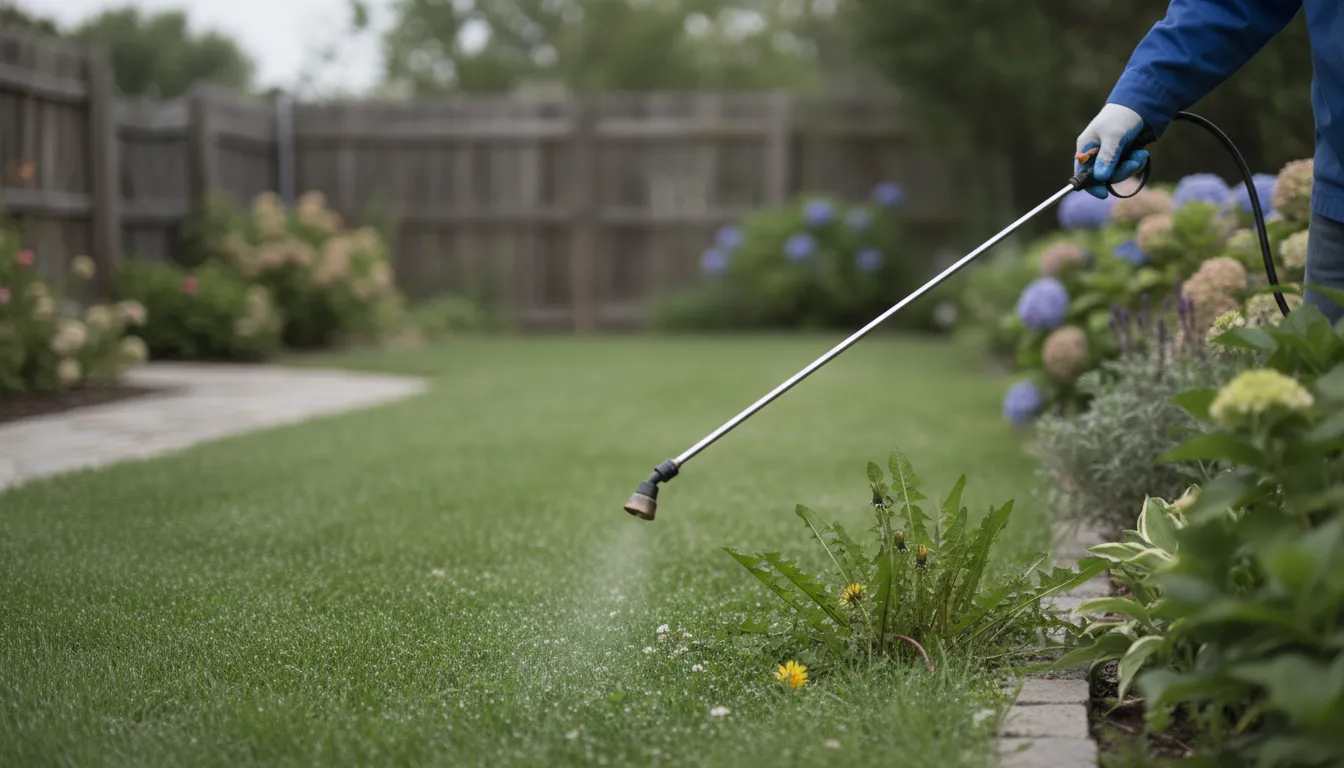
- Post-emergent Herbicides: These are used to kill weeds that are already visible. They can be selective (targeting broadleaf weeds like dandelions in grass) or non-selective (like glyphosate, which kills any plant it touches). Always use selective herbicides for spot treatment in lawns.
Other useful treatments include iron supplements (like ferrous sulfate) to enhance green color without causing a growth surge, and lime to correct soil pH as recommended by a soil test 3 4.
Professional Services vs. DIY Lawn Care
Many homeowners choose to hire a professional service for lawn fertilization and weed control, while others prefer the hands-on DIY approach.
Professional Lawn Care Services: Professional companies offer expertise, convenience, and consistent results. They typically provide bundled annual programs that include multiple fertilizer and herbicide applications timed correctly for your region and grass type.
- Pricing: Costs vary based on lawn size, location, and service scope. A single fertilization and weed control visit can range from $70 to $150. An annual program (usually 4-6 visits) typically costs between $250 and $1,000 per year 5 6 7. Bundled programs are generally more cost-effective than one-off treatments.
- Additional Services: Professionals often offer crucial complementary services like core aeration and overseeding (averaging $150-$450), which is highly recommended for fescue lawns to combat thinning and soil compaction 8.
DIY Lawn Care: The DIY route requires an investment in equipment (spreader, sprayer), knowledge, and time. Material costs are lower, potentially $1-$2 per 1,000 sq. ft. per application 9, but you are responsible for proper product storage, calibration, application, and safety. The NC State Extension's TurfFiles portal is an invaluable free resource for DIYers 10 11 12.
Environmental Considerations & Best Practices
Caring for your lawn also means caring for North Carolina's waterways and ecosystem.
- Follow the Soil Test: Avoid applying phosphorus unless a test shows a deficiency to prevent runoff into streams and lakes.
- Use Slow-Release Fertilizers: They reduce the risk of nitrogen leaching into groundwater.
- Calibrate Your Spreader: Misapplication wastes product and harms the environment. Ensure your spreader is set correctly for the product.
- Keep Products on Target: Sweep any fertilizer granules off driveways and sidewalks back onto the lawn.
- Water Wisely: After applying fertilizer or herbicides, water lightly (about 1/4 inch) to move the product into the soil. Avoid watering to the point of runoff.
Frequently asked questions
Sources
Footnotes
-
Zoysiagrass Lawn Maintenance Calendar - NC State Extension ↩
-
Centipedegrass Lawn Maintenance Calendar - NC State Extension ↩
-
How Much Does Lawn Care Cost in Wilmington, NC - Vinedresser Landscaping ↩
-
Month-by-Month Lawn Care Guide for the Carolinas - Carolina Fresh Farms ↩
-
When (and How) to Fertilize Your North Carolina Lawn - LawnStarter ↩
-
The Cost of Professional Lawn Care in NC - Honeycutt Landscaping ↩
-
Tall Fescue Lawn Maintenance Calendar - NC State Extension ↩
-
Fertilizer Guide for Lawns, Gardens and Landscapes - NC State Extension ↩
-
Bermudagrass Lawn Maintenance Calendar - NC State Extension ↩