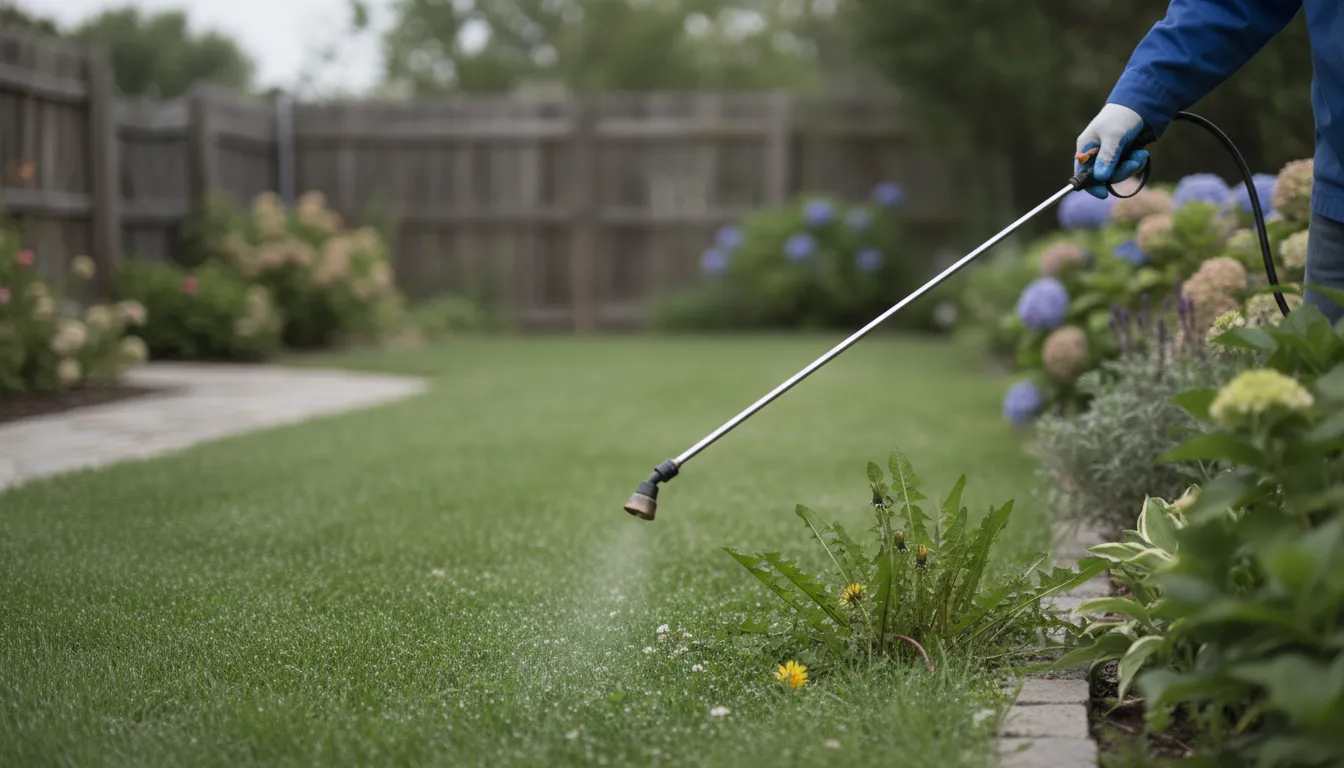
Find the Best Lawn Treatment Companies for Your Business
No obligation • Fast responses • Nationwide coverage

Why you can trust Landscape Atlas
Landscape Atlas is a leading United States resource for evaluating landscaping, lawn care, and outdoor service providers. Our team researches each category in depth, focusing on service quality, safety, and customer experience. Listings and rankings are based on independent criteria and user feedback, and companies cannot pay to influence our assessments or recommendations.
Search providers near you
Top Lawn Treatment Companies in East Providence, Rhode Island Ranked
Maintaining a lush, healthy lawn in East Providence requires a strategic approach tailored to Rhode Island's climate. Lawn fertilization and weed control are essential services that provide your grass with the nutrients it needs to thrive while preventing invasive weeds from taking over. A well-executed program not only enhances your property's curb appeal but also builds a resilient turf that can withstand seasonal stresses. This guide will help you understand the local best practices and connect with professionals who can develop a customized plan for your yard.
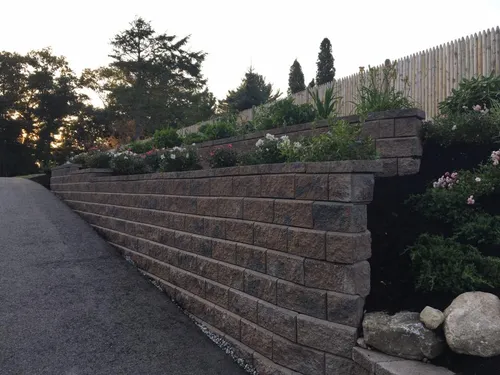
Pat Gibbs Landscape Design & Construction, Inc.
Boston, MA
Pat Gibbs Landscape Design & Construction, Inc. is a landscaping and construction company serving Boston, MA, and the surrounding areas. With over 25 years of experience, they offer a wide range of services including lawn maintenance, landscaping, hardscaping, excavating, fencing installation, outdoor living spaces, tick and mosquito spray, bathroom remodeling, dumpster rental, and snow removal. The company uses quality materials such as Techo Block and Uni-Lock for durable and attractive hardscaping projects and provides a 25-year warranty on hardscaping work. They also offer a 10% discount for military and first responders on seasonal contracts and hardscaping.
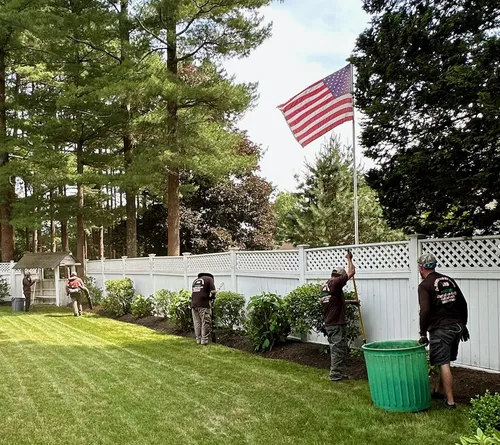
A. David Lawn Care
1075 Pleasant St, Norwood, MA 02062
A. David Lawn Care is a family-owned lawn care and landscaping company serving Boston, MA, and nearby towns including Norwood, Walpole, and Westwood. With over 30 years of experience, they provide year-round services such as lawn mowing, fertilization, weed control, hardscaping, and mosquito management. Their team offers expertise in landscaping and hardscaping projects, focusing on attention to detail and quality workmanship. The company has built its reputation through referrals and a strong commitment to customer loyalty.
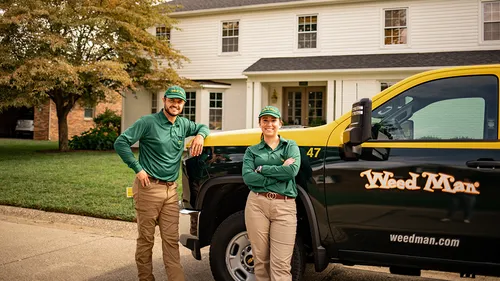
Weed Man Lawn Care
Boston, MA
Weed Man Lawn Care is a lawn care company based in Boston, MA, specializing in lawn fertilization and weed control services. They offer comprehensive lawn care solutions tailored to the local soil and seasonal conditions in the Boston area. Their expertise includes creating healthy, well-maintained lawns through targeted fertilization and effective weed management.
Understanding Your East Providence Lawn
The foundation of effective lawn care in Rhode Island starts with knowing your grass. The University of Rhode Island (URI) recommends cool-season grasses for our region, with Turf-Type Tall Fescue (TTTF) and Fine Fescues being top choices due to their hardiness and lower maintenance requirements 1. These grasses grow most vigorously in the cool temperatures of spring and fall, which directly dictates the optimal timing for feeding and weed management.
A one-size-fits-all approach rarely works. Local lawn care experts assess factors like soil composition, sun exposure, and existing turf health to create a program. This personalized strategy ensures that applications of fertilizer and herbicide are both effective and environmentally responsible, protecting local water resources.
The Essential Seasonal Program for Rhode Island Lawns
A comprehensive lawn feeding and weed prevention schedule follows the natural growth cycle of cool-season grasses. Most professional programs in East Providence involve four or more timed applications throughout the year.
Early Spring (March - April): The Foundation
This critical period sets the stage for the entire growing season. The primary goal is applying a pre-emergent herbicide to create a barrier in the soil that prevents crabgrass and other annual weeds from germinating 2. The first fertilizer application is typically done after the lawn has "greened-up" and been mowed a couple of times, providing a boost of nitrogen for strong leaf growth.
Late Spring (May - June): Nourishment and Correction
As temperatures rise, a second round of fertilizer supports continued growth. This is also the ideal window for post-emergent weed control to tackle visible broadleaf weeds like dandelions and clover that escaped the pre-emergent barrier 3. Spot treatments are often used to address problem areas without treating the entire lawn.
Late Summer (August - September): Recovery and Renewal
Summer heat can stress lawns. A late-summer fertilizer application helps the grass recover and prepare for the fall growing surge. This is also the best time for overseeding or power seeding to fill in thin areas, as soil is warm, moisture is more reliable, and weed competition is lower. Combining seeding with your lawn nutrition plan ensures new grass establishes strongly.
Late Fall (October - November): The Crucial "Winterizer"
The final application of the year is often called a winterizer. This high-potassium fertilizer is designed not for top growth but to build root strength and promote carbohydrate storage, giving your lawn the resources it needs to survive winter and green up quickly next spring. Fall is also an excellent time for a second round of post-emergent weed control, as perennials like dandelions are actively moving nutrients to their roots, carrying the herbicide with them 4.
Find the perfect lawn treatment companies for your needs
Get personalized recommendations and expert advice
Key Services Within a Lawn Care Program
While fertilization and weed control are the core, they are often supported by other vital practices.
- Core Aeration: Performing this service in spring or fall alleviates soil compaction, improves water and nutrient penetration to the roots, and enhances the effectiveness of your fertilizer. It's a valuable add-on that can transform the health of your turf.
- Soil Testing: Professional soil tests go beyond DIY kits, providing detailed analysis of pH and nutrient levels. This data allows for precise fertilizer formulation, ensuring your lawn gets exactly what it lacks and nothing it doesn't need, which is both cost-effective and eco-friendly 5.
- Grass Cycling: Leaving grass clippings on the lawn after mowing (where appropriate) returns valuable nitrogen and organic matter back to the soil, acting as a natural, slow-release fertilizer supplement.
- Integrated Pest Management (IPM): Beyond weeds, professionals can identify and treat for lawn-damaging insects and diseases as part of a holistic plant health care strategy.
What to Expect: Investment and Value
Understanding the typical costs for lawn feeding and weed management in East Providence helps in planning and selecting services. Pricing is usually based on the size of your lawn and the complexity of the program.
A standard visit for combined fertilizer and weed control application typically ranges from $60 to $70 6. A full-season program, encompassing four to five applications, generally costs between $250 and $500+ annually, with variations depending on square footage and add-on services 7 6. For context, national providers may charge in the range of $250 to $500 per acre for seasonal plans 8. Supportive services like core aeration are an additional investment, averaging around $114 per session, though this is highly dependent on lawn size 6.
The value of a professional program lies in consistency, expertise, and results. Professionals have access to commercial-grade products and the knowledge to apply them safely and at the correct time. They handle the scheduling, weather delays, and ongoing monitoring, freeing up your time while providing a noticeably healthier, more uniform lawn.
Choosing the Right Local Professional
When looking for lawn fertilization and weed control services in East Providence, consider providers who emphasize local knowledge. They should ask about your grass type, lawn history, and specific concerns. Look for companies that practice responsible nutrient management, as outlined by the RI Water Resources Board, to protect the Narragansett Bay watershed 9. Don't hesitate to ask for details about their seasonal schedule, the types of products they use, and how they tailor programs. A trustworthy expert will be transparent about their process and focused on building the long-term health of your soil and turf, not just a quick green-up.
Frequently asked questions
Sources
Footnotes
-
Best Grass Seed for Rhode Island - LawnStarter - https://www.lawnstarter.com/blog/rhode-island/best-grass-seed-rhode-island/ ↩
-
Weed And Feed Lawns: Where To Begin | Bioadvanced - https://bioadvanced.com/weed-feed-where-begin ↩
-
Weed Control Service - East Providence, Rhode Island (02914) - https://www.lawndoctor.com/blog/weed-control-service-east-providence-rhode-island-2914/ ↩
-
How to Prevent Weed From Overtaking Your Rhode Island Lawn - https://4evergreenri.com/prevent-weed-takeover/ ↩
-
Healthy Lawn Care - URI Home-A-Syst - https://web.uri.edu/safewater/protecting-water-quality-at-home/sustainable-landscaping/healthy-lawn-care/ ↩
-
East Providence, RI Lawn Care Service | Best of 2026 - https://www.lawnstarter.com/east-providence-ri-lawn-care ↩ ↩2 ↩3
-
Lawn Care in East Providence, RI | 6000+ 5-Star Reviews - https://www.getsunday.com/local-guide/lawn-care-in-east-providence-ri ↩
-
How Much Does TruGreen Cost? (2026) - HomeGuide - https://homeguide.com/costs/trugreen-cost ↩
-
Lawn Maintenance Guidelines from the RI Water Resources Board - https://wrb.ri.gov/lawnmaintenance/lawnguidelines.html ↩