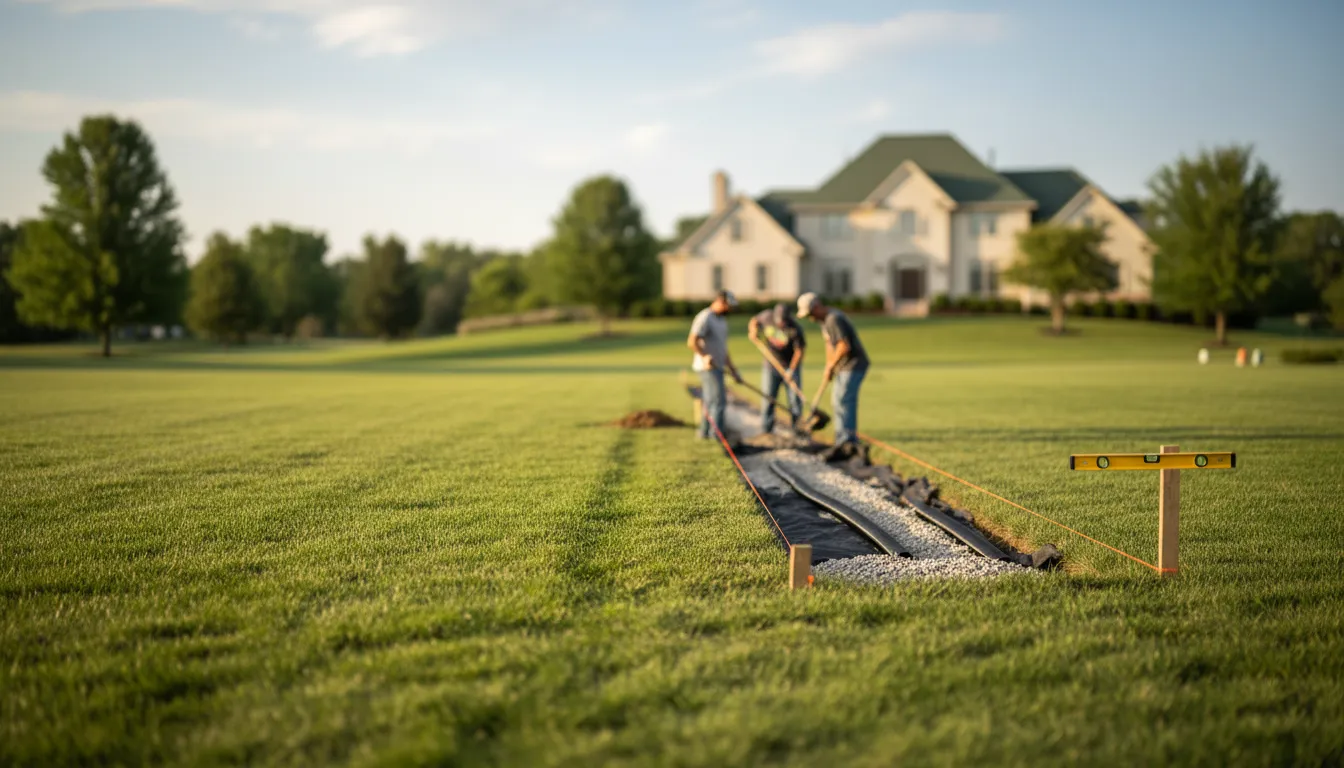
Find the Best Yard Drainage Contractors for Your Business
No obligation • Fast responses • Nationwide coverage

Why you can trust Landscape Atlas
Landscape Atlas is a leading United States resource for evaluating landscaping, lawn care, and outdoor service providers. Our team researches each category in depth, focusing on service quality, safety, and customer experience. Listings and rankings are based on independent criteria and user feedback, and companies cannot pay to influence our assessments or recommendations.
Search providers near you
Top Yard Drainage Contractors in Littleton, Colorado Ranked
Proper yard drainage and grading are essential for protecting your Littleton home from water damage, soil erosion, and foundation issues. Colorado's weather can bring intense downpours and rapid snowmelt, making a well-designed drainage system a critical component of your property's health. This guide will help you understand the common solutions, processes, and considerations for managing water flow on your land, so you can make informed decisions about protecting your investment.
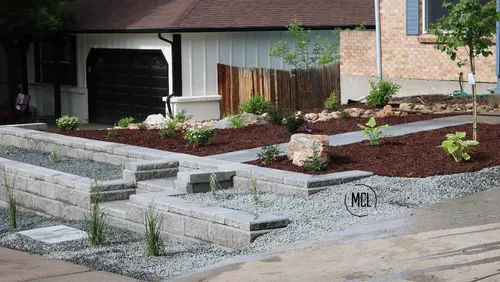
Modern Concepts Landscape
2650 W Warren Ave, Denver, CO 80219
Modern Concepts Landscape is a landscaping company based in Denver, CO, offering a wide range of services including landscape design, tree removal, stump grinding, yard drainage, grading, sprinkler installation and repair, lawn care, and hardscaping such as pavers and retaining walls. With over 20 years of experience, they provide expertise in irrigation systems and xeriscape designs to support low-water landscaping options. Their services aim to enhance and maintain outdoor spaces while addressing practical concerns like tree health and yard drainage.
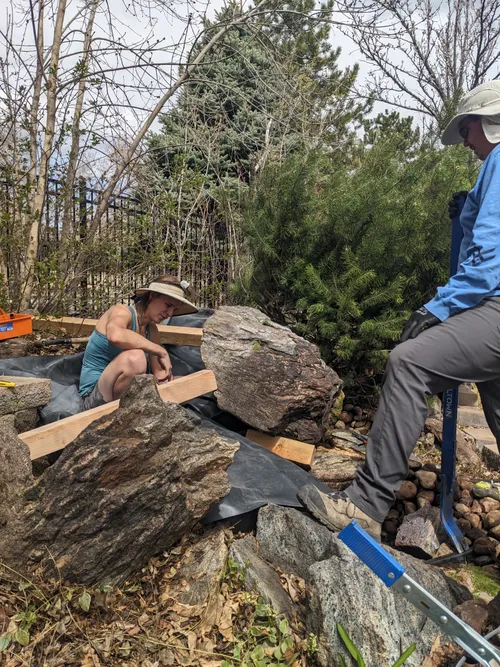
Act Right Irrigation and Landscaping LLC
608 Garrison St # R, Lakewood, CO 80215
Act Right Irrigation and Landscaping LLC is a landscape design and irrigation company based in Denver, CO. They provide services including efficient irrigation system installation and repair, smart controller maintenance, landscape design, yard drainage, grading, and hardscaping such as retaining walls and pavers. With over ten years of irrigation expertise and a horticulturist on staff, they focus on water conservation and creating functional, beautiful outdoor spaces. The company serves Lakewood and the surrounding area and emphasizes sustainable practices and client partnerships in their work.
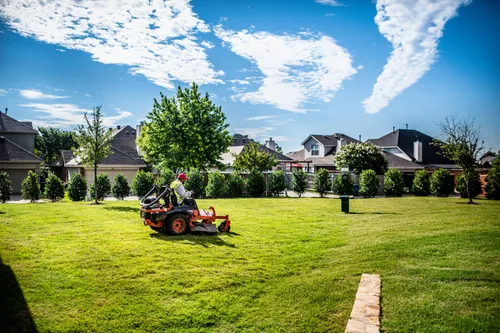
GKC Tree Care and Landscape Design Group
Denver, CO
GKC Tree Care and Landscape Design Group is a landscaping company based in Denver, CO, offering full-service landscape design, construction, and maintenance for homes and businesses. Founded in 2019 with over 15 years of experience from its founder, the company provides custom outdoor solutions including tree care, sod installation, fence and hardscape construction, yard drainage, sprinkler systems, and innovative jellyfish lighting installation. Their services emphasize tailored designs and functional outdoor living spaces, with capabilities like emergency tree removal and programmable permanent lighting. GKC also offers commercial landscaping and seasonal property maintenance, combining creativity and craftsmanship to transform outdoor areas.
Little Foot Landscaping Co
6205 W Mississippi Ave, Lakewood, CO 80226
Little Foot Landscaping Co is a family-owned landscaping company serving Denver, CO, and the surrounding area since 1979. They offer a range of services including lawn mowing, fertilization, weed control, landscape design, yard drainage, grading, and hardscaping such as pavers and retaining walls. The company emphasizes sustainable landscaping practices using native plants and water-saving techniques to minimize environmental impact. Their expertise includes creating durable and aesthetically pleasing outdoor spaces with quality craftsmanship and personalized service tailored to each client's unique needs.
Grade A Excavation & Landscape Inc.
Denver, CO
Grade A Excavation & Landscape Inc. is a Denver, CO-based contractor specializing in yard drainage, grading, and hardscaping services. They provide solutions such as foundation drainage, retaining walls, and paving for residential and commercial properties. With nearly 20 years of experience, they focus on delivering durable and effective results.
Why Proper Drainage is Critical in Littleton
Littleton's landscape and climate create unique challenges for homeowners. The soil composition, combined with the potential for heavy seasonal precipitation, means that without proper water management, you risk serious property damage. Poor drainage can lead to basement flooding, cracked foundations, ruined landscaping, and the creation of mosquito-breeding grounds from standing water. Effective water control isn't just about fixing a soggy lawn; it's about preserving the structural integrity of your home and preventing costly repairs down the line. A proactive approach to landscape grading and drainage installation is a wise investment for any property owner in the area.
Common Yard Drainage Problems and Signs
How do you know if you need drainage work? Look for these telltale signs:
- Standing Water: Puddles that linger for more than a day after a rainstorm or snowmelt.
- Soil Erosion: Gullies or washed-away soil in your yard, especially near downspouts or slopes.
- Basement Dampness or Seepage: Moisture, mildew, or water stains on basement walls or floors.
- Soggy, Spongy Lawns: Areas of grass that are constantly wet and mushy underfoot.
- Foundation Cracks: New or widening cracks in your home's foundation or exterior walls.
- Overflowing Gutters: Gutters that spill over during rain because water cannot flow away from the house efficiently.
If you notice any of these issues, it's time to consider a professional assessment of your property's water flow and grading.
Core Solutions for Water Management
A variety of techniques are used to solve drainage problems, often in combination. The right solution depends on your property's specific topography and the nature of the water issue.
Grading and Sloping
This is the foundational step for most drainage projects. Grading involves reshaping the land's contour to create a gentle slope-typically a minimum of 2% grade-that directs surface water away from your home's foundation and toward a suitable discharge point 1. Proper landscape grading is often the most effective way to prevent surface water from pooling near your house.
Subsurface Drainage Systems
When water is seeping underground or saturating the soil, surface grading alone may not be enough.
- French Drains: A trench filled with gravel and a perforated pipe that collects and redirects subsurface water. They are excellent for relieving hydrostatic pressure against foundation walls and drying out wet yards.
- Catch Basins and Yard Drains: These are grated inlets installed in low spots to capture large volumes of surface water. The water is then piped away underground to a storm drain or a safe discharge area 2.
Surface Water Management
These solutions handle water as it flows across your property.
- Swales: These are broad, shallow, vegetated channels designed to slow down and direct runoff. They are a more natural-looking alternative to concrete ditches.
- Downspout Extensions and Splash Blocks: A simple but crucial fix. Extending downspouts at least 5 to 10 feet away from your foundation ensures roof runoff doesn't pool at your home's base.
- Permeable Surfaces: Replacing solid concrete or asphalt with permeable pavers, gravel, or other porous materials allows rainwater to soak into the ground on-site, reducing overall runoff.
Eco-Friendly Retention Methods
For homeowners interested in sustainability, these options manage water while benefiting the landscape.
- Rain Gardens: A strategically placed, shallow depression planted with native, water-tolerant plants. It collects runoff from roofs or driveways and allows it to infiltrate the soil naturally, filtering pollutants in the process.
- Rain Barrels: Connected to your downspouts, these barrels capture and store rainwater from your roof for later use in irrigation, reducing the volume of water entering your yard's drainage system 3.
Find the perfect yard drainage contractors for your needs
Get personalized recommendations and expert advice
The Professional Drainage Project Process
A successful drainage installation follows a logical sequence to ensure a long-lasting solution.
- Site Assessment and Diagnosis: A qualified professional will inspect your property during or after a rain event to identify the source of water, its flow path, and the problem areas. They will look for low spots, evaluate soil type, and determine where water can be safely discharged.
- Custom Design and Planning: Based on the assessment, a plan is developed. This may involve combining several drainage solutions. For larger projects, especially those involving significant earth movement, you may need to check with the City of Littleton regarding permits or stormwater management requirements 4 5.
- Installation: This is the construction phase, involving excavation, trenching for pipes, installing basins and inlets, backfilling with gravel, and final, precise grading and compaction of the soil.
- Inspection and Final Adjustments: Once installed, the system should be tested, often with a hose or by waiting for the next rain. The contractor will ensure water flows as intended and make any final tweaks.
Understanding Investment and Cost Factors
The cost for drainage and grading work in Littleton varies significantly based on the project's scope and complexity. Here's a general breakdown based on typical project sizes:
- Minor Corrections: For simple projects like extending downspouts, adding splash blocks, or minor regrading, homeowners might invest between $500 and $2,000.
- Standard Solutions: Installing a French drain system or a couple of catch basins to address a moderate drainage issue commonly ranges from $2,000 to $6,400 or more.
- Comprehensive Systems: Larger properties with significant grading needs, multiple integrated systems (like French drains leading to catch basins and dry wells), or challenging terrain can see projects ranging from $10,000 to $15,000+ 6 7.
Key factors influencing cost include the size of your yard, the type of system (French drains are often priced per linear foot, while catch basins are per unit), the depth and difficulty of excavation, labor rates, and material costs. Getting multiple detailed quotes for your specific situation is always recommended.
Maintaining Your Drainage System
A well-installed system is low-maintenance but not no-maintenance. Keep it functioning optimally with these simple steps:
- Regular Inspection: Check your drainage paths, catch basin grates, and downspout extensions after major storms or seasonally.
- Clear Debris: Remove leaves, mulch, and soil from grate inlets and the openings of downspout extensions to prevent clogs.
- Monitor Performance: Watch for new areas of standing water or erosion, which could indicate a blockage or a shift in your yard's grade.
- Check Final Discharge Points: Ensure the area where your system outlets water remains clear and stable.
Frequently asked questions
Sources
Footnotes
-
Control Heavy Runoff - Solving Drainage and Erosion Problems - https://www.fairfaxcounty.gov/soil-water-conservation/drainage-problem-control-runoff ↩
-
12 Residential Backyard Drainage Solutions - Protect Your Yard - https://wilsonslawncare.com/12-residential-backyard-drainage-solutions/2024/ ↩
-
10 Drainage Solutions for Your Yard - This Old House - https://www.thisoldhouse.com/lawns/lawn-drainage-solutions ↩
-
Storm Drainage - Littleton CO - https://www.littletonco.gov/Government/Departments/Public-Works-Engineering/Storm-Drainage ↩
-
Littleton Stormwater Management Plan Requirements - https://www.raptor-civil.com/post/stormwater-management-plan-requirements-in-littleton-colorado ↩
-
Grading and Drainage in Denver, CO - Mile High Landscaping - https://milehighlandscaping.com/grading-drainage-installation/ ↩
-
Landscape Grading and Drainage Costs - https://www.whiteshovel.com/blog/landscape-grading-and-drainage-costs ↩