Find the Best Yard Drainage Contractors for Your Business
No obligation • Fast responses • Nationwide coverage

Why you can trust Landscape Atlas
Landscape Atlas is a leading United States resource for evaluating landscaping, lawn care, and outdoor service providers. Our team researches each category in depth, focusing on service quality, safety, and customer experience. Listings and rankings are based on independent criteria and user feedback, and companies cannot pay to influence our assessments or recommendations.
Search providers near you
Top Yard Drainage Contractors in North Miami Beach, Florida Ranked
Managing water flow on your property is a critical part of homeownership in North Miami Beach. Yard drainage and grading services focus on solving problems like standing water, soggy lawns, and foundation erosion by reshaping the land and installing systems to control runoff. This is especially vital in our flat, low-lying coastal environment, where heavy rains and sea-level rise can exacerbate flooding issues. This guide will help you understand the common solutions used by local professionals, from simple grading to complex drainage systems, so you can make informed decisions about protecting your home and landscape.
RFM Landscaping
Miami, FL
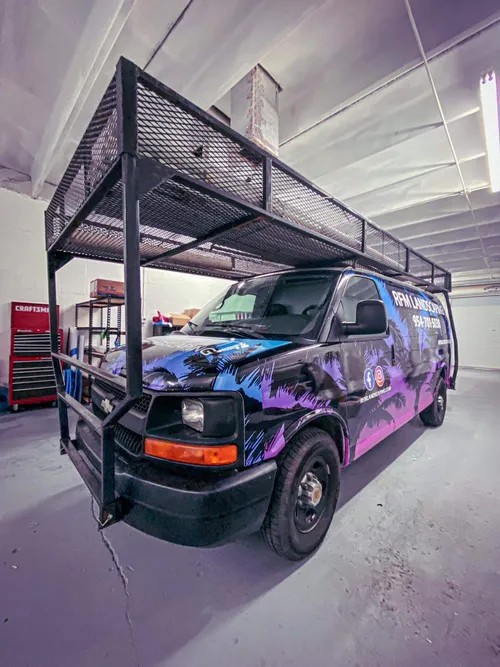
RFM Landscaping is a family-owned landscaping company serving Miami, FL, and the surrounding South Florida counties including Miami-Dade, Broward, and Monroe. They provide a wide range of services for residential, commercial, and HOA properties, including lawn care, landscape design, tree services, irrigation installation and repair, drainage solutions, and hardscaping such as pavers and fencing. Their team is experienced in managing South Florida's unique climate challenges, offering eco-friendly and sustainable landscaping solutions. RFM Landscaping also specializes in storm and hurricane cleanup to help restore properties after severe weather.
Driveway & Paver Solutions
5420 NW 114th Ave Ste 102, Doral, FL 33178
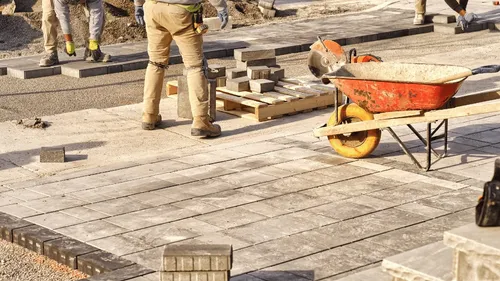
Driveway & Paver Solutions is a hardscaping and landscaping company based in Miami, FL, offering design, permit processing, and installation services for outdoor projects. They specialize in driveway installation, pool decks, patios, walkways, pergolas, retaining walls, and artificial turf, serving Miami-Dade and Broward counties. Led by a civil engineer with over 25 years of experience, the company ensures compliance with local codes and HOA requirements. Their expertise includes permeable paver systems designed for Miami-Dade's drainage regulations. They provide in-house permit handling and a one-year warranty on materials and workmanship.
Beast grading and Junk Removal
11083 Boston Dr, Cooper City, FL 33026
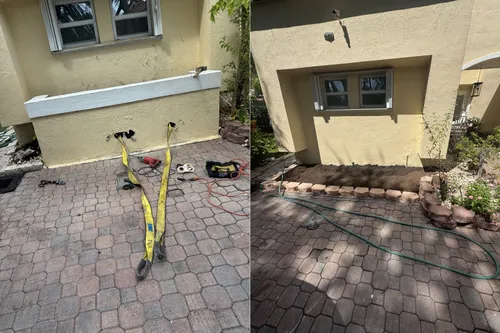
Beast grading and Junk Removal is a yard drainage, grading, and land clearing contractor based in Miami, FL. They provide services including junk removal, light demolition, debris hauling, estate and garage cleanouts, and skid steer work such as driveway grading and soil resurfacing. The company serves residential and commercial clients across Miami, Broward, and Palm Beach counties. Beast grading and Junk Removal offers 24-hour availability to assist with disaster response and other urgent cleanup needs.
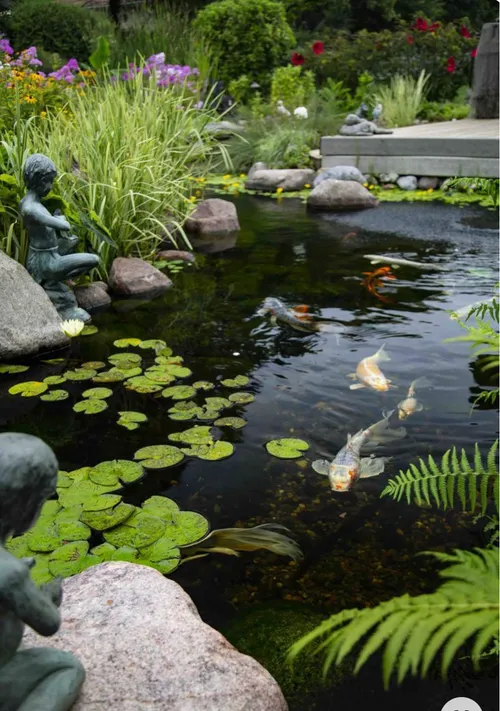
OUTDOOR PRO LAND & WATER DESIGN
15000 SW 200th St, Miami, FL 33187
OUTDOOR PRO LAND & WATER DESIGN is a landscaping company based in Miami, FL. They offer a range of services including landscape design, yard drainage, grading, sprinkler installation and repair, as well as hardscaping with pavers and retaining walls. Their capabilities include custom hardscape designs and drainage solutions, along with features like ponds and fountains. The company emphasizes eco-conscious practices and professionalism in their work.
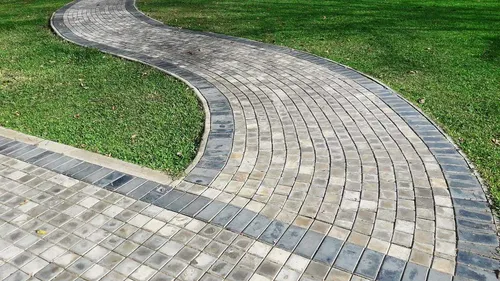
Harold's Paving & Drainage INC
1450 NE 201st Terrace, Miami, FL 33179
Harold's Paving & Drainage INC is a paving and drainage contractor based in Miami, FL, offering services for both residential and commercial properties. With over 25 years of experience, they provide a wide range of solutions including asphalt and concrete paving, drainage system installation, sealcoating, and excavation. Their expertise includes managing stormwater and sewer systems to ensure effective drainage and durable surfaces. Harold's Paving & Drainage INC emphasizes quality workmanship and uses modern techniques to meet client needs.
Why Proper Drainage is Essential in North Miami Beach
North Miami Beach's unique geography presents specific challenges for property owners. The area is characterized by flat terrain, high water tables, and sandy soil that can become compacted. During South Florida's intense rainy seasons, water has nowhere to go, leading to persistent puddles, swampy grass, and potential seepage into basements or crawl spaces. Over time, this moisture can damage your home's foundation, attract pests like mosquitoes, and kill your lawn and ornamental plants. Effective surface drainage and subsurface water management aren't just about convenience; they're about preserving your property's value and structural integrity in the face of our climate.
Professional water management solutions are designed to work with local conditions. They address both the symptom-the standing water-and the cause, which is often improper slope or a lack of channels for water to escape. By implementing a tailored plan, you can transform a problematic, water-logged yard into a dry, usable, and healthy landscape.
Common Yard Drainage Solutions for Local Homes
Local contractors employ a variety of techniques to manage stormwater and subsurface water. The right solution depends on your yard's specific issues, soil type, and budget.
Grading & Swales
The most fundamental approach is land grading, which involves carefully shaping the soil to create a gentle slope away from your home's foundation. This directs surface runoff toward a safe discharge point, like a street gutter or a designated landscape area. Often integrated with grading are vegetated swales-shallow, grassy channels that slow down runoff, allowing it to soak into the ground naturally. Swales are a form of green infrastructure that can be both functional and attractive, helping to filter pollutants from the water as it infiltrates.
French Drains
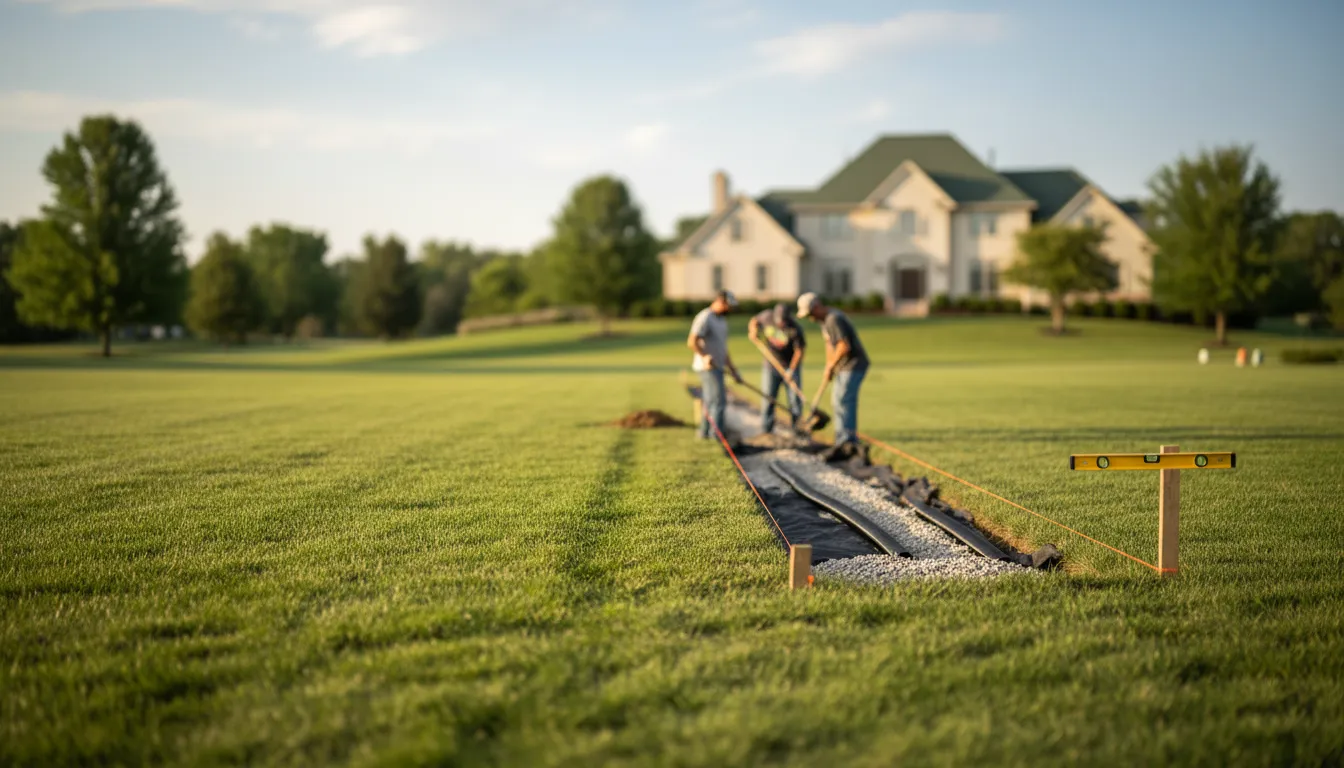
For yards with soggy soil or water that collects in specific low spots, a French drain is a classic and effective subsurface drainage system. It consists of a trench filled with gravel and a perforated pipe wrapped in fabric. The pipe collects groundwater and redirects it to a more suitable location, such as a dry well or a storm drain. This is an excellent solution for relieving hydrostatic pressure around foundations and drying out perpetually wet areas of your lawn.
Catch Basins, Trench Drains, and Dry Wells
In areas with heavy surface flow, like driveways, patios, or pool decks, catch basins (grated inlets) or channel drains are used to collect water before it can pool. These basins connect to underground piping that carries the water away. For properties where diverting water to the street isn't feasible, a dry well-an underground chamber filled with gravel-can be installed. It collects and temporarily stores runoff, allowing it to slowly percolate into the surrounding soil over time.
Downspout Management and Rain Gardens
A simple but critical step is managing roof runoff. Downspout extensions or underground piping direct water from your gutters several feet away from your foundation. For a more ecological solution, rain gardens are landscaped depressions planted with native, water-tolerant vegetation. They are designed to capture and absorb runoff from roofs and paved surfaces, reducing the burden on other drainage systems while adding beauty and supporting local ecology 1.
The Professional Installation Process: What to Expect
Hiring a professional for your drainage project ensures it is done correctly, complies with local codes, and effectively solves the problem. The process typically follows these stages:
- Site Assessment and Diagnosis: A specialist will visit your property to identify the core issues. They will look for low spots, evaluate soil composition, check the slope (or lack thereof), and determine where water is coming from and where it needs to go. This step is crucial for designing an effective system.
- System Design and Planning: Based on the assessment, the contractor will create a plan. This may include a combination of grading, swales, French drains, and basins. In North Miami Beach, the design must also consider municipal regulations regarding stormwater discharge and any integration with community drainage infrastructure 2.
- Preparation and Excavation: The work area is marked, and any necessary vegetation is cleared. Trenches are dug for pipes and drains, and areas for grading are identified. For French drains or dry wells, this excavation can be quite extensive 3.
- Installation of Components: Pipes are laid, catch basins are set and leveled, and dry wells are placed. For French drains, the trench is lined with fabric, filled with gravel, the pipe is laid, and then covered with more gravel. All components are connected to form a cohesive system 4.
- Final Grading and Backfilling: The excavated soil is used to shape the final grade of the yard, ensuring positive slope away from structures. Trenches are backfilled, and the surface is smoothed and prepared for sod or seed. If a rain garden or swale is part of the plan, the final step involves planting the appropriate vegetation 5.
Find the perfect yard drainage contractors for your needs
Get personalized recommendations and expert advice
Understanding Investment and Value
The cost of a drainage project in North Miami Beach varies widely based on the yard's size, the complexity of the problem, and the solutions chosen. Simple regrading or creating a swale might range from a few hundred to a couple thousand dollars. Installing a French drain is often priced per linear foot, with costs influenced by depth and installation difficulty 6.
More complex systems involving catch basins, extensive piping, or dry wells represent a larger investment, often ranging from several thousand to over ten thousand dollars for comprehensive solutions on larger properties. While this may seem significant, it's important to weigh it against the cost of potential foundation repairs, landscape replacement, or decreased property value due to chronic water issues. A professional consultation is the best first step to get an accurate estimate tailored to your situation 7 8.
Integrating Drainage with Your Landscape Design
Modern drainage solutions don't have to be purely utilitarian. Green infrastructure techniques allow you to manage water beautifully. A vegetated swale can be a landscaped feature lined with attractive grasses and flowers. A rain garden serves as a vibrant, low-maintenance garden bed that comes to life after a storm. Even the exit point of a French drain can be disguised within a rock garden or dry creek bed. By working with a knowledgeable contractor, you can implement effective water management that enhances, rather than detracts from, your outdoor living space 9 10.
Maintaining Your Drainage System
Once installed, most subsurface drainage systems require minimal maintenance. However, periodic checks are wise. Ensure catch basin grates are clear of debris like leaves and grass clippings. Inspect the outlets of any pipes to confirm they are flowing freely. For surface solutions like swales and rain gardens, routine weeding and occasional replanting may be necessary to keep them functioning optimally. A well-maintained system will provide reliable protection for your property for many years.
Frequently asked questions
Sources
Footnotes
-
10 Things You Can Do to Prevent Stormwater Runoff Pollution - https://www.farmington-ct.org/departments/engineering/stormwater/10-things-to-prevent-stormwater-pollution ↩
-
Drainage Design Guide | FDOT - https://www.fdot.gov/docs/default-source/roadway/drainage/files/DrainageDesignGuide.pdf ↩
-
Swales, Drains, and Site Grading for Stormwater Control - https://basc.pnnl.gov/resource-guides/swales-drains-and-site-grading-stormwater-control ↩
-
Drainage Installation in Miami | Conserva Irrigation of Miami - https://www.conservairrigation.com/miami/services/drainage-solutions/ ↩
-
How Land Grading Helps with Yard Drainage - Dirt Connections - https://www.dirtconnections.com/how-land-grading-helps-with-yard-drainage/ ↩
-
8 Grading and Drainage Strategies for Florida's Landscapes - https://dtelandscape.com/8-grading-and-drainage-strategies-for-florida-landscapes/ ↩
-
Residential and Commercial Drainage Solutions - American Septic and Plumbing in North Miami Beach - https://theamericanseptic.com/plumbing/drainage/ ↩
-
Understanding the Real Cost of Yard Drainage - A Homeowner's ... - https://www.tlcincorporated.com/understanding-the-real-cost-of-yard-drainage-a-homeowners-guide/ ↩
-
An Inside Look at Vegetative Swales 🌎 Green infrastructure for ... - https://www.facebook.com/HenryCountyBOC/posts/in-this-weeks-edition-of-the-stormwater-departments-green-infrastructure-series-/1225002696327762/ ↩
-
Attractive Ways to Manage Stormwater Runoff - https://piedmontmastergardeners.org/attractive-ways-to-manage-stormwater-runoff/ ↩