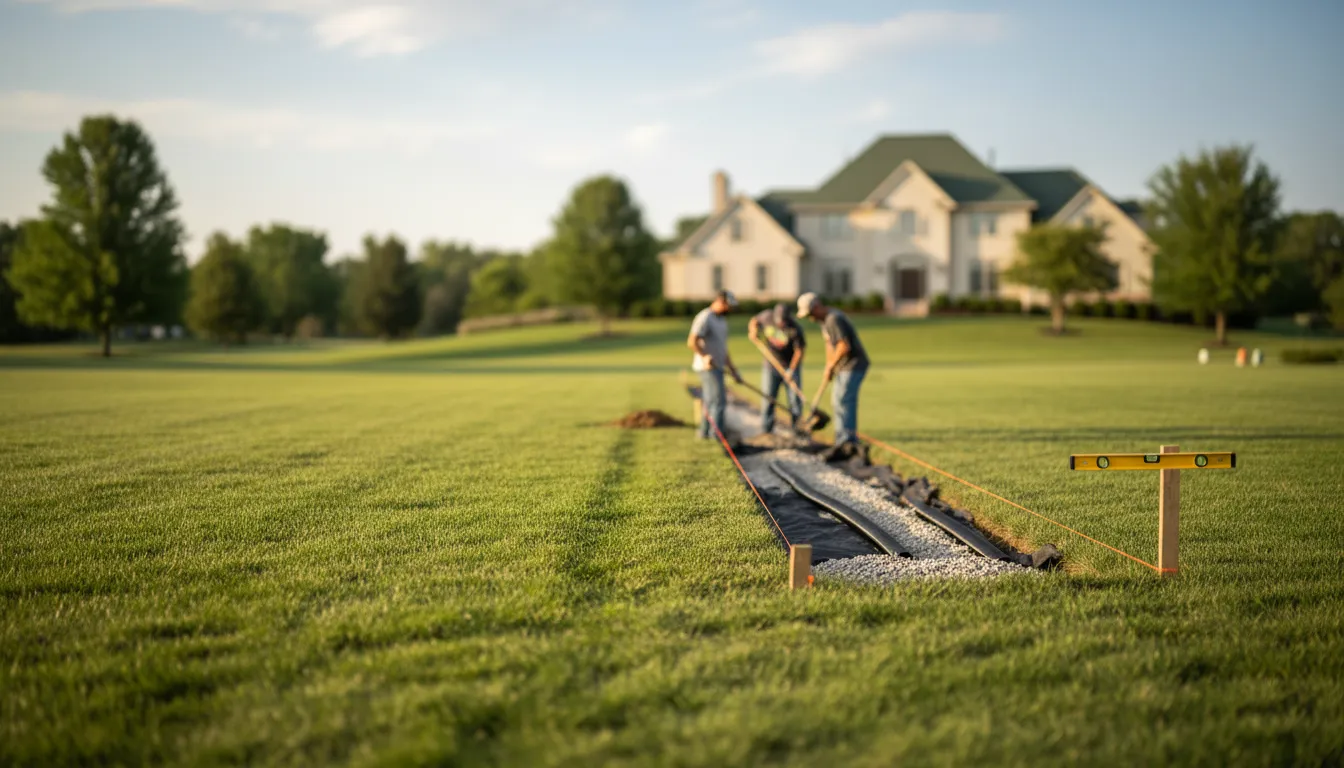
Find the Best Yard Drainage Contractors for Your Business
No obligation • Fast responses • Nationwide coverage

Why you can trust Landscape Atlas
Landscape Atlas is a leading United States resource for evaluating landscaping, lawn care, and outdoor service providers. Our team researches each category in depth, focusing on service quality, safety, and customer experience. Listings and rankings are based on independent criteria and user feedback, and companies cannot pay to influence our assessments or recommendations.
Search providers near you
Top Yard Drainage Contractors in Tampa, Florida Ranked
Managing water flow in your Tampa yard is more than just a landscaping task-it's essential home maintenance. The heavy, seasonal rains common to Florida can quickly turn a beautiful lawn into a soggy, mosquito-breeding mess and threaten your home's foundation with water intrusion. Proper yard drainage and grading involves shaping the land and installing systems to direct rainwater away from your home and prevent pooling. This guide will help you understand the common solutions used by local professionals, from simple grading to complex French drain installations, so you can make informed decisions about protecting your property.
Mark Sheets Irrigation
10449 127th Ave N, Largo, FL 33773
Mark Sheets Irrigation is an irrigation specialist serving Tampa, FL, and surrounding areas, including Largo and Pinellas County. Since 2014, they have provided residential and commercial sprinkler installation, repair, maintenance, and yard drainage solutions. Their team focuses on efficient irrigation systems that promote healthy lawns and smart water conservation. With over eight years of experience, Mark Sheets Irrigation offers dependable services designed for long-term operation and customer satisfaction.
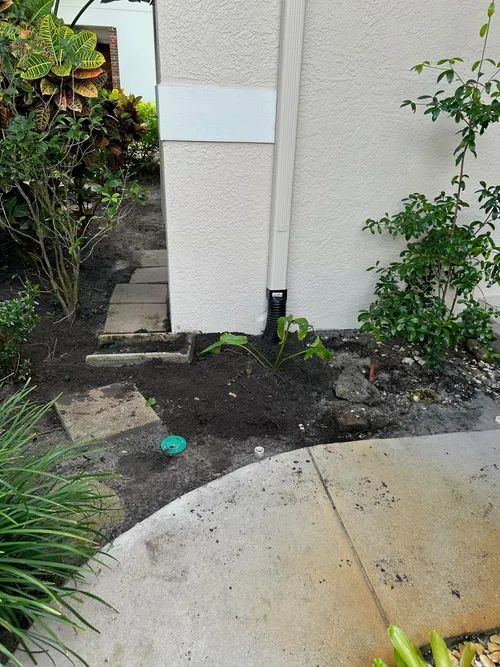
Local Irrigation
2112 Sunnydale Blvd unit h, Clearwater, FL 33765
Local Irrigation is a Clearwater-based company serving Tampa, FL, and surrounding counties with a focus on sprinkler installation, irrigation repair, yard drainage, grading, and landscape lighting. They provide tailored irrigation system services including installation, maintenance, and rapid repairs to optimize lawn health and water management. Their expertise includes advanced yard drainage solutions and lighting installations to enhance outdoor spaces. With decades of experience in plant health and arboriculture, Local Irrigation emphasizes precision watering and sustainable lawn care. They work closely with clients and landscaping teams to ensure efficient system performance and have a strong presence in both residential and commercial projects.

Citrus Pavers
401 E Jackson St Suite 3338, Tampa, FL 33602
Citrus Pavers is a Tampa, FL-based company specializing in luxury outdoor construction and landscape design. They offer a comprehensive range of services including fence installation, landscape lighting, yard drainage, sprinkler systems, land clearing, hardscaping, and custom outdoor structures. The company emphasizes architectural-grade engineering and integrated project execution, ensuring long-term stability and seamless coordination from design through construction. Their expertise includes precision grading, engineered foundations, and premium surface materials, delivering refined outdoor environments tailored to each client's vision. Citrus Pavers manages all permitting and regulatory requirements, providing a streamlined process for complex exterior projects.
Conserva Irrigation of Southeast Tampa
Tampa, FL
Conserva Irrigation of Southeast Tampa provides comprehensive lawn irrigation services in Tampa, FL, including design, installation, repair, and maintenance for residential and commercial properties. They focus on conserving water and improving landscape health through smart irrigation systems that can reduce water usage by up to 60%. Their expertise covers sprinkler system components, zoning, timing, grading, and drainage solutions to ensure efficient water distribution and prevent runoff. Conserva Irrigation serves multiple nearby communities such as Apollo Beach, Riverview, and Sun City Center. They offer 24-hour availability to address irrigation needs promptly.
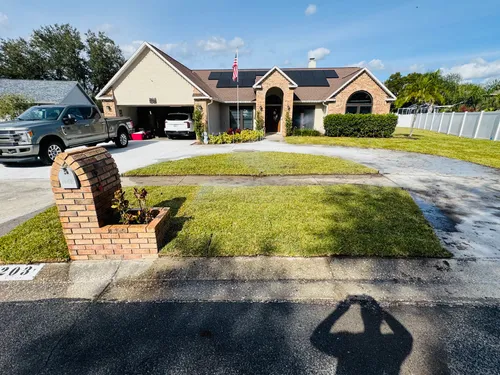
All American Lawn and Irrigation Corp
Tampa, FL
All American Lawn and Irrigation Corp is a family-owned company based in Tampa, FL, with over 20 years of experience serving Hillsborough County and surrounding areas. They offer a wide range of outdoor services including irrigation system design, repair and maintenance, sod removal and installation, custom landscaping, tree trimming and removal, French drain installation, and landscape lighting. Their expertise includes efficient irrigation systems and water management solutions to keep lawns healthy and well-maintained year-round.
Why Tampa Yards Need Specialized Drainage Solutions
Tampa's climate presents unique challenges for homeowners. Intense afternoon thunderstorms, especially during the summer wet season, can deposit large volumes of water in a short time. The region's often sandy or clay-heavy soil may not absorb this rapid influx, leading to surface runoff and pooling. Without proper land grading or a drainage plan, this water can seep toward your home's slab, cause erosion in your planting beds, create persistent muddy areas, and damage your lawn's root systems. Investing in effective water management is crucial for preserving your landscape's health and your home's structural integrity.
Common Yard Drainage Problems in Tampa
Identifying the issue is the first step toward a solution. Here are frequent signs you may need drainage work:
- Standing Water: Puddles that remain for more than 24 hours after rain indicate poor drainage or a low spot in your yard.
- Soil Erosion: Water washing away soil from around foundations, under downspouts, or in garden beds.
- Soggy Lawn: Areas of grass that are constantly wet, spongy, or turning yellow.
- Water in the Basement or Crawl Space: While less common with slab foundations, water can still find its way into sunken living areas or garages.
- Mosquito Infestations: Standing water is a prime breeding ground for mosquitoes.
- Foundation Cracks: Persistent moisture against the foundation can lead to cracking and settling over time.
Core Solutions for Water Management
Local professionals employ a range of techniques to solve drainage issues. The right solution depends on your yard's specific topography, soil type, and the problem's severity.
Regrading and Soil Slope Correction
This is often the first line of defense. Grading involves reshaping the soil around your home to create a gentle slope (typically a 2-5% grade) that directs water away from the foundation1. For existing lawns, this may involve adding topsoil or removing and releveling sod. Proper land grading is a foundational step that can prevent many water problems before they start and is frequently combined with other drainage methods.
French Drain Systems
A French drain is a highly effective solution for subsurface water. It consists of a trench filled with gravel containing a perforated pipe. The pipe collects water from the surrounding soil and channels it to a safer discharge point, like a street gutter, storm drain, or dry well. These systems are excellent for relieving hydrostatic pressure against foundations and drying out chronically wet areas of the lawn.
Catch Basins and Surface Drains
For managing heavy surface runoff, catch basins (also called drain inlets) are key. These are grated collection boxes installed at low points in your yard, patios, or driveways. They capture surface water and connect to a solid pipe that carries it away. This is an ideal solution for pooling water in concrete areas or at the bottom of a slope.
Downspout Management and Diversion
Often, a simple fix can have a big impact. Downspouts that empty directly next to the foundation dump thousands of gallons of water during a storm. Solutions include adding downspout extensions, burying downspout lines that connect to a drainage system, or using splash blocks to direct water away. This is one of the most cost-effective improvements you can make.
Swales and Dry Stream Beds
A swale is a broad, shallow, vegetated channel designed to move water across your landscape. It can be a natural-looking and attractive way to guide runoff. A dry stream bed uses rocks and gravel to create a defined channel that handles water flow during rains while serving as a decorative landscape feature when dry2.
Dry Wells and Infiltration Chambers
When you cannot drain water to a municipal system or street, a dry well can be the answer. This is an underground chamber filled with gravel or a pre-fabricated structure that collects water and allows it to slowly percolate back into the surrounding soil. It's a useful endpoint for downspout or French drain systems.
Soil Improvement
Sometimes, the problem is the soil itself. Compacted or clay-heavy soil repels water. Core aeration (pulling small plugs of soil from the lawn) and adding organic matter like compost can dramatically improve soil permeability, helping your lawn absorb rainwater more effectively3 4.
Find the perfect yard drainage contractors for your needs
Get personalized recommendations and expert advice
The Professional Installation Process
Understanding how a contractor approaches your drainage project can set clear expectations.
- Site Assessment and Diagnosis: A professional will inspect your property during or after a rain to observe water flow, identify low spots, and evaluate soil conditions. They will also look for issues like improper grading or insufficient downspout extensions.
- System Design and Planning: Based on the assessment, they will design a tailored solution. This plan will specify the type of systems (e.g., French drain, catch basins), their placement, slope calculations, and where water will be safely discharged.
- Preparation and Excavation: The work area is marked, and any necessary plants or hardscape are carefully moved. Trenches for drains or areas for regrading are excavated.
- Installation and Construction: Pipes are laid, catch basins are set, and trenches are filled with gravel. For grading projects, soil is moved, shaped, and compacted to the precise slope. All components are connected to form a complete system.
- Testing and Restoration: The system is tested with water to ensure proper flow. Once confirmed, the site is cleaned up, trenches are topped with soil and sod or seed, and the landscape is restored as agreed.
Understanding Investment and Cost Factors
The cost for drainage work in Tampa varies significantly based on the project's scale and complexity. Below are general price ranges for common components, but obtaining quotes from local specialists is essential for an accurate estimate 5 6.
- French Drain Installation: Typically ranges from $30 to $60 or more per linear foot. This includes trenching, pipe, gravel, and labor. The total cost depends heavily on the drain's length, depth, and accessibility.
- Catch Basins: Individual basin units can cost between $50 and $200, plus the cost of connecting pipe and installation labor. A system with multiple basins will increase the total project price.
- Downspout Redirection: Extending or burying a downspout can range from $150 to $500+ per downspout, depending on the materials used and the distance the water needs to be carried.
- Yard Grading and Soil Work: Costs for regrading are highly variable, as they depend on the yard size, the amount of soil to be moved or added, and whether sod needs to be replaced. Adding topsoil or compost for soil improvement is an additional cost.
Important Note: These figures are estimates. The final price for your Tampa property will depend on the specific solutions recommended, the materials chosen, local labor rates, and the challenges posed by Florida's unique weather and soil conditions7 8.
Maintaining Your Drainage System
Once installed, a well-designed drainage system requires minimal maintenance but benefits from periodic checks, especially after major storms.
- Keep drain grates and catch basins clear of leaves, grass clippings, and debris.
- Inspect downspout extensions to ensure they are intact and pointing away from the foundation.
- Check the outlets of French drains or discharge pipes to ensure they are not blocked.
- Observe your yard after heavy rain to confirm the system is working and no new pooling has occurred.
Frequently asked questions
Sources
Footnotes
-
Yard Grading 101: Everything you need to know - This Old House - https://www.thisoldhouse.com/lawns/yard-grading ↩
-
Control Heavy Runoff - Solving Drainage and Erosion Problems - https://www.fairfaxcounty.gov/soil-water-conservation/drainage-problem-control-runoff ↩
-
How to Fix the Wet Spot in Your Yard | Proven Winners - https://www.provenwinners.com/learn/finding-right-plant/how-fix-wet-spot-your-yard ↩
-
How to improve drainage in your garden - Decorative Aggregates - https://decorativeaggregates.com/blogs/garden-inspiration/how-to-improve-drainage-in-your-garden ↩
-
6 Ways to Divert Water - The Home Depot - https://www.homedepot.com/c/ai/6-ways-to-divert-water/9ba683603be9fa5395fab90120dc3412 ↩
-
How to Solve Yard Drainage Problems | Lowe's - https://www.lowes.com/n/how-to/solve-simple-drainage-problems ↩
-
Yard Drainage Specialist Tampa Bay Prices - Landscape design - https://landscapedesignandinstallation.com/post/yard-drainage-specialist-tampa-bay-prices---tampa-bay-yard-drainage-specialist ↩
-
Expert Landscape Drainage Solutions in Tampa, FL - https://landscapingtuneups.com/landscape-drainage-contractor-tampa-fl/ ↩