Find the Best Yard Drainage Contractors for Your Business
No obligation • Fast responses • Nationwide coverage

Why you can trust Landscape Atlas
Landscape Atlas is a leading United States resource for evaluating landscaping, lawn care, and outdoor service providers. Our team researches each category in depth, focusing on service quality, safety, and customer experience. Listings and rankings are based on independent criteria and user feedback, and companies cannot pay to influence our assessments or recommendations.
Search providers near you
Best Yard Drainage Contractors in Louisiana Ranked
Proper water management is essential for protecting your home and landscape in Louisiana. The state's high rainfall and unique soil conditions make effective drainage and grading critical to prevent foundation damage, soil erosion, and landscape health issues. This guide explains the importance of water control, outlines the best solutions for Louisiana properties, and helps you understand how to connect with local professionals who can assess your specific needs and implement lasting solutions.
Curbside Solutions Landscape and Pressure Washing
17186 Old Jefferson Hwy, Prairieville, LA 70769
Curbside Solutions Landscape and Pressure Washing is based in Baton Rouge, LA, offering a variety of landscaping and pressure washing services. Their expertise includes sod installation, artificial turf, landscape design, tree removal, stump grinding, yard drainage, grading, hardscaping with pavers and retaining walls, and lawn care. Established in 2005, they provide comprehensive property care with capabilities in both softscaping and hardscaping, including effective grading and drainage solutions to enhance outdoor spaces.
Borries Landscaping, Llc
726 N Starrett Rd, Metairie, LA 70003
Borries Landscaping, Llc is a family-owned landscaping company serving New Orleans, LA, and nearby areas including Kenner and Metairie. Established in 2018, they offer a range of services such as sod installation with options like St. Augustine and Bermuda, landscape design, tree removal, yard drainage solutions including French drains, sprinkler installation and repair, land clearing, and hardscaping. Their team includes a licensed horticulturist and experienced staff who handle projects from garden cleanups to full landscape installations. They are equipped to manage grading and drainage issues common in South Louisiana's rainy climate.
Daniel king landscaping
Baton Rouge, LA
Daniel King Landscaping is a full-service landscaping company based in Baton Rouge, LA. They offer a range of services including lawn fertilization and weed control, fence installation, landscape lighting, yard drainage and grading, sprinkler installation and repair, and general landscaping. Their irrigation services help manage the local climate challenges with efficient systems, while their fencing options include various materials to suit property needs. Daniel King Landscaping provides comprehensive outdoor solutions to enhance and maintain residential properties.
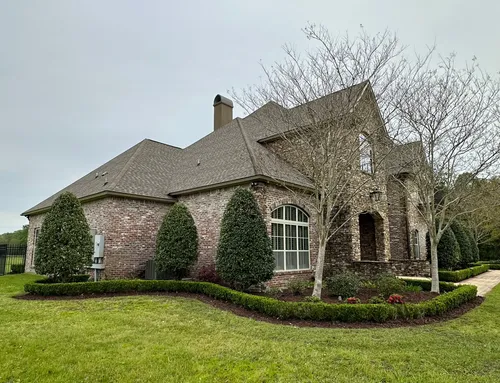
Hernandez Lawnscape LLC
10801 Yarlin St, Denham Springs, LA 70726
Hernandez Lawnscape LLC is a landscaping and lawn care company serving Baton Rouge, LA, and surrounding areas including Denham Springs. They offer a wide range of services such as lawn mowing, fertilization, weed control, sod installation, landscape design, hardscaping with pavers and retaining walls, sprinkler system installation and repair, and yard drainage solutions. Their expertise includes 3D landscape design rendering to help clients visualize projects before implementation. Hernandez Lawnscape works with both residential and commercial clients to create functional and attractive outdoor spaces tailored to local climate and property needs.
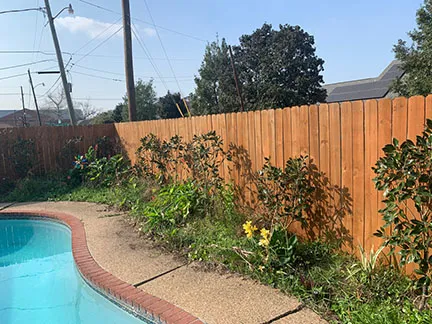
Gordon's Lawn & Landscape
420 Hollandey St, Kenner, LA 70062
Gordon's Lawn & Landscape is a landscaping contractor based in New Orleans, LA, offering a wide range of services including landscape design, hardscaping, grading, sod installation, synthetic turf, drainage solutions, and landscape lighting. They serve the greater New Orleans area, including the North Shore, Jefferson and St. Bernard Parishes, and the River Parishes. With over 12 years of experience, Gordon's Lawn & Landscape handles projects from excavation to final installation, ensuring a seamless process. Their expertise includes custom drainage solutions tailored for the local climate, and the owner is actively involved on-site to oversee quality.
Why Water Management is Critical in Louisiana
Louisiana's climate presents distinct challenges for property owners. The combination of high annual rainfall and specific soil types creates an environment where uncontrolled water can cause significant and costly damage.
- High Rainfall & Storm Intensity: Louisiana receives substantial rainfall throughout the year, often in intense bursts. This volume of water can quickly overwhelm poorly graded yards, leading to pooling, saturation, and excessive runoff.
- Foundation Threats: When water pools around your home's foundation, it creates hydrostatic pressure. Over time, this pressure can lead to cracks, settling, and structural damage. Repairing a compromised foundation is a major expense, often costing thousands of dollars.
- Problematic Soils: Much of Louisiana has clay-rich soils. These soils expand when wet and contract when dry, a cycle that puts tremendous stress on foundations, driveways, and walkways. Saturated soil also loses its stability and can contribute to subsidence issues.
- Landscape and Environmental Impact: Constant saturation washes away vital soil nutrients, harms plant roots, and kills grass. Excess runoff can also carry pollutants from your property into local waterways.
Core Principles of Effective Drainage
Successful water management is built on a few key principles. The goal is always to control the flow of water, moving it away from structures and allowing it to infiltrate the soil safely or be carried to an appropriate discharge point.
- Gravity is Your Friend: All drainage systems rely on gravity. Proper grading establishes a slope that encourages water to flow away from your home and toward a safe outlet, such as a street gutter, dry well, or drainage ditch.
- Surface vs. Subsurface: Problems can occur on the surface (standing water, erosion) or beneath it (soggy soil, hydrostatic pressure). An effective plan often addresses both, using surface grading to handle rainwater and subsurface drains to manage groundwater.
- Start Simple: The first and most important step is often correcting the grade of your soil. Before investing in complex systems, ensure your yard has the basic slope needed to direct water away.
- Minimize Disturbance: Using plants, mulch, and strategic landscaping to slow down water and hold soil in place is a core best management practice (BMP). Reducing bare soil areas prevents erosion and filters runoff naturally.
Essential Drainage & Grading Solutions for Louisiana Homes
A range of solutions exists to handle Louisiana's water challenges. The right choice depends on your property's slope, soil, problem areas, and budget.
1. Grading and Re-Grading
This is the foundational defense. The goal is to create a slope that directs surface water away from your home's foundation.
- How It Works: Soil is shaped and compacted to achieve a consistent slope. The standard minimum is a 2-3% grade (a 2 to 3-foot drop over 100 feet) away from the foundation.
- Best For: New construction, homes with flat or negative grading (sloping toward the house), and as a first step before installing other drainage systems.
- Considerations: May require bringing in clean fill dirt. It's crucial to avoid directing water onto a neighbor's property.
2. French Drains
A French drain is a subsurface trench designed to collect and redirect groundwater and excess surface water.
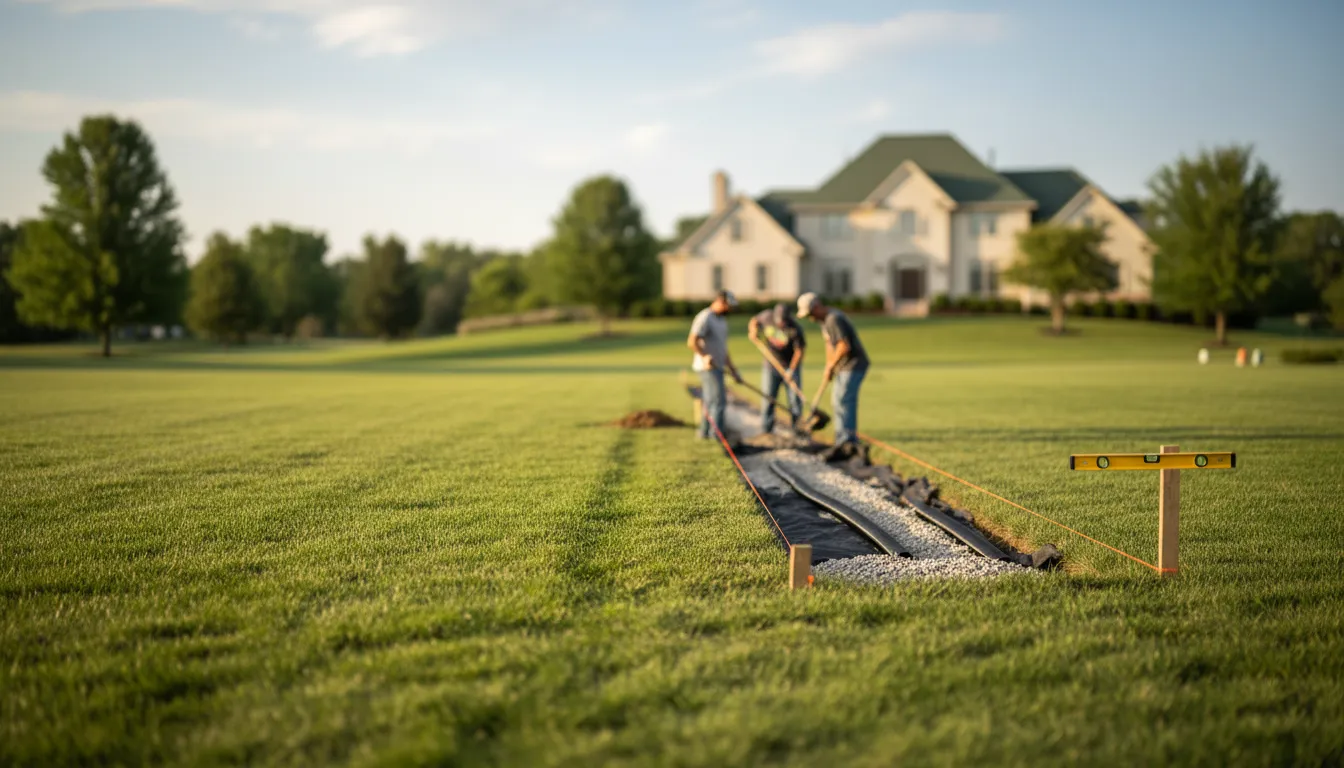
- How It Works: A perforated pipe is laid in a gravel-filled trench. Water seeps through the gravel into the pipe, which then carries it away to a discharge point like a storm drain or a lower area of the yard.
- Best For: Yards with chronic soggy spots, areas with high water tables, or to relieve hydrostatic pressure against foundation walls.
- Considerations: Proper installation depth and pipe slope are critical. They can be connected to downspouts to handle roof runoff.
3. Catch Basins and Channel Drains
These are in-ground inlets that capture surface water before it can pool.
- How It Works: A basin with a grated top is installed at a low point or in a paved area. Water flows into the basin and is carried away via a solid pipe to a drainage area.
- Best For: Driveways, patios, walkways, and yard depressions where water consistently collects. Channel drains (long, linear grates) are ideal across driveway entrances or along garage aprons.
- Considerations: Requires periodic cleaning of the grate to prevent clogging by leaves and debris.
4. Dry Creek Beds and Swales
These are landscaped, shallow ditches that manage water flow while adding aesthetic appeal.
- How It Works: A swale is a grassy, graded channel. A dry creek bed is a rock-lined channel designed to look like a natural stream bed. Both guide water along a desired path, slowing it down to allow for absorption 1.
- Best For: Managing runoff across slopes, directing water from downspouts, or solving erosion problems in a natural-looking way.
- Considerations: An excellent BMP that integrates well into landscaping and helps filter pollutants from runoff.
5. Rain Gardens
A rain garden is a depression planted with native, water-tolerant vegetation designed to temporarily hold and absorb stormwater runoff.
- How It Works: Runoff from a roof or paved area is directed into the garden. The plants and soil filter pollutants, and the water slowly infiltrates the ground, recharging groundwater.
- Best For: Eco-conscious homeowners, managing runoff from roofs, and reducing the volume of water sent to municipal storm systems.
- Considerations: Requires careful plant selection and proper sizing for the drainage area it serves.
Find the perfect yard drainage contractors for your needs
Get personalized recommendations and expert advice
Stormwater Best Management Practices (BMPs)
Incorporating BMPs into your landscape plan is not only effective for drainage but also beneficial for the local environment. These practices mimic natural water cycles and reduce pollution 2.
- Minimize Soil Disturbance: During projects, limit the area of bare soil and the time it is exposed to prevent erosion.
- Use Vegetative Buffers: Plant strips of grass or native plants between paved areas and waterways to filter and slow runoff.
- Redirect Downspouts: Ensure downspouts discharge onto grassy areas, rain gardens, or into drainage systems-not directly onto paved surfaces or foundation beds.
- Permeable Surfaces: Consider permeable pavers for patios or walkways to allow water to soak through rather than run off.
Understanding Costs and Investment
The cost of drainage solutions varies widely based on the scope, materials, and complexity of the installation. Investing in proper drainage is an investment in protecting your home's structural integrity and your landscape's value.
- Regrading/Minor Corrections: For adjusting the slope of soil around a foundation, costs might range from $500 to $2,000 or more, depending on the amount of labor and fill dirt required.
- French Drain Installation: Typically priced per linear foot, with costs ranging from $15 to $40+ per foot installed, factoring in trenching, pipe, gravel, and labor.
- Catch Basin System: Installing a single basin with piping can cost between $1,000 and $3,000, with price increasing for multiple basins, deeper installation, or complex piping runs.
- Rain Garden Installation: A professionally installed rain garden can range from $500 to $2,500+, influenced by its size, the plants selected, and any necessary soil amendments 3.
- Foundation Repair (Due to Water Damage): This underscores the importance of prevention. Correcting foundation issues caused by poor drainage can cost $2,000 to $7,000 or significantly more for major structural repairs 4.
Developing a Plan for Your Property
A successful drainage project starts with a proper assessment.
- Identify the Problem: Observe your yard during and after a heavy rain. Where does water pool? Where does it flow? Check for signs of soil erosion or water stains on foundation walls.
- Start with the Source: Always manage roof water first by ensuring gutters are clean and downspouts are effectively directed away from the house.
- Correct the Grade: Verify and fix the basic slope of your yard as a priority.
- Layer Solutions: Often, a combination of methods works best-for example, grading to handle general runoff, a French drain for a persistent wet spot, and a rain garden to manage a downspout's flow.
- Consult a Professional: For anything beyond minor grading, a professional assessment is invaluable. Local experts understand Louisiana's soil and climate and can design a system that addresses your specific issues efficiently and effectively.
Frequently asked questions
Sources
Footnotes
-
Sloped Yard Drainage: 12 Best DIY Solutions for 2024 - https://salcorplandscaping.com/sloped-yard-drainage/ ↩
-
Stormwater Best Management Practices - https://spcwater.org/topics/stormwater-management/stormwater-best-management-practices-2/ ↩
-
10 Things You Can Do to Prevent Stormwater Runoff Pollution - https://www.farmington-ct.org/departments/engineering/stormwater/10-things-to-prevent-stormwater-pollution ↩
-
How Proper Drainage in Louisiana Yards Safeguards Your ... - https://www.loopxconstruction.com/post/how-proper-drainage-in-louisiana-yards-safeguards-your-home-and-landscape ↩