Find the Best Yard Drainage Contractors for Your Business
No obligation • Fast responses • Nationwide coverage

Why you can trust Landscape Atlas
Landscape Atlas is a leading United States resource for evaluating landscaping, lawn care, and outdoor service providers. Our team researches each category in depth, focusing on service quality, safety, and customer experience. Listings and rankings are based on independent criteria and user feedback, and companies cannot pay to influence our assessments or recommendations.
Search providers near you
Top Yard Drainage Contractors in Malden, Massachusetts Ranked
A wet, soggy yard or a basement that floods after every rainstorm is more than just an inconvenience-it's a threat to your property's foundation, landscaping, and overall value. Yard drainage and grading services are essential for managing water flow on your property, directing rainfall and runoff away from your home and into appropriate areas. This guide explains the common water management solutions for Malden homes, from simple regrading to complex underground systems, and how you can find qualified local professionals to assess and solve your specific drainage issues.
Pave Tech LLC
27 Wendell Rd, Newton, MA 02459
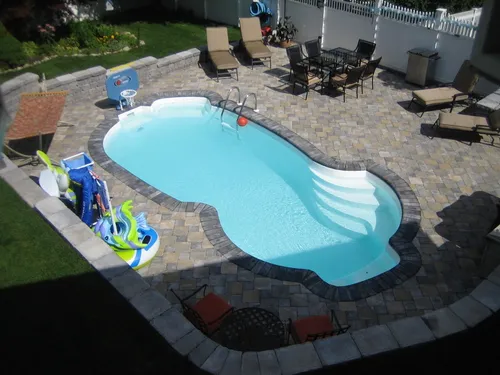
Pave Tech LLC is a licensed and insured contractor based in Boston, MA, specializing in asphalt paving, hardscaping, yard drainage, and grading services. With over 30 years of experience, they serve both commercial and residential clients throughout the Greater Boston area. Their services include driveway and parking lot paving, asphalt milling, excavation, drainage system installation, and snow removal. Pave Tech is equipped to handle demolition and hardscaping projects such as pavers and retaining walls, ensuring proper ground preparation and quality materials for lasting results.
Conserva Irrigation of Southwest Boston
Boston, MA
Conserva Irrigation of Southwest Boston provides residential and commercial irrigation services in Boston, MA, and surrounding areas. They specialize in eco-friendly sprinkler system installation, repair, and maintenance, focusing on water conservation through smart irrigation technology and sustainable practices. Their services include system inspections, drip irrigation installation, grading for proper drainage, and seasonal maintenance to keep landscapes healthy year-round. Conserva Irrigation partners with leading brands like Toro and Hunter to offer advanced irrigation solutions and has built a reputation for knowledgeable and thorough service. They serve a wide range of nearby communities and emphasize water-saving technologies in their work.
Land Solutions & Hardscapes, LLC
685 Main St, Wilmington, MA 01887
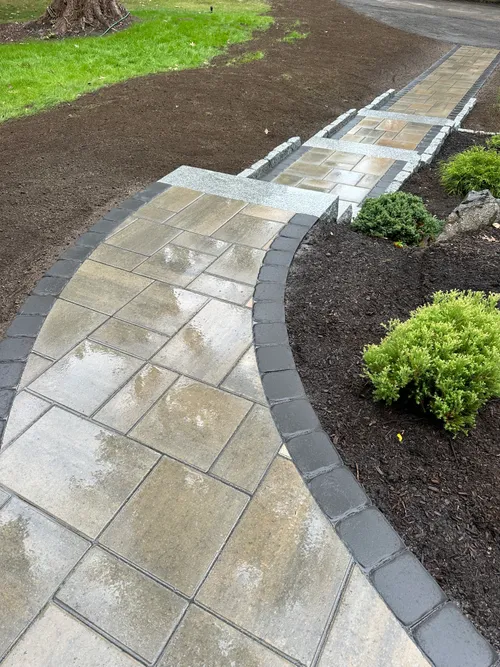
Land Solutions & Hardscapes, LLC is a full-service landscape and hardscape contractor based near Boston, MA. With over 20 years of experience, they provide design and installation services for residential and commercial outdoor living spaces. Their offerings include custom walkways, paver patios with fire pits, outdoor kitchens, and retaining walls. The company also specializes in grading and excavation services, ensuring a well-prepared site for any landscaping or hardscaping project.
EP Landscape Demo & Services LLC - Boston
Boston, MA
EP Landscape Demo & Services LLC - Boston is a landscaping company serving Boston, MA, and surrounding communities. They offer a wide range of services including lawn mowing, fertilization, weed control, landscape design, tree and stump removal, yard drainage, grading, land clearing, and brush removal. Their expertise covers residential, commercial, and industrial landscaping needs, with capabilities such as large-scale land clearing, site preparation, and storm damage cleanup. The company understands Boston's unique climate and terrain, adapting their services to local conditions including coastal weather and seasonal changes. They provide ongoing maintenance and specialized services like bi-weekly weeding and mulch installation to support healthy landscapes throughout the year.
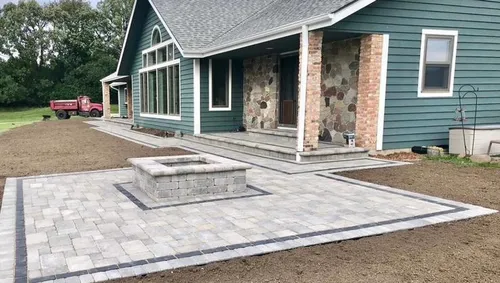
Omar Masonry And Painting LLC
39 Alpena Ave, Dedham, MA 02026
Omar Masonry And Painting LLC is a landscaping and hardscaping company based in Boston, MA. They offer a wide range of services including landscape design, yard drainage, grading, lawn care, and hardscaping such as patios, walkways, and retaining walls. The company also provides masonry, painting, basement cleanouts, demolition, power washing, gutter repair, and carpentry services. Omar Masonry And Painting LLC serves both residential and commercial clients in the Boston area, focusing on enhancing outdoor spaces with durable and functional designs.
Why Proper Drainage is Critical in Malden
Malden's climate, with its nor'easters and seasonal downpours, combined with varied soil conditions-including dense clay common in the area-can create significant water management challenges for homeowners. Poor drainage leads to standing water that kills grass, creates mud pits, and breeds mosquitoes. More critically, it can cause hydrostatic pressure against your foundation walls, leading to cracks, leaks, and costly structural damage over time. Effective surface and subsurface drainage systems are not just about lawn care; they are a fundamental part of protecting your home's integrity.
Common Residential Drainage Problems
Identifying the symptom is the first step toward a cure. Here are the most frequent signs that your Malden property needs drainage or grading work:
- Persistent Puddling: Water that stands for more than 24 hours after a rain indicates poor absorption or inadequate slope.
- Soil Erosion: Gullies or washed-away soil in your garden or yard show that water is moving too quickly and uncontrolled.
- Wet Basement or Crawl Space: This is often the ultimate red flag, signaling that groundwater or surface runoff is penetrating your foundation.
- Soggy Lawn: Spongy, constantly wet grass areas, even without visible puddles, suggest a high water table or compacted soil.
- Downspout Dumping: If your gutter downspouts empty directly next to the foundation, you're funneling thousands of gallons of water toward your home's weakest point annually.
Core Solutions: Grading and Drainage Systems
Professional contractors typically recommend a combination of approaches tailored to your property's specific topography and problem areas. Here are the primary methods used in Malden.
Land Grading and Regrading
This is often the foundational fix. Grading involves reshaping the land's surface to create a gentle, consistent slope-typically a minimum of a 2% grade (a quarter-inch drop per foot)-away from your home's foundation. 1 Proper yard leveling ensures surface water flows to a designated drainage area or storm sewer, not toward your structure. For existing homes, regrading may be necessary to correct settling or improper original landscaping.
Subsurface Drainage Systems
When surface grading isn't enough, underground solutions are installed to intercept and redirect water.
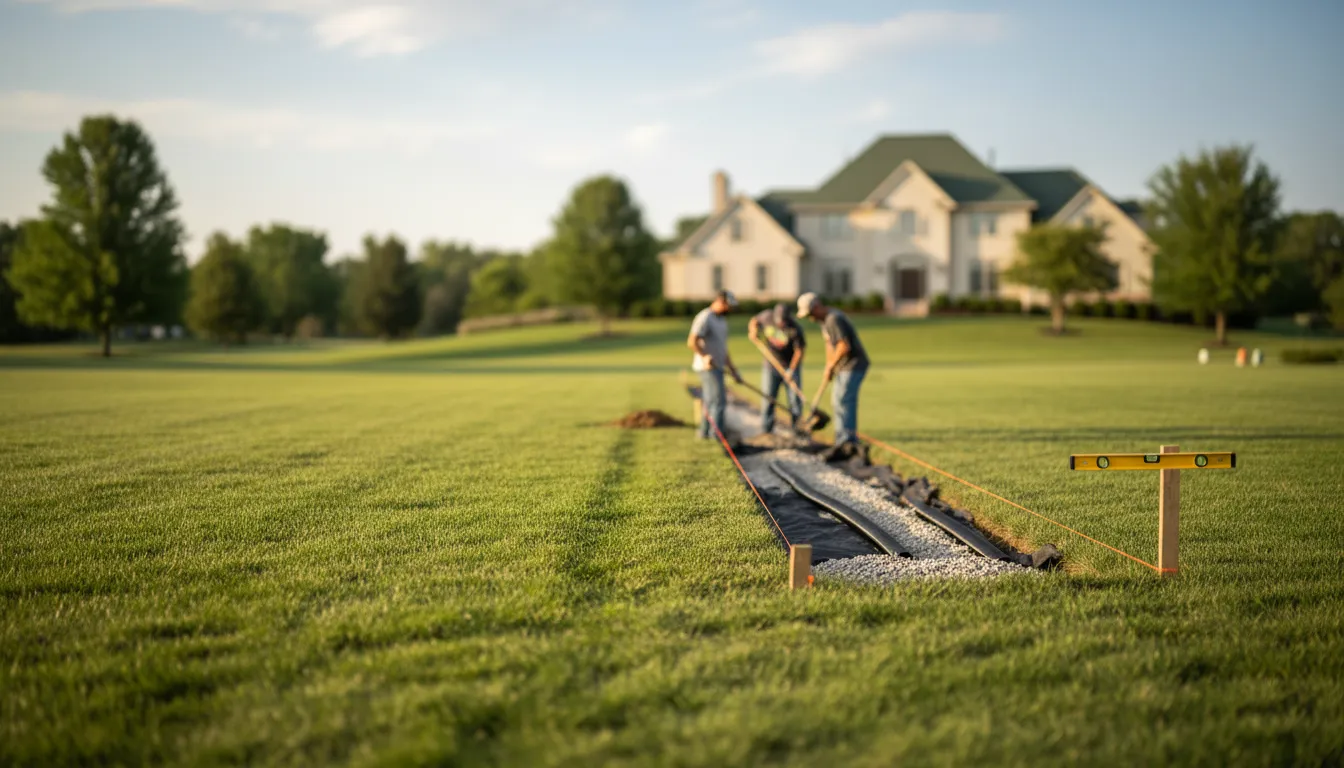
- French Drains: A highly effective and common solution. A trench is dug, lined with fabric, filled with gravel, and contains a perforated pipe that collects and redirects groundwater and surface water to a safe discharge point like a dry well or street curb.
- Dry Wells and Infiltration Trenches: These act as underground reservoirs. They collect large volumes of water from downspouts or drains and allow it to slowly percolate into the surrounding soil, recharging groundwater. They require soil with good infiltration rates. 2
- Underground Downspout Drains: Instead of letting roof runoff pool at your foundation, downspouts are connected to solid pipes buried underground that channel water directly to a dry well, drainage ditch, or storm drain.
Surface Drainage and Eco-Friendly Options
These solutions manage water where it collects on the surface.
- Catch Basins and Channel Drains: Grates installed in low spots or along driveways collect surface water, which is then carried away via underground piping.
- Swales: Shallow, grassy ditches are landscaped to guide water flow across a property.
- Rain Gardens (Bioretention Areas): An eco-friendly and attractive option. These are shallow, planted depressions that capture runoff from roofs or pavement. Deep-rooted native plants help absorb and filter the water naturally. 3 4
Find the perfect yard drainage contractors for your needs
Get personalized recommendations and expert advice
The Professional Installation Process
A successful residential drainage project follows a structured path from problem identification to final testing.
- Site Assessment and Design: A specialist will evaluate your property, identify water sources and flow paths, and may perform soil tests. They then design a system that may combine several solutions (e.g., regrading with a French drain and dry well) for maximum effectiveness. 5
- Permitting and Utility Location: Before any digging, you or your contractor must Call 811 to have all public underground utility lines marked. For many projects in Malden, especially those tying into municipal systems or involving significant excavation, a local permit from the Inspectional Services Department may be required. 6
- Excavation and Installation: Trenches are dug for pipes, areas are shaped for grading, and pits are excavated for dry wells or rain gardens. The system components are then installed according to plan, ensuring proper slope (or "fall") on pipes for gravity-fed flow.
- Backfilling and Restoration: The excavated areas are filled back in with gravel, soil, or other materials. The site is restored, which may involve laying new sod, seeding grass, or installing landscaping around new features like a rain garden.
- Testing and Maintenance Guidance: The contractor should test the system with water to verify performance. They will also advise on simple maintenance, like cleaning gutter guards and catch basin grates, to keep the system functioning for years. 7
Understanding Costs for Drainage Work in Malden
Costs in the Greater Boston area, including Malden, can be higher due to the regional cost of living, labor rates, and potentially difficult soil conditions. 8 The final price depends entirely on the complexity, size, and components of your system. The table below provides general estimates to help you budget; obtaining multiple detailed quotes from local contractors is essential.
| System/Service | Average Cost Range | Notes |
|---|---|---|
| French Drain Installation | $10 - $50 per linear foot | Highly variable based on depth, materials, and site access. |
| Yard Grading/Regrading | $1.25 - $4.00 per sq. ft., or $1,400 - $6,000 total | Reshaping the land to direct water flow. 9 |
| Underground Downspout Drains | $200 - $2,000 per downspout | Connects gutters to an underground pipe system. |
| Dry Well Installation | $1,600 - $4,800 per unit | Cost depends on size and excavation difficulty. |
| Catch Basin Installation | $200 - $500 per unit (plastic) | For collecting surface water in low spots. |
| Rain Garden Installation | $500 - $3,000 total | An eco-friendly solution using plants to absorb water. |
| Permits & Inspections | $400 - $2,300+ | Varies significantly by project scope and local requirements. |
Total project costs can range from a few hundred dollars for a simple downspout extension to over $15,000 for large, complex systems involving extensive regrading, multiple French drains, and dry wells. 10 Always ensure quotes include a clear scope of work, materials, labor, permitting fees, and site restoration.
Choosing a Contractor in Malden
Selecting the right professional is crucial. Look for contractors who specialize in excavation and drainage work, not just general landscaping. They should be licensed, insured, and willing to provide local references. Ask about their experience with Malden's specific soil and permitting process. A reputable contractor will always start with a thorough site evaluation and provide a detailed, written proposal explaining the problem, the proposed solution, and the associated costs before any work begins. 11 12
Frequently asked questions
Sources
Footnotes
-
French Drains - Millennial Landscape & Construction - https://millenniallandscaping.com/french-drains/ ↩
-
Understanding Residential Drainage Solutions | Dry Wells ... - https://landdesignassociates.com/residential-drainage-solutions/ ↩
-
Control Heavy Runoff - Solving Drainage and Erosion Problems - https://www.fairfaxcounty.gov/soil-water-conservation/drainage-problem-control-runoff ↩
-
Yard Drainage Contractor Boston - https://bostonyarddrainage.com/yard-drainage-contractor-boston/ ↩
-
Residential landscape drainage: 5 Best Steps to Dry - https://bostonlandscapeco.com/residential-landscape-drainage/ ↩
-
How Much Does It Cost to Install a Drainage System in Your Yard in ... - https://www.homeadvisor.com/cost/landscape/install-drainage/ ↩
-
#1 Best backyard drainage solutions: Conquer your woes - https://bostonlandscapeco.com/backyard-drainage-solutions/ ↩
-
How Much Does It Cost to Level a Yard in Boston, MA? | Angi - https://www.angi.com/articles/how-much-does-yard-leveling-cost/ma/boston ↩
-
Landscape Grading and Drainage Costs - https://www.whiteshovel.com/blog/landscape-grading-and-drainage-costs ↩
-
How Much Does Yard Drainage Cost in 2025? Homeowner's ... - https://warelandscaping.com/how-much-does-yard-drainage-cost-in-2025 ↩
-
Exterior Drainage Systems in Massachusetts - M.T. Mayo Corp. - https://mtmayocorp.com/exterior-drainage-systems/ ↩
-
Excavation, Grading and Drainage Systems - https://provostcompanies.com/landscape-construction/excavation-grading-and-drainage-systems/ ↩