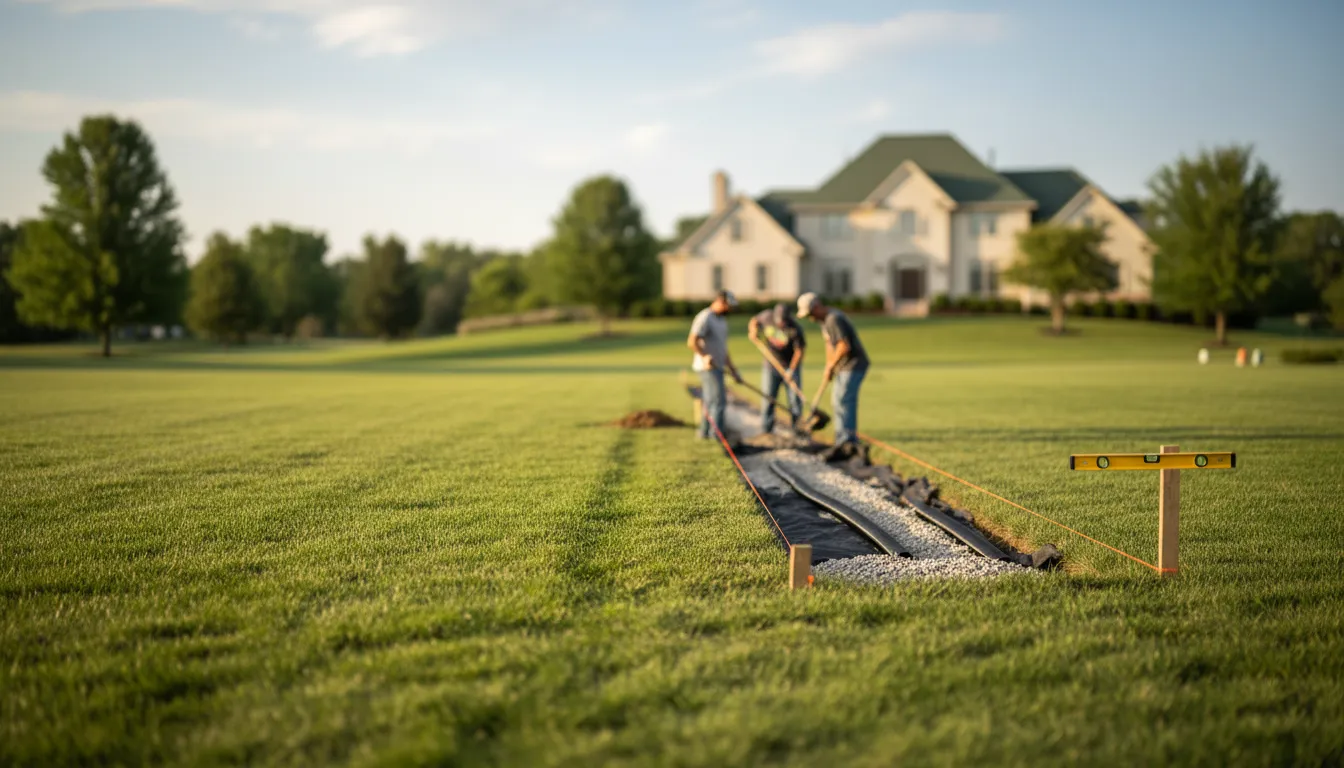
Find the Best Yard Drainage Contractors for Your Business
No obligation • Fast responses • Nationwide coverage

Why you can trust Landscape Atlas
Landscape Atlas is a leading United States resource for evaluating landscaping, lawn care, and outdoor service providers. Our team researches each category in depth, focusing on service quality, safety, and customer experience. Listings and rankings are based on independent criteria and user feedback, and companies cannot pay to influence our assessments or recommendations.
Search providers near you
Best Yard Drainage Contractors in Nebraska Ranked
Effective yard drainage and grading are essential for protecting your Nebraska home from water damage. Properly managing stormwater runoff prevents basement flooding, protects your foundation, and preserves your landscape. This guide explains the unique challenges in Nebraska, outlines practical solutions, and helps you understand how to connect with local experts who can assess your property and implement the right system for your needs.
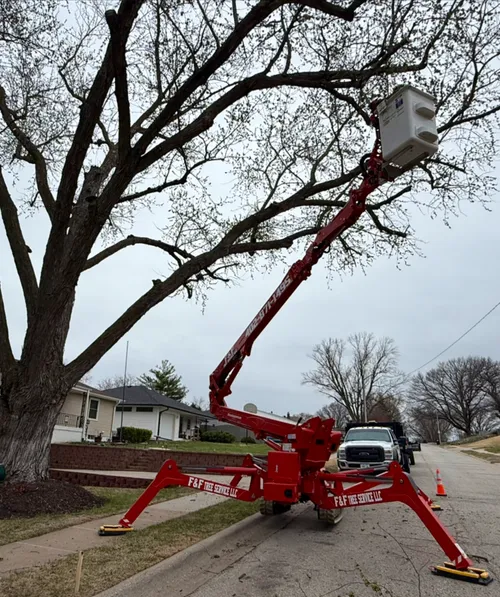
F & F Tree & Landscaping service LLC.
2424 S 12th St, Council Bluffs, IA 51501
F & F Tree & Landscaping Service LLC. is a landscaping and lawn care company based in Omaha, NE. They provide a broad range of services including landscape design, installation, and maintenance, tree pruning and removal, yard drainage and grading, sprinkler system installation and repair, and outdoor lighting. The company serves both residential and commercial clients in the Omaha Metropolitan area. Their capabilities include comprehensive landscape construction and irrigation system services. F & F Tree & Landscaping has developed long-term client relationships by consistently delivering valuable customer service and landscaping solutions.
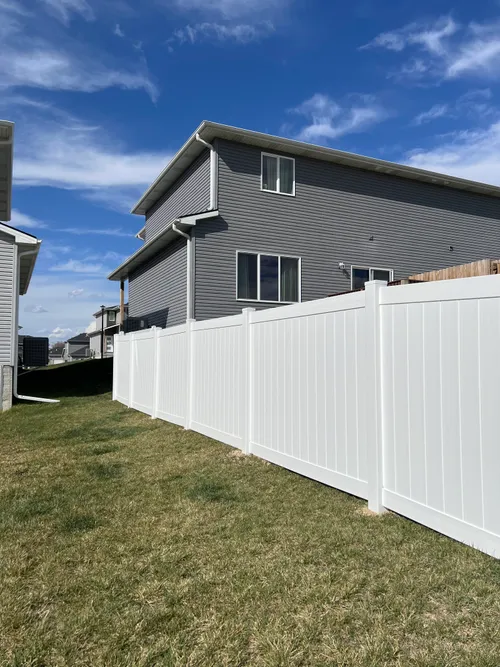
JB's Landscapes & Lawn Care
Lincoln, NE
JB's Landscapes & Lawn Care is a landscaping and lawn care company based in Lincoln, NE. Serving the community since 2014, they offer a wide range of services including landscape design, lawn treatment and fertilization, mulch services, paver installation, retaining walls, fence installation, minor grading, and drainage solutions. Their capabilities include hardscaping elements such as paver installation and retaining walls, as well as lawn care and fertilization to maintain healthy outdoor spaces.
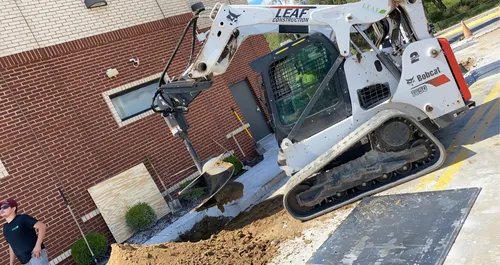
Leaf Construction
15586 Walnut Cir, Omaha, NE 68144
Leaf Construction is a family-owned and operated company based in Omaha, NE, specializing in concrete services, yard drainage, grading, land clearing, brush removal, and hardscaping. They provide concrete removal and repair for walkways, driveways, and parking lots, as well as decorative stamped concrete for residential and commercial properties. Their services also include lot clearing, excavation, demolition, and retaining wall construction for erosion control and drainage. Leaf Construction handles both residential and commercial projects with a focus on safety and quality workmanship.
Sun Valley Landscaping
5601 Harrison St, Omaha, NE 68157
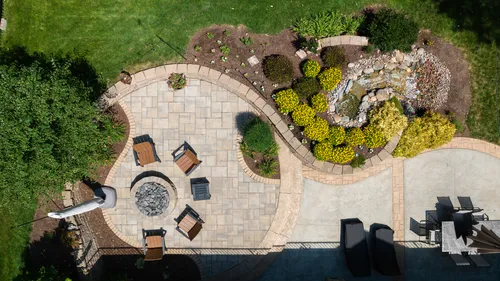
Sun Valley Landscaping is a landscaping company based in Omaha, NE, offering a wide range of residential and commercial outdoor services. Their expertise includes landscape design and build, hardscaping such as patios and retaining walls, lawn care and maintenance, irrigation installation and repair, and yard drainage solutions. The company focuses on creating tailored outdoor spaces that combine functionality with aesthetic appeal. They provide detailed design plans and professional construction to enhance property value and curb appeal. Sun Valley Landscaping also addresses drainage issues and offers ongoing maintenance to keep landscapes healthy and attractive. Serving Omaha and surrounding areas, they emphasize clear communication and craftsmanship throughout each project.
Conserva Irrigation of Omaha
Omaha, NE
Conserva Irrigation of Omaha provides residential and commercial irrigation services in Omaha, NE, and surrounding areas. They focus on environmentally conscious irrigation solutions that promote water conservation and healthy landscapes. Their services include sprinkler system design, installation, repair, winterization, and upgrades using smart irrigation controllers and climate-based scheduling to optimize water use. The company offers expertise in grading and drainage to prevent pooling and runoff, ensuring efficient water absorption and system performance. Conserva Irrigation of Omaha combines local climate knowledge with modern technology to customize systems that adapt to seasonal changes and municipal regulations.
Why Nebraska Homes Need Proper Drainage
Nebraska's climate and geology create specific challenges for property drainage. Understanding these factors is the first step toward an effective solution.
- Heavy Rainfall Events: The state is prone to intense thunderstorms that can drop large volumes of water in a short time. A robust drainage system is necessary to move this water quickly away from your home's foundation to prevent basement flooding and soil saturation.
- Varied Soil Types: Soil composition affects how water moves. Clay-heavy soils, common in parts of Nebraska, shed water slowly, increasing surface runoff and the risk of pooling. Sandy soils drain faster but are more susceptible to erosion 1. Your drainage plan must account for your local soil conditions.
- Freeze-Thaw Cycles: Water that saturates the soil around your foundation can freeze in winter. This expansion exerts pressure on foundation walls and can damage drainage pipes, leading to costly repairs2. Proper grading and subsurface drainage help keep this area dry.
Core Principles: Grading and Foundation Protection
The most fundamental and critical aspect of yard drainage is ensuring the ground slopes away from your home. This isn't just a recommendation-it's a building code requirement. The International Residential Code (IRC) specifies that the ground should slope away from the foundation a minimum of 6 inches within the first 10 feet. This simple gradient is your first and most important defense against water intrusion.
The primary goals of any drainage system are to:
- Divert Water Away: Prevent water from accumulating near foundation walls, which eliminates hydrostatic pressure that can cause cracks and seepage.
- Protect Footings: Ensure grading and drainage solutions prevent water from pooling at the base of your foundation, which can undermine its structural integrity.
- Manage Discharge: Safely direct water from downspouts and sump pumps far from the foundation, often to a street gutter, storm drain, or a designated infiltration area like a dry well.
Effective Drainage Solutions for Nebraska Properties
From simple adjustments to engineered systems, multiple options exist to manage stormwater on your property.
1. Grading (The Essential First Step) This involves reshaping the soil around your home to create the proper slope. It's often the most cost-effective solution if the existing grade is flat or slopes toward the house. Even if you install other systems, proper grading is the necessary foundation for them to work correctly3 4 5.
2. Downspout Extensions and Rain Barrels Never let roof runoff dump directly next to your foundation. Extending downspouts to discharge at least 5-10 feet away is a low-cost, high-impact fix. Installing rain barrels or cisterns captures this runoff for later use in gardening, simultaneously reducing the volume of water your yard needs to manage6 7.
3. French Drains A French drain is a trench filled with gravel containing a perforated pipe. It's designed to intercept and redirect subsurface water (water soaking through the soil) away from problem areas. They are excellent for solving soggy yards or preventing water from pressing against basement walls.
4. Swales and Dry Stream Beds A swale is a broad, shallow, vegetated channel designed to guide surface water across your landscape to a safe discharge point. They can be landscaped to look like a natural dry stream bed, adding aesthetic value while serving a crucial function.
5. Rain Gardens and Bioretention A rain garden is a depressed area filled with engineered soil and native plants that can tolerate both wet and dry conditions. It collects runoff from roofs or driveways, allows it to pond temporarily, and then filters it slowly into the ground. This is a beautiful, eco-friendly Best Management Practice (BMP) that reduces runoff and filters pollutants.
6. Catch Basins and Dry Wells A catch basin is an inlet that collects surface water, connecting to an underground pipe. This pipe can lead to a municipal storm sewer or to a dry well-an underground chamber filled with gravel that allows collected water to gradually percolate into the surrounding soil.
Find the perfect yard drainage contractors for your needs
Get personalized recommendations and expert advice
Understanding Costs and Planning
The investment for yard drainage solutions varies widely based on the complexity of your problem and the chosen solution.
- DIY Grading & Downspouts: Simple regrading with a shovel and wheelbarrow or installing downspout extensions and rain barrels can be a low-cost project (in the hundreds of dollars) for a handy homeowner.
- French Drains & Swales: Professional installation of a French drain or a landscaped swale typically ranges from $500 to $2,000 or more, depending on the length, depth, and materials.
- Rain Gardens & Complex Systems: Engineered solutions like rain gardens or systems involving multiple catch basins and subsurface piping involve higher costs ($1,000 to $5,000+), accounting for design, specialized soil mixes, plants, and labor.
Before starting any significant project, it's wise to check with your local municipality. Cities like Lincoln and Norfolk have guidelines for stormwater Best Management Practices (BMPs) and drainage criteria that may affect your plans 8 9. A call to your local building or public works department can clarify requirements for discharge locations, permits, and approved techniques.
Maintenance for Long-Term Performance
A drainage system is only as good as its upkeep. Simple, regular maintenance ensures your investment continues to protect your home for years to come.
- Inspect and Clean: Regularly check gutters, downspouts, and the inlets of any catch basins or channel drains. Clear away leaves, silt, and debris that can cause blockages.
- Preserve the Grade: Avoid piling soil, mulch, or landscaping materials against your foundation in a way that reverses the critical slope. After heavy rains, look for areas where water is pooling and address them promptly.
- Verify Flow: Periodically during a rainstorm, observe how water moves across your property. Ensure it is flowing away from the house and that all components of your system are working as intended.
- Landscape Wisely: The City of Lincoln and other entities provide maintenance requirements for BMPs like rain gardens, which may include weeding, replanting, and checking for soil compaction10. Proper care keeps these systems functional and attractive.
Frequently asked questions
Sources
Footnotes
-
CHAPTER 4 DRAINAGE DESIGN - https://www.fao.org/4/t0099e/t0099e04.htm ↩
-
Stormwater Post Construction Best Management Practices ... - https://www.lincoln.ne.gov/files/sharedassets/public/ltu/utilities/watershed-management/best-management-practices/bmp-guidelines.pdf ↩
-
Control Heavy Runoff - Solving Drainage and Erosion Problems - https://www.fairfaxcounty.gov/soil-water-conservation/drainage-problem-control-runoff ↩
-
2021 International Residential Code (IRC) - R401.3 Drainage. - https://codes.iccsafe.org/s/IRC2021P3/chapter-4-foundations/IRC2021P3-Pt03-Ch04-SecR401.3 ↩
-
The Role of Grading in Water Drainage and Flood Prevention • Almand Bros Concrete - https://almandbros.com/grading-for-watershed/ ↩
-
Stormwater Best Management Practices - https://spcwater.org/topics/stormwater-management/stormwater-best-management-practices-2/ ↩
-
Stormwater - | YourHome - https://www.yourhome.gov.au/water/stormwater ↩
-
Drainage Design and Erosion Control Manual - https://dot.nebraska.gov/media/ro0ivtgy/a-drainage-design-and-erosion-control-manual.pdf ↩
-
DRAINAGE CRITERIA MANUAL | Norfolk, NE - https://norfolkne.gov/assets/site/documentcentral/stormwater/norfolk-drainage-criteria-manual.pdf ↩
-
Owner/Operator Maintenance Requirements - City of Lincoln, NE - https://www.lincoln.ne.gov/City/Departments/LTU/Utilities/Watershed-Management/Sustainable-Landscapes/Post-Construction-BMPs/Maintenance-Requirements ↩