Find the Best Yard Drainage Contractors for Your Business
No obligation • Fast responses • Nationwide coverage

Why you can trust Landscape Atlas
Landscape Atlas is a leading United States resource for evaluating landscaping, lawn care, and outdoor service providers. Our team researches each category in depth, focusing on service quality, safety, and customer experience. Listings and rankings are based on independent criteria and user feedback, and companies cannot pay to influence our assessments or recommendations.
Search providers near you
Top Yard Drainage Contractors in Tigard, Oregon Ranked
A soggy lawn, water pooling against your foundation, or persistent erosion can turn your outdoor space into a headache. Proper yard drainage and grading are essential services for managing the significant rainfall in the Tigard area, protecting your home's structural integrity, and creating a usable, healthy landscape. This guide explains the core solutions for water management, from simple grading to complex drainage systems, and helps you understand the process of finding and working with skilled local professionals to solve your property's unique water challenges.
HD Landscape and Maintenance
Portland, OR
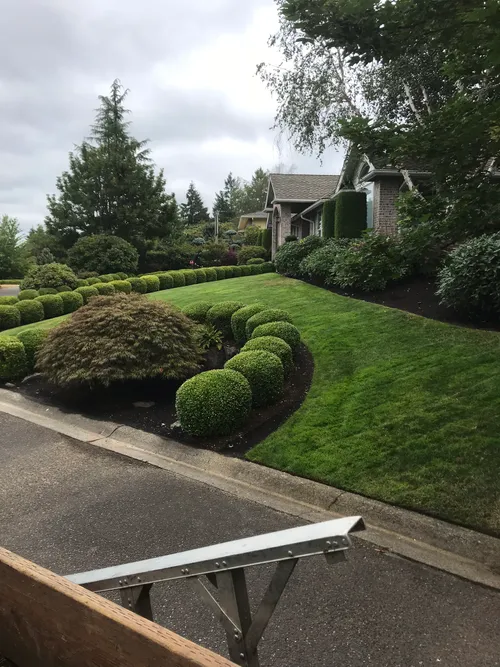
HD Landscape and Maintenance is a landscaping and maintenance company serving Portland, OR, and the surrounding metropolitan area. They offer a wide range of services including lawn care, sod and artificial turf installation, fence installation, landscape lighting, landscape design, tree services, yard drainage, hardscaping, and seasonal maintenance. Their work covers residential and commercial properties across Multnomah, Washington, and Clackamas counties. The company emphasizes sustainable landscaping practices using native plants and eco-friendly materials. They are fully licensed and insured, with experience handling projects from initial design to completion, including specialized capabilities like storm damage restoration and smart drainage systems.
Simple Lawns Landscape Design
9707 NE 54th St #C, Vancouver, WA 98662
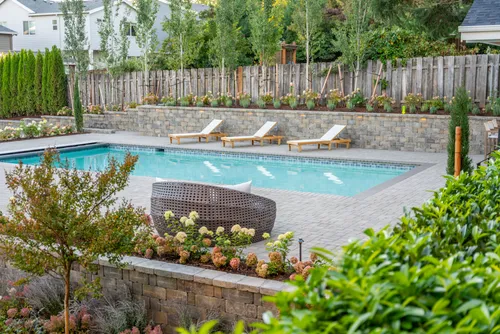
Simple Lawns Landscape Design is a family-owned landscaping and lawn care company serving Portland, OR. They provide a full range of services including lawn mowing, fertilization, weed control, landscape design, yard drainage, sprinkler installation and repair, and hardscaping such as pavers and retaining walls. With over 20 years of experience, they focus on durable outdoor solutions backed by a 5-year warranty on hardscaping. Their team includes trained installers who stay current with landscaping techniques to ensure quality results.
Lawn & Irrigation Technologies NW
2900 SE Cornelius Pass Rd Ste 336, Hillsboro, OR 97123
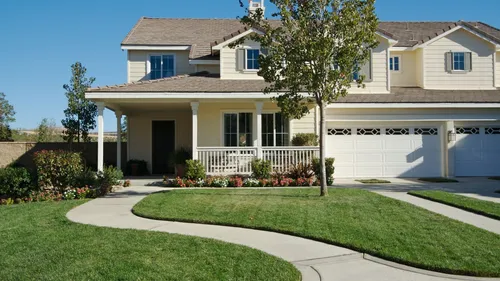
Lawn & Irrigation Technologies NW is a landscaping and irrigation contractor based in Portland, OR, serving the Washington County area for over 30 years. They offer a wide range of services including irrigation system installation and repair, sod installation, landscape lighting, paver installation, yard drainage solutions, and lawn fertilization. Their team is known for using water-efficient irrigation products and providing NDS-certified drainage solutions to enhance outdoor spaces while promoting environmental stewardship.
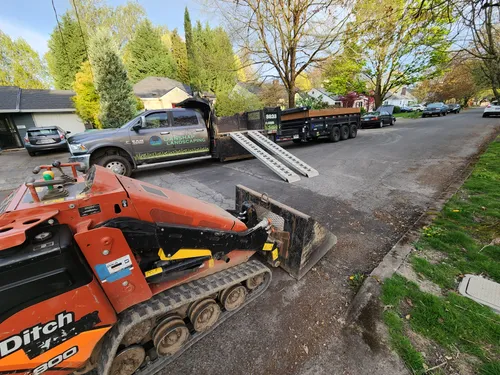
Danshap Landscaping and Excavation inc.
7800 NE 103rd Ave, Vancouver, WA 98662
Danshap Landscaping and Excavation Inc. is a licensed, bonded, and insured landscaping company serving Portland, OR, and the surrounding areas. They offer a wide range of services including sod installation, landscape design, tree removal, stump grinding, yard drainage, grading, land clearing, brush removal, and general lawn care. The company is equipped to handle both residential and commercial projects, with capabilities such as grading and re-sloping yards to improve drainage and appearance. Danshap Landscaping is locally owned and operated, with a strong focus on customer satisfaction and quality workmanship.
Wyeast Gardens, LLC
23202 SE Hoffmeister Rd, Damascus, OR 97089
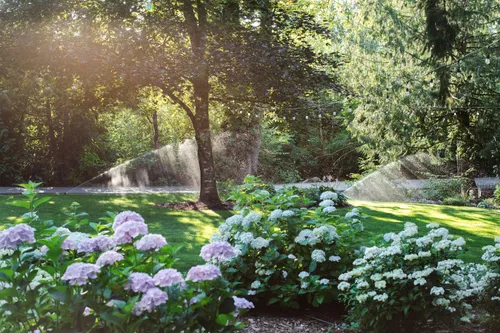
Wyeast Gardens, LLC is a full-service landscaping company based in Portland, OR, offering landscape design, irrigation installation and repair, yard drainage solutions, and hardscaping services. Serving commercial, residential, industrial, and governmental clients, they specialize in efficient irrigation systems and sustainable water management to enhance outdoor spaces. Established in 1994, Wyeast Gardens brings over 25 years of experience, including work with national cemeteries and VA hospitals, and provides skilled masonry and landscape construction services.
Why Water Management is Critical in Tigard
The Pacific Northwest climate brings ample rain, making effective landscape drainage not just an enhancement but a necessity for home maintenance. Without proper grading and water diversion systems, stormwater runoff can seep into basements and crawlspaces, cause foundation cracks, kill grass and plants through oversaturation, and create muddy, unusable areas in your yard. Furthermore, managing water on your property responsibly helps reduce the burden on municipal storm systems and can prevent pollutants from being carried into local waterways 1. Addressing drainage issues proactively is an investment in your property's value, safety, and longevity.
Core Solutions for Yard Drainage and Grading
Tackling water problems involves a combination of reshaping the land (grading) and installing structures to capture and redirect water (drainage). Here are the primary methods used by professionals in Tigard.
Landscape Grading: The First Line of Defense
Grading is the process of reshaping the soil to create a gentle, consistent slope that directs surface water away from your home and toward a suitable discharge point. The goal is to achieve a "positive grade," typically a slope of about 2-5% (or a 2- to 6-inch drop per 10 feet) away from the foundation. Regrading a yard often involves moving significant amounts of soil, compacting it properly, and sometimes amending it with compost to improve stability and absorption. This is often the most fundamental step in solving surface water issues.
Subsurface Drainage: The French Drain
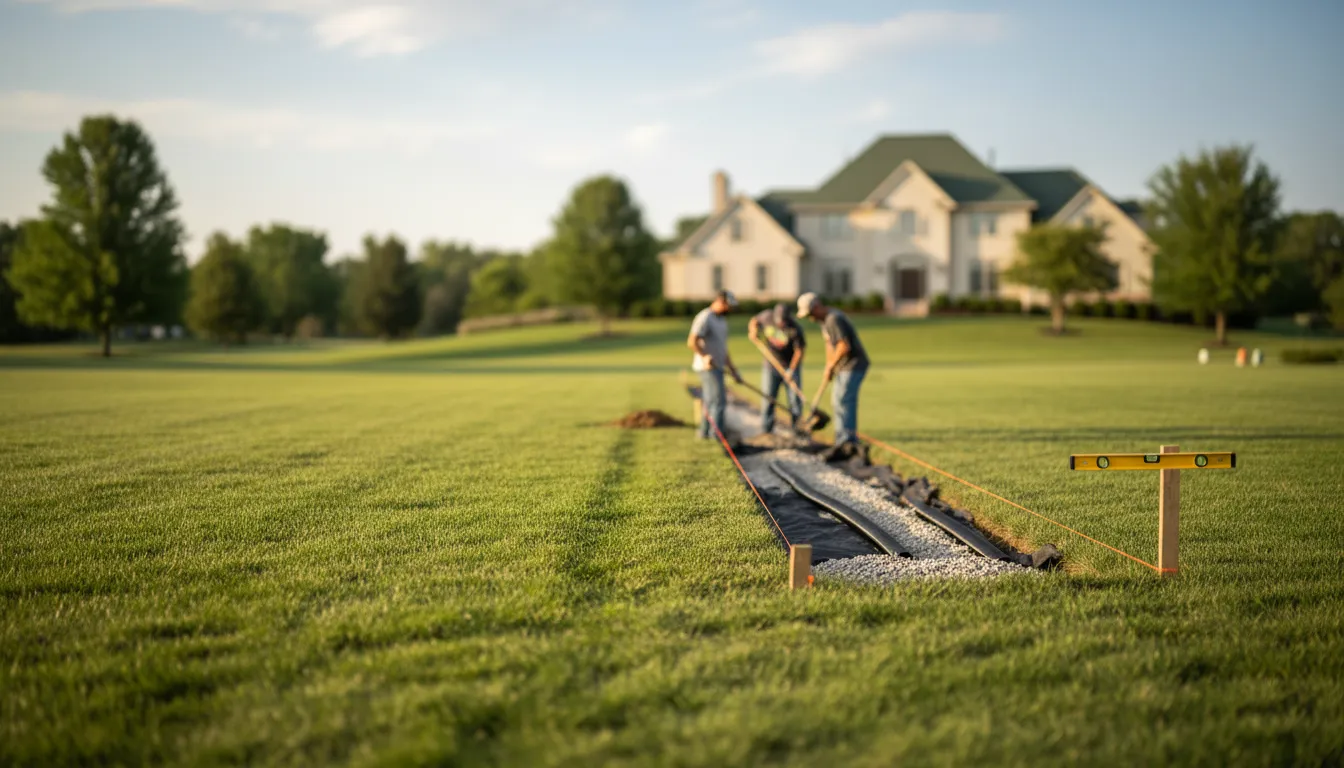
For water that saturates the soil below the surface, a French drain is a classic and highly effective solution. It consists of a trench lined with landscape fabric, filled with gravel, and containing a perforated pipe at the bottom. This system collects groundwater and excess subsurface moisture, channeling it safely away from problem areas to a daylight outlet (like a street gutter or dry well). French drains are ideal for solving soggy spots in the middle of a lawn or for intercepting water flowing toward a basement.
Surface Water Capture: Catch Basins and Channel Drains
When water pools on hard surfaces like driveways, patios, or in low spots of your lawn, catch basins and channel drains are the answer. These are grated inlets installed at the lowest point of the problem area, connected to a solid pipe that carries the captured water underground to a discharge location. They are excellent for preventing standing water and controlling heavy runoff from roofs and paved areas before it can cause erosion or seep toward the foundation.
Sustainable Stormwater Solutions: Rain Gardens and Dry Wells
Increasingly, homeowners and local guidelines encourage solutions that manage water sustainably by allowing it to infiltrate back into the ground on-site. A rain garden is a shallow, planted depression designed to collect and absorb runoff from roofs or driveways. It uses specific native plants and engineered soil to filter pollutants and recharge groundwater 2. A dry well or infiltration trench is an underground pit or gravel-filled trench that stores stormwater temporarily, allowing it to slowly percolate into the surrounding soil. These green infrastructure options can often qualify for guidance or incentives from local agencies like Clean Water Services 3.
Downspout and Gutter Management
Often, the simplest fix involves managing where your roof water goes. Extending downspouts to discharge at least 5-10 feet away from your foundation is a basic but critical step. For a more integrated solution, downspouts can be connected directly to underground drain pipes that lead to a catch basin, dry well, or rain garden, effectively removing a major source of water from the equation near your home's footprint.
Find the perfect yard drainage contractors for your needs
Get personalized recommendations and expert advice
The Professional Installation Process: What to Expect
Hiring a professional for yard drainage and grading ensures the job is done correctly, safely, and in compliance with any local regulations. Here's a typical process:
- Site Assessment and Diagnosis: A reputable contractor will first walk your property to identify all water sources (e.g., downspout flow, natural slope, neighbor's runoff) and map the problem areas. They will look for signs of pooling, erosion, and soil saturation.
- Design and Planning: Based on the assessment, the professional will design a system that may combine several solutions. They will plan the slope for grading, the routing for drain pipes, the placement of basins or dry wells, and a legal, effective discharge point. For larger projects in Tigard, they may need to check with the City's Public Works department regarding stormwater permits or regulations.
- Excavation and Preparation: This phase involves the physical work of digging trenches for drains, moving soil for regrading, and preparing holes for catch basins or dry wells. Proper excavation depth and slope are crucial for system function.
- System Installation: Crews will lay and connect pipes, install basins and grates, fill trenches with gravel, and construct any rain garden or dry well structures. For grading, they will spread, shape, and compact soil to the precise slope required.
- Finishing and Restoration: The final steps include backfilling with topsoil, seeding or sodding over disturbed areas, planting rain garden vegetation, and applying mulch. A good contractor will leave your property clean and restored.
Understanding Investment and Cost Factors
The cost for yard drainage and grading in Tigard varies widely based on the scale and complexity of the problem, the solutions chosen, and the size of your property. Professional projects are typically an investment in the thousands of dollars, but they prevent far more costly foundation or landscaping repairs.
- Smaller Projects & Simple Solutions: Basic downspout extensions, minor regrading to fix a small area, or installing a single rain garden might range from a few hundred to around $1,500 4.
- Standard Professional Installations: A single French drain run or a catch basin system for a driveway often falls in the range of $1,000 to $4,000, depending on length and depth 5 6.
- Comprehensive Systems: For whole-yard solutions involving significant regrading, multiple interconnected French drains, several catch basins, and dry wells, costs can range from $5,000 to $15,000 or more 7 8. The price reflects the extensive labor, materials (pipe, gravel, basins), and machinery required.
Always seek detailed, written estimates from several licensed and insured local contractors. Reputable firms in the area, such as those found on local listing services, can provide transparent quotes based on a thorough evaluation 9.
Finding the Right Local Professional
When searching for "yard drainage" or "grading" experts in Tigard, look for landscapers or excavation contractors who specialize in drainage solutions. Key indicators include:
- Experience & Portfolio: They should readily show examples of past drainage projects.
- Knowledge of Local Conditions: Familiarity with Tigard's soil types (often clay-heavy) and rainfall patterns is a plus.
- Licensing & Insurance: Verify they are licensed to work in Oregon and carry liability and workers' compensation insurance.
- References & Reviews: Check reviews on platforms like Yelp and HomeGuide, and ask for local references you can contact 10 11.
Frequently asked questions
Sources
Footnotes
-
10 Things You Can Do to Prevent Stormwater Runoff Pollution - https://www.farmington-ct.org/departments/engineering/stormwater/10-things-to-prevent-stormwater-pollution ↩
-
Stormwater Solutions - Oregon Environmental Council - https://www.oeconline.org/wp/wp-content/uploads/2014/11/Stormwater-Solutions-Report.pdf ↩
-
Stormwater | City of Tigard - https://www.tigard-or.gov/your-government/departments/public-works/stormwater ↩
-
Grading & Drainage Basics for Residential Landscaping in North ... - https://www.honeycutt-landscaping-inc.com/grading-and-drainage-in-residential-yard-design/ ↩
-
Keep Your Yard Dry with Expert Landscape Drainage Solutions - https://www.lewislandscape.com/drainage.html ↩
-
Creative Landscape Drainage Solutions In Oregon City OR - https://www.whiteoaknw.com/landscape-drainage-solutions/ ↩
-
Grading Yard for Drainage: A Homeowner's Step-by-Step Guide - https://tamuradesigns.com/grading-yard-for-drainage/ ↩
-
Control Heavy Runoff - Solving Drainage and Erosion Problems - https://www.fairfaxcounty.gov/soil-water-conservation/drainage-problem-control-runoff ↩
-
TOP 10 BEST Yard Drainage Contractors in Tigard, OR - Yelp - https://m.yelp.com/search?find_desc=Yard+Drainage+Contractors&find_loc=Tigard%2C+OR ↩
-
TOP 10 BEST Yard Drainage in Tigard, OR - Updated 2026 - Yelp - https://m.yelp.com/search?find_desc=Yard+Drainage&find_loc=Tigard%2C+OR ↩
-
The 10 Best Landscaping Companies in Tigard, OR (2026) - https://homeguide.com/or/tigard/landscaping/ ↩