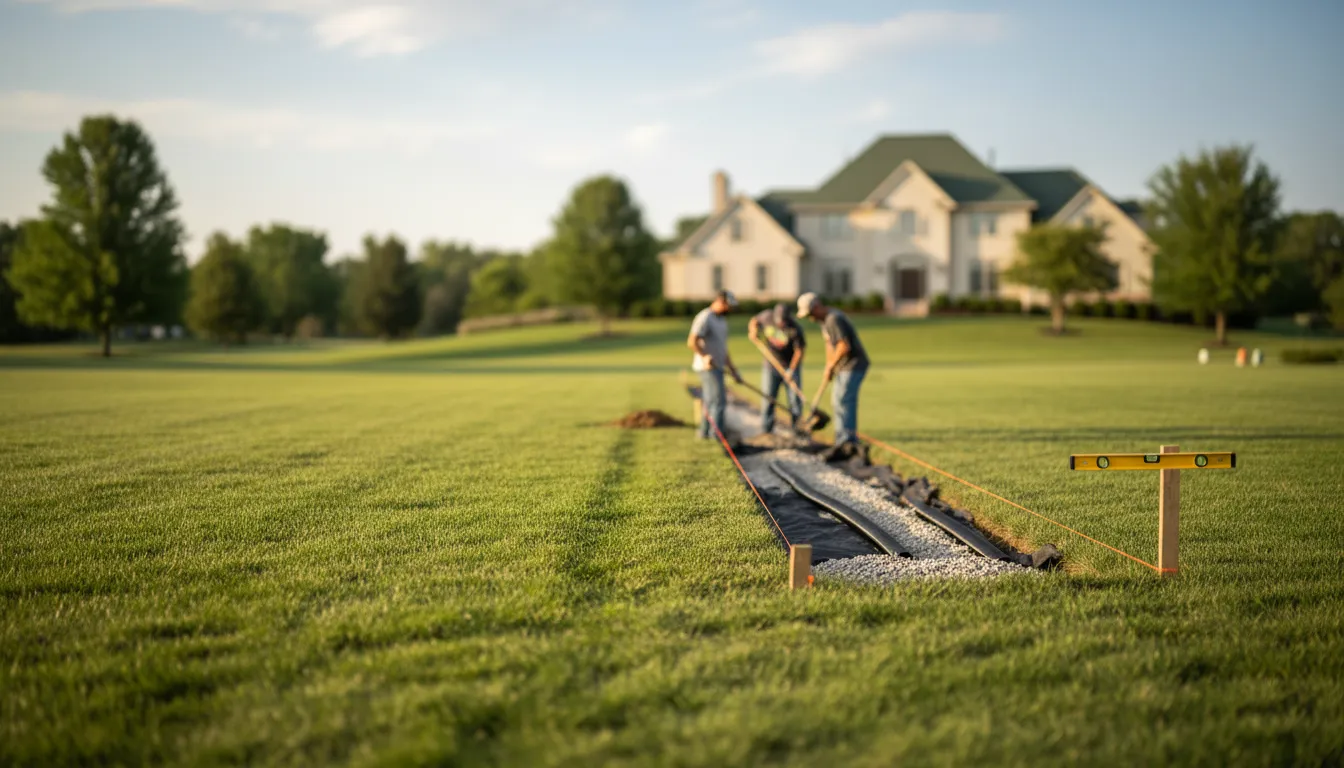
Find the Best Yard Drainage Contractors for Your Business
No obligation • Fast responses • Nationwide coverage

Why you can trust Landscape Atlas
Landscape Atlas is a leading United States resource for evaluating landscaping, lawn care, and outdoor service providers. Our team researches each category in depth, focusing on service quality, safety, and customer experience. Listings and rankings are based on independent criteria and user feedback, and companies cannot pay to influence our assessments or recommendations.
Search providers near you
Best Yard Drainage Contractors in Washington Ranked
Proper yard drainage and grading are essential for protecting your Washington home from water damage, preventing soil erosion, and maintaining a healthy landscape. In a state with such varied climates-from the famously wet west to the drier east-managing stormwater effectively is a critical part of homeownership. This guide explains the core principles of drainage, outlines common solutions used across Washington, and provides the information you need to connect with qualified local professionals who can assess your property and implement an effective, site-specific plan.
North East Landscaping Services
12259 155th Ave SE, Renton, WA 98059
North East Landscaping Services is a family-owned landscaping company with over 20 years of experience serving residential and commercial clients in Seattle, WA. They provide a comprehensive range of outdoor services including lawn care, fertilization, weed control, sod and artificial turf installation, fence and deck construction, landscape lighting, tree services, yard drainage, sprinkler installation and repair, as well as hardscaping like pavers and retaining walls. The company emphasizes quality workmanship and building lasting relationships with clients, handling projects of all sizes with care and honesty.
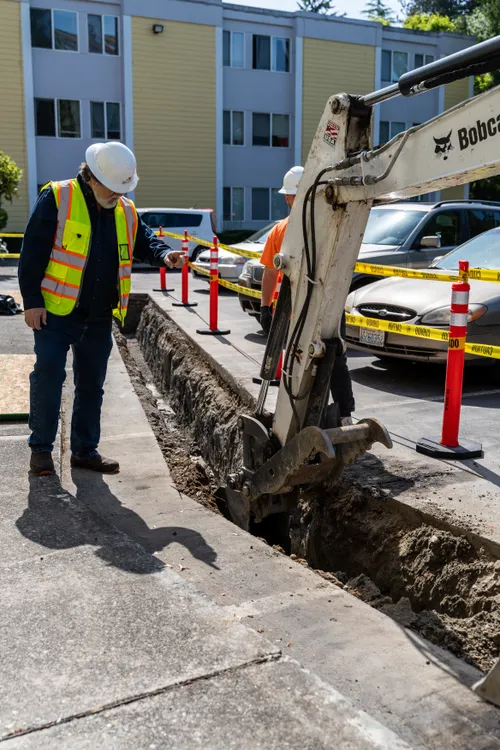
ACES FOUR Enterprises - Sewer Repair & Replacement
537 S Southern St, Seattle, WA 98108
ACES FOUR Enterprises - Sewer Repair & Replacement is a yard drainage and sewer contractor based in Seattle, WA. They provide a range of services including sewer repair, drain cleaning, water line installation, excavation, and demolition. Their capabilities include hydro jetting for sewer line cleaning and comprehensive drainage solutions such as foundation waterproofing and trench drain installation. With an in-house crew boasting 45 years of experience, they focus on careful planning, obtaining necessary permits, and maintaining clean job sites throughout their projects.
Badger Excavation
Seattle, WA
Badger Excavation is a Seattle, WA-based contractor offering excavation, land clearing, grading, and hardscaping services. Their work includes road building, driveways, site and foundation preparation, septic systems, brush removal, and installation of concrete landscape curbing and retaining walls. With 15 years of experience, the owner personally oversees quality and ensures clear communication throughout projects.
Precision Landscape LLC
16203 122nd Ave SE, Renton, WA 98058
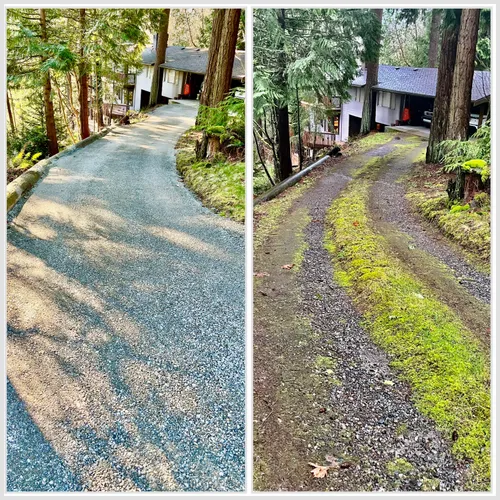
Precision Landscape LLC is a landscaping company based in Seattle, WA, offering a wide range of services including sod installation, artificial turf, tree removal, stump grinding, yard drainage, grading, land clearing, and brush removal. Serving residential and commercial clients throughout King County, they provide customized landscaping solutions supported by specialized equipment to improve efficiency and project outcomes. Their capabilities include comprehensive tree services and land clearing to prepare properties for various uses. With over 15 years of experience, Precision Landscape LLC is licensed, bonded, and insured to handle diverse landscaping needs.
Hone Landscape Company
31604 NE 40th St, Carnation, WA 98014
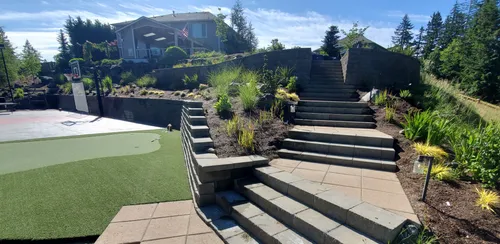
Hone Landscape Company is a landscaping and hardscaping contractor serving Seattle, WA, and nearby communities. They offer a full range of services including landscape design, sod and artificial turf installation, outdoor lighting, yard drainage solutions, and the construction of patios, retaining walls, and driveways. The company emphasizes a principles-based approach focused on clear communication and integrity. They have experience managing drainage problems and creating sustainable landscapes, ensuring projects are completed from design through installation with detailed estimates and ongoing customer updates.
Why Drainage Matters in Washington
Washington's diverse geography creates unique water management challenges. In Western Washington, including Seattle and Tacoma, persistent, heavy rainfall can saturate soil and lead to basement flooding, foundation issues, and landscape erosion if water isn't properly directed away from structures. Eastern Washington, around areas like Spokane, experiences a drier climate but is susceptible to intense, short-duration rain events that can overwhelm poorly drained soils. Statewide, managing runoff isn't just about property protection; it's also about protecting water quality by reducing the pollutants that wash into local streams, rivers, and Puget Sound 1 2.
The Washington State Building Code mandates proper site drainage, requiring that water drain away from foundation walls 3. A well-designed system prevents costly repairs, preserves your home's structural integrity, and can even transform a soggy, unusable yard into a functional and attractive outdoor space.
Core Principles: Grading and Positive Drainage
The first and most fundamental step in any drainage plan is ensuring proper grading. This refers to the slope of the land around your home. The goal is to create positive drainage-a slope that consistently moves water away from your foundation.
- The Golden Rule: Soil should slope away from the house with a minimum drop of 6 inches within the first 10 feet. This is a non-negotiable starting point for foundation protection.
- Gutter Integration: Effective grading works hand-in-hand with your roof drainage. Downspouts must discharge water onto a sloped surface or into a dedicated drainage system, not simply dump it at the foundation line.
- Site Assessment: Before any work begins, a professional will assess your property's specific conditions, including soil type, existing slopes, and the location of underground utilities.
Common Drainage Solutions for Washington Homes
Depending on your property's challenges, a combination of solutions is often used. Here are the most effective methods employed across the state.
French Drains
A French drain is a trench filled with gravel and containing a perforated pipe. It's designed to collect subsurface water (hydrostatic pressure) and surface runoff, channeling it to a safe discharge point like a storm drain, dry well, or lower slope on your property. They are excellent for solving problems with standing water in low spots or relieving pressure against foundation walls.
Catch Basins and Yard Drains
These are grated inlets installed in low points or at the end of downspouts to collect surface water. They connect to a solid pipe that carries the water away. Catch basins are crucial for managing large volumes of water quickly during heavy rain and preventing surface pooling.
Dry Wells
A dry well is an underground structure, typically a large pit filled with gravel or a pre-manufactured chamber, that collects water from drains or downspouts and allows it to slowly percolate into the surrounding soil. They are a valuable solution when there is no suitable slope for daylighting a drain, but their feasibility depends heavily on your soil's infiltration rate.
Rain Gardens
A rain garden is a landscaped depression planted with native, water-tolerant vegetation. It is designed to capture and temporarily hold runoff from roofs, driveways, or lawns, allowing it to soak into the ground naturally. Rain gardens are a highly recommended Low Impact Development (LID) practice in Washington. They reduce runoff volume, filter pollutants, and provide habitat, aligning with guidelines in the state's Stormwater Management Manuals. Proper construction with a specific soil mix is essential for their function.
Swales
Swales are broad, shallow, vegetated channels designed to convey and infiltrate stormwater runoff. They can be used instead of pipes in some situations to move water across a landscape while reducing its speed and allowing for some filtration. They are often integrated into the overall grading plan.
Simple Landscaping Adjustments
Sometimes, simpler changes can have a big impact. Using mulch in planting beds helps absorb water and reduce erosion. Replacing impervious surfaces like concrete with permeable pavers allows water to soak through. Strategic planting with deep-rooted native plants can also help stabilize soil and improve absorption 4.
Find the perfect yard drainage contractors for your needs
Get personalized recommendations and expert advice
Regional Considerations: Western vs. Eastern Washington
A one-size-fits-all approach doesn't work in Washington. Your location significantly influences the design priorities for your drainage system.
- Western Washington: The high annual rainfall means systems must be designed to handle large, frequent volumes of water. The Stormwater Management Manual for Western Washington (SWMMWW) provides detailed guidance, emphasizing water quality treatment and volume control 5. Solutions here often need greater capacity and redundancy.
- Eastern Washington: While drier, the region can experience intense summer thunderstorms. The Stormwater Management Manual for Eastern Washington focuses on managing these peak flows and protecting water quality in a different hydrological context 6. Here, systems may be designed for less frequent but higher-intensity events, and frost depth can be a greater consideration for buried components.
Understanding Costs and Planning
The cost of drainage work in Washington varies widely based on the complexity of the problem, the solutions chosen, the size of your property, and labor rates. It's an investment in your property's long-term health.
- Basic Grading/Regrading: Adjusting soil slopes can range from $500 to $2,000 or more, depending on the area and machinery required.
- French Drain or Catch Basin System: Installing a typical residential system often falls in the range of $1,000 to $3,000+, with final cost depending on length, depth, and the difficulty of finding a discharge point 7 8.
- Rain Garden: A professionally installed rain garden, including excavation, soil amendment, and plants, may cost between $500 and $2,500+ 9.
- Dry Well: This is typically a more involved excavation project, with costs commonly ranging from $1,000 to $4,000 or more 10.
Always get multiple detailed quotes from licensed and insured professionals. A reputable provider will start with a thorough site evaluation before recommending a solution.
Key Tips for Homeowners
- Observe Your Property: Watch how water flows during a heavy rain. Note where it pools and where it travels.
- Maintain Gutters and Downspouts: This is the easiest and most important maintenance task. Keep them clean and ensure downspout extensions are in place.
- Test Soil Drainage: Before investing in infiltration-based solutions like rain gardens or dry wells, a percolation test can determine if your soil drains adequately.
- Call Before You Dig: Always contact Washington 811 to have underground utility lines marked before any excavation begins.
- Think Long-Term: Consider how landscaping changes, new patios, or outbuildings might affect drainage patterns.
Frequently asked questions
Sources
Footnotes
-
Effective Yard Drainage Solutions for Washington State Homeowners - https://www.caringrealestate.com/blog/effective-yard-drainage-solutions-for-washington-state-homeowners/ ↩
-
Stormwater Best Management Practices - https://spcwater.org/topics/stormwater-management/stormwater-best-management-practices-2/ ↩
-
2021 Washington State Residential Code - R401.3 Drainage. - https://codes.iccsafe.org/s/WARC2021P1/chapter-4-foundations/WARC2021P1-Pt03-Ch04-SecR401.3 ↩
-
The Importance Of Proper Drainage In Portland & Washington State - https://www.simplelawnslandscaping.com/blog/p.250219040/the-importance-of-proper-drainage-in-portland-washington-state/ ↩
-
2024 Stormwater Management Manual for Western Washington - https://apps.ecology.wa.gov/publications/documents/2410013.pdf ↩
-
Stormwater Management Manual for Eastern Washington - https://apps.ecology.wa.gov/publications/documents/0410076.pdf ↩
-
Swales, Drains, and Site Grading for Stormwater Control - https://basc.pnnl.gov/resource-guides/swales-drains-and-site-grading-stormwater-control ↩
-
Designing With Drainage - Kryssie Maybay - Snohomish County - https://www.snohomishcountywa.gov/DocumentCenter/View/111031/Designing-with-Drainage?bidId= ↩
-
Rain Garden Handbook - Washington State Department of Ecology - https://apps.ecology.wa.gov/publications/documents/1310027.pdf ↩
-
Urban Stormwater Runoff Capture and Management Resource ... - https://water.ca.gov/-/media/DWR-Website/Web-Pages/Programs/California-Water-Plan/Docs/RMS/2025/Urban-Stormwater-RMS---2025.pdf ↩