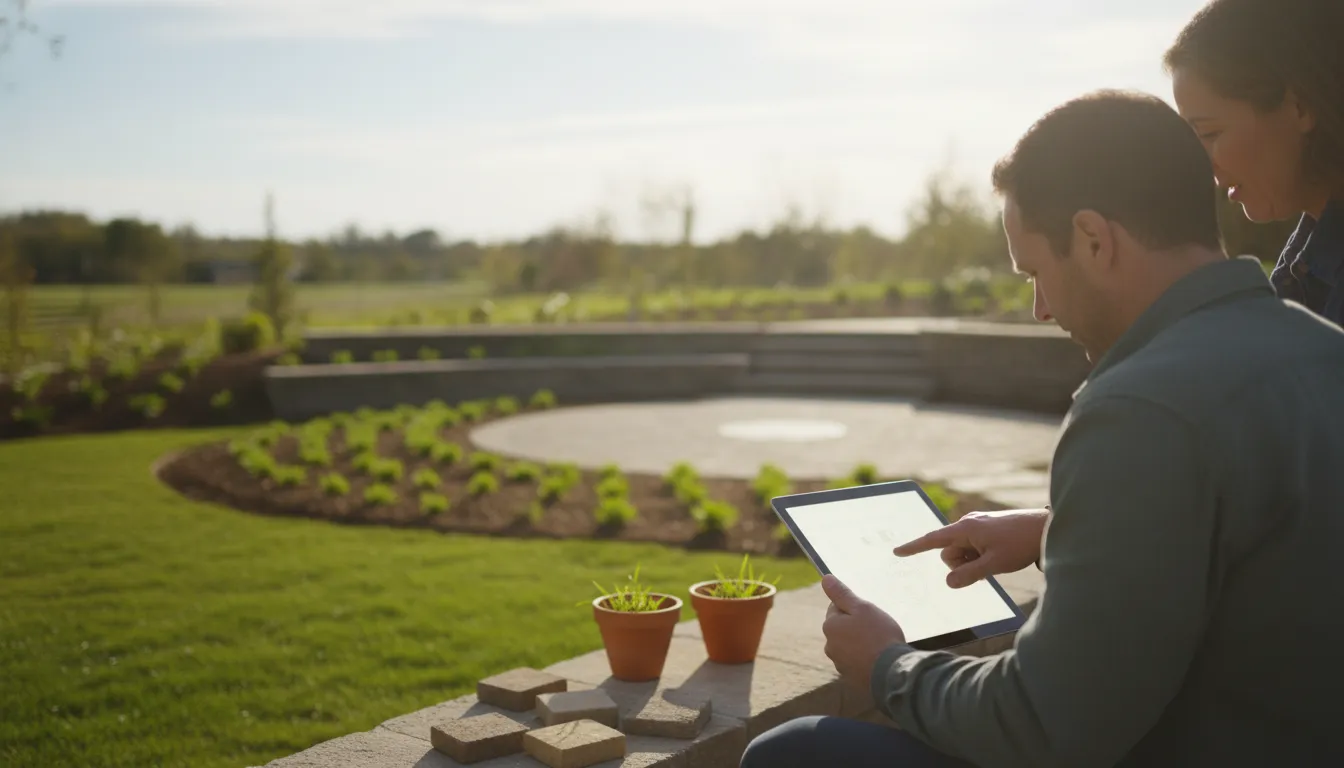
Find the Best Landscape Design Companies for Your Business
No obligation • Fast responses • Nationwide coverage

Why you can trust Landscape Atlas
Landscape Atlas is a leading United States resource for evaluating landscaping, lawn care, and outdoor service providers. Our team researches each category in depth, focusing on service quality, safety, and customer experience. Listings and rankings are based on independent criteria and user feedback, and companies cannot pay to influence our assessments or recommendations.
Search providers near you
Top Landscape Design Companies in Round Rock, Texas Ranked
Creating a beautiful and functional outdoor space in Round Rock requires a thoughtful approach that respects the unique Central Texas environment. Professional landscape design is the art and science of planning your yard to be both aesthetically pleasing and sustainable, addressing challenges like intense heat, clay soil, and water conservation. This guide will help you understand the key considerations for your property, from initial concepts to material selection, so you can effectively connect with local experts who can bring your vision to life.
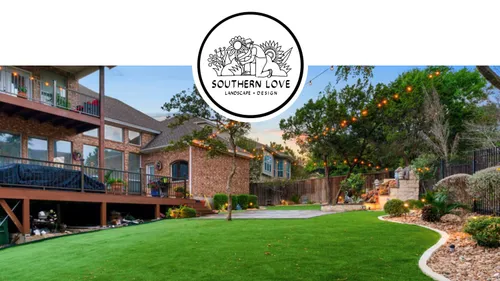
Southern Love Landscaping & Design
111 Congress Ave. Suite 400, Austin, TX 78701
Southern Love Landscaping & Design is a landscaping and outdoor living company based in Austin, TX. They offer a wide range of services including custom landscaping, fire pits, patios, sod installation, irrigation installation and repair, fence installation, retaining walls, and landscape lighting. The company serves Austin and nearby areas such as Cedar Park and Round Rock, providing tailored outdoor solutions that enhance both residential and commercial properties. Their expertise includes building durable retaining walls and designing functional irrigation systems to support healthy landscapes. Southern Love Landscaping & Design emphasizes personalized service and craftsmanship to meet client needs.
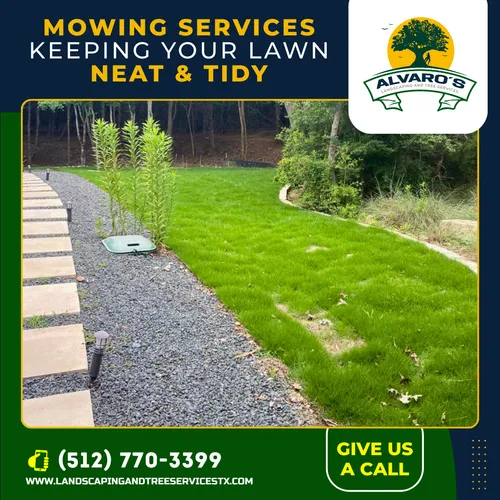
Alvaro’s Landscaping and Tree service
Austin, TX
Alvaro's Landscaping and Tree Service is a landscaping and tree care company based in Austin, TX. With over 15 years of experience, they offer a wide range of services including landscaping design, tree removal, stump grinding, lawn care, sod installation, sprinkler repair, and fence installation. Their team works with both residential and commercial properties, providing customized solutions to meet client needs. They are fully licensed and insured, prioritizing safety and customer satisfaction throughout each project.
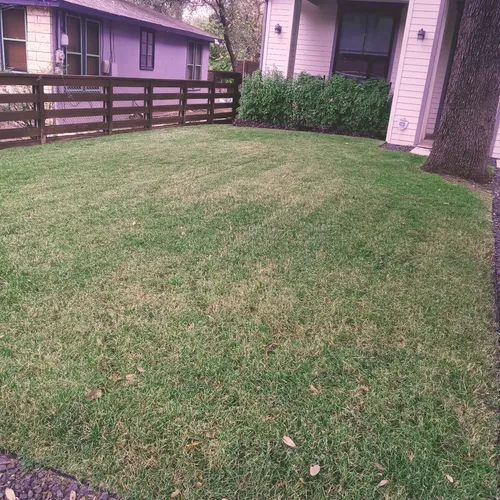
Lucio Gonzales Lawn Maintenance and Flower Bed Services
Austin, TX
Lucio Gonzales Lawn Maintenance and Flower Bed Services is a lawn care and landscaping company based in Austin, TX. They offer a variety of services including lawn mowing, fertilization, weed control, flower bed creation, and hardscaping such as stone pavers and patios. Founded by Lucio Gonzales, a U.S. Army Veteran with over a decade of experience and formal training in landscape professional principles, the company serves both residential and commercial properties. Their approach focuses on personalized service tailored to each customer's needs.
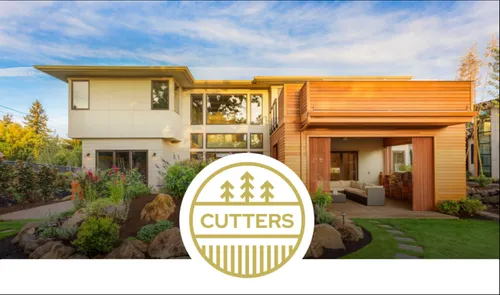
Cutters Landscaping
9600 Great Hills Trl Suite 150W, Austin, TX 78759
Cutters Landscaping is a landscaping company based in Austin, TX, offering services to both residential and commercial clients. Their expertise includes landscape design, hardscaping, decking, outdoor living spaces, and irrigation installation and repair. They focus on creating personalized outdoor environments that blend softscape and hardscape elements to enhance property aesthetics and functionality. The company emphasizes clear project coordination and client collaboration to meet individual preferences and budgets. Cutters Landscaping is known for its comprehensive approach to landscaping and irrigation services in the Austin area.
ABC Home & Commercial Services
9016 Old Manor Rd, Austin, TX 78724
ABC Home & Commercial Services offers a wide range of landscaping and outdoor improvement services in Austin, TX. Their team handles everything from lawn care, fertilization, and weed control to sod installation, fence building, landscape lighting, and tree services. They also specialize in hardscaping projects such as patios, retaining walls, and outdoor kitchens, and provide solutions for yard drainage and irrigation systems. ABC is a certified Belgard installer with decades of experience creating customized landscape designs that suit various styles and climates, including water-wise and drought-resistant options. They work closely with clients to develop and implement projects in stages if needed, and can perform work while homeowners are away for convenience.
Understanding Round Rock's Landscape Environment
A successful landscape plan in Round Rock begins with a deep understanding of the local climate and soil. The city experiences hot, dry summers and generally mild winters, which places a premium on drought tolerance and heat resistance for plant selections. This often leads homeowners toward xeriscaping principles, which focus on water-efficient gardening.
The soil presents another significant factor. Much of Round Rock sits atop rocky, alkaline clay, often referred to as caliche. This soil type drains poorly when wet and becomes extremely hard when dry, which can challenge plant roots and water management. Any comprehensive landscape plan must include strategies for soil amendment and proper drainage to ensure plant health and prevent erosion.
Finally, careful analysis of sun exposure across your property is crucial. Mapping out full sun, partial shade, and full shade areas throughout the day will directly guide which plants will thrive in each location, ensuring your garden remains vibrant with minimal intervention.
Core Principles of Residential Landscape Design
Effective outdoor planning applies fundamental design principles to create a cohesive and inviting space. These principles help organize the various elements of your yard into a unified whole.
- Unity & Harmony: This is achieved by repeating elements like plants, colors, or materials throughout the design. Using a consistent paver style or a limited palette of native plants can tie different areas of your yard together.
- Balance: Balance can be symmetrical (mirrored on either side of a central point) or asymmetrical (achieved with different elements of equal visual weight). It creates a sense of stability in the landscape.
- Rhythm & Movement: Rhythm is created through repetition, leading the eye through the space. A line of shrubs, a series of path lights, or a repeating ornamental grass can create a visual flow that connects your front yard to your backyard 1.
- Focal Points: Every great design has a focal point-an element that draws attention. This could be a specimen tree, a striking water feature, or an elegant pergola. Focal points anchor the design and provide visual interest 2.
Zoning Your Round Rock Property: Public, Private, and Service Areas
A functional landscape design typically divides a residential property into three distinct zones, each serving a different purpose.
The Public Area (Front Yard) The front yard is your home's public face, focused on curb appeal and creating a welcoming entry. Designs here often balance structured plantings with more naturalistic beds. In Round Rock, this is an ideal place to showcase drought-tolerant native wildflowers and adapted shrubs that provide color and texture with minimal water. A well-designed walkway and layered planting beds can guide visitors to your front door while managing stormwater runoff.
The Private Area (Backyard) The backyard is your personal retreat, designed for entertainment, relaxation, and family time. This zone often includes the most significant hardscape investments and personal amenities. Common features for Round Rock backyards include patios for gathering, shade structures like pergolas for relief from the sun, and outdoor kitchens to extend living and dining spaces outdoors 3. This area is where design truly tailors to your lifestyle.
The Service Area Often tucked away, the service area handles the practical needs of your property. This zone includes spaces for trash and recycling bins, storage sheds, air conditioning units, compost bins, and vegetable gardens. Good landscape planning screens these functional areas from view using fencing, lattice with vines, or strategic plantings, ensuring they are accessible but not intrusive to the overall beauty of your landscape.
Popular Hardscape and Feature Elements
Integrating non-living elements, or hardscaping, is essential for creating usable outdoor rooms. These features define spaces and add significant value and enjoyment.
- Patios & Pathways: The foundation of outdoor living. Materials must withstand Texas heat; popular choices include flagstone, textured concrete pavers, and locally sourced limestone. Patios serve as the primary gathering space, while pathways provide circulation and connect different zones.
- Shade Structures & Pergolas: Essential for comfort during Round Rock's long summers. A pergola, gazebo, or pavilion defines a space and provides a framework for shade cloth or climbing vines, creating a cooler microclimate.
- Outdoor Kitchens & Grilling Stations: Extending your home's functionality, these can range from a simple built-in grill station to a full kitchen with countertops, refrigeration, and sinks. They are a central feature for social gatherings.
- Fire Features: Fire pits or outdoor fireplaces extend the usability of your backyard into cooler evenings, creating a natural focal point for conversation and relaxation.
- Water Features: The sound of moving water from a fountain, pond, or waterfall adds a layer of tranquility to your garden, masks neighborhood noise, and can attract local wildlife.
- Lighting: Strategic landscape lighting enhances safety on paths and steps, highlights architectural and plant features, and allows you to enjoy your yard after sunset. Low-voltage LED systems are energy-efficient and offer various effects.
Find the perfect landscape design companies for your needs
Get personalized recommendations and expert advice
Plant Selection for Central Texas Success
Choosing the right plants is critical for a low-maintenance, thriving landscape in Round Rock. The goal is to work with the local environment, not against it.
Prioritize native plants and those adapted to the Texas Blackland Prairie region. These plants have evolved to handle the heat, drought, and soil conditions, requiring less water, fertilizer, and pest control. Resources like the Lady Bird Johnson Wildflower Center in Austin provide excellent guidance on suitable native species 4. Think about incorporating Texas sage, agarita, various native grasses, and a succession of wildflowers for year-round interest.
Always group plants with similar water and sun needs together (a concept called hydrozoning) to improve irrigation efficiency. Amending the native clay soil with generous amounts of compost at planting time is a non-negotiable step for most beds; it improves drainage, adds nutrients, and helps retain moisture 5.
Understanding Investment and Project Scope
The cost of a landscape design project in Round Rock varies dramatically based on size, complexity, and materials. It's helpful to think of the investment in phases.
Many design professionals charge a separate design fee, which can range from $500 for a basic plan to $3,000 or more for a comprehensive, detailed master plan. This fee is sometimes waived or rolled into the total cost if you proceed with the same company for installation.
Installation costs are broken down by element:
- Planting: Trees can range from $50 to $500+ each, while shrubs and perennials may cost $10 to $50 per plant, depending on size and variety.
- Hardscaping: Patio installation typically costs between $10 and $25 per square foot, influenced by material choice. Pathways can range from $8 to $20 per linear foot.
- Irrigation: Installing a new drip or sprinkler system for water efficiency can be a wise investment, with basic systems starting around $1,500 to $4,000 6.
A full landscape makeover that includes design, significant hardscaping, planting, and lighting can range from approximately $5,000 for a small, basic update to $30,000 or more for a complex design with high-end materials and multiple features like outdoor kitchens or custom water elements 7 8.
Frequently asked questions
Sources
Footnotes
-
What are the 7 Principles of Landscape Design? - https://hearnlandscape.com/what-are-the-7-principles-of-landscape-design/ ↩
-
Four Visual Tools of Landscape Design - Dargan Garden Design - https://dargan.com/2013/10/29/four-visual-tools-of-landscape-design/ ↩
-
Spruce Up Your Site: How to Plan a Residential Landscape Design - https://www.skh.com/blog/residential-landscape-design/ ↩
-
Round Rock Landscaping & Landscape Design Services - https://www.oakgrovelawnandlandscape.com/services/landscaping-design-installation-round-rock ↩
-
Soil Health in Your Yard - City of Round Rock - https://www.roundrocktexas.gov/water-spot/2025/07/soil-health-in-your-yard/ ↩
-
Stunning Landscape Design in Round Rock, TX - B&B Masonry - https://txlandscapingmasonry.com/2025/01/14/landscape-design-round-rock-tx/ ↩
-
Stunning Landscape Design in Round Rock, TX - B&B Masonry - https://txlandscapingmasonry.com/2025/01/14/landscape-design-round-rock-tx/ ↩
-
landscape design definition - https://www.toddhaimanlandscapedesign.com/blog/what-is-landscape-design ↩