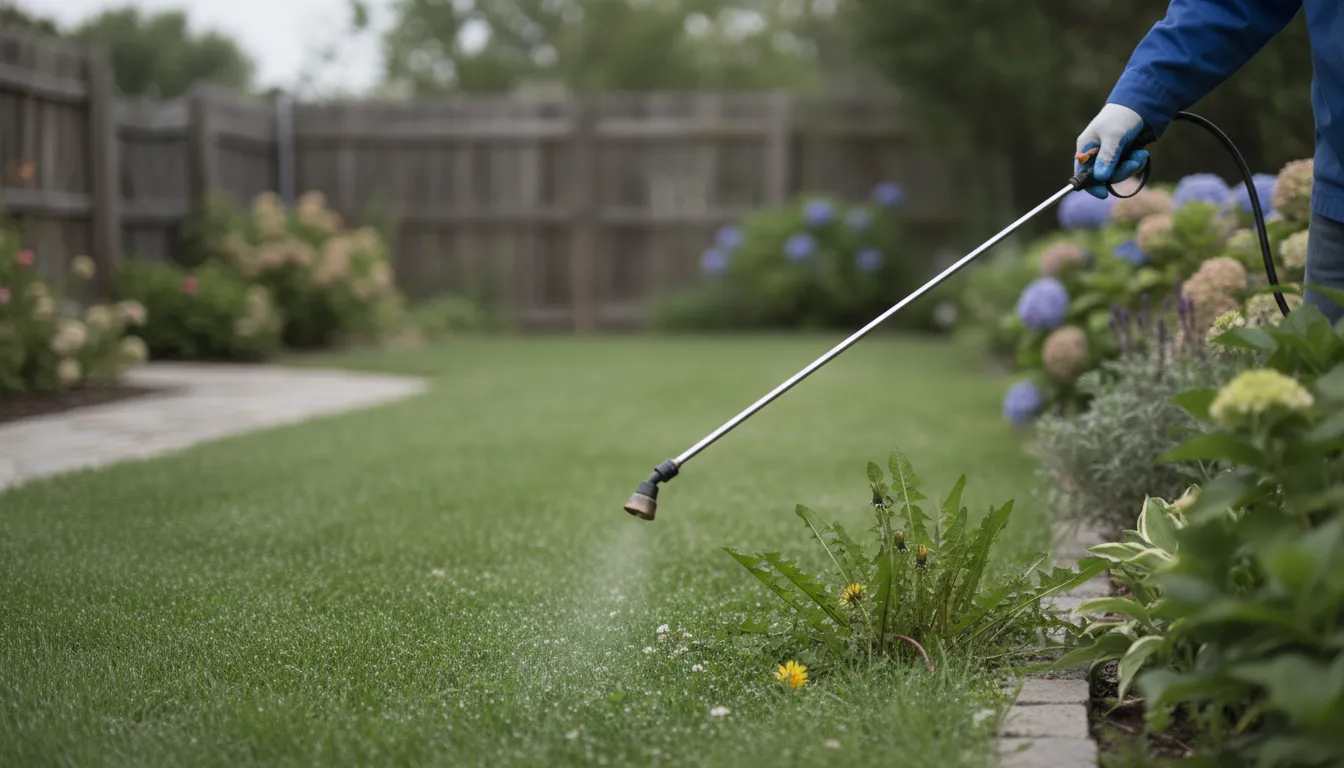
Find the Best Lawn Treatment Companies for Your Business
No obligation • Fast responses • Nationwide coverage

Why you can trust Landscape Atlas
Landscape Atlas is a leading United States resource for evaluating landscaping, lawn care, and outdoor service providers. Our team researches each category in depth, focusing on service quality, safety, and customer experience. Listings and rankings are based on independent criteria and user feedback, and companies cannot pay to influence our assessments or recommendations.
Search providers near you
Best Lawn Treatment Companies in Missouri Ranked
A healthy, vibrant lawn in Missouri is the result of a well-planned strategy for feeding your grass and managing unwanted weeds. Professional lawn fertilization and weed control services provide the expertise and targeted products needed to address the unique challenges of Missouri's climate and soil. This guide explains the essential practices, timing, and considerations for maintaining your lawn, helping you understand what local professionals can offer to achieve a thicker, greener, and more resilient yard.

Quality All-Care Lawn Services
13627 Martin Luther King Jr Ave, Bonner Springs, KS 66012
Quality All-Care Lawn Services is a locally owned lawn care company serving Kansas City, MO, and surrounding areas. They offer a comprehensive range of services including lawn fertilization, weed control, tree services, tree removal, stump grinding, and perimeter pest control. With over 40 years of experience, the company provides a one-stop solution for maintaining healthy lawns and yards. Their expertise includes pest control targeting common local pests such as chinch bugs and white grubs. Quality All-Care Lawn Services operates with a 100% satisfaction guarantee and no-contract approach.
Pro Outdoor - formerly Professional Irrigation Systems
12852 Maurer Industrial Dr, Sunset Hills, MO 63127
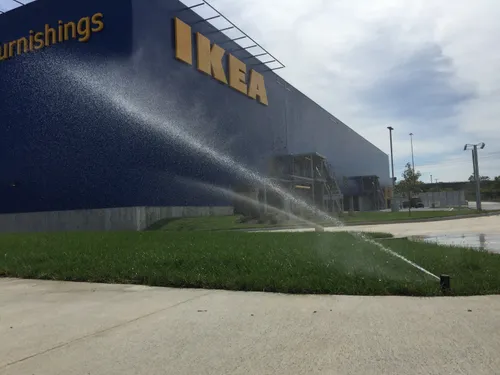
Pro Outdoor - formerly Professional Irrigation Systems, is a lawn care and irrigation company based in St Louis, MO. They provide lawn fertilization, weed control, sprinkler installation, and sprinkler repair services. Their irrigation memberships include regular maintenance and seasonal adjustments to keep systems efficient, while fertilization memberships offer year-round treatments for healthy, weed-free lawns. Pro Outdoor focuses on comprehensive outdoor care to maintain and enhance properties throughout the year.
B&L Tree and Lawn Services
Kansas City, MO
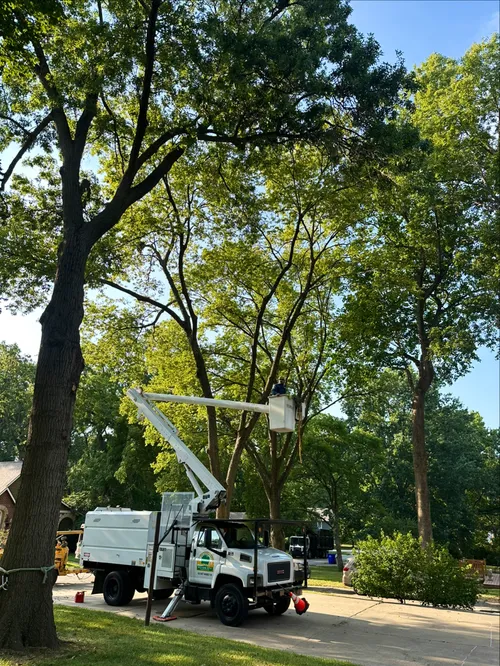
B&L Tree and Lawn Services is a family-owned and minority-owned business serving the Kansas City, MO metro area since 2023. They provide a wide range of tree and lawn care services including tree removal, tree trimming, stump grinding, lawn mowing, fertilization, weed control, and snow removal. The company uses state-of-the-line equipment to ensure safe and efficient service, with capabilities such as emergency tree removal and stump grinding. They offer 24-hour emergency services and same-day estimates to support urgent needs.
Mears Lawn & Landscape
6370 Carter Ave, Merriam, KS 66203
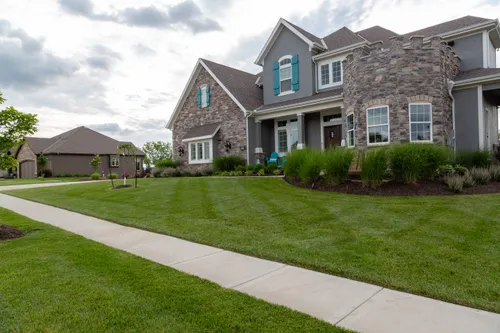
Mears Lawn & Landscape is a full-service lawn and landscape company based in Kansas City, MO. They offer a wide range of services including landscape design, construction, lawn maintenance, irrigation installation and repair, landscape lighting, drainage solutions, and hardscaping such as patios and retaining walls. Their team is certified and trained, providing expert craftsmanship and tailored solutions to enhance outdoor spaces. As a family-owned business, they emphasize honest recommendations and clear communication throughout each project. They serve Johnson County and surrounding areas.
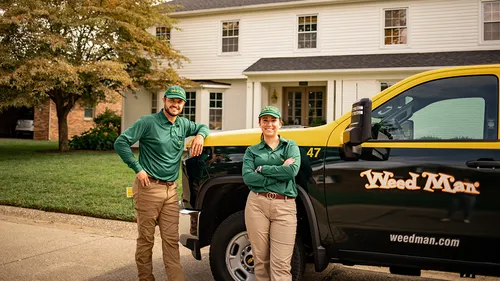
Weed Man
6620 Royal St, Pleasant Valley, MO 64068
Weed Man is a lawn care company based in Kansas City, MO, offering comprehensive lawn services including fertilization and weed control. They focus on creating healthy, attractive lawns and provide expert guidance to help customers maintain their outdoor spaces. The company serves the Kansas City area with a range of lawn care solutions designed to improve lawn health and appearance.
Understanding Missouri's Lawn Environment
Missouri's climate presents a distinct challenge for lawn care, straddling the transition zone between northern and southern growing regions. This means both cool-season and warm-season grasses can be grown, but each requires a different approach to fertilization and weed management. The state experiences hot, humid summers and cold winters, which influences weed pressure and grass growth cycles.
The foundation of any effective program is understanding your soil. A professional soil test is crucial, as it reveals pH levels and nutrient deficiencies common in Missouri soils. Many areas have acidic soil, requiring lime applications to raise the pH into the ideal range of 6.0 to 7.0 for optimal nutrient uptake. Without this balance, even the best fertilizer will be less effective.
The Essential Lawn Care Calendar for Missouri
Following a seasonal schedule is key to preventing problems and promoting deep root growth. Here's a breakdown of the critical tasks throughout the year.
Spring (Late March to May)
Spring awakening is the time for prevention and recovery. The first major step is applying a pre-emergent herbicide to stop crabgrass and other annual weeds before they germinate, typically when soil temperatures consistently reach 55°F. Products containing dithiopyr (Dimension) or pendimethalin (Pre-M) are commonly used. This is also an excellent time for a balanced, slow-release fertilizer application to kick-start green-up and recovery from winter. Any existing broadleaf weeds like dandelions can be spot-treated with post-emergent herbicides.
Summer (June to August)
Summer stresses lawns with heat and potential drought. The focus shifts to maintenance and careful intervention. For cool-season grasses like tall fescue, heavy fertilization should be avoided to prevent burnout. The priorities are:
- Mowing High: Keep blades sharp and mow at a higher setting (3-4 inches) to shade soil and conserve moisture.
- Deep Watering: Water infrequently but deeply to encourage deep roots.
- Spot Treatment: Only treat visible weeds as needed, being cautious with herbicides during high heat.
For warm-season grasses like zoysia, summer is the peak growing period, making it the prime time for fertilization.
Fall (September to November)
Fall is the most important season for lawn care in Missouri. Cool-season grasses recover from summer stress and build root reserves for the next year. Core aeration is highly recommended in early fall to relieve compaction and allow fertilizer, water, and air to reach the roots. Follow aeration with a balanced fertilizer application, aiming for 1 to 1.5 pounds of nitrogen per 1,000 square feet. Late September through October is also the ideal window for applying post-emergent herbicides for perennial broadleaf weeds like clover and ground ivy, as weeds are actively moving nutrients to their roots 1 2.
Late Fall / Winter (December to February)
A final, lighter fertilizer application in late fall (after the grass stops growing but before the ground freezes) can provide nutrients for root development and early spring green-up. This is also the time for planning, equipment maintenance, and reviewing the past season's results 3.
Find the perfect lawn treatment companies for your needs
Get personalized recommendations and expert advice
Key Products and Their Uses
Knowing what products professionals use and why can help you make informed decisions about your lawn's care.
- Slow-Release Nitrogen Fertilizers: These are preferred over quick-release formulas because they feed the lawn consistently over 6-8 weeks, reducing the risk of burn and promoting steady growth. They are often the core of a professional feeding program 4.
- Pre-Emergent Herbicides: As mentioned, these form a barrier in the soil to prevent weed seeds from sprouting. Timing is absolutely critical for their success.
- Post-Emergent Herbicides: These are used to kill existing weeds. They can be selective (targeting broadleaf plants but not grass) or non-selective (like glyphosate). Professionals choose the right product based on the weed type and the time of year 5.
- Soil Amendments: Beyond fertilizer, lime is frequently needed to correct soil acidity. Iron supplements can also be applied to enhance green color without promoting excessive growth 6.
Professional Services vs. DIY: Costs and Considerations
Many homeowners choose to hire a professional for lawn fertilization and weed control due to the expertise, proper equipment, and guaranteed results they provide.
Professional Service Costs:
- Monthly/Seasonal Plans: Comprehensive plans that include multiple fertilizer and weed control applications typically start around $45 or more per month.
- Per Application: For specific treatments like a broadleaf weed control application, costs can range from $50 to $125+.
- Large Properties: For acreage, full-service plans can range from $250 to $500 per acre 7 8.
DIY Approach: The DIY route requires an investment of time, knowledge, and equipment. Costs vary but expect to spend $20 to $50 for a bag of quality fertilizer or weed control product to cover a standard yard 9. The primary advantages are cost savings and direct control. The disadvantages include the potential for misapplication, improper timing, and the need to store and handle chemicals safely.
Best Practices for a Healthier Lawn
- Identify Your Grass Type: Tailor your entire program to whether you have cool-season (e.g., tall fescue, Kentucky bluegrass) or warm-season (e.g., zoysia, bermuda) grass 10.
- Test Your Soil Annually: Don't guess-test. A soil test from the University of Missouri Extension is an inexpensive way to get precise recommendations for lime and fertilizer 11 12.
- Read and Follow Label Instructions: This is non-negotiable for both safety and effectiveness. Labels specify application rates, proper timing, and environmental conditions (like temperature) for use 13 14.
- Mow Properly: Never remove more than one-third of the grass blade in a single mowing. Keep your mower blades sharp to create clean cuts that heal quickly.
- Water Wisely: Lawns need about 1 to 1.5 inches of water per week from rainfall or irrigation. Watering deeply and less frequently is far better than frequent, shallow watering.
Frequently asked questions
Sources
Footnotes
-
Spring Lawn Care in Missouri: Our Complete Guide - https://loyaltylawncare.com/spring-lawn-care-in-missouri-our-complete-guide/ ↩
-
A Complete Missouri Lawn Care Schedule - https://loyaltylawncare.com/missouri-lawn-care-schedule/ ↩
-
Month-By-Month Lawn Care Calendar For Missouri - https://www.gunterpest.com/news/missouri-lawn-care-schedule-for-a-greener-yard/ ↩
-
Cool-Season Grasses: Lawn Maintenance Calendar - MU Extension - https://extension.missouri.edu/publications/g6705 ↩
-
Lawn Maintenance Calendar - MU Extension - https://extension.missouri.edu/media/wysiwyg/Extensiondata/Pub/pdf/agguides/hort/g06705.pdf ↩
-
Fertilization for a Healthier Lawn - St. Louis, Missouri - https://lawnsystem.com/fertilization/ ↩
-
How Much Does TruGreen Cost? (2026) - HomeGuide - https://homeguide.com/costs/trugreen-cost ↩
-
Grass Seed Installation Cost: 7 Powerful Ways to Save 2025 - https://salcorplandscaping.com/grass-seed-installation-cost/ ↩
-
Managing Annual Weeds in Lawns // Missouri Environment ... - https://ipm.missouri.edu/meg/index.cfm?ID=47 ↩
-
Month-by-Month Lawn Care Calendar for Missouri - Lawn Love - https://lawnlove.com/blog/lawn-care-calendar-missouri/ ↩
-
Natural Lawn Care - MU Extension - University of Missouri - https://extension.missouri.edu/publications/g6749 ↩
-
Managing Lawns and Turfgrass - MU Extension - https://extension.missouri.edu/publications/mg10 ↩
-
MU Guide - MU Extension - https://extension.missouri.edu/media/wysiwyg/Extensiondata/Pub/pdf/agguides/hort/g06959.pdf ↩
-
MU Guide - Springfield, MO - https://www.springfieldmo.gov/DocumentCenter/View/15030/Home-Lawn-Weed-Control ↩