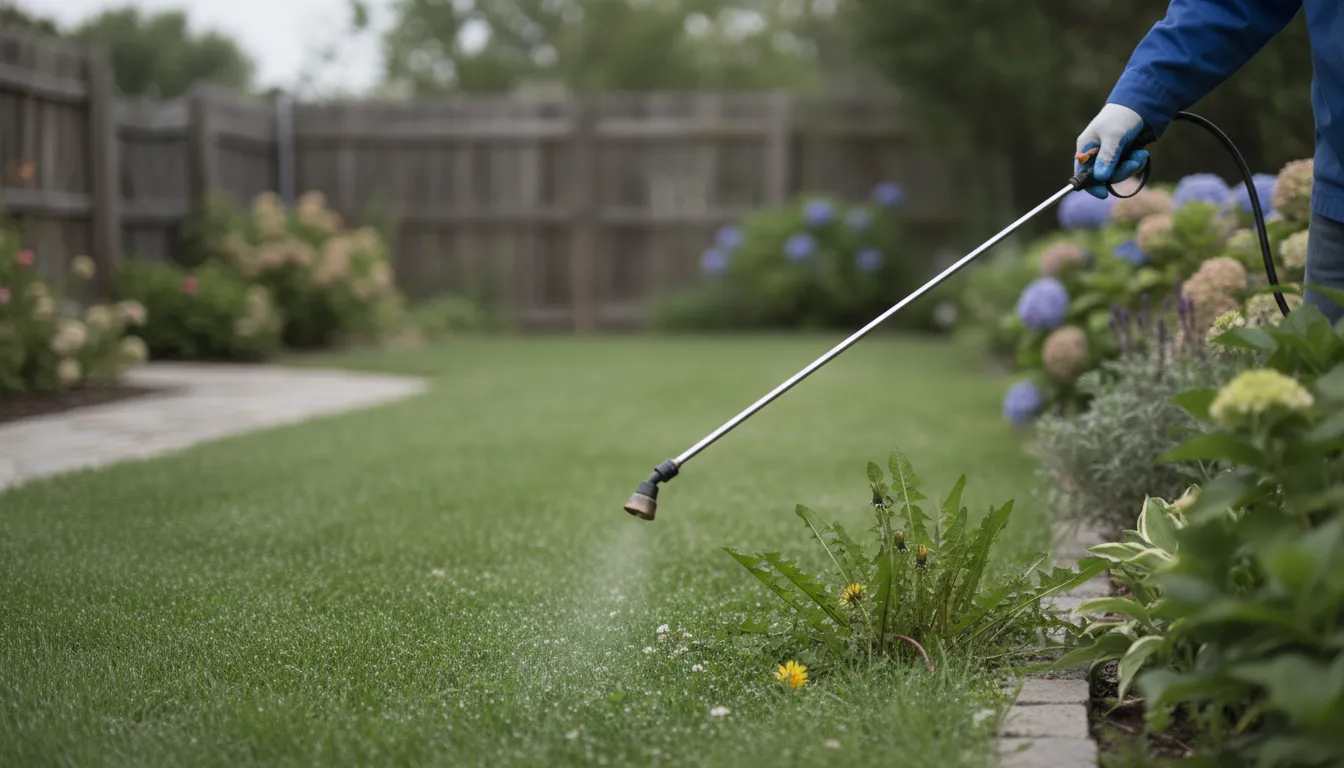
Find the Best Lawn Treatment Companies for Your Business
No obligation • Fast responses • Nationwide coverage

Why you can trust Landscape Atlas
Landscape Atlas is a leading United States resource for evaluating landscaping, lawn care, and outdoor service providers. Our team researches each category in depth, focusing on service quality, safety, and customer experience. Listings and rankings are based on independent criteria and user feedback, and companies cannot pay to influence our assessments or recommendations.
Search providers near you
Top Lawn Treatment Companies in Kansas City, Missouri Ranked
A healthy, vibrant lawn is more than just a green space; it's a key part of your home's curb appeal and a source of pride. Achieving that lush, weed-free turf in Kansas City requires a strategic approach to lawn fertilization and weed management, tailored to our region's specific climate and grass types. This guide explains the core principles of professional turf care, helping you understand the seasonal treatments and science behind effective programs so you can make informed decisions for your property.

Quality All-Care Lawn Services
13627 Martin Luther King Jr Ave, Bonner Springs, KS 66012
Quality All-Care Lawn Services is a locally owned lawn care company serving Kansas City, MO, and surrounding areas. They offer a comprehensive range of services including lawn fertilization, weed control, tree services, tree removal, stump grinding, and perimeter pest control. With over 40 years of experience, the company provides a one-stop solution for maintaining healthy lawns and yards. Their expertise includes pest control targeting common local pests such as chinch bugs and white grubs. Quality All-Care Lawn Services operates with a 100% satisfaction guarantee and no-contract approach.
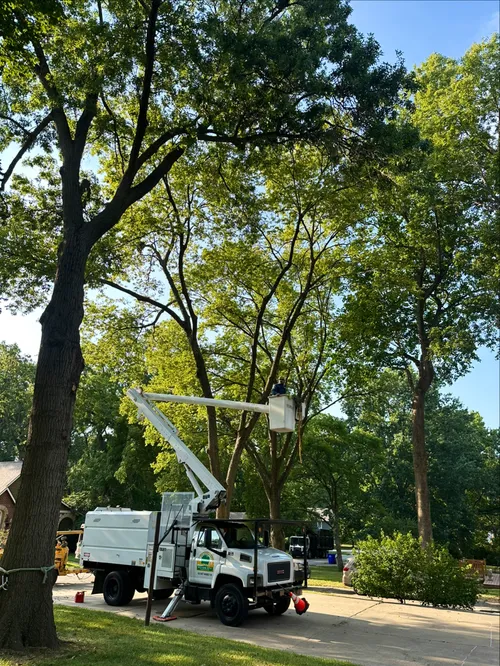
B&L Tree and Lawn Services
Kansas City, MO
B&L Tree and Lawn Services is a family-owned and minority-owned business serving the Kansas City, MO metro area since 2023. They provide a wide range of tree and lawn care services including tree removal, tree trimming, stump grinding, lawn mowing, fertilization, weed control, and snow removal. The company uses state-of-the-line equipment to ensure safe and efficient service, with capabilities such as emergency tree removal and stump grinding. They offer 24-hour emergency services and same-day estimates to support urgent needs.
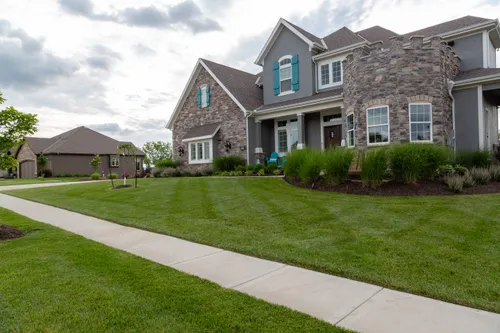
Mears Lawn & Landscape
6370 Carter Ave, Merriam, KS 66203
Mears Lawn & Landscape is a full-service lawn and landscape company based in Kansas City, MO. They offer a wide range of services including landscape design, construction, lawn maintenance, irrigation installation and repair, landscape lighting, drainage solutions, and hardscaping such as patios and retaining walls. Their team is certified and trained, providing expert craftsmanship and tailored solutions to enhance outdoor spaces. As a family-owned business, they emphasize honest recommendations and clear communication throughout each project. They serve Johnson County and surrounding areas.
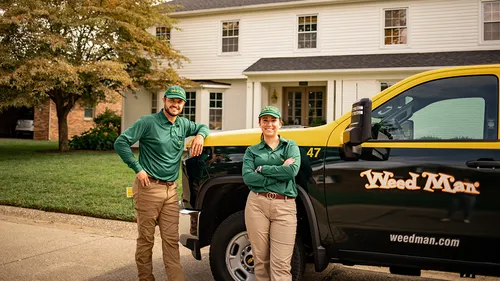
Weed Man
6620 Royal St, Pleasant Valley, MO 64068
Weed Man is a lawn care company based in Kansas City, MO, offering comprehensive lawn services including fertilization and weed control. They focus on creating healthy, attractive lawns and provide expert guidance to help customers maintain their outdoor spaces. The company serves the Kansas City area with a range of lawn care solutions designed to improve lawn health and appearance.

Heartland Turf and Landscape
5251 W 116th Pl Suite 200, Leawood, KS 66211
Heartland Turf and Landscape is a lawn care and landscaping company serving Kansas City, MO, and nearby areas. Since 2002, they have provided a range of services including weekly lawn mowing, lawn fertilization, weed control, pest control, core aeration, overseeding, mulch installation, and yard cleanup. Their approach focuses on long-term lawn health through tailored fertilization schedules and professional aeration techniques. The company also offers pest control services such as mosquito, flea, tick, and home barrier treatments to protect lawns and homes.
Understanding Kansas City's Lawn Environment
The foundation of any successful lawn care program is understanding what you're working with. In the Kansas City metro area, the vast majority of lawns are composed of cool-season grasses. The most common varieties include Tall Fescue and Kentucky Bluegrass 1. These grasses thrive in the cooler temperatures of spring and fall but can go dormant and struggle under the intense heat and potential drought of a Midwestern summer.
This climatic reality dictates the entire fertilization and weed control calendar. Cool-season grasses have two primary growth peaks: one in the spring and a more vigorous one in the fall. Fertilization schedules are designed to support these natural growth cycles, strengthening the grass to better compete with weeds and withstand environmental stress. Applying the right nutrients at the wrong time can be ineffective or even harmful, making a seasonally-aware approach essential.
The Core Components of a Professional Program
Professional lawn care services bundle several key practices into a cohesive plan. Here's what a typical lawn treatment program includes:
- Customized Fertilization: This isn't a one-size-fits-all approach. Programs use balanced, often slow-release fertilizers that provide a steady supply of essential nutrients-primarily nitrogen (N), phosphorus (P), and potassium (K). The formulation and timing are adjusted based on whether your lawn is cool-season or, less commonly, warm-season (like Bermuda or Zoysia).
- Pre-Emergent Weed Control: This is a proactive, preventative treatment applied to the soil in early spring. It forms a barrier that stops weed seeds (like crabgrass and other grassy weeds) from germinating and sprouting. Timing is critical; it must be applied before soil temperatures consistently reach 55°F.
- Post-Emergent Weed Control: This reactive treatment targets weeds that have already emerged and are visible in your lawn, such as dandelions, clover, and ground ivy. Selective herbicides are used to kill the broadleaf weeds without harming the desirable grass.
- Grub & Insect Control: Part of maintaining a healthy turf includes protecting it from subsurface pests. Grubs, the larvae of beetles, feed on grass roots and can cause significant damage. Effective programs often include a preventative grub control application.
The Seasonal Lawn Care Calendar for Kansas City
Following nature's rhythm is the secret to a great lawn. Here's a breakdown of the typical lawn care schedule for cool-season grasses in our area:
Early Spring (Late February - April)
This kick-off phase focuses on recovery and prevention. A balanced fertilizer application helps the grass green up after winter. The most critical task is the application of pre-emergent herbicide to create a barrier against crabgrass. This step is non-negotiable for a weed-free summer 2.
Late Spring (April - May)
As temperatures rise, broadleaf weeds become active. A post-emergent weed control application targets dandelions and clover. A follow-up fertilizer feeding provides nutrients to support strong leaf and root growth before the summer stress begins.
Summer (June - August)
The goal shifts from growth to preservation. Fertilizer applications during this period are lighter and designed to relieve heat stress, not spur excessive growth that strains the grass. Spot treatments for stubborn summer weeds like nutsedge are common. This is also the prime window for preventative grub control.
Fall (September - October)
This is the most important season for lawn care in Kansas City. Cool-season grasses enter their prime growing period. A high-nitrogen fertilizer application in early fall promotes deep root development, which is crucial for drought tolerance and winter survival. A second fall feeding and broadleaf weed control application often follow to further strengthen the lawn 3.
Late Fall (November)
The final application is a "winterizer." This heavy nitrogen feeding is absorbed and stored by the plant, providing the energy needed for a quicker green-up and stronger start the following spring 4.
Find the perfect lawn treatment companies for your needs
Get personalized recommendations and expert advice
Special Considerations for Weed Management
Weeds are more than an eyesore; they are competitors for water, sunlight, and soil nutrients. Effective management requires identifying the enemy:
- Broadleaf Weeds: Easily identifiable by their wide leaves (e.g., dandelion, clover, plantain). These are typically controlled with selective post-emergent herbicides5.
- Grassy Weeds: Look like grass but grow faster and in clumps (e.g., crabgrass, foxtail). Pre-emergent control in spring is the best defense6.
- Sedges: Often mistaken for grass, they have a triangular stem (e.g., yellow nutsedge). These require specific post-emergent treatments, usually in summer.
A dense, healthy lawn grown from proper fertilization is the best long-term defense against weeds, as it leaves little room for invaders to establish.
Understanding Service Options and Value
Many local providers offer comprehensive annual lawn care programs that bundle these seasonal steps-typically between 5 and 8 visits per year7 8. These programs are designed for convenience and consistent results, often with a guarantee. The cost for such a program for an average-sized lawn in Kansas City typically ranges from $300 to $600 annually9 10. Some companies also offer per-application services, which can range from $49 to $89 per visit, for homeowners who prefer a more à la carte approach9.
When evaluating services, look for providers who offer a free lawn analysis. A reputable professional will assess your grass type, soil condition, weed pressure, and sun exposure to create a customized plan, rather than offering a generic package. This personalized approach ensures your lawn gets exactly what it needs to thrive in the unique Kansas City climate.
Frequently asked questions
Sources
Footnotes
-
Turf Fertilization and Weed Control - TLC Nursery and Outdoor Living ↩
-
Flowers and Ornamental Grasses - When to Fertilize Your Lawn ↩
-
Lawn Fertilization- Kansas City, Omaha, Springfield, St Louis, Tulsa, ... - Ryan Lawn ↩
-
Turf Geeks: Lawn Fertilization & Weed Control in Liberty ... ↩ ↩2
-
How much does lawn care service cost? - Green Lawn Fertilizing ↩