Find the Best Lawn Treatment Companies for Your Business
No obligation • Fast responses • Nationwide coverage

Why you can trust Landscape Atlas
Landscape Atlas is a leading United States resource for evaluating landscaping, lawn care, and outdoor service providers. Our team researches each category in depth, focusing on service quality, safety, and customer experience. Listings and rankings are based on independent criteria and user feedback, and companies cannot pay to influence our assessments or recommendations.
Search providers near you
Top Lawn Treatment Companies in St Louis, Missouri Ranked
A healthy, vibrant lawn in St. Louis is the result of a consistent, science-backed program of fertilization and weed management. These services are essential for nurturing the cool-season grasses common to our region, suppressing invasive weeds, and building a turf that can withstand Missouri's variable climate. This guide outlines the key components of a professional lawn care program, helping you understand the seasonal strategies local experts use to cultivate resilient, beautiful grass.
Pro Outdoor - formerly Professional Irrigation Systems
12852 Maurer Industrial Dr, Sunset Hills, MO 63127
Pro Outdoor - formerly Professional Irrigation Systems, is a lawn care and irrigation company based in St Louis, MO. They provide lawn fertilization, weed control, sprinkler installation, and sprinkler repair services. Their irrigation memberships include regular maintenance and seasonal adjustments to keep systems efficient, while fertilization memberships offer year-round treatments for healthy, weed-free lawns. Pro Outdoor focuses on comprehensive outdoor care to maintain and enhance properties throughout the year.
Spring Green
12430 Tesson Ferry Rd, St. Louis, MO 63128
Spring Green is a locally owned lawn care and tree service company based in St. Louis, MO. Since 2009, they have provided tailored lawn care, pest control, and tree care services to St. Louis and nearby communities including Ballwin, Fenton, and Mehlville. Their offerings include core aeration, grub control, lime treatment, overseeding, and total lawn insect control, focusing on maintaining healthy lawns and landscapes. One notable capability is their expertise in weed control for common local weeds like dandelion and clover.
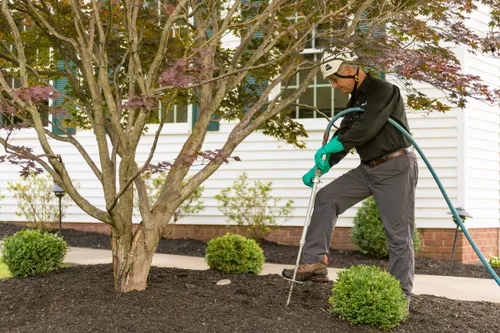
The Davey Tree Expert Company
6264 Lemay Ferry Rd, St. Louis, MO 63129
The Davey Tree Expert Company provides professional tree and lawn care services in St. Louis, MO. Their offerings include tree removal, trimming, pruning, fertilization, planting, and comprehensive plant health care. The company employs ISA Certified Arborists who use science-backed methods to address regional tree and plant challenges. Davey serves a wide range of communities around St. Louis, including Affton, Des Peres, and University City. With over 130 years of experience in tree pruning and care, they bring extensive expertise to their work.
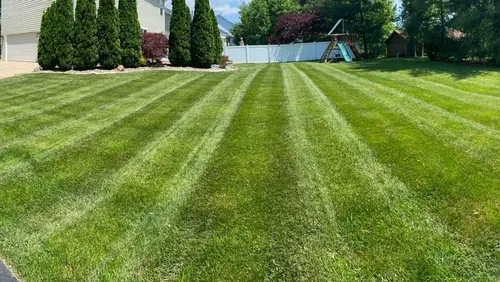
Kozeny's Lawn Service LLC
2717 Sedan Dr, St. Louis, MO 63125
Kozeny's Lawn Service LLC provides a range of lawn care and landscaping services in St Louis, MO, including lawn mowing, fertilization, weed control, aeration, overseeding, shrub trimming, and mulch installation. Serving Oakville and nearby communities such as Mehlville, Affton, South County St. Louis, Crestwood, Kirkwood, and Webster Groves, the company focuses on tailored lawn treatments to maintain healthy, vibrant outdoor spaces. Kozeny's Lawn Service is locally owned and licensed, offering professional care designed to enhance curb appeal and lawn health throughout the region.
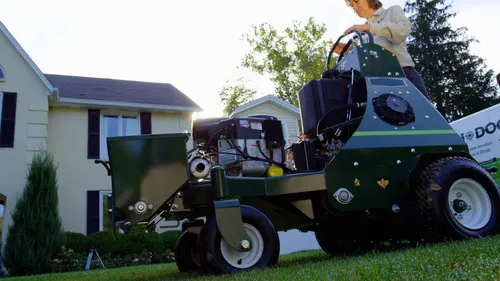
Lawn Doctor of Fenton-Wildwood-Oakville-Imperial
808 Marshall Rd, Valley Park, MO 63088
Lawn Doctor of Fenton-Wildwood-Oakville-Imperial provides lawn care and pest control services in St Louis, MO. They offer customized treatment plans based on a free lawn analysis to address specific lawn health needs. Their services include fertilization, pest control for various lawn pests, and annual lawn care programs designed to maintain healthy lawns throughout the year. The company serves multiple communities around St Louis, including Fenton, Wildwood, Oakville, and Imperial.
Understanding St. Louis Lawns: The Cool-Season Foundation
The success of any lawn feeding and weed suppression program starts with knowing what type of grass you're growing. St. Louis lawns are predominantly composed of cool-season grasses like Kentucky Bluegrass and Tall Fescue 1. These grasses thrive in the cooler temperatures of spring and fall, entering a period of stress or dormancy during the intense summer heat. This growth cycle dictates the entire annual schedule for nutrient application and pest control. A program designed for warm-season grasses would be ineffective here, making local expertise particularly valuable.
The Annual Program: A Seasonal Roadmap to Lawn Health
Professional lawn care in St. Louis isn't a one-time event; it's a series of timed interventions that address the lawn's changing needs throughout the year. Most comprehensive programs involve between four to seven visits, each with a specific goal.
Early Spring (March - April): The Pre-Emergent Foundation
The first critical application of the year targets crabgrass and other grassy weeds before they even appear. A pre-emergent herbicide is applied, forming a barrier in the soil that prevents weed seeds from germinating. This step is often combined with a balanced fertilizer to give the grass a strong, green start as it exits winter dormancy. Early broadleaf weed control for plants like dandelions may also begin at this time.
Late Spring to Early Summer (May - June): Growth and Correction
As temperatures rise, a slow-release fertilizer application provides steady nutrients without causing excessive, weak growth. This phase often includes post-emergent weed control to tackle any broadleaf weeds that have emerged, such as clover and plantain. Some treatments may include iron supplements for a deeper green color without excessive growth.
Summer (July - August): Stress Management
The focus shifts to helping the lawn survive summer stress. Fertilizers used during this period are often specially formulated to be heat-tolerant. Weed control continues as needed, and this is also a prime time for pest control applications, targeting surface insects like chinch bugs and subsurface threats like white grubs 2 3.
Late Summer to Early Fall (September - October): Recovery and Renewal
This is arguably the most important season for lawn health in St. Louis. As temperatures cool, grass roots become active again. Core aeration-pulling small plugs of soil from the lawn-relieves compaction and allows air, water, and nutrients to reach the root zone. This is the ideal time for overseeding to introduce new grass seed and fill in thin or bare areas. An organic-based fertilizer is often applied to replenish the soil and support recovery.
Late Fall (November): The Crucial Winterizer
The final application of the year is a winterizer fertilizer. High in potassium, this feeding strengthens grass roots for the winter months, improving cold tolerance and ensuring a healthier, quicker green-up the following spring 4. A lime application may also be recommended if a soil test indicates the soil is too acidic.
Find the perfect lawn treatment companies for your needs
Get personalized recommendations and expert advice
Core Services in a Lawn Care Program
When evaluating providers, you'll hear specific terms for the treatments they offer. Understanding these will help you compare programs.
- Pre-Emergent Weed Control: This is a preventative treatment. It does not kill existing weeds but creates a barrier to stop new weed seeds (primarily crabgrass) from sprouting. Timing is absolutely critical for effectiveness 5 6.
- Post-Emergent Weed Control: This is a curative treatment designed to eliminate weeds that are already visible in the lawn, such as dandelions, clover, and ground ivy. Different herbicides are used for broadleaf weeds versus grassy weeds.
- Slow-Release Fertilization: Unlike quick-release fertilizers that can cause a rapid flush of growth, slow-release formulas feed the lawn gradually over several weeks. This promotes steadier, stronger growth and reduces the risk of nutrient runoff or burn 7 8.
- Core Aeration & Overseeding: These are vital cultural practices. Aeration alleviates soil compaction, a common problem in St. Louis yards. Overseeding immediately after aeration introduces new, robust grass plants to thicken the turf, which is nature's best defense against weeds 9 10.
Investment and Program Considerations
The cost for a professional lawn feeding and weed management program in St. Louis varies based on the size of your lawn, the number of applications, and the specific services included. Basic annual fertilization and weed control programs for a typical yard often range from approximately $300 to $600 11 12. Individual weed control visits may range from $50 to $100 per application 11. It's important to get detailed quotes that outline exactly what is included in each visit throughout the season.
When choosing a provider, look for companies that offer transparent program outlines, use high-quality products, and employ licensed applicators. Don't hesitate to ask about their approach to soil health, their specific timing for pre-emergent applications, and how they tailor their program for different grass types and sun/shade conditions.
Frequently asked questions
Sources
Footnotes
-
Lawn Care in St. Louis, MO | 6,000+ 5-Star Reviews - https://www.getsunday.com/local-guide/lawn-care-in-st-louis-mo ↩
-
St. Louis Lawn Fertilization and Weed Control - https://www.dowcoinc.com/lawn-fertilization-and-weed-control ↩
-
Lawn Fertilizing And Weed Control Services - St. Louis - Irreco - https://www.irreco.com/lawn-fertilization-and-weed-control/ ↩
-
Lawn Care Service: Lawn Fertilization & Weed Control - https://mmlawnandland.com/lawn-landscape-services/lawn-fertilization-and-weed-control/ ↩
-
St. Louis Lawn Care - Kapp's Green Lawn - https://kappslawn.com/location/st-louis-mo/lawn-care/ ↩
-
Lawn Fertilization | Weed Control | Frontenac MO - https://completelawncareinc.com/fertilization ↩
-
Fertilization for a Healthier Lawn - St. Louis, Missouri - https://lawnsystem.com/fertilization/ ↩
-
Fertilization & Weed Control - Lawn Masters - https://www.lawnmastersstlouis.com/fertilization-weed-control/ ↩
-
Lawn Maintenance Calendar - MU Extension - https://extension.missouri.edu/media/wysiwyg/Extensiondata/Pub/pdf/agguides/hort/g06705.pdf ↩
-
Lawn Care for St. Louis Weed Control EBook - Dowco Enterprises - https://www.dowcoinc.com/hubfs/St._Louis_Lawn_Care_Weed_Control_EBook.pdf ↩
-
How much does lawn care service cost? - Green Lawn Fertilizing - https://www.greenlawnfertilizing.com/blog/how-much-does-lawn-care-service-cost ↩ ↩2
-
St. Louis Lawn Care - Ryan Lawn | STL Lawn Maintenance Services - https://ryanlawn.com/st-louis-lawn-care/ ↩