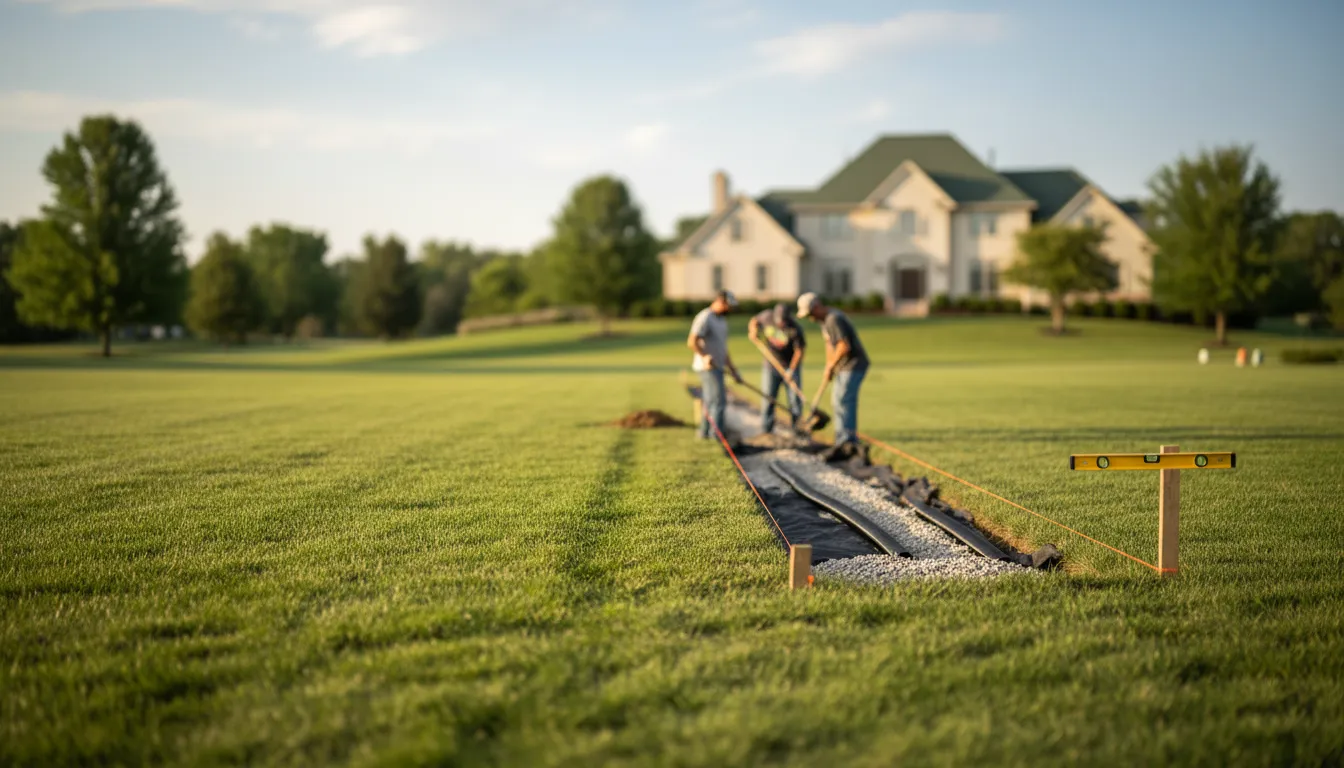
Find the Best Yard Drainage Contractors for Your Business
No obligation • Fast responses • Nationwide coverage

Why you can trust Landscape Atlas
Landscape Atlas is a leading United States resource for evaluating landscaping, lawn care, and outdoor service providers. Our team researches each category in depth, focusing on service quality, safety, and customer experience. Listings and rankings are based on independent criteria and user feedback, and companies cannot pay to influence our assessments or recommendations.
Search providers near you
Best Yard Drainage Contractors in California Ranked
Proper yard drainage and grading is essential for protecting your California home from water damage, soil erosion, and foundation problems. It involves shaping the land to direct water away from structures and managing runoff sustainably. This guide explains the key principles, climate-specific solutions, and regulatory considerations for effective drainage in California, helping you understand your options and connect with qualified local professionals for your project.
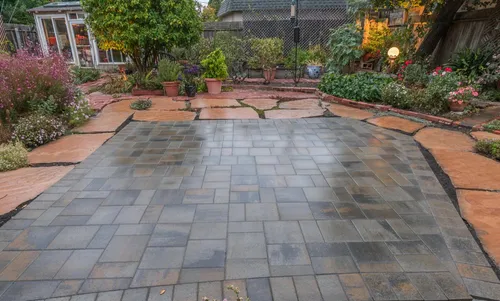
Ideal Landscape & Concrete
921 N Amphlett Blvd, San Mateo, CA 94401
Ideal Landscape & Concrete is a landscape and hardscape construction company based in San Jose, CA. Founded in 1981, they offer a range of services including fence installation, landscape lighting, yard drainage, sprinkler system installation and repair, landscaping, and hardscaping such as pavers and retaining walls. They also specialize in irrigation system installation and maintenance to support water conservation in the drought-prone Bay Area. Their capabilities include concrete and masonry construction, as well as erosion control and low-voltage lighting installation.
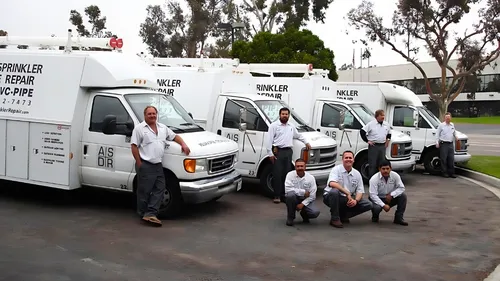
Advanced Sprinkler & Drainage Repair
San Diego, CA
Advanced Sprinkler & Drainage Repair is a San Diego, CA company specializing in sprinkler installation, repair, yard drainage, grading, and outdoor lighting. With over 40 years of experience, they handle irrigation system leaks, electrical issues, low water pressure, and other sprinkler malfunctions using commercial-grade materials. Their fully stocked trucks allow them to complete most repairs in one visit, ensuring efficient service for residential properties. They also provide drainage system solutions and erosion control to maintain healthy lawns and gardens.
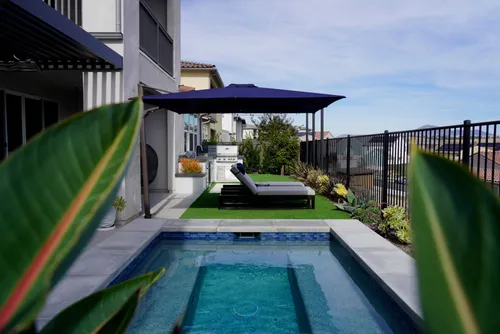
Modern Yardz Landscaping San Diego
8133 Engineer Rd, San Diego, CA 92111
Modern Yardz Landscaping San Diego is a landscaping company based in San Diego, CA, offering a wide range of services including landscape design, artificial turf installation, outdoor lighting, yard drainage, sprinkler installation and repair, hardscaping with pavers and retaining walls, and general landscaping. They provide a collaborative design process featuring 2D and 3D renderings to help clients visualize their projects before installation. The company emphasizes sustainable landscaping options such as drought-tolerant plants and efficient irrigation systems. With decades of experience, Modern Yardz caters to projects of all sizes, from small enhancements to major outdoor transformations.
Droughtscape
Angeles Crest Hwy, La Cañada Flintridge, CA 91011
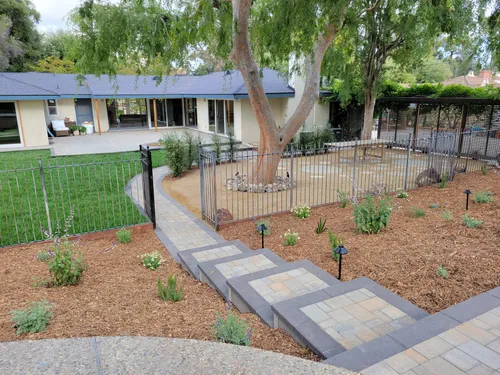
Droughtscape is a landscaping and outdoor construction company based in Los Angeles, CA. With over 45 years of experience, they specialize in drought and fire-resistant landscape design and installation, hardscaping, irrigation, fencing, artificial turf, and more. Their services cover a wide range of outdoor improvements including interlocking pavers, decks, pergolas, retaining walls, and yard drainage. Droughtscape serves multiple neighborhoods in the Los Angeles area, focusing on water-saving and sustainable landscaping solutions that suit various home styles. They emphasize clear communication and quality craftsmanship to provide a smooth project experience.
SYNLawn Sacramento
3920 W Capitol Ave #160, West Sacramento, CA 95691
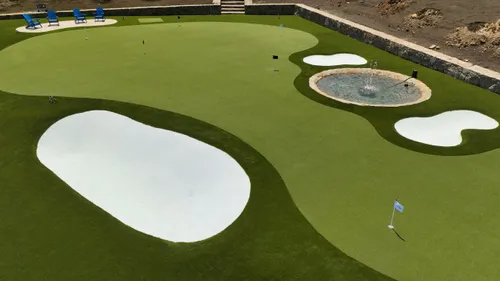
SYNLawn Sacramento specializes in artificial turf installation, landscaping, yard drainage, and grading services in Sacramento, CA. They offer synthetic grass solutions designed to maintain vibrant color and durability through heat and drought, featuring HeatBlock™ technology to reduce surface temperatures. Their turf is suitable for residential and commercial properties, providing low-maintenance, eco-friendly landscaping that reduces water use and eliminates the need for mowing and chemical fertilizers. SYNLawn Sacramento customizes each installation to fit various yard shapes and traffic levels, ensuring proper drainage and long-lasting performance. The company provides a limited lifetime warranty on materials and workmanship and supports customers with certified installation teams.
Effective water management on your property is not just about moving water away; it's about doing so intelligently to protect your investment and conserve a precious resource. In California, this is governed by a blend of building codes, stormwater regulations, and best practices that emphasize managing water at its source.
Core Principles of Proper Drainage
The fundamental goal of any drainage plan is to protect your home's foundation. California guidelines specify that soil should be graded to slope away from the foundation a minimum of 6 inches within the first 10 feet1. For impervious surfaces like driveways and patios, a slope of at least 2% (or 2 feet per 100 feet) is required to ensure runoff flows away from the building2 3.
When simple grading isn't possible due to property layout or physical barriers, alternative systems like drains or swales must be implemented. The overarching philosophy in modern California practice is Low Impact Development (LID), which focuses on keeping stormwater on-site to reduce runoff, filter pollutants, and recharge groundwater. This means solutions often integrate natural absorption and filtration, not just rapid removal.
California-Specific Challenges & Solutions
California's diverse climates demand tailored drainage strategies. A one-size-fits-all approach can be ineffective or even counterproductive.
- Drought-Prone & Inland Areas: Here, the focus shifts from mere water disposal to water retention and recharge. Techniques like rain gardens, bioswales, and dry wells are encouraged. These features capture runoff, allow it to percolate into the soil, and support native planting, turning a drainage necessity into a landscape asset that conserves water.
- Wildfire-Prone Regions: Properties in or near wildland-urban interfaces face a unique threat: post-fire erosion and mudslides. Proper grading and reinforced drainage channels are critical to safely direct heavy rainwater away from the home and prevent catastrophic erosion after vegetation has been lost.
- Coastal & High Rainfall Zones: Areas with higher water tables or intense seasonal storms require more robust systems. Solutions often include subsurface French drains, catch basins, and solid pipe conveyance to handle larger volumes of water and prevent saturation of the soil around foundations.
Common Drainage & Grading Systems
Understanding the tools available helps in planning an effective solution. Systems are often used in combination.
- Regrading & Swales: The most basic solution involves reshaping the earth to create positive slope. A swale is a broad, shallow, vegetated channel that gently directs surface water along a desired path. It's a natural and often low-cost option for managing sheet flow4.
- Subsurface Drains (French Drains): A French drain is a gravel-filled trench containing a perforated pipe. It collects groundwater and subsurface water, channeling it away from problem areas. It's ideal for yards with persistent soggy spots or where surface grading is insufficient.
- Surface Capture Systems: For concentrated runoff from downspouts, driveways, or walkways, catch basins (grated inlets) and channel drains (trench drains) are used. They collect surface water and connect to a pipe system to carry it to a safe discharge point 5.
- Permeable Pavements: Replacing traditional concrete or asphalt with permeable pavers, porous concrete, or gravel grids allows rainwater to soak directly into the ground below. This significantly reduces runoff from patios, driveways, and walkways.
- Rain Gardens & Bioswales (LID): These are landscaped depressions designed to capture, filter, and absorb runoff. Planted with native, water-tolerant plants, they are a cornerstone of California's sustainable stormwater approach, removing pollutants while adding beauty.
Find the perfect yard drainage contractors for your needs
Get personalized recommendations and expert advice
Navigating Local Regulations
Drainage work in California often requires awareness of local rules. Regulations can vary by city and county, but they generally enforce the state's emphasis on source control and LID. For instance, some municipalities have specific guidelines for grading permits, especially for significant earthmoving. Others have strict requirements for managing stormwater runoff from new hardscapes. Before starting a project, it's wise to consult your local city or county public works or building department to understand any permit requirements or design standards you must follow 6.
Project Considerations & Investment
The scope and cost of a drainage project vary dramatically based on size, complexity, and site conditions.
- Basic Regrading: A professional regrading job to correct slope around a foundation can range from $500 to $2,000 or more, depending on the yard size and amount of soil moved.
- Installed Drain Systems: A professionally installed French drain typically costs between $1,000 and $3,000+ per run. More complex systems involving multiple catch basins and solid piping can range from $1,500 to $4,000+.
- Sustainable LID Features: Permeable paving is a significant investment, often costing $10 to $25+ per square foot installed. A designed and planted rain garden may range from $500 to $2,000+, influenced by size and plant selection7 8.
While DIY grading or simple swale creation is possible for the handy homeowner (costing in the hundreds for materials/rentals), most systems involving pipes, basins, or significant earthwork benefit from professional design and installation to ensure they function correctly and comply with any local guidelines.
Planning Your Project
A successful drainage project starts with a clear assessment. Identify where water pools, how it flows during a storm, and where it causes issues. Consider your local climate challenges-whether it's drought, fire, or heavy rain. Review the principles of LID and think about how you might incorporate water-saving features. Finally, use this understanding to seek out experienced professionals in your area who can provide a site-specific diagnosis and a plan that protects your home, manages runoff responsibly, and potentially enhances your landscape.
Frequently asked questions
Sources
Footnotes
-
OC Development Services - Site Grading for drainage around building policy ↩
-
California Water Boards - Guidance for Stormwater and Dry Weather Runoff - CAPTURE ↩
-
California Water Boards - Residential Stormwater Management ↩
-
LA County Public Works - Stormwater Best Management Practice Handbook ↩
-
Schmitt Waterproofing - How to Grade a Yard: Step-by-Step Guide for Proper Drainage ↩