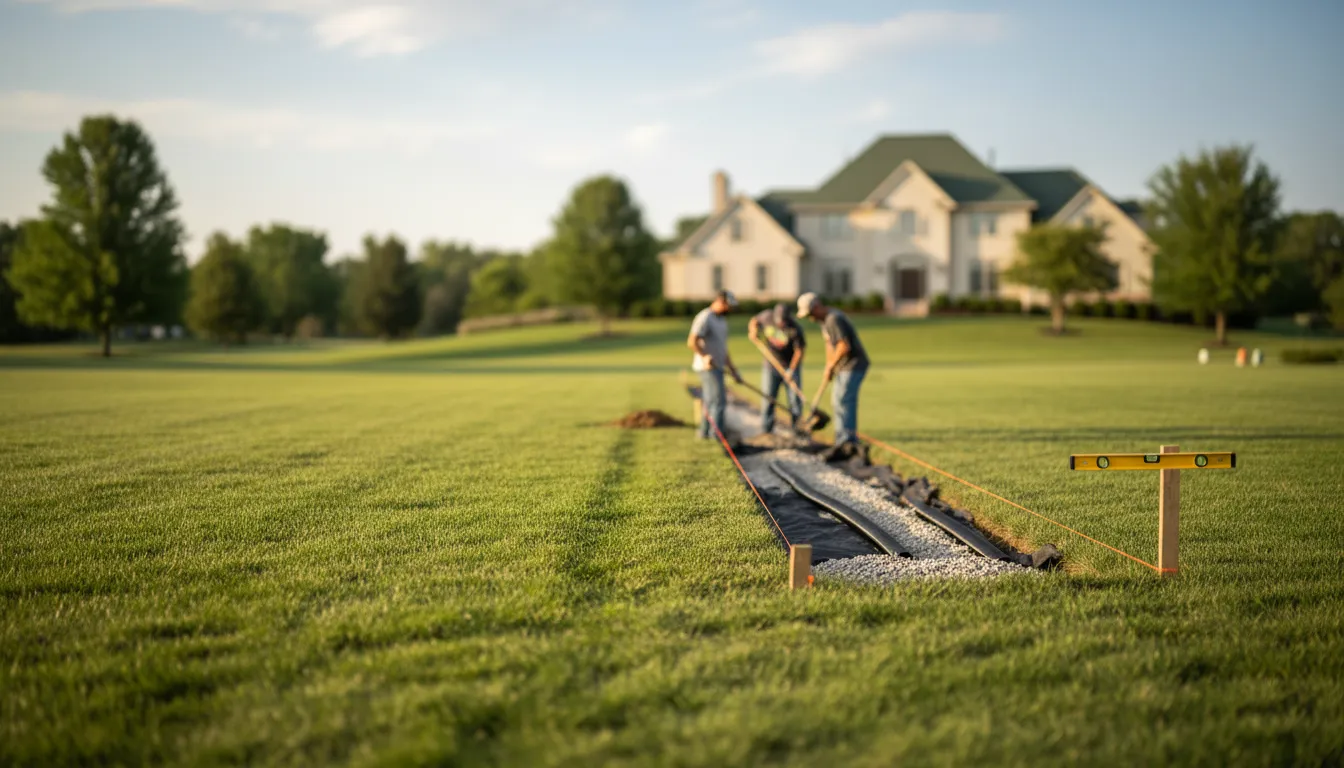
Find the Best Yard Drainage Contractors for Your Business
No obligation • Fast responses • Nationwide coverage

Why you can trust Landscape Atlas
Landscape Atlas is a leading United States resource for evaluating landscaping, lawn care, and outdoor service providers. Our team researches each category in depth, focusing on service quality, safety, and customer experience. Listings and rankings are based on independent criteria and user feedback, and companies cannot pay to influence our assessments or recommendations.
Search providers near you
Top Yard Drainage Contractors in San Francisco, California Ranked
Effective yard drainage and grading are essential for protecting your San Francisco property from water damage, soil erosion, and foundation issues. The city's unique microclimates and hilly terrain can create significant runoff challenges, making proper water management a critical component of landscape health and home maintenance. This guide explores the core principles of residential drainage solutions, from identifying problems to implementing effective systems like rain gardens and French drains, helping you connect with the right expertise to safeguard your home.
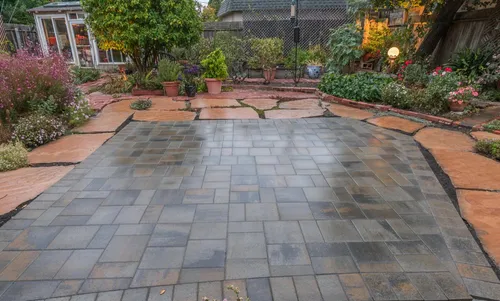
Ideal Landscape & Concrete
921 N Amphlett Blvd, San Mateo, CA 94401
Ideal Landscape & Concrete is a landscape and hardscape construction company based in San Jose, CA. Founded in 1981, they offer a range of services including fence installation, landscape lighting, yard drainage, sprinkler system installation and repair, landscaping, and hardscaping such as pavers and retaining walls. They also specialize in irrigation system installation and maintenance to support water conservation in the drought-prone Bay Area. Their capabilities include concrete and masonry construction, as well as erosion control and low-voltage lighting installation.
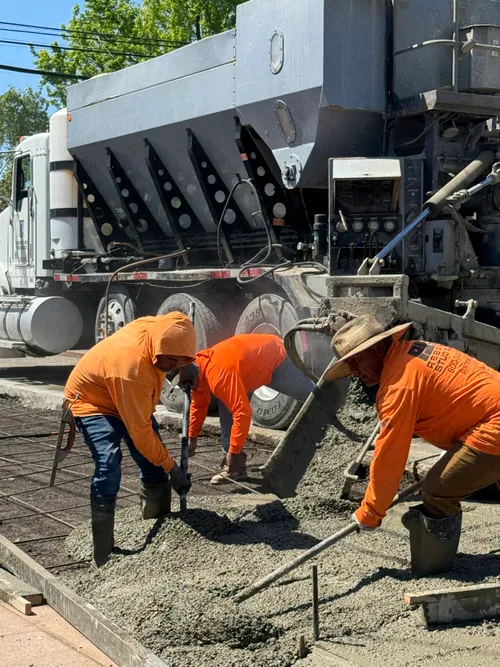
Lamata Concrete
San Francisco, CA
Lamata Concrete is a San Francisco, CA-based company with over 35 years of experience specializing in concrete foundation and flatwork solutions. They offer services for residential and small commercial projects, including driveways, patios, walkways, retaining walls, foundations, and drainage systems. Their expertise in local soil conditions supports durable and stable installations. Lamata Concrete also handles commercial work such as sidewalks, curbs, gutters, stairs, and ADA-compliant ramps.

Atlas Tree Service Inc.
150 Medburn St, Concord, CA 94520
Atlas Tree Service Inc. is a tree and landscape specialist serving Oakland, CA, and the surrounding Northern California area. Established in 1962, the company offers a wide range of services including tree removal, pruning, stump grinding, land clearing, and landscape design. They have a large fleet equipped with cranes and bucket trucks to handle large tree demolition and installation. Atlas Tree Service also provides grading, drainage system installation, and concrete and paving services. The company operates 24/7, offering emergency tree services at any time.
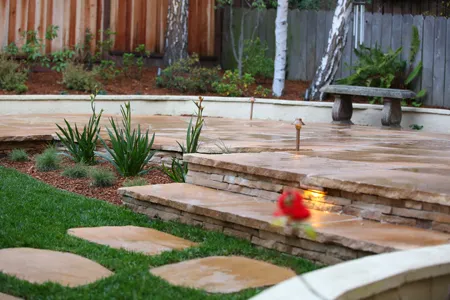
Jenn's Gardening
Fremont, CA
Jenn's Gardening is a full-service landscaping company based in Fremont, CA, serving the Peninsula area. Since 1993, owner Jennifer France and her team have provided a wide range of services including lawn mowing, fertilization, weed control, sod installation, irrigation system installation and repair, tree pruning and removal, hardscaping with pavers and retaining walls, and yard drainage solutions. They specialize in water-wise irrigation systems and use environmentally safe methods for disease and pest control to maintain healthy, attractive gardens. Jenn's Gardening combines decades of experience with personalized care to create functional and beautiful outdoor spaces.
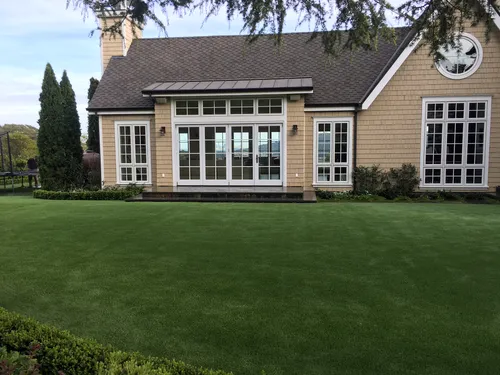
Onelawn
16120 Ashland Ave, San Lorenzo, CA 94580
Onelawn is a synthetic turf installation and landscape design company serving San Jose, CA, and the greater Bay Area. Since 2008, they have specialized in artificial grass installation for residential lawns, commercial properties, playgrounds, pet areas, putting greens, bocce courts, and rooftop landscaping. Their expertise includes using high-quality, US-made synthetic fibers and advanced installation techniques to create durable, low-maintenance lawns that conserve water and reduce environmental impact. Onelawn works closely with clients to design customized outdoor spaces that combine aesthetic appeal with practical benefits.
Understanding San Francisco's Drainage Challenges
San Francisco's landscape presents a distinct set of challenges for property owners. Steep slopes in neighborhoods like Twin Peaks or Pacific Heights can accelerate runoff, leading to erosion and downslope flooding. Conversely, flat areas in the Sunset or Mission districts may experience persistent pooling because the dense, clay-heavy soil common in the Bay Area has poor natural infiltration. Combined with seasonal heavy rains, these factors mean that without a proper drainage plan, water can seep into basements, damage foundations, saturate lawns, and create slippery, hazardous conditions.
The city also encourages sustainable water management through its Stormwater Management Ordinance. Implementing approved solutions doesn't just solve a property issue-it can also qualify you for credits on your sewer bill from the San Francisco Public Utilities Commission (SFPUC). This makes investing in good drainage both a protective measure and a potential financial benefit.
Core Principles of Effective Drainage Systems
The goal of any drainage or grading project is to control the flow of surface water and subsurface water. The key principles are to capture, convey, and infiltrate runoff safely.
- Capture: Intercept water at its source before it causes problems. This includes using gutters, downspouts, and catch basins.
- Convey: Move water away from vulnerable areas like your home's foundation using slopes (grading), channels, or underground pipes.
- Infiltrate: Allow water to soak into the ground on your property where it is safe to do so, replenishing groundwater and reducing the burden on the municipal sewer system.
A successful system often combines these principles. For example, you might capture roof runoff with a gutter, convey it via a downspout to a rain barrel (for later irrigation use), and then overflow from the barrel into a rain garden designed to infiltrate any excess water.
Common Residential Drainage Solutions
A variety of techniques are used by Bay Area professionals to manage water. The best solution depends on your specific site conditions, budget, and goals.
Surface Solutions (Green Infrastructure)
These methods manage water at the surface and are often integrated into the landscape design.
- Rain Gardens & Bioretention Cells: These are shallow, landscaped depressions filled with amended, porous soil and planted with water-tolerant native plants. They are designed to capture runoff from roofs or driveways, allowing it to pool and slowly infiltrate into the ground while filtering pollutants. They are an attractive, eco-friendly solution for managing moderate volumes of water.
- Swales & Dry Creek Beds: Swales are broad, shallow, vegetated channels that direct water along a desired path, slowing it down to encourage infiltration. Dry creek beds are a more aesthetic version, using stone and gravel to create a natural-looking streambed that handles water flow during storms while serving as a landscape feature during dry periods.
- Permeable Pavement: This includes special pavers, porous concrete, or gravel systems that allow water to pass through the surface into a stone reservoir below, where it slowly infiltrates into the soil. Replacing impervious surfaces like concrete patios with permeable options can significantly reduce runoff from your property.
- Rain Barrels and Cisterns: These systems collect water from your roof downspouts, storing it for later use in irrigation. They are a simple way to reduce runoff volume and conserve water. Disconnecting your downspout from the sewer and directing it to a barrel is a fundamental first step in sustainable drainage 1.
Subsurface and Structural Solutions
These solutions are designed to handle larger volumes of water or to protect specific areas like foundations.
- French Drains: A French drain is a gravel-filled trench containing a perforated pipe. It is designed to intercept subsurface or surface water and redirect it safely away from an area, such as along a foundation wall or from a low spot in a yard. They are highly effective for moving significant water but involve more extensive excavation.
- Catch Basins and Channel Drains: Catch basins are in-ground containers with grates that collect surface water, connecting to an underground pipe system to carry it away. Channel drains are long, narrow grates often used across driveways or patios to intercept sheet flow.
- Grading and Recontouring: This is the process of reshaping the land's surface to create gentle slopes (typically a 2% slope away from foundations is recommended) that direct water toward desired drainage points or infiltration areas. Proper grading is often the most critical first step in solving drainage issues 2.
Find the perfect yard drainage contractors for your needs
Get personalized recommendations and expert advice
The Process: From Assessment to Maintenance
Implementing an effective drainage plan is a multi-step process.
- Assessment and Diagnosis: A professional starts by identifying the source of water (e.g., roof runoff, hillside seepage, neighbor's property) and the symptoms (e.g., pooling, erosion, basement dampness). They will examine soil type, slope, and existing structures during a site evaluation.
- Design and Planning: Based on the assessment, a plan is created. This may combine several solutions-for instance, regrading a slope, installing a catch basin at a low point, and using a French drain to pipe water to a safe discharge area or rain garden 3. For larger projects, permits from the San Francisco Department of Building Inspection may be required.
- Installation: This is the construction phase. It can involve excavation for grading or trenches, installing pipes and basins, building rain garden beds with specific soil mixes, laying permeable pavers, or planting water-appropriate vegetation.
- Maintenance: All drainage systems require upkeep to function properly. This includes cleaning debris from gutter screens and catch basin grates, checking for pipe blockages, refreshing mulch in rain gardens, and ensuring downspouts and barrels are clear 4. An annual check, especially before the rainy season, is advisable.
Cost Considerations for Drainage Work
Costs for drainage and grading solutions in San Francisco vary dramatically based on the complexity, materials, and labor involved. Simple, do-it-yourself projects like installing a rain barrel may cost a few hundred dollars for a basic kit 5 6. A professionally installed small rain garden might range from $500 to $2,000 for materials and labor 5.
More intensive solutions carry higher price tags. Permeable paving can cost $10 to $30 or more per square foot for materials 7. Subsurface systems like French drains or complex catch basin networks are labor-intensive, often ranging from $1,000 for a simple run to $10,000 or more for extensive systems dealing with significant water volumes or difficult access 8 9. Professional grading projects are highly variable but typically start in the thousands of dollars and can reach into the tens of thousands for major recontouring on a sloped lot 8.
It's important to view these costs as an investment in protecting your property's value and preventing far more expensive repairs from water damage.
Leveraging Local Resources and Expertise
San Francisco offers resources for homeowners. The SFPUC's Stormwater Credit Program is a key incentive, providing financial credits on your wastewater bill for installing approved green infrastructure like rain gardens, permeable pavement, and cisterns. Checking their website for current program details and eligibility is highly recommended.
For implementation, seek out local landscapers and contractors who specialize in drainage solutions and hardscaping for the Bay Area. They will be familiar with local soil conditions, permitting processes, and the specific challenges of hillside properties. Look for firms with experience in sustainable, "Low-Impact Development" (LID) techniques, as this expertise aligns with both effective water management and potential city incentives 10 11.
Frequently asked questions
Sources
Footnotes
-
10 Things You Can Do to Prevent Stormwater Runoff Pollution - https://www.farmington-ct.org/departments/engineering/stormwater/10-things-to-prevent-stormwater-pollution ↩
-
Control Heavy Runoff - Solving Drainage and Erosion Problems - https://www.fairfaxcounty.gov/soil-water-conservation/drainage-problem-control-runoff ↩
-
Best Drainage Fixes for Sloped Bay Area Yards - R & J Landscaping - https://www.randjlandscaping.net/landscaping-articles/best-drainage-fixes-sloped-bay-area-yards ↩
-
What A Well Maintained Drainage System Has - Gardeners' Guild - https://www.gardenersguild.com/check-4-basics-of-landscape-drainage-for-rainy-season ↩
-
Green Infrastructure for Homes - https://www.sfpuc.gov/sites/default/files/programs/grants/SFPUC_GIGrantsforHomes_Maintenance_Guidebook.pdf ↩ ↩2
-
A Homeowner Guide to Backyard Drainage Solutions - https://tamuradesigns.com/backyard-drainage-solutions/ ↩
-
Hardscaping for San Francisco Landscapes - https://tamatelandscaping.com/hardscaping-for-san-francisco-landscapes/ ↩
-
Grading & Drainage | Serving The San Francisco Bay Area - https://techconcorp.com/services/drainage/ ↩ ↩2
-
Drainage Solutions for the Bay Area - Diamond Certified - https://www.diamondcertified.org/drainage-solutions-bay-area/ ↩
-
Guidance for Stormwater and Dry Weather Runoff - owp.csus.edu - https://www.owp.csus.edu/research/papers/stormwater/SWRCB-Schools-LID-2018-rev-12-20-2018-final.pdf ↩
-
Bay Area Homeowner's Guide to Drainage Systems | Kiwi Pavers - https://kiwipaversinc.com/homeowners-guide-bay-area-drainage-systems/ ↩