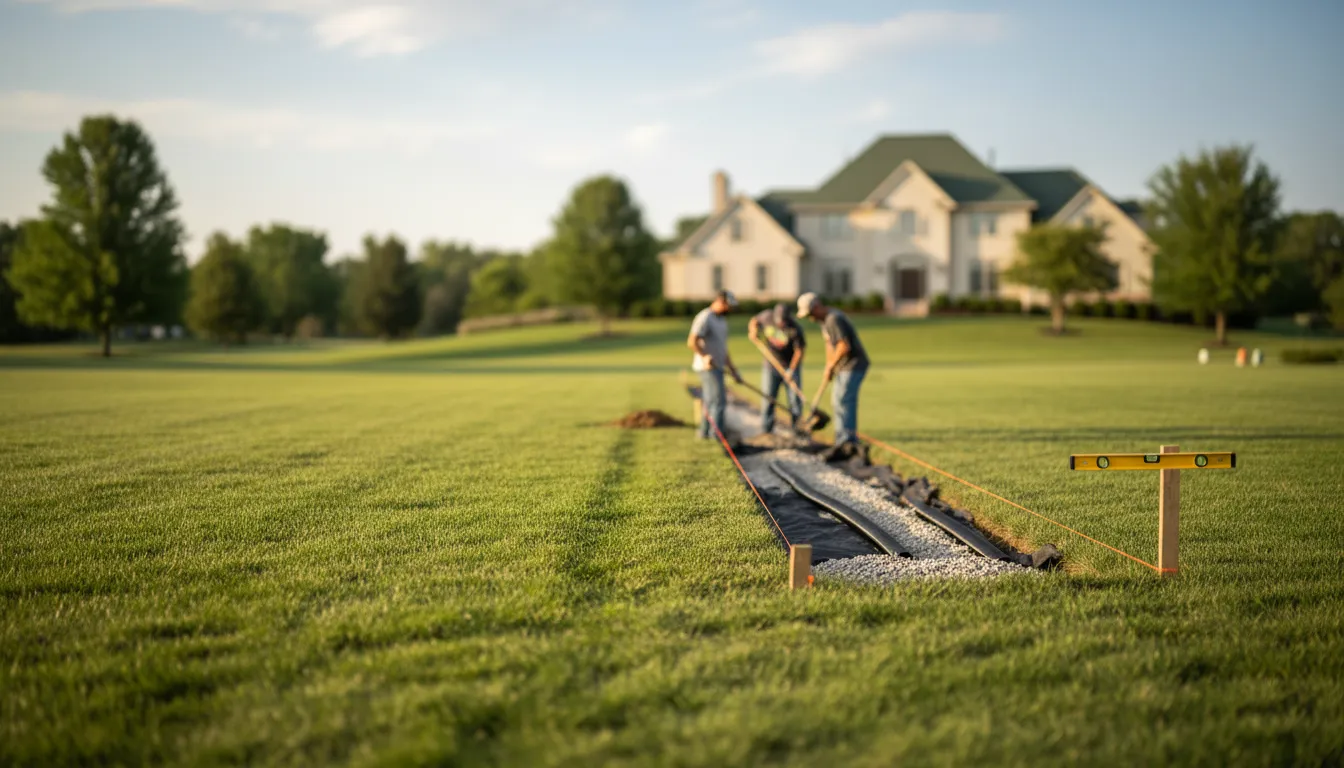
Find the Best Yard Drainage Contractors for Your Business
No obligation • Fast responses • Nationwide coverage

Why you can trust Landscape Atlas
Landscape Atlas is a leading United States resource for evaluating landscaping, lawn care, and outdoor service providers. Our team researches each category in depth, focusing on service quality, safety, and customer experience. Listings and rankings are based on independent criteria and user feedback, and companies cannot pay to influence our assessments or recommendations.
Search providers near you
Top Yard Drainage Contractors in Chula Vista, California Ranked
Proper yard drainage and grading are essential for protecting your Chula Vista home from water damage, soil erosion, and foundation issues. Effective water management involves reshaping your landscape to direct runoff away from structures and installing systems to capture and redirect excess water. This guide will help you understand the key solutions-from simple grading to complex drainage systems-and how to find qualified local professionals to assess and solve your property's unique water flow challenges.
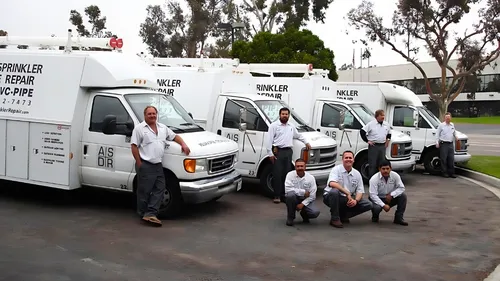
Advanced Sprinkler & Drainage Repair
San Diego, CA
Advanced Sprinkler & Drainage Repair is a San Diego, CA company specializing in sprinkler installation, repair, yard drainage, grading, and outdoor lighting. With over 40 years of experience, they handle irrigation system leaks, electrical issues, low water pressure, and other sprinkler malfunctions using commercial-grade materials. Their fully stocked trucks allow them to complete most repairs in one visit, ensuring efficient service for residential properties. They also provide drainage system solutions and erosion control to maintain healthy lawns and gardens.
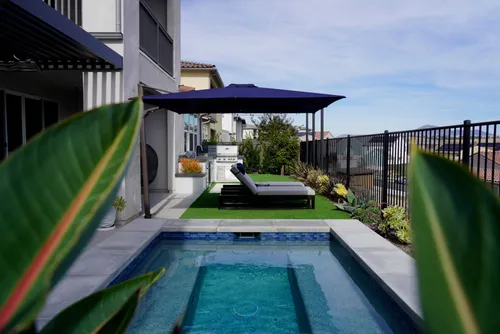
Modern Yardz Landscaping San Diego
8133 Engineer Rd, San Diego, CA 92111
Modern Yardz Landscaping San Diego is a landscaping company based in San Diego, CA, offering a wide range of services including landscape design, artificial turf installation, outdoor lighting, yard drainage, sprinkler installation and repair, hardscaping with pavers and retaining walls, and general landscaping. They provide a collaborative design process featuring 2D and 3D renderings to help clients visualize their projects before installation. The company emphasizes sustainable landscaping options such as drought-tolerant plants and efficient irrigation systems. With decades of experience, Modern Yardz caters to projects of all sizes, from small enhancements to major outdoor transformations.
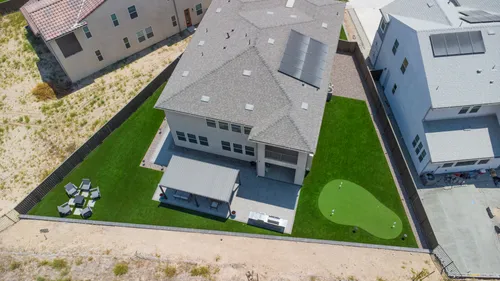
Eternal Turf and Pavers
601 11th Ave #2403, San Diego, CA 92101
Eternal Turf and Pavers is a landscaping company based in San Diego, CA, specializing in artificial turf installation, landscape design, hardscaping, and yard drainage solutions. They offer a range of services including premium turf installation, paver and concrete work, retaining walls, outdoor living spaces, and irrigation systems. Their team is skilled in creating custom outdoor environments, such as putting greens and stylish patios, tailored to client needs. Known for efficient project completion and attention to detail, Eternal Turf and Pavers manages everything from design and HOA approvals to final installation. The company is recognized for its quality craftsmanship and customer-focused approach.
ARC Design Landscape
10911 Wheatlands Ave Ste F, Santee, CA 92071
ARC Design Landscape is a landscape design and installation company based in San Diego, CA. They offer a wide range of services including landscape design with 3D renderings, artificial turf installation, hardscaping with pavers and retaining walls, outdoor lighting, water features, and outdoor kitchens. Their team works closely with clients to create customized outdoor living spaces that fit their lifestyle and design preferences. ARC Design Landscape serves many cities throughout San Diego County and provides detailed design consultations and site evaluations to ensure each project meets client goals. They also specialize in pet-friendly turf installations and support local animal charities through their ARC 4Pets program.
United Turf & Pavers
2426 Fourth Ave #407, San Diego, CA 92101
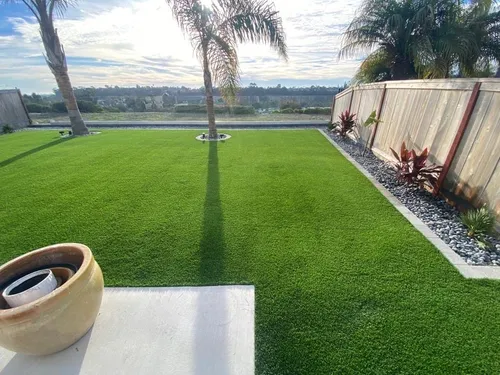
United Turf & Pavers is a landscaping and outdoor remodeling company based in San Diego, CA. They offer a range of services including artificial turf installation, landscape lighting, yard drainage and grading, hardscaping with pavers and retaining walls, and full backyard remodels. Their work includes installing pet-friendly and putting green turf, outdoor kitchens, fire features, and pergolas. The company uses premium materials and licensed crews to complete most projects within a few days, backed by a lifetime warranty. They serve all neighborhoods in San Diego County and provide flexible financing options.
Why Proper Drainage is Critical for Chula Vista Properties
Living in Chula Vista means enjoying a beautiful climate, but it also involves managing seasonal rain. Without a proper plan, water can pool around your home's foundation, lead to basement or crawl space flooding, damage landscaping, and create soggy, unusable areas in your yard. Implementing correct land grading and installing appropriate drainage systems are not just about curb appeal; they are vital investments in your property's structural integrity and value. The City of Chula Vista has a comprehensive Drainage Master Plan to manage municipal water flow, but managing on-site residential drainage is a homeowner's responsibility.
Core Solutions for Water Management
Several proven methods exist to control surface water and subsurface moisture. The right solution depends on your property's slope, soil composition, and the specific problem areas.
Regrading Your Landscape
Grading is the process of reshaping the soil's contour to create a slope that directs water away from your home. The standard recommendation is a minimum 5% slope (a 6-inch drop) for at least the first 10 feet from your foundation. This is often the first and most crucial step, as it addresses surface water flow at its source. Regrading can solve many minor pooling issues and is a fundamental part of any comprehensive drainage strategy.
Subsurface Drainage Systems
When grading alone isn't enough, or for dealing with persistent soggy ground, subsurface systems are installed.
- French Drains: A classic and highly effective solution, a French drain involves digging a trench, laying a perforated pipe, and filling it with gravel. It's designed to intercept and redirect groundwater and surface seepage, making it ideal for chronically wet areas or for channeling water from downspouts away from the house.
- Catch Basins and Trench Drains: These are grated inlets installed at low points or along surfaces like driveways and patios to collect large volumes of surface water. They connect to solid piping that carries the water to a safe discharge point, such as a street gutter or dry well.
- Dry Wells: An underground pit filled with gravel, a dry well acts as a dispersal chamber for collected water, allowing it to slowly percolate back into the surrounding soil. They are often used as a termination point for downspout or catch basin lines.
Sustainable Water Absorption Features
For a more ecological approach that also enhances your garden, consider these features:
- Rain Gardens: These are shallow, landscaped depressions planted with native, water-tolerant plants. They are designed to temporarily hold and absorb runoff from roofs and paved areas, filtering pollutants and recharging groundwater. They can be a beautiful and functional component of a drainage plan.
The Professional Installation Process: From Assessment to Finish
Tackling a drainage project involves a series of logical steps to ensure a lasting solution.
- Site Assessment: A professional will identify problem areas, trace water flow paths during a rain event, and evaluate your soil type. This diagnosis is critical for a correct design.
- System Design: Based on the assessment, a plan is sketched outlining the necessary grading adjustments, pipe runs, basin placements, and discharge points. This plan considers the overall landscape and integrates solutions seamlessly.
- Permitting: While minor grading and drainage work often don't require permits, significant earthmoving or connections to public storm sewers might. A reputable contractor will check with the City of Chula Vista's Engineering Department to secure any necessary permits 1.
- Installation: This phase includes excavation, installing pipes and basins, regrading and compacting soil, adding gravel bedding, backfilling trenches, and final landscaping like sod or planting in a rain garden.
- Maintenance: A well-designed system requires minimal upkeep, primarily involving keeping drain grates and the ends of pipes clear of leaves, soil, and debris to ensure unobstructed water flow.
Find the perfect yard drainage contractors for your needs
Get personalized recommendations and expert advice
Understanding Project Investment
The cost of drainage and grading work varies widely based on the project's scale, complexity, and whether you handle it yourself or hire a professional.
- DIY Solutions: Simple regrading with added topsoil might cost $50-$200 for materials. A DIY French drain kit for a 50-foot run typically ranges from $100 to $400 for pipes, gravel, and fabric.
- Professional Minor Grading: For correcting the slope around a foundation, homeowners might invest between $500 and $2,000.
- Professional Drainage Systems: Installing a complete French drain or catch basin system professionally is a more significant investment, generally ranging from $1,500 to $5,000 or more, depending on the length, depth, and complexity of the installation 2.
- Rain Gardens: Creating a rain garden, including excavation, soil amendments, plants, and edging, can cost between $200 and $1,000, influenced by size and plant selection.
For large-scale projects, professionals may reference technical guidelines like the San Diego County Hydrology Manual.
Choosing the Right Specialist in Chula Vista
Not every landscaper is equipped for complex drainage work. Look for professionals who specialize in yard grading, stormwater management, or site engineering. They should be able to explain the hydrodynamics of your property, provide a clear plan, and have experience dealing with local soil conditions and municipal requirements. Always verify licensing, insurance, and ask for references from past drainage-specific projects.
Long-Term Benefits and Property Care
A correctly installed drainage and grading system provides peace of mind and tangible benefits. It protects your foundation from costly cracks and leaks, prevents erosion that can undermine patios and walkways, eliminates mosquito-breeding stagnant water, and reclaims your yard as usable, enjoyable space. It's a foundational aspect of responsible property stewardship in Chula Vista's climate.
Frequently asked questions
Sources
Footnotes
-
Drainage Master Plan | City of Chula Vista - https://www.chulavistaca.gov/departments/engineering/drainage-master-plan ↩
-
San Diego County Hydrology Manual - https://www.sandiegocounty.gov/content/dam/sdc/dpw/FLOOD_CONTROL/floodcontroldocuments/hydro-hydrologymanual.pdf ↩