Find the Best Yard Drainage Contractors for Your Business
No obligation • Fast responses • Nationwide coverage

Why you can trust Landscape Atlas
Landscape Atlas is a leading United States resource for evaluating landscaping, lawn care, and outdoor service providers. Our team researches each category in depth, focusing on service quality, safety, and customer experience. Listings and rankings are based on independent criteria and user feedback, and companies cannot pay to influence our assessments or recommendations.
Search providers near you
Top Yard Drainage Contractors in Gastonia, North Carolina Ranked
A soggy lawn, persistent puddles, or water pooling near your foundation are more than just nuisances; they are signs of poor yard drainage that can lead to serious property damage, soil erosion, and mosquito breeding grounds. Effective water management is crucial for protecting your home's structural integrity and maintaining a healthy, usable landscape. This guide will help you understand the common drainage solutions available in Gastonia, from simple regrading to complex systems, so you can identify the right approach for your property and connect with local professionals who can implement it.
GreenWorx180
6425 Bannington Rd Unit A, Charlotte, NC 28226
GreenWorx180 is a landscaping and lawn care company based in Charlotte, NC, serving the city and nearby communities including Indian Trail, Cornelius, Matthews, and Fort Mill, SC. They offer a wide range of services such as sod installation, shrub and tree planting, hardscape design, drainage solutions, landscape lighting, fence installation, and seasonal yard maintenance. The company is experienced in both residential and commercial landscaping projects, with capabilities including custom paver patios and efficient irrigation systems. Established in 2017, GreenWorx180 has built a reputation supported by numerous positive reviews and local awards, reflecting their commitment to quality and customer satisfaction.
Haven Landscape Design
Charlotte, NC
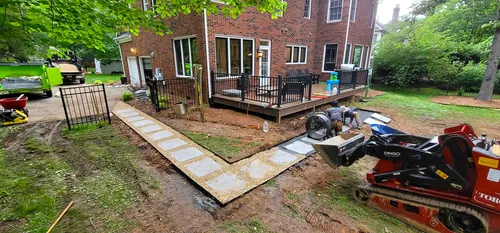
Haven Landscape Design is a landscape design and installation company based in Charlotte, NC. They offer a range of services including custom landscape design, hardscaping with patios, walkways, and retaining walls, landscape lighting, sod installation, yard drainage solutions, and outdoor kitchens and fire pits. Their work focuses on blending beauty, functionality, and sustainability to create personalized outdoor spaces. Haven Landscape Design serves Charlotte and nearby areas such as Matthews, Huntersville, Concord, and Fort Mill. They are experienced in installing advanced drainage systems to protect properties and enhance landscape health.
The Grounds Guys of Ballantyne
Charlotte, NC
The Grounds Guys of Ballantyne is a landscaping company serving Charlotte, NC, offering a wide range of lawn and landscape services. Their expertise includes lawn mowing, fertilization, weed control, sod installation, landscape lighting, irrigation installation and repair, tree services, yard drainage, and hardscaping such as patios and retaining walls. They provide customized landscape design and maintenance plans tailored to local soil and climate conditions. The company emphasizes eco-friendly solutions like drought-tolerant plants and efficient irrigation. Their services cover both residential and commercial properties, with flexible scheduling and clear communication to support year-round landscape health.
Palmetto Land Services
Charlotte, NC
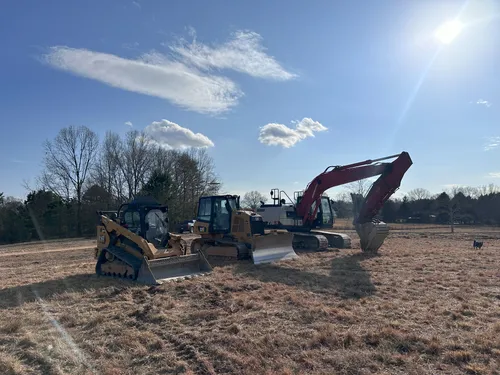
Palmetto Land Services is a land preparation and clearing company based in Charlotte, NC. They provide services including land clearing, forestry mulching, construction pad grading, stone driveway installation and repair, tree removal, and yard drainage solutions. Their expertise includes proper soil compaction and grading to ensure solid foundations and prevent issues like washouts or sinkholes. Palmetto Land Services works with homeowners, builders, and local developers in the Charlotte area and surrounding regions.
Queen City Hardscapes
Charlotte, NC
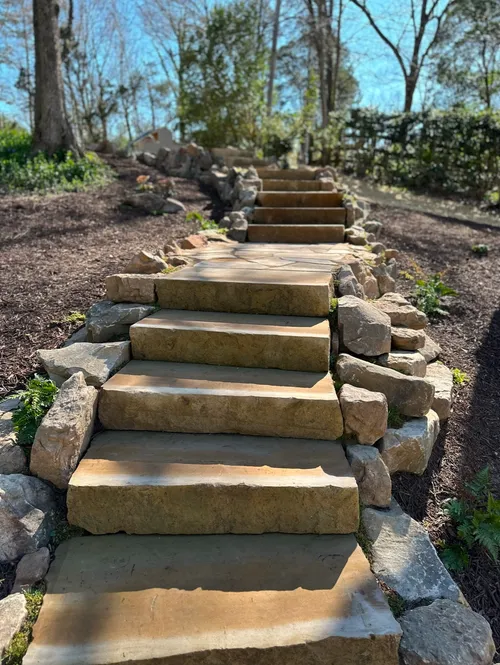
Queen City Hardscapes is a landscape design and hardscaping company based in Charlotte, NC. They provide a range of services including landscape design, yard drainage solutions, grading, and the construction of pavers and retaining walls. The company focuses on creating custom outdoor spaces that blend functionality with aesthetic appeal, addressing challenges such as sloped yards and drainage problems. Their approach emphasizes innovative design and craftsmanship to enhance outdoor living areas.
Why Proper Drainage is Critical for Gastonia Homes
Gastonia's climate, with its periods of heavy rainfall, can quickly overwhelm a yard that doesn't channel water away effectively. The primary goal of any drainage or grading project is to manage stormwater runoff, directing it away from your home's foundation and into appropriate areas like storm drains, dry wells, or landscaped zones where it can be absorbed. Without proper slope and flow, water can seep into basements and crawl spaces, cause foundation cracks, kill grass and plants, and create hazardous icy patches in winter. Investing in a good drainage plan is an investment in your property's long-term value and safety.
Common Yard Drainage Problems and Their Signs
Before choosing a solution, you need to diagnose the problem. Here are typical issues Gastonia homeowners face:
- Standing Water: Puddles that remain for more than 24 hours after rain indicate a low spot or compacted soil that prevents absorption.
- Foundation Dampness: Wet siding, moisture in the basement or crawl space, or mold/mildew on exterior walls are clear signs water is pooling against your home.
- Soil Erosion: Gullies or washed-out areas in your lawn show that water is flowing too quickly and carrying topsoil away.
- Soggy Lawn: A consistently spongy, muddy yard, even away from the house, suggests high water tables or poor subsurface drainage.
- Overwhelmed Downspouts: Water cascading directly from roof gutters onto the ground next to the foundation is a major contributor to basement leaks and foundation issues.
Core Solutions for Water Management and Land Grading
Professional landscape and excavation contractors in Gastonia use a combination of techniques to solve water problems. The right solution depends on your property's specific topography and the water source.
Grading and Regrading
This is the process of shaping the soil to create a gentle slope away from your home. Proper land grading ensures surface water flows in the desired direction, typically a minimum slope of 2% (or about 2.5 inches over 10 feet). Regrading may involve bringing in fill dirt to raise low areas or excavating to create swales (broad, shallow ditches) that channel water across your property safely.
Subsurface Drainage Systems
When water is soaking into the ground but has nowhere to go, subsurface solutions are needed.
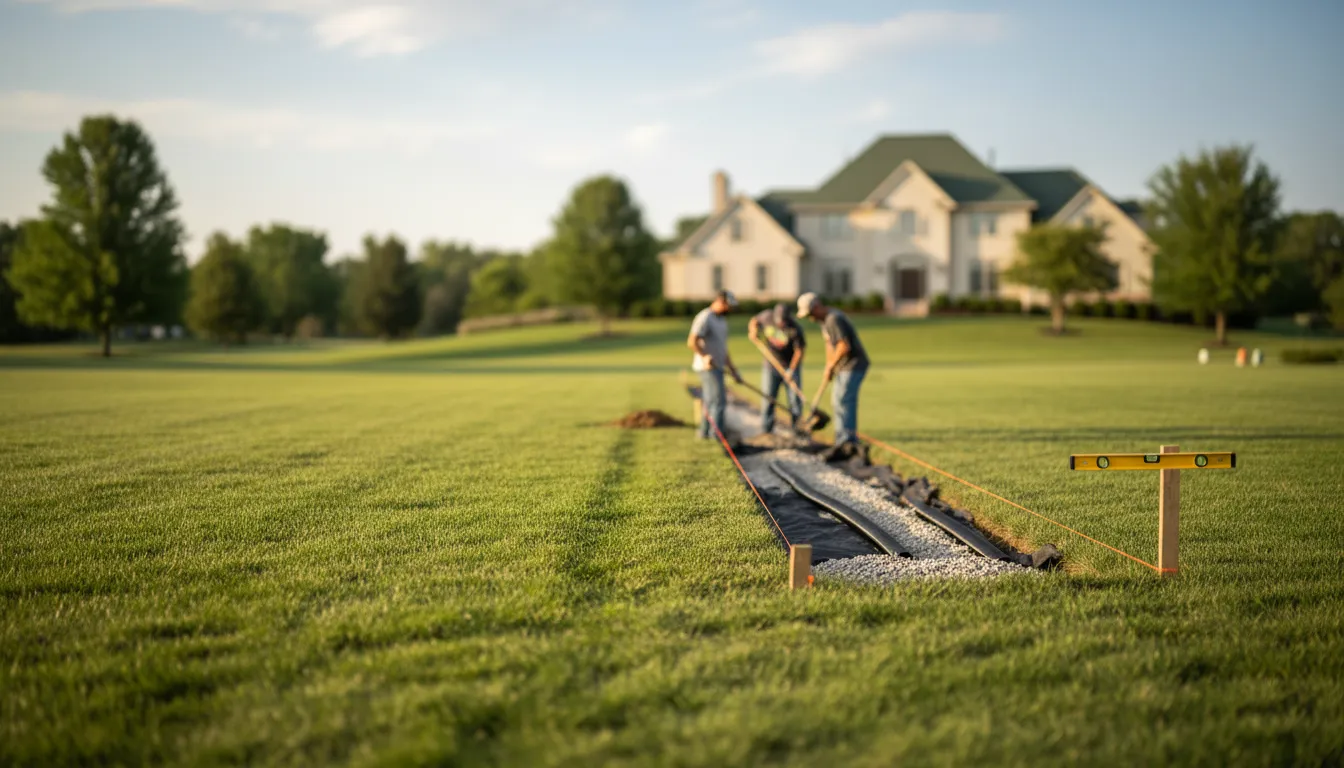
- French Drains: A trench filled with gravel and containing a perforated pipe collects groundwater and redirects it to a safer discharge point, like a storm drain or dry well.
- Catch Basins and Channel Drains: These are grated inlets installed at low points or along driveways/walkways to capture large volumes of surface water before it becomes a problem, connecting to an underground pipe system.
Surface Water Diversion and Absorption
These solutions manage water where it falls or immediately after it runs off a hard surface.
- Downspout Extensions and Splash Blocks: The simplest fix is often redirecting roof runoff several feet away from the foundation onto the lawn or into a rain barrel.
- Rain Gardens and Bioswales: These are landscaped depressions planted with native, water-tolerant plants. They are designed to collect runoff, allow it to soak into the ground, and filter out pollutants-a beautiful and eco-friendly solution.
- Permeable Paving: Replacing solid concrete or asphalt with materials like permeable pavers, gravel, or crushed stone allows rainwater to seep through the surface and recharge the groundwater below.
Find the perfect yard drainage contractors for your needs
Get personalized recommendations and expert advice
The Professional Process: From Assessment to Final Grade
Working with a local Gastonia contractor for site grading or drainage installation typically follows a structured process to ensure lasting results.
- Site Assessment and Diagnosis: A professional will inspect your property during or after a rain to identify all problem areas, determine the source of the water (e.g., roof runoff, uphill neighbor, natural springs), and evaluate soil composition. 1
- Design and Planning: Based on the assessment, the contractor will design a customized plan. This may involve a single solution or a combination (e.g., regrading the lawn and installing a French drain). For larger projects impacting stormwater systems, they will handle any necessary permits from Gaston County.
- Execution and Installation: This is the construction phase. It can include excavation for drains, using heavy equipment to reshape the land (earth grading), laying pipe, installing basins, and adding soil amendments. For projects involving rain gardens, this step also includes planting.
- Finalization and Follow-up: The contractor will ensure all slopes are correct, systems are connected, and the site is cleaned up. A key step is testing the system during the next rain event to verify water is moving as designed. They may also provide guidance on post-installation care, like mulching a rain garden. 2
Understanding Investment Ranges for Drainage Work
The cost for yard drainage solutions in Gastonia varies widely based on the complexity of the problem, the size of your property, and the materials used. Below are general price ranges to help you budget, but always seek detailed quotes from local providers like Bright LLC, All In Grading, or A L Parker Services. 3 4
- Simple Corrections (Often DIY or Small Pro Job): Installing rain barrels or basic downspout extensions can range from $50 to $300.
- Medium-Scale Professional Projects: This includes most regrading and standard drain installations.
- French Drain Installation: Typically costs $10-$30 per linear foot installed, depending on depth and materials.
- Major Landscape-Based Solutions: Integrating drainage into the landscape represents a larger investment but adds aesthetic and ecological value.
- Rain Gardens/Bioswales: A professionally designed and installed rain garden can range from $500 to over $2,000.
- Permeable Paving: Installing permeable surfaces like pavers or gravel can cost $10-$25 per square foot. 7
Choosing a Local Gastonia Drainage and Grading Contractor
Selecting the right professional is crucial. Look for contractors with specific experience in excavation and grading or stormwater management. They should be licensed, insured, and able to provide local references. Review portfolios of past drainage projects and ensure they are familiar with Gaston County's stormwater regulations. 8 9 A reputable contractor will always start with a thorough assessment and provide a clear, detailed proposal outlining the scope of work, materials, timeline, and cost before any work begins.
Maintaining Your Drainage System
Once installed, most drainage systems require minimal maintenance. Keep surface drains and grates clear of leaves and debris. Periodically check downspout extensions to ensure they are intact and directing water properly. For French drains, ensure the exit point remains unobstructed. Rain gardens may require occasional weeding and replanting. An annual inspection, especially before the rainy season, can help catch small issues before they become big problems.
Frequently asked questions
Sources
Footnotes
-
Control Heavy Runoff - Solving Drainage and Erosion Problems - https://www.fairfaxcounty.gov/soil-water-conservation/drainage-problem-control-runoff ↩
-
How to Manage and Control Storm Water Runoff (Fact Sheet) - https://extension.missouri.edu/publications/eqm102f ↩
-
All In Grading: Excavation and Grading Service, Site Development ... - https://allingradingllc.com/ ↩
-
Land Clearing & Grading In Gastonia, NC | A L Parker Services - https://alparkerservices.com/gastonia-nc/ ↩
-
Grading & Leveling Experts in NC & SC | Bright LLC - https://brightllc.us/grading-leveling-nc-sc/ ↩
-
Grading and Land Clearing Gastonia, NC - https://carolinagradinglandclearing.com/location/gastonia ↩
-
What You Can Do to Soak Up the Rain | US EPA - https://www.epa.gov/soakuptherain/what-you-can-do-soak-rain ↩
-
Gastonia Landscape Management Industry - https://www.gastonianc.gov/images/Gastonia_Landscape_Management_Industry.pdf ↩
-
Stormwater | Gaston County, NC - https://www.gastongov.com/1083/Stormwater ↩