Find the Best Yard Drainage Contractors for Your Business
No obligation • Fast responses • Nationwide coverage

Why you can trust Landscape Atlas
Landscape Atlas is a leading United States resource for evaluating landscaping, lawn care, and outdoor service providers. Our team researches each category in depth, focusing on service quality, safety, and customer experience. Listings and rankings are based on independent criteria and user feedback, and companies cannot pay to influence our assessments or recommendations.
Search providers near you
Top Yard Drainage Contractors in Wilson, North Carolina Ranked
Proper yard drainage and grading are essential for protecting your Wilson home's foundation, preventing landscape erosion, and creating a usable outdoor space. Without effective water management, heavy rains common to Eastern North Carolina can lead to soggy lawns, flooded basements, and costly property damage. This guide explains the core solutions for managing stormwater runoff, from simple grading adjustments to complex drainage systems, and helps you understand how to find qualified local professionals to assess and solve your property's unique water issues.
Grey Land Specialist
Raleigh, NC
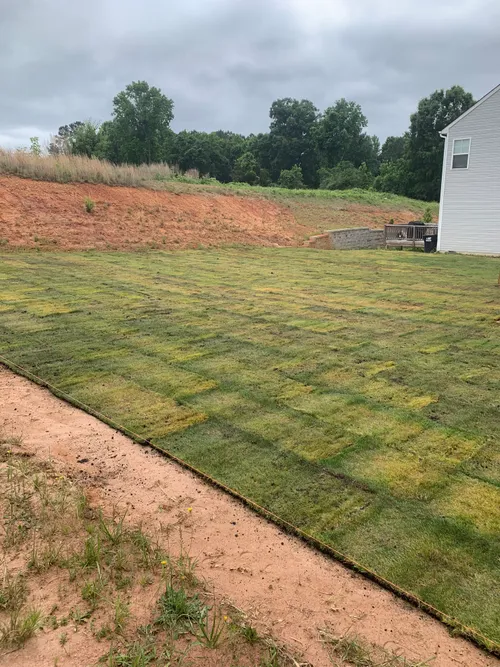
Grey Land Specialist is a grading and excavation contractor based in Raleigh, NC. They provide a range of services including land clearing, grading, drainage solutions, sod installation, fence installation, hardscaping, and driveway installation. Serving Raleigh and nearby areas such as Clayton, Wendell, Wake Forest, and Zebulon, the company focuses on residential projects and offers expertise in site preparation and landscape excavation. With nearly a decade of industry experience, the owner is personally involved in every job to ensure quality and attention to detail.
Outdoor Images Inc
4029 Billy Hopkins Rd, Zebulon, NC 27597
Outdoor Images Inc is a landscaping company based in Raleigh, NC, offering a range of services including landscape design, outdoor lighting installation, yard drainage, irrigation, and hardscaping. They serve Raleigh and nearby areas such as Durham, Chapel Hill, Wilson, Wake Forest, Rolesville, Knightdale, and Zebulon. Their team uses mixed materials and horticultural techniques to create and maintain outdoor living spaces that encourage comfort and connection. Outdoor Images provides stone masonry and drainage solutions alongside landscape maintenance and sprinkler services.
Pristine Turf Management And Landscaping Llc
Raleigh, NC
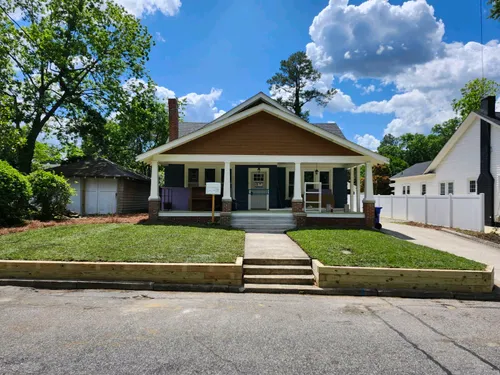
Pristine Turf Management And Landscaping Llc is a landscaping company based in Raleigh, NC, offering a wide range of services including lawn care, sod installation, hardscape construction, and forestry mulching. They provide custom patio and walkway installations, retaining wall construction, outdoor kitchen setups, and comprehensive lawn maintenance. With 30 years of experience, the owner is present on every project to ensure quality and communication. The company is fully licensed for pesticide applications and serves both residential and commercial clients in the Raleigh area.
Understanding Your Wilson Yard's Drainage Problem
The first step to a dry yard is identifying the source and path of unwanted water. Common issues in Wilson include water pooling in low spots, soil erosion near foundations, and downspouts that dump water directly next to your home. North Carolina law generally requires lower properties to accept natural runoff from higher ones, but you are responsible for managing the flow across your own land and cannot unlawfully divert water onto a neighbor's property 1. A simple assessment after a rainstorm can reveal where water collects and where it flows, which is the foundation for any effective drainage plan.
Core Solutions for Water Management
There are several proven methods for controlling yard drainage, ranging from surface grading to subsurface systems. The right approach often combines multiple techniques.
Regrading and Surface Solutions
Grading is the process of shaping the soil to create a gentle slope (typically at least a 2% grade) away from your home's foundation and toward a suitable discharge point like a street gutter or dry well. This is often the most fundamental fix for preventing basement seepage. Complementary surface solutions include:
- Swales: Shallow, grassy ditches that channel water across your yard.
- Dry Creek Beds: Decorative, rock-lined channels designed to move and infiltrate water while adding landscape interest.
- Permeable Pavers: For patios or walkways, these materials allow water to soak through into the ground below, reducing immediate runoff 2.
Subsurface Drainage Systems
When surface water needs to be collected and moved away from problem areas, underground systems are key.
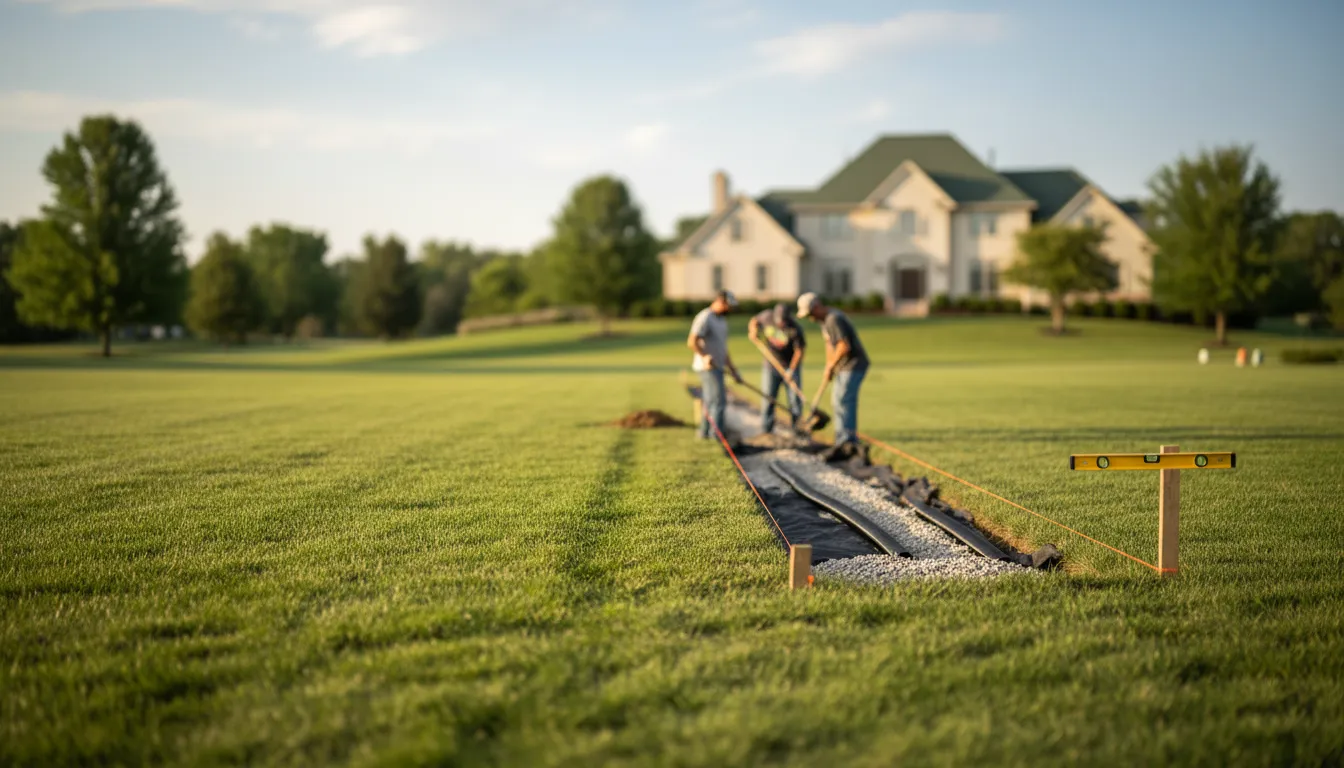
- French Drains: A trench filled with gravel and containing a perforated pipe that collects and redirects groundwater and surface runoff. These are highly effective for relieving hydrostatic pressure against foundations.
- Dry Wells and Infiltration Trenches: Underground pits or trenches filled with gravel that collect water from downspouts or drains and allow it to slowly percolate into the surrounding soil.
Eco-Friendly and Rainwater Harvesting
Managing water volume at the source is a smart strategy.
- Rain Gardens (Bioretention): A depressed garden area planted with native, water-tolerant plants that collects runoff from roofs or driveways, filters pollutants, and allows water to soak into the ground. The NC State Extension service is an excellent resource for plant selection.
- Rain Barrels and Cisterns: Attached to your downspouts, these systems capture roof runoff for later use in watering your garden, simultaneously reducing the volume of water entering your yard's drainage system.
Find the perfect yard drainage contractors for your needs
Get personalized recommendations and expert advice
The Professional Process: From Assessment to Installation
For anything beyond a simple DIY project like installing a rain barrel, working with a professional ensures the job is done correctly and complies with local regulations.
- Site Assessment: A qualified contractor will evaluate your property's topography, soil type (Wilson's clay-heavy soil can impede drainage), and identify all water sources and problem areas.
- Design & Planning: Based on the assessment, they will design a tailored system, which may integrate grading, French drains, and rain gardens. This is the stage where a landscape designer or engineer can be invaluable for complex issues.
- Permits: The City of Wilson Public Works Department oversees stormwater and erosion control. Significant grading work or drainage alterations may require a permit. Your contractor should handle this, but it's wise to verify.
- Installation: This involves excavation, pipe laying, grading, and final landscaping. Professional installation is crucial for ensuring proper pipe slope and long-term system functionality.
Investment and Cost Considerations
The cost for yard drainage work in Wilson varies widely based on the solution's complexity and scale. Here's a general range based on common projects:
- Rain Barrel or Basic Gutter Extensions: $100 - $800 for DIY or professional installation 3.
- Small Rain Garden: $300 - $1,500, depending on plants, soil amendments, and labor 4.
- Professional Grading (for a moderate area): $500 - $2,000+ 5.
- French Drain or Dry Well System: $1,000 - $4,000 or more, factoring in excavation depth, length, and materials 6 7.
While DIY can save money on simple projects, improper grading or drain installation can worsen problems or lead to costly repairs. Investing in a professional assessment often pays for itself by pinpointing the most effective, long-term solution.
Local Regulations and Best Practices in Wilson
Wilson has specific ordinances to manage stormwater and prevent erosion 8. Before starting any major earth-moving or drainage project, it's prudent to check with the City of Wilson Public Works Department for current guidelines and permit requirements. Furthermore, using native plants in rain gardens and ensuring downspouts are directed onto pervious surfaces are considered best practices that support local water quality goals.
Maintaining Your Drainage System
Once installed, a little maintenance keeps your system working. Regularly clear debris from catch basins and the tops of dry wells. Inspect French drain outlets after heavy rains to ensure they are flowing freely. Keep swales and ditches clear of leaves and sediment, and maintain the health of plants in your rain garden to ensure optimal water absorption.
Frequently asked questions
Sources
Footnotes
-
How to Address Water Drainage from Adjoining Parcels | Black Mountain ... - https://townofblackmountain.org/2927/How-to-Address-Water-Drainage-from-Adjoi ↩
-
Urban Stormwater Runoff Capture and Management Resource ... - https://water.ca.gov/-/media/DWR-Website/Web-Pages/Programs/California-Water-Plan/Docs/RMS/2025/Urban-Stormwater-RMS---2025.pdf ↩
-
A HOMEOWNER'S TOOLKIT FOR WATER QUALITY AND ... - https://tjpdc.org/wp-content/uploads/A-Homeowners-Toolkit-for-Water-Quality-and-Stormwater-Management.pdf ↩
-
Educational Materials | Wilson, NC - https://www.wilsonnc.org/residents/all-departments/public-works/stormwater-and-erosion-control/educational-materials ↩
-
Grading & Drainage Basics for Residential Landscaping in North ... - https://www.honeycutt-landscaping-inc.com/grading-and-drainage-in-residential-yard-design/ ↩
-
12 Residential Backyard Drainage Solutions - Protect Your Yard - https://wilsonslawncare.com/12-residential-backyard-drainage-solutions/2024/ ↩
-
Control Heavy Runoff - Solving Drainage and Erosion Problems - https://www.fairfaxcounty.gov/soil-water-conservation/drainage-problem-control-runoff ↩
-
STORMWATER AND EROSION CONTROL | Wilson, NC - https://www.wilsonnc.org/residents/all-departments/public-works/stormwater-and-erosion-control ↩